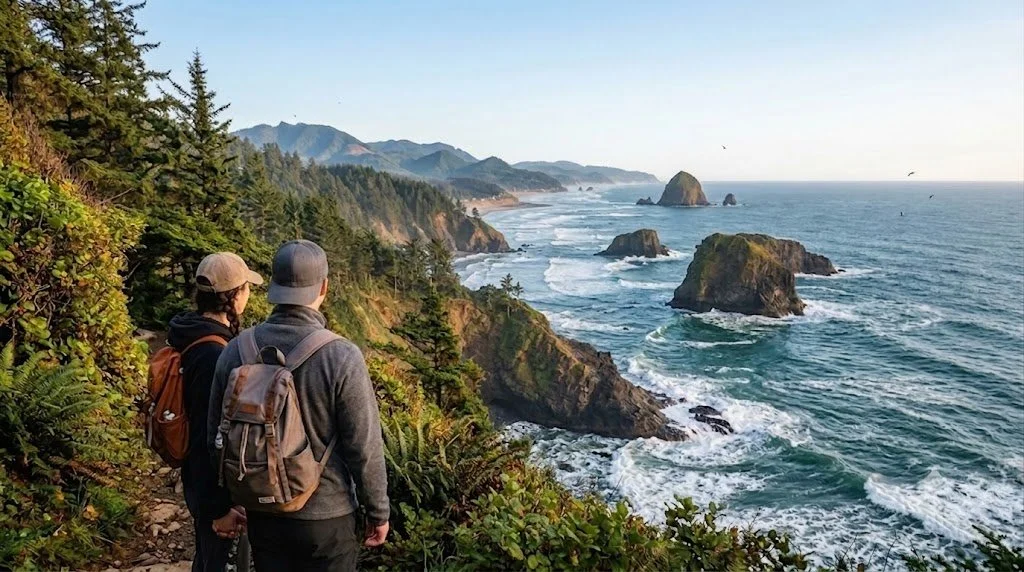
Waterfalls, Mountains, & Sea Lions: A Pacific Northwest Adventure on a Budget
Jake Donovan & Amy Barrelle
Story developed and edited by Heidi Donovan
From Heidi
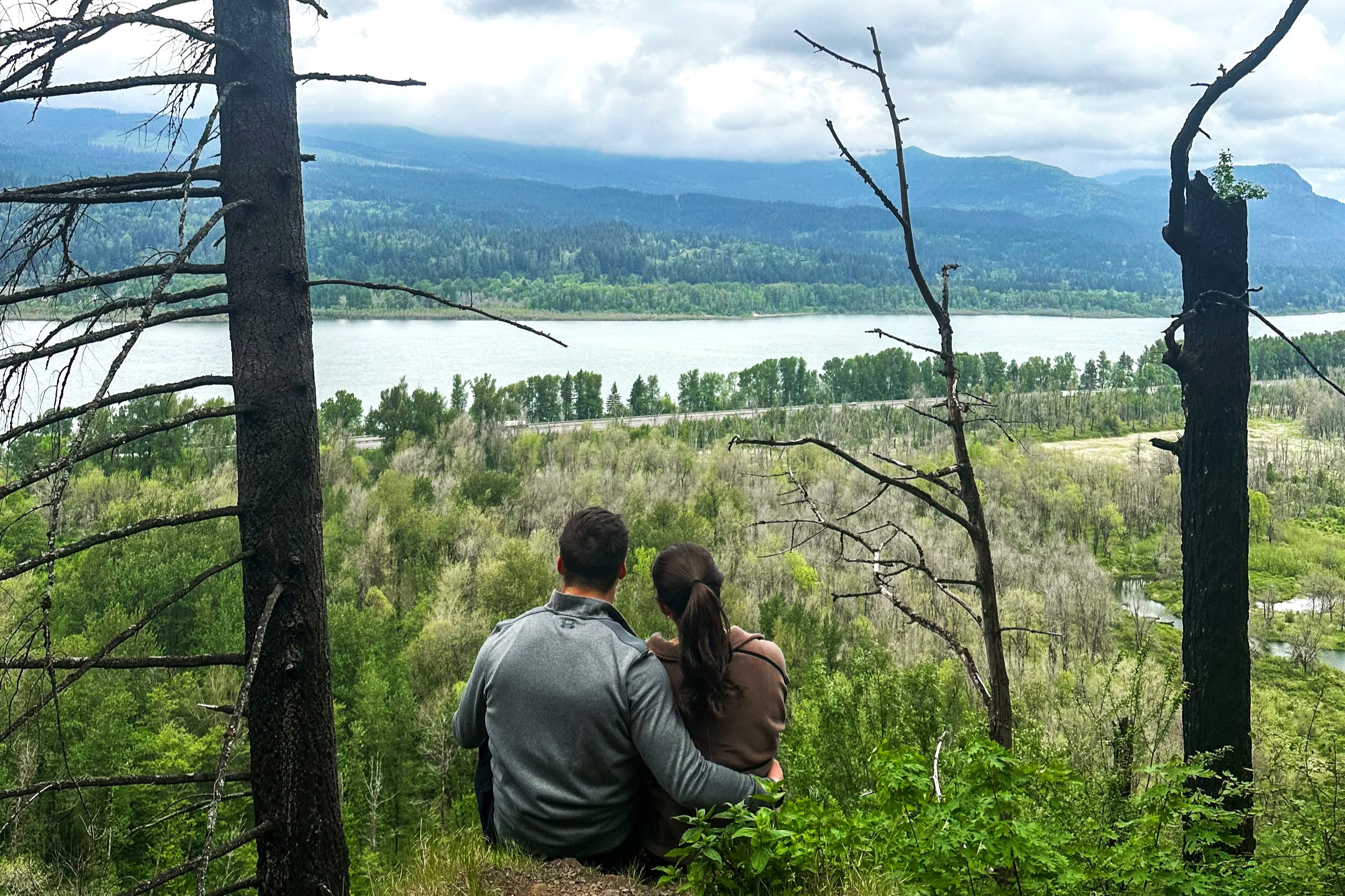
I love when members of our D5 Travel Tribe share their own travel stories—especially when they come from a completely different stage of life. This one is from my son Jake and his girlfriend Amy Barrelle, both 20 and college students at the University of Central Florida. They planned and took their first Pacific Northwest road trip together this past spring. It’s a very different style of travel than our usual family trips—budget-driven, flexible, and very road-trip heavy—but that’s exactly what makes it interesting.
I’ll let Jake and Amy take it from here.
Why We Chose the Pacific Northwest
We started talking about taking a trip together after realizing we both wanted to experience something completely different from Florida. Like, not just a different beach—an entirely different climate, landscape, and personality. We kept circling the same idea: mountains, waterfalls, cooler weather, and places that felt like we should be filming a nature documentary.
We also didn’t have a big budget, so every decision came down to what was realistic, not idealistic. Flights ended up being the first win—roundtrip from Orlando to Portland for about $250 per person—which basically locked in the destination and made planning a cross-country trip feel possible. From there, our focus shifted to how much of Oregon and Washington we could realistically see in one week without completely breaking the bank.
In this article, we’ll walk through our full Pacific Northwest road trip—stop by stop—including waterfalls you can hike behind, lakes that look unreal in person, a few accidental “we might run out of gas” moments, and why Mount Rainier and the Oregon coast ended up being the highlights of the entire trip.
If you’re a young traveler trying to plan something similar, we’ll also share what we’d do differently, what was 100% worth it, and how to make a trip like this work on a real-world budget. Uncertain whether or not to book a trip to the Pacific Northwest? This is your sign.
Trip Snapshot
Dates: May 5–14, 2026
Travelers: Jake Donovan & Amy Barrelle (both 20)
Total Cost: $3,685
States Visited: Oregon & Washington
Home Base: Portland, Oregon
Flights: Orlando → Salt Lake City → Portland
Rental Car: Turo (allows drivers < 25 yo)
Hotels: Super 8 + Riverfront Lodge
Budget: How We Kept Costs Low
This trip was all about being intentional with where we spent our money. Instead of trying to do everything, we prioritized the experiences we were most excited about and looked for ways to save everywhere else. A little planning went a long way—booking flights when prices dropped, packing snacks for long driving days, and taking advantage of the Pacific Northwest's biggest perk: most of nature is completely free.
Our philosophy was simple: spend money on the memories, not the extras. Turns out, waterfalls, mountain views, and epic hikes don't charge admission.
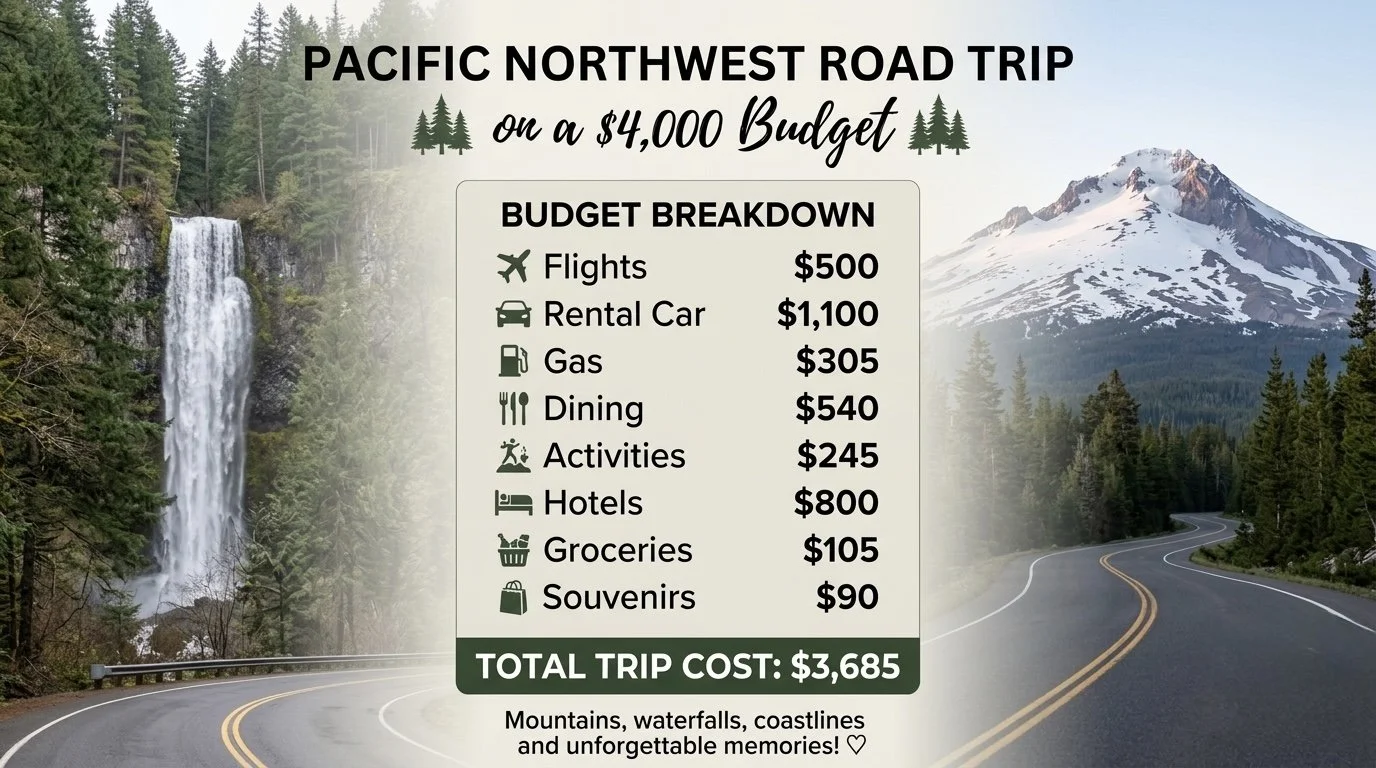
Pro Tip: Budget travel is all about priorities. We chose red-eye flights, a basic hotel, and grocery runs so we could spend our money on experiences.
Getting Around the Pacific Northwest
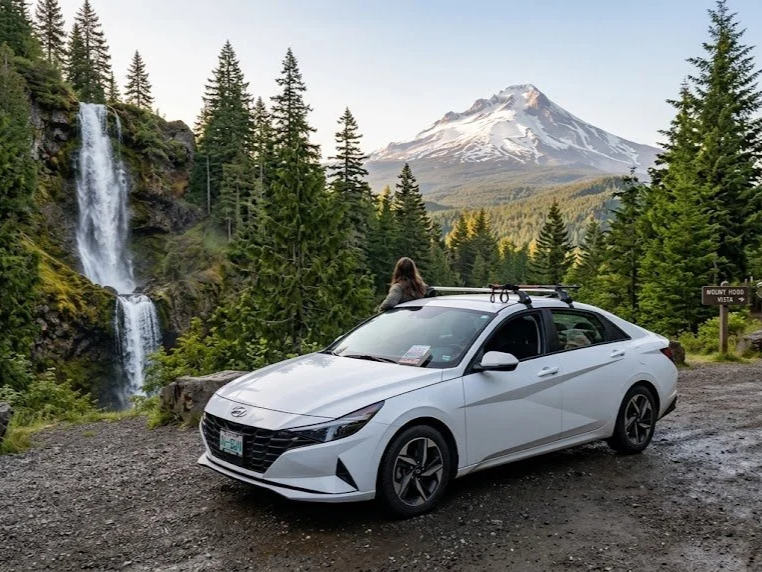
Since this was a road trip, having a car wasn't optional—it was the key to seeing everything on our itinerary. The problem? Most traditional rental car companies wouldn't rent to us because we were only 20, which felt like a major roadblock.
Thankfully, we found Turo, a peer-to-peer car-sharing platform that lets you rent vehicles directly from local owners. Jake rented a midsize car, we added the optional insurance for some extra peace of mind, and the whole process was surprisingly simple. We created an account, booked the car through the app, and agreed on a pickup location with the owner. When we landed in Portland, the car was waiting for us in the airport parking garage. We unlocked it with the app, loaded our bags, and officially kicked off the trip.
Jake deserves a huge shout-out because he did all of the driving. (Thanks, Jake!)
Where We Stayed
We weren't looking for luxury—we were looking for a clean place to sleep so we could spend our money on experiences instead of a hotel room.
For most of the trip, we stayed at the Super 8 by Wyndham Portland Airport. At around $60 a night, it fit our budget perfectly and became our home base while we explored Oregon and Washington. It was close to the airport, right off the major highways, and came with free breakfast, which meant one less meal to pay for each day. Was it fancy? Definitely not. But it was clean, convenient, and exactly what we needed.
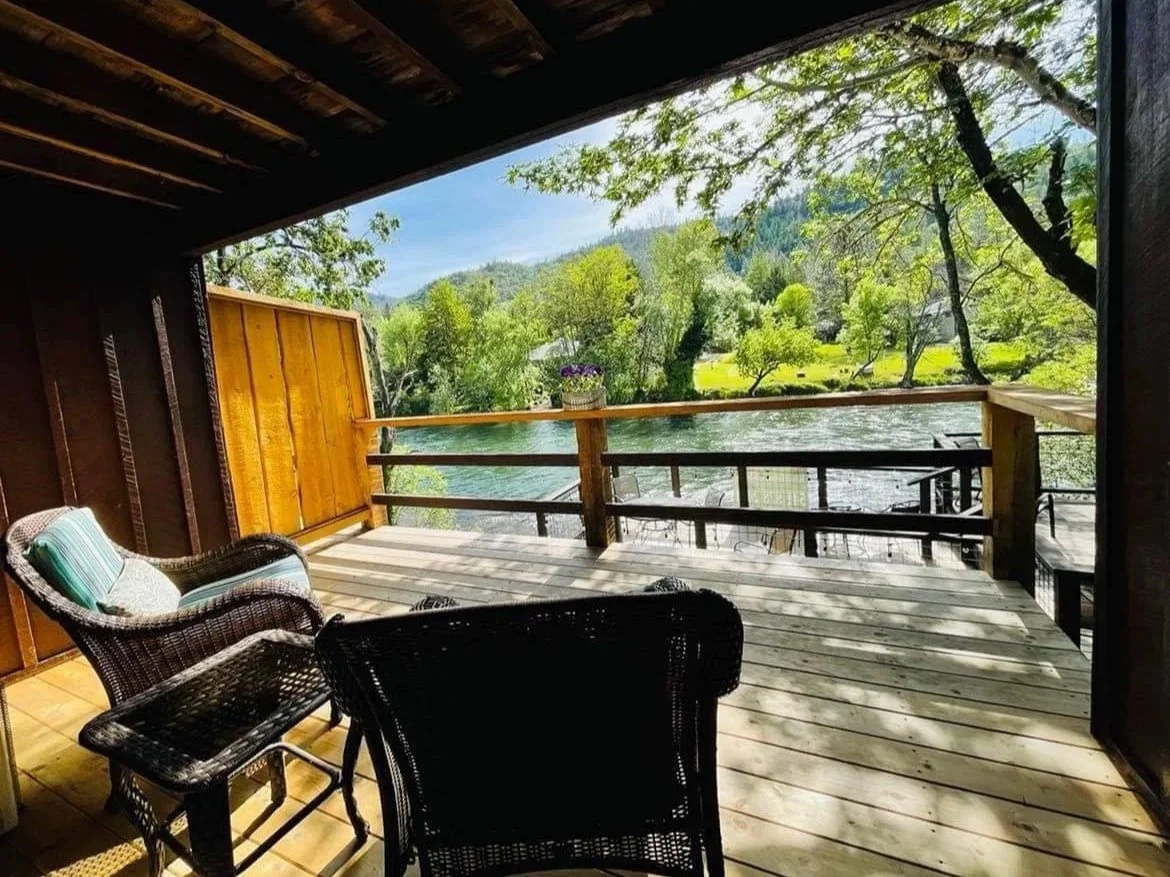
The one exception was our night in southern Oregon, when we treated ourselves to the Riverfront Lodge in Medford. At about $140 a night, it felt like a splurge, but after several days of hiking and long drives, it was 100% worth it.
Our cabin at the Lodge was tucked alongside the Rogue River. There were Adirondack chairs overlooking the water, towering trees all around, and the peaceful sound of the river flowing by. It was the kind of place where you actually wanted to slow down and relax before getting back on the road. If we ever make this trip again, we'd happily stay there again.
The Itinerary
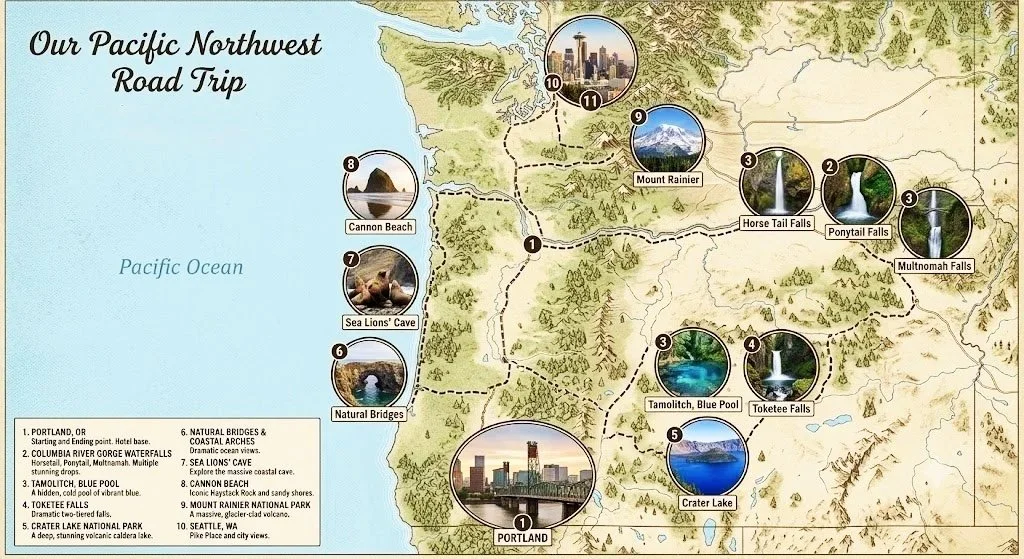
We started our trip with a delayed flight from Orlando → a rebooked connection in Salt Lake City → Portland (finally). By the time we landed, picked up our rental car, and checked into our hotel, it was close to midnight—more like 3 a.m. in our bodies still running on East Coast time. We had every intention of starting early the next morning.
We did not. We slept in instead. No regrets. That slow start set the tone for the day—with well-rested bodies and full bellies from the hotel breakfast buffet, we eased into Oregon with a short drive to Horsetail Falls and Ponytail Falls.
Oregon Waterfalls: Where Everything Started
Horsetail + Ponytail Falls
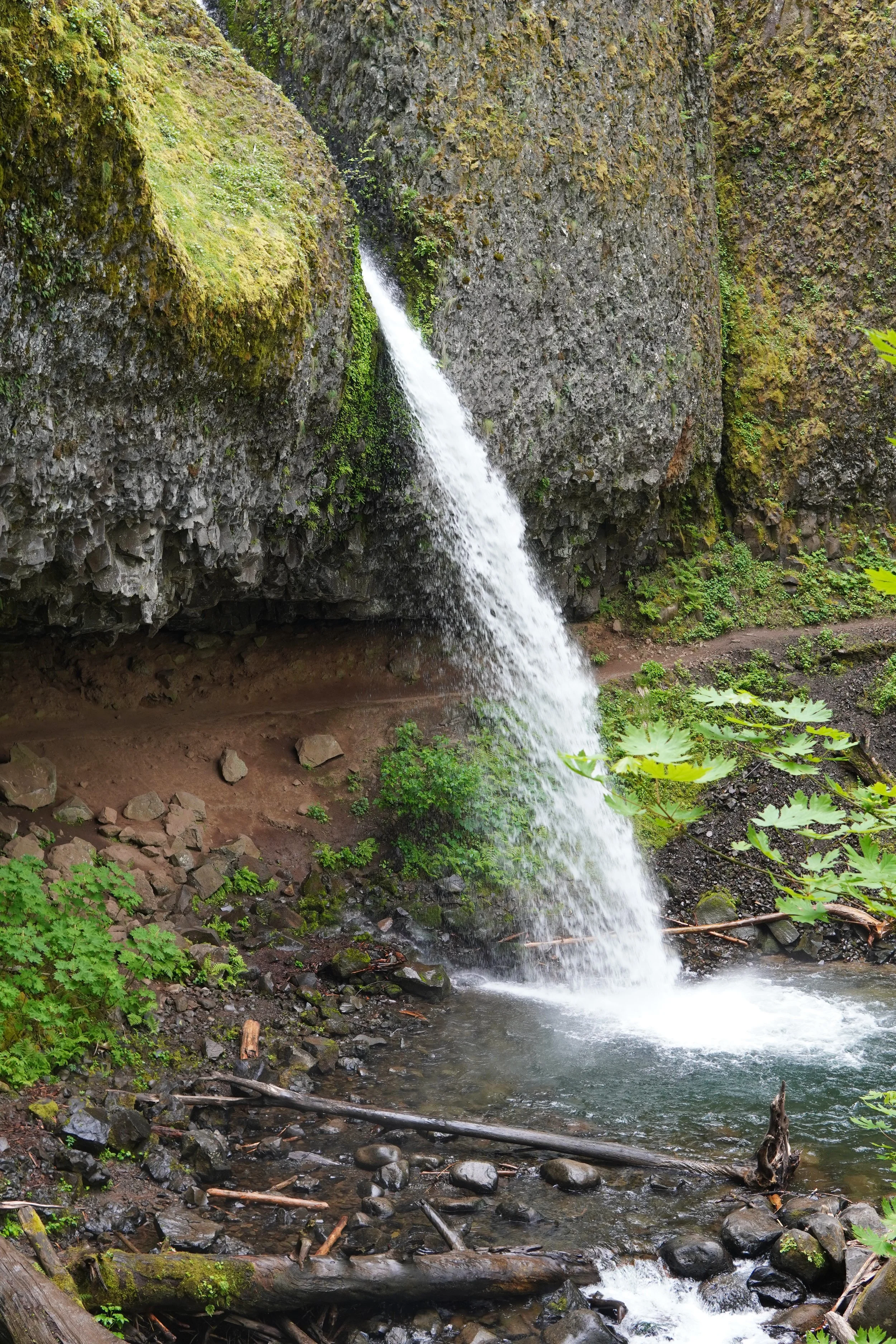
Our first hike was short—less than a mile—but it immediately felt like we’d stepped into another world. Everything was lush and intensely green, with moss covering nearly every tree and rock in that slightly overgrown way that makes you wonder if you accidentally wandered onto the set of a Twilight movie. The trail’s first highlight, Horsetail Falls, lived up to its name—powerful, thunderous, and impossible to miss from the road.
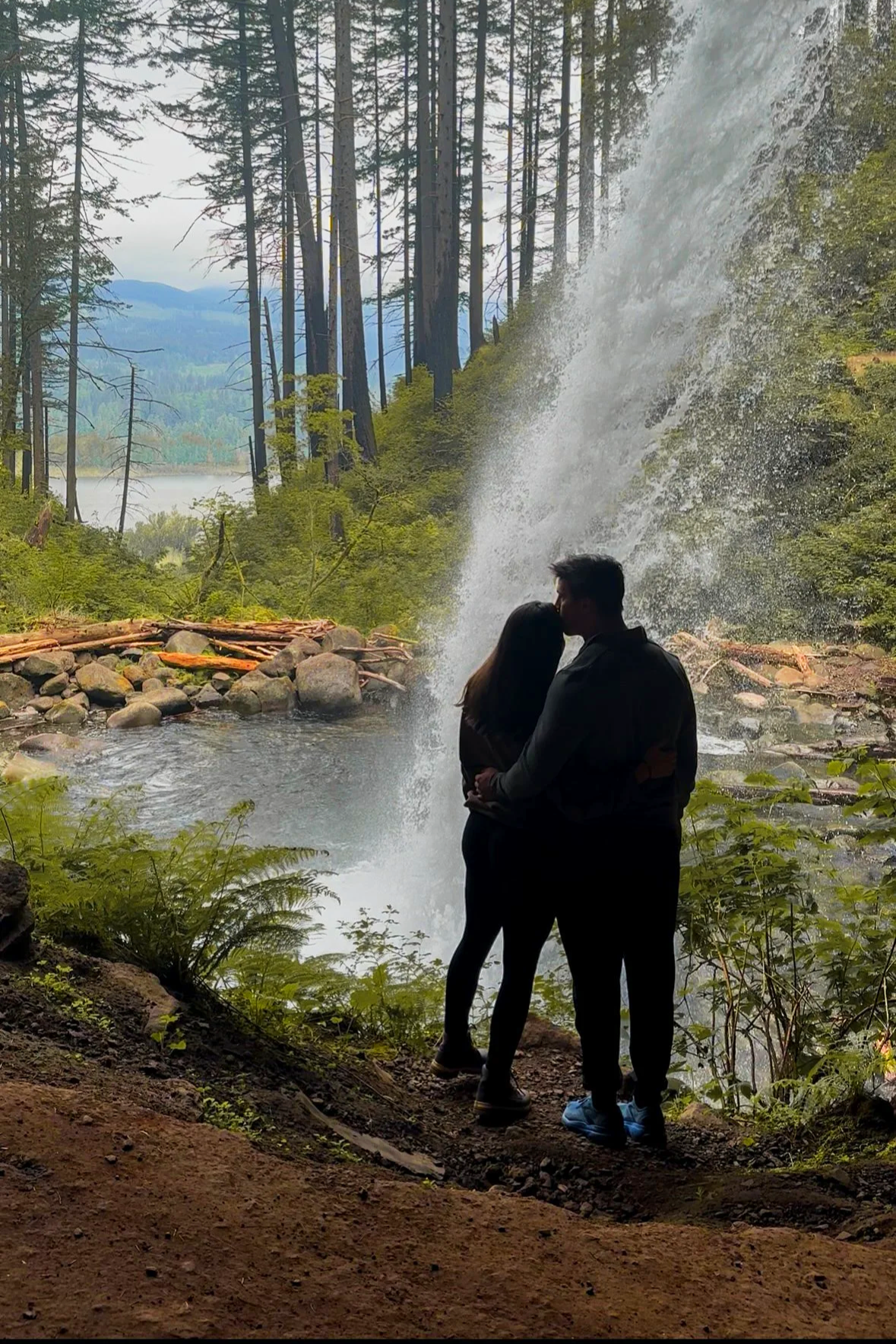
But the real surprise was Ponytail Falls. The trail takes you behind the waterfall, into a carved-out rock alcove where water absolutely hammers down just a few feet away. It’s so loud conversation stops being a thing, and you’re reduced to expressive nodding and wide eyes. We didn’t really say much. Just that shared look of: okay… this is amazing.
Multnomah Falls → Blue Pool
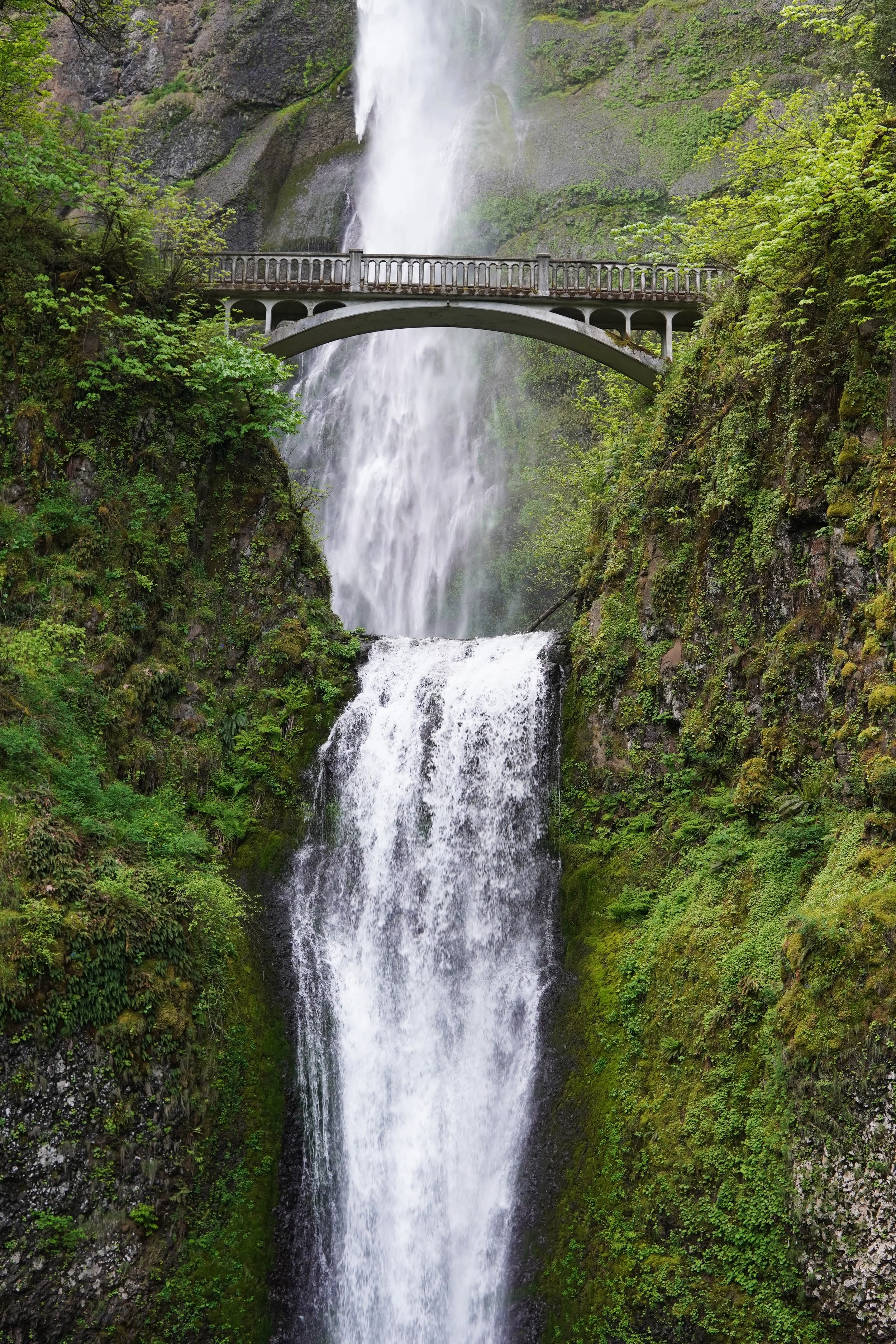
A few days later, we hit Multnomah Falls—probably Oregon's most famous waterfall. We'd seen it all over Instagram, but standing at the base of it is a completely different experience. At more than 600 feet tall, it feels immense and powerful. We hiked up to Benson Bridge for the classic view, took the required number of photos (plus a few extras), and moved on.
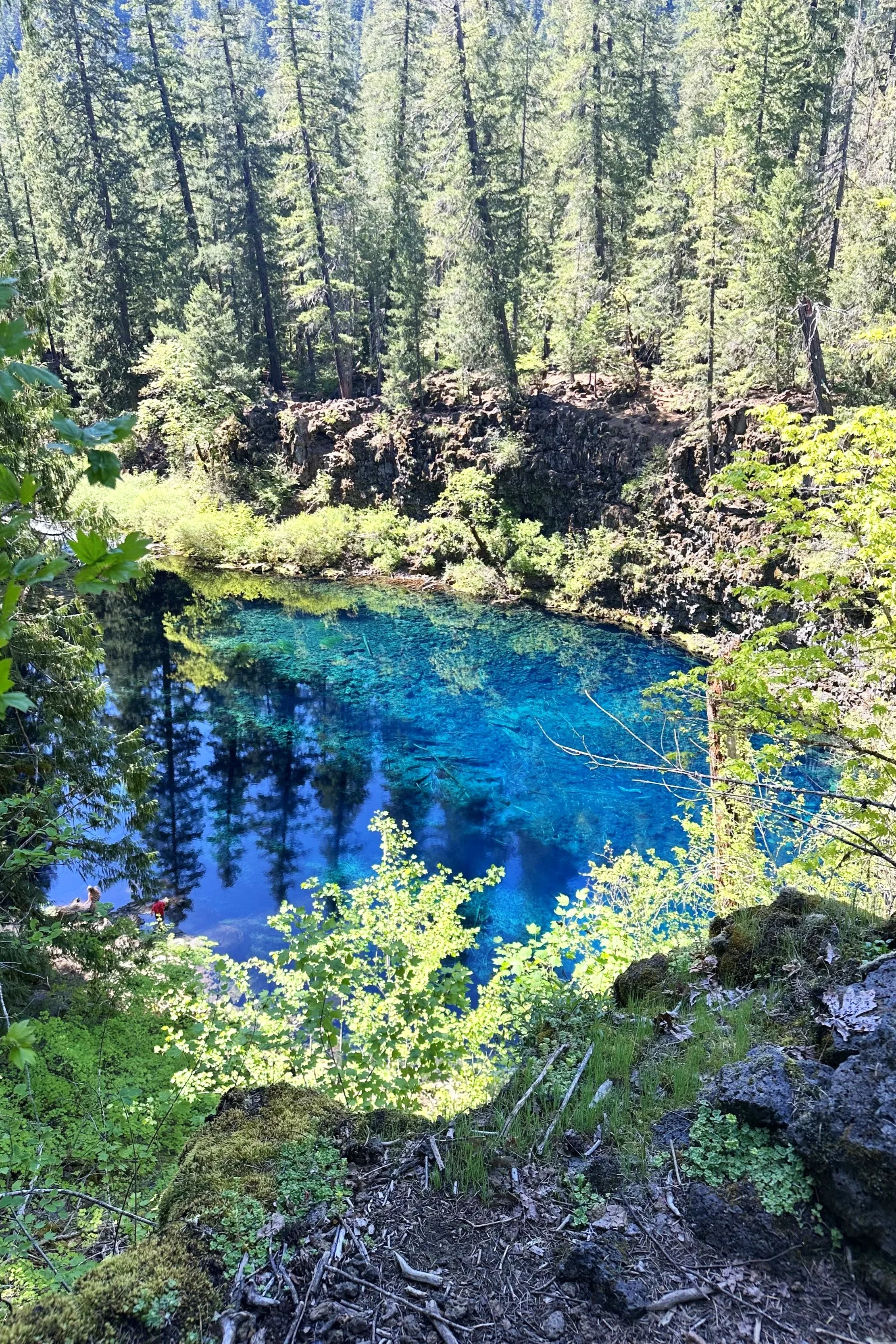
About three and a half hours later, we arrived at Tamolitch Blue Pool. The hike is about four miles round trip through quiet forest, following the McKenzie River in that calm, almost meditative way that slowly builds anticipation before you even realize it. And everyone who says the Blue Pool is unforgettable is not exaggerating. When the trees finally opened up, the water didn't look real. Not just blue—electric, almost glowing turquoise, like someone dropped a Caribbean filter into the middle of an Oregon forest.
We had every intention of staying dry. We were doing the mature thing: admiring, photographing, behaving responsibly. Then a group of hikers arrived, immediately kicked off their shoes, and jumped in like it wasn't a life-altering temperature decision. So, obviously, that was the end of our self-control. We climbed down and went in.
The water was around 37 degrees, which is a polite way of saying "instant full-body betrayal." Any confidence evaporated on contact. For about thirty seconds, it was pure shock and regret. Then, somehow, it turned into one of the best moments of the trip. Would we do it again? Unfortunately, yes.
Toketee Falls
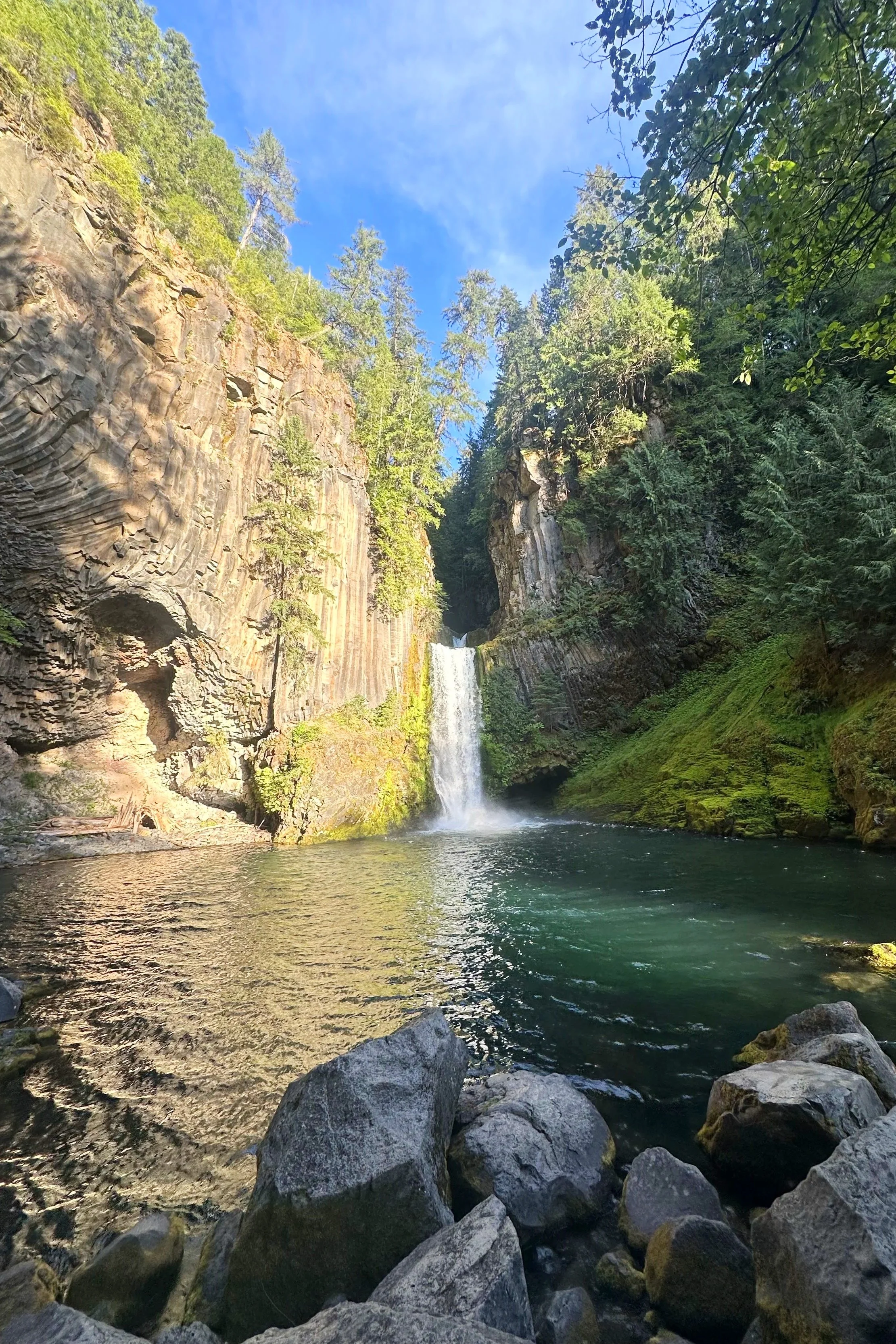
By the time we reached Toketee Falls, we thought we understood Oregon waterfalls. That was optimistic. The hike is only about 0.8 miles, but the final approach escalates quickly into a rocky scramble with ropes bolted into the cliffside—because apparently “casual waterfall viewing” was not the goal.
Neither of us had planned an upper-body workout, but there we were, carefully lowering ourselves over volcanic rock while pretending this was all very normal and intentional. Then the canyon opened up. Toketee drops into a narrow basalt chute that looks like it was designed specifically to make people stop talking. It’s one of those places that feels slightly unreal, like the landscape is showing off.
And, in what was becoming a theme, Jake looked at the freezing water and decided the only reasonable response was to jump in. At this point, it wasn’t even surprising. It was just his thing.
Pro Tip: Hit the Columbia River Gorge waterfalls early in the morning—not just to beat the massive crowds, but because the early morning light creates the most magical, mist-filled photos without harsh sun glare.
Oregon Coast: Cold Air, Big Views, and Wildlife Moments
The Oregon coast felt like a complete change of scenery. One minute we were hiking through moss-covered forests surrounded by waterfalls, and the next we were standing on a wide-open beach with salty air, crashing waves, and wind that made us instantly wish we'd packed another sweatshirt. Everything felt bigger out there—the ocean, the cliffs, even the sky.
It also highlighted how differently we explore. Jake was usually a few steps ahead, heading toward whatever looked climbable, splashable, or worth investigating at full speed. I was more likely to hang back, take in the view, and notice the little details that were easy to miss if you rushed past them. Somehow, those two approaches ended up balancing each other out, and I think we experienced more because of it.
Cannon Beach
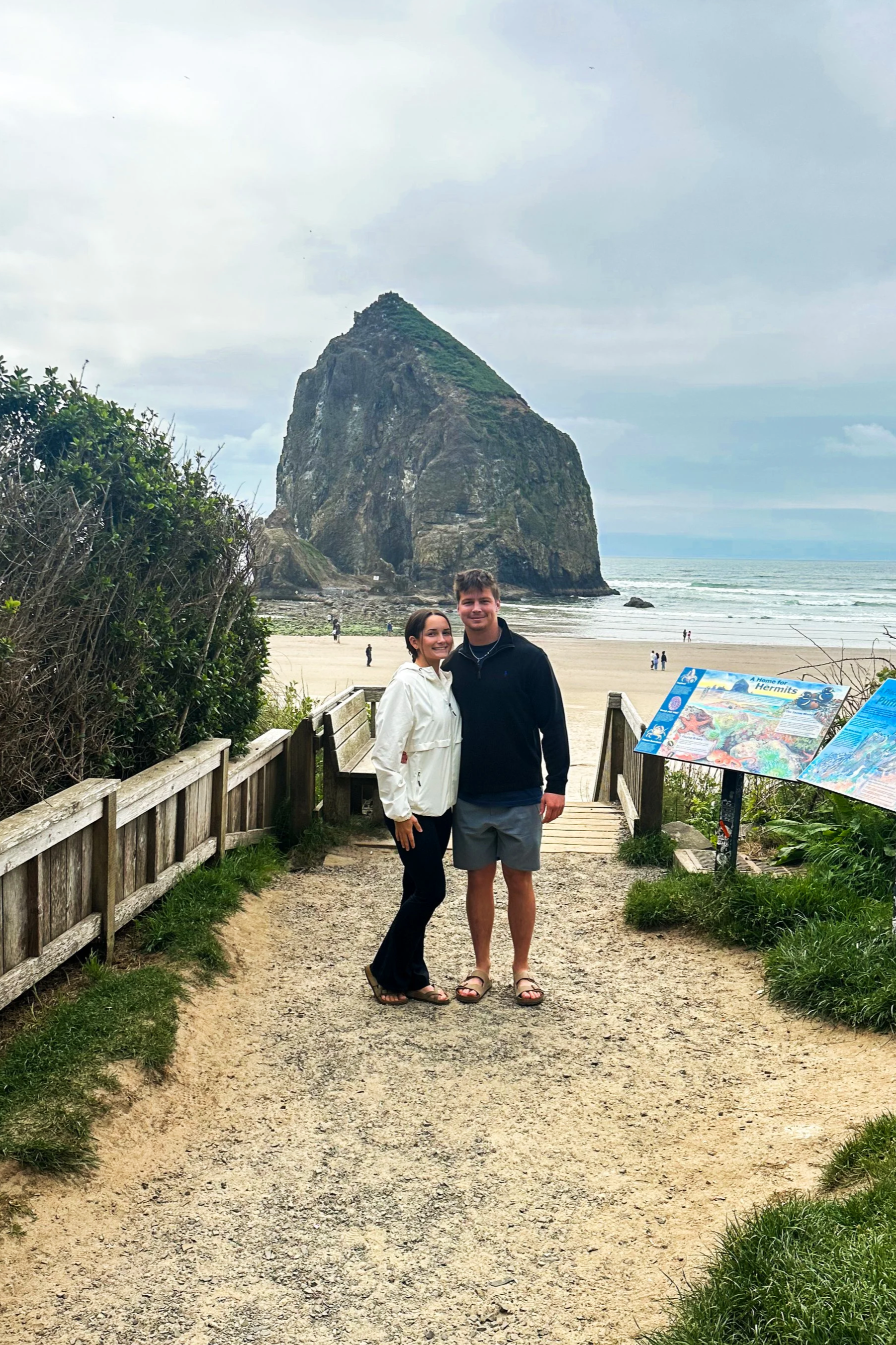
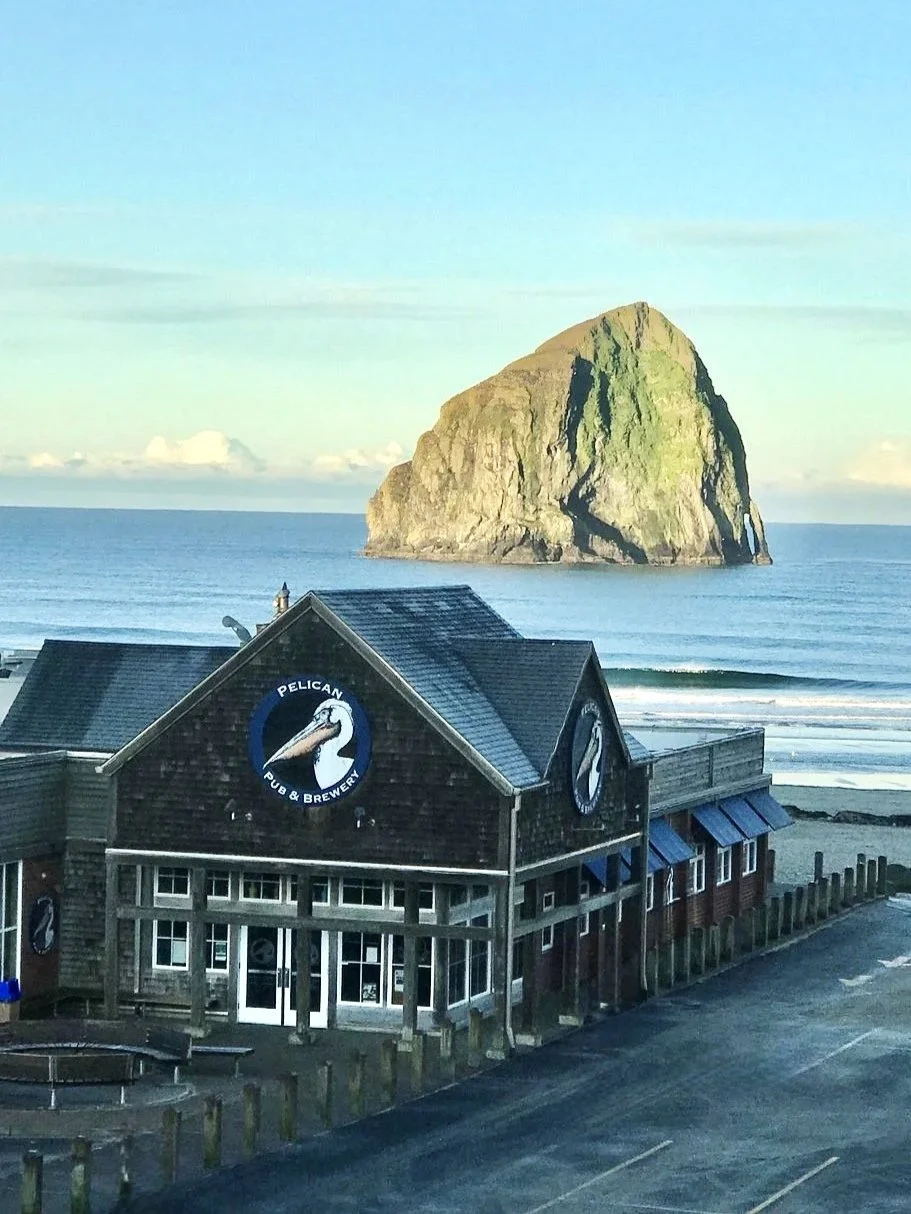
Cannon Beach was our first stop along the coast, and it felt completely different from anywhere we’d been so far. The towering trees were gone, replaced by a wide stretch of sand, a cool ocean breeze, and the kind of gray sky that makes the already lovely coast even lovlier. Haystack Rock dominated the shoreline. No matter where we walked, our eyes kept drifting back to it. After a relaxing walk we made our way to Pelican Brewing – Cannon Beach, a respite we didn’t realize we needed. The cafe’s clam chowder was warm, delicious, and the perfect comfort food after coming in from the windy beach. We both settled into that quiet, warm-up-after-the-cold kind of pause where everything slows down for a minute.
Sea Lion Caves
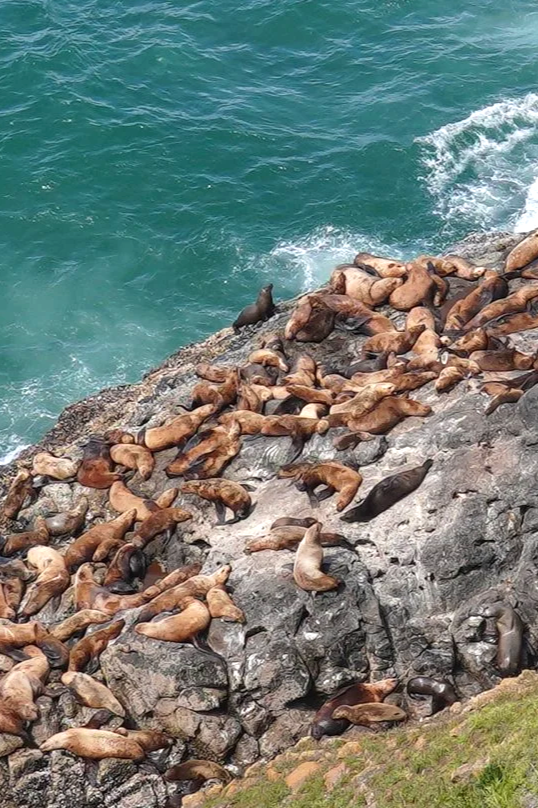
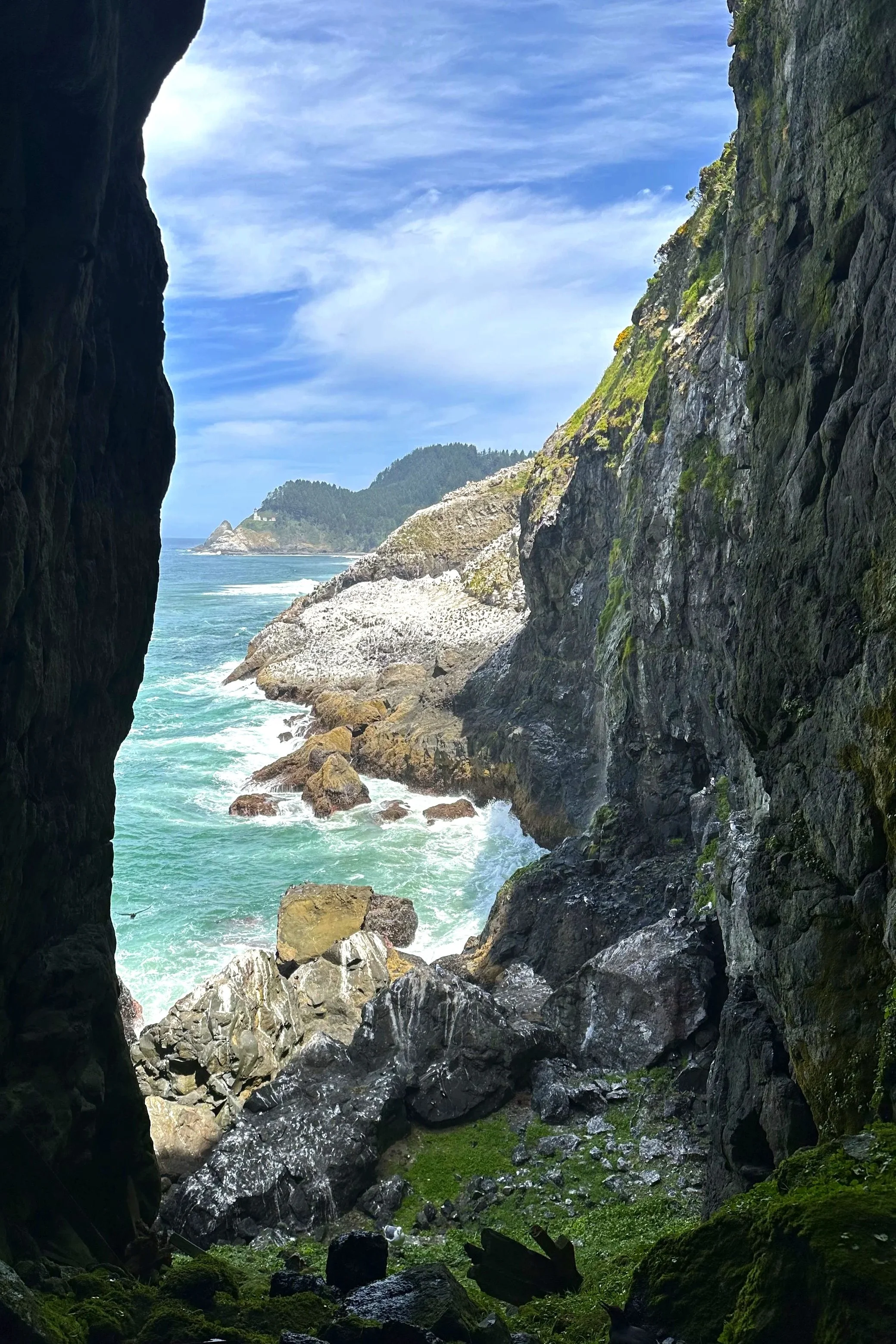
At Sea Lion Caves, we heard them before we saw anything. The sound carried up through the cavern—layered barking and echoing calls that made it clear the space below was completely alive. When we looked down, it was almost overwhelming at first. Sea lions packed across the rocks in every direction, constantly moving, calling, shifting, and reacting to each other.
I mostly stood still just trying to take it all in. Jake immediately started narrating everything he saw—pointing out the biggest ones, the babies, anything that moved differently, like he was running commentary for a show only we could see. We stayed longer than we planned, just watching the constant motion below us without really feeling the need to rush off anywhere else.
Natural Bridges
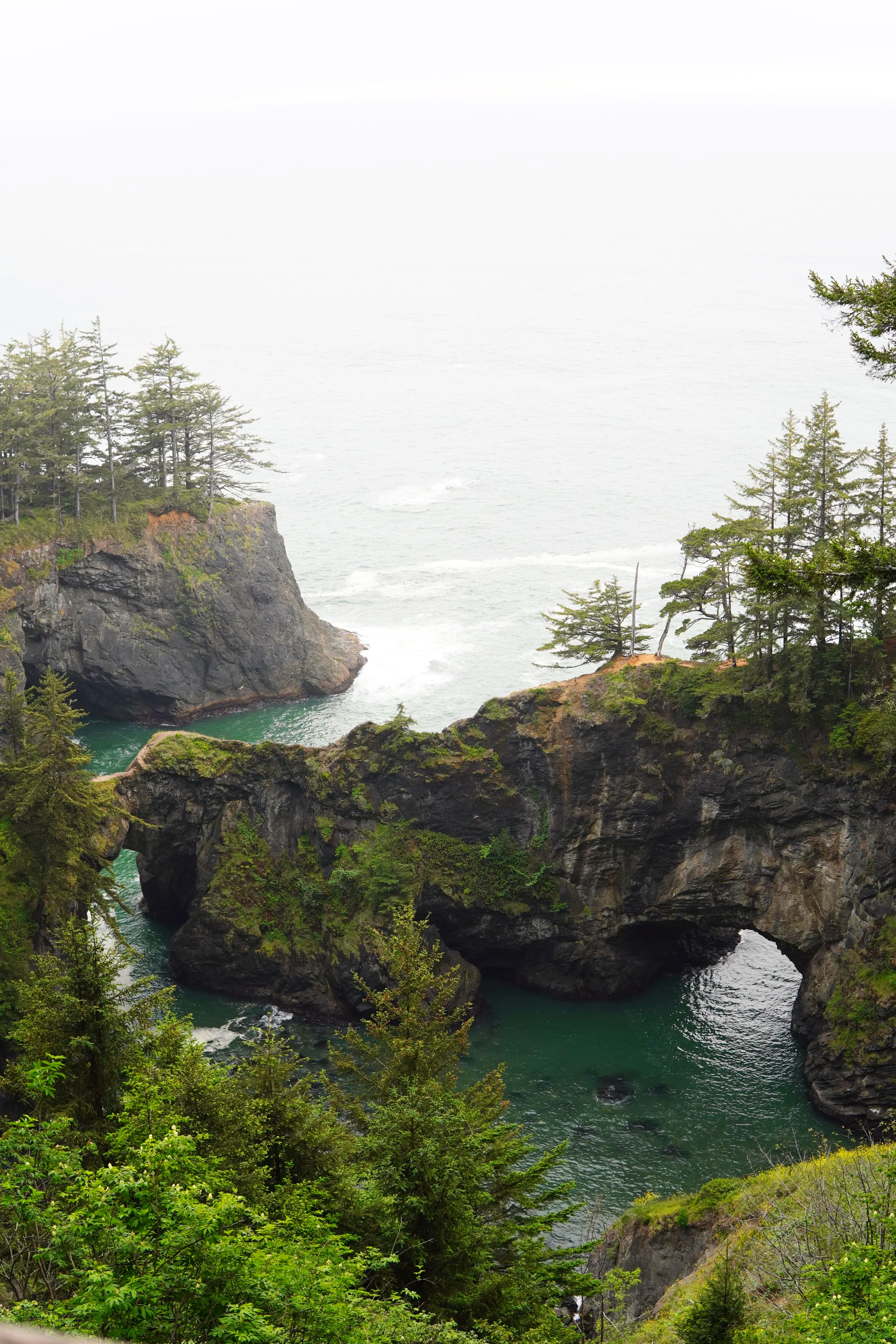
Natural Bridges Viewpoint was a quick stop, but one of the more visually striking ones along the coast. A short trail leads out to a rugged section of shoreline where the ocean has carved natural rock arches. Waves move through and underneath constantly, changing the view every few seconds so nothing quite looks the same twice.
I stayed closer to the railing, just watching the water and how it kept reshaping the scene in real time. Jake wandered a bit farther ahead to get different angles and kept calling back for me to come see how it looked from where he was standing. It wasn’t a long stop, but it was one of those places where you don’t need much time—the view does most of the work for you.
Pro Tip: Check local tide charts before you head out, as spots like the Natural Bridges and Cannon Beach tide pools completely change—and can even become cut off—depending on the water level.
Crater Lake & a Google Maps mishap
We were so hyped for Crater Lake—like, it was the headliner for our itinerary. After a quick breakfast, we plugged it into Google Maps and hit the road, completely oblivious to the plot twist waiting for us.
Here’s a fun fact Google Maps conveniently forgot to mention: the North Entrance is completely closed for winter and doesn't even open until around June. Another fun fact? There are absolutely zero gas stations on the stretch leading up to it. So when we rolled up only to be greeted by a giant "CLOSED" sign, we had to pull a massive U-turn and reroute all the way around to the South Entrance.
Naturally, that is exactly when the low gas light started aggressively blinking at us. We were a solid 30 miles from civilization, and total panic set in. We spent what felt like an eternity driving down these incredibly remote, empty backroads with nothing but pine trees and pure anxiety.
Eventually, we stumbled upon this highly questionable, totally deserted-looking gas station with exactly one working pump. We rolled in on absolute fumes, right in the nick of time. I still can't believe our GPS didn't give us a heads-up about the seasonal closure. Lesson learned: always double-check the actual park website, because digital maps will absolutely let you down!
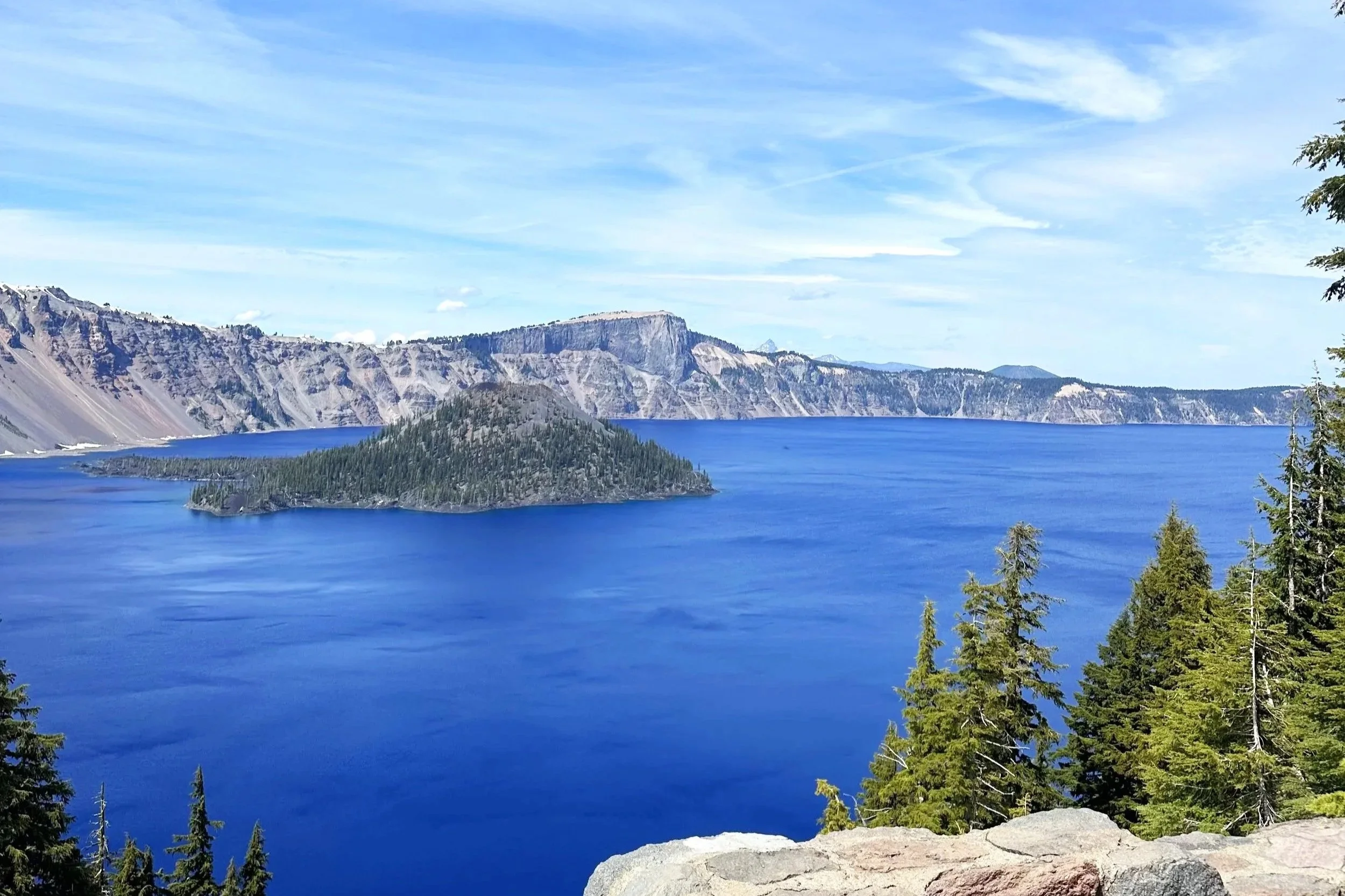
When we finally made it to the lake, all that gas-crisis drama completely melted away. We walked around the Rim Trail and hit up multiple vista points, and honestly, each one was a total flex. The water is this intense, vibrant blue that doesn’t even look real—like, it straight-up looks like a Photoshop filter in real life. Plus, since it was late spring, there was still a massive amount of snow covering the ground, creating this totally surreal winter-meets-summer vibe.
After the long car ride, I was feeling a little mischievous. I scooped up a massive handful of snow and dumped it straight down Jake’s pants. It triggered an immediate, full-body adrenaline shock, and he went flying. I was laughing hysterically while he jokingly promised he’d find a way to get his revenge.
The energy shifted quickly upon reaching a steep, rocky outcrop near the Watchman Overlook area. Jake, probably still riding that adrenaline high from the snow-in-the-pants incident, decided it was a great idea to scoot down a super narrow, sharp-angled rock ridge that jutted out right above the lake. It looked extremely unsafe to me, and I literally begged him not to do it. But being the stubborn daredevil that he is, he just waved me off and said it was fine. I swear I watched in slow motion as rocks and sand started sliding out from under his feet and bottom, and I completely feared the worst. Even as I'm writing this right now, my heart is genuinely racing. To make it even more terrifying, we were in the middle of nowhere with absolutely zero cell service.
Fortunately, he made it down and back up safely. If I’m being 100% honest, he got some really great photos out of it for the grid. But yeah... I’m still not convinced it was worth the near-death experience!
Pro Tip: Always check the official park website for seasonal road closures before you go, as the North Entrance stays blocked by snow until June and leaves you stranded with a long detour and zero gas stations.
Mount Rainier: Snow, Slush, & Sunburn
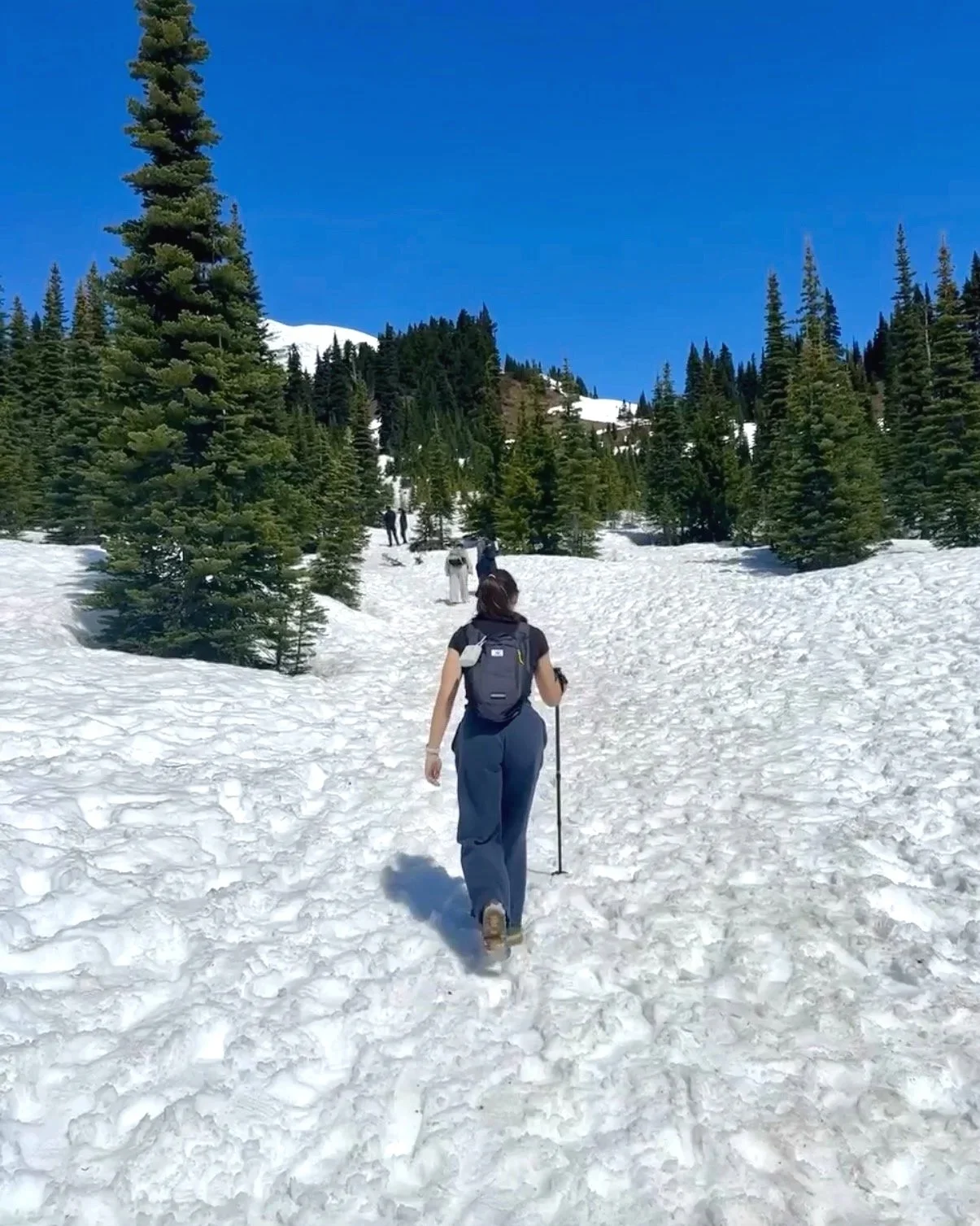
Mount Rainier was easily one of the best parts of the trip, even if the mountain completely humbled us. It was May, but there was still deep snow everywhere—and not the packed, easy-to-walk-on kind. It was icy on top, pure slush underneath, and constantly caving in. Walking basically turned into sinking, sliding, and occasionally just giving up and letting gravity take the wheel.
To make matters worse, we were entirely unprepared. We showed up in basic sneakers and T-shirts, sharing one single walking stick between us like it was a piece of essential infrastructure.
The hike up was a battle, but the way down was pure chaos. Because every normal step meant sinking past our ankles into the slush, we realized it was actually way easier to just run. So there we were, sprinting down a mountain, slipping, sliding, and laughing hysterically. Walking upright was pretty much optional at that point.
Somehow, we also managed to get completely sunburned thanks to a UV index of 8 bouncing directly off the snow, which felt deeply unfair. Still, it was one of the most fun, unfiltered days of the entire trip.
Pro Tip: Aim to arrive at the park entrance before 8:00 AM, especially during peak summer wildflower season, to secure a parking spot at popular trailheads like Paradise or Sunrise before the lines back up for miles.
Seattle: A Surprise Pause
After Mount Rainier, we met Jake’s cousin Annie and her husband Steven in Seattle. The original plan was just dinner, but they offered for us to stay the night, which completely changed the rhythm of the trip. We had already booked a hotel back in Portland, but after a week of constant movement, we said yes. And we’re so glad we stayed.
That evening, we had dinner at Rough & Tumble, a sports bar focused on women’s sports. It had a lively, modern energy—packed screens, loud tables, and a community feel that made it stand out from typical sports bars.
After dinner, we went back to Annie and Steven’s house, hung out, and finally slowed down enough to actually talk and catch up. It was also the first time they really got to meet Amy, which made the evening feel more personal than just another stop on a trip.
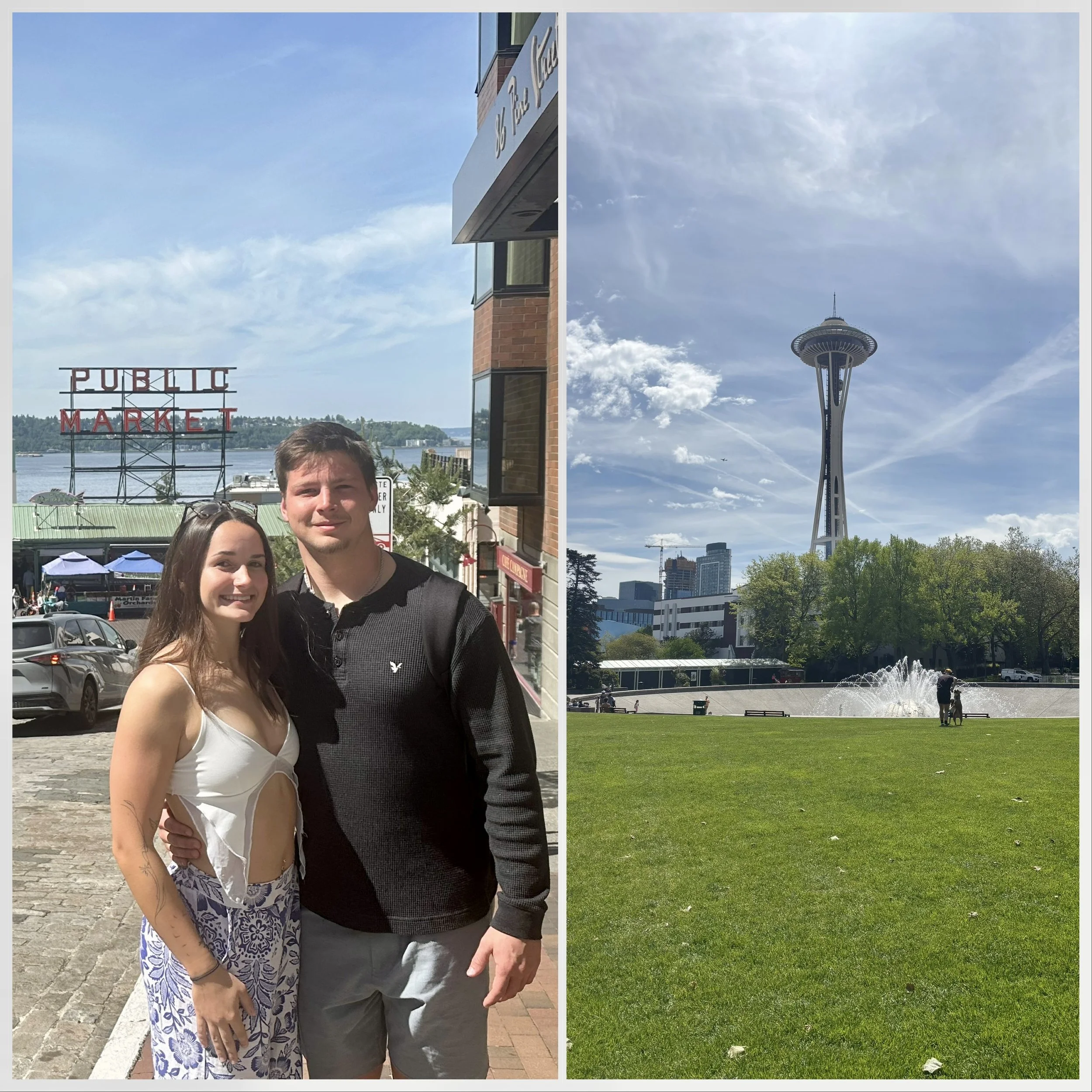
The next day, Annie and Steven had to work, so we explored Seattle on our own at a slower, “figure it out as we go” pace:
Pike Place Market: A bustling waterfront market where fish fly through the air, flower stalls line the walkways, and local artisans sell their wares. It was chaotic but fun.
The Gum Wall: A narrow alley completely covered in layers of chewed gum—gross, colorful, and weirdly fascinating.
Space Needle: The classic Seattle skyline view from above, giving you a full sweep of water, city, and mountains in every direction.
Museum of Pop Culture: An interactive museum dedicated to music, film, and pop culture that feels part exhibit, part experience.
Original Starbucks: A quick stop at the original location for complimentary coffee samples.
Lime scooters: Rented just for fun and ended up being one of the best parts of the day, zipping through downtown Seattle with no real agenda other than not crashing.
By late afternoon, we headed back to Portland. Seattle ended up feeling like the first real pause of the entire trip—less about checking boxes, more about actually enjoying where we were.
Pro Tip: Save your sanity and leave your car at the hotel. Downtown Seattle is incredibly scooter-friendly, so grab a Lime scooter to cruise the waterfront and downtown bike lanes instead of fighting traffic and paying $30 at every parking garage.
Portland: The Soft Landing
Our final day brought everything full circle.
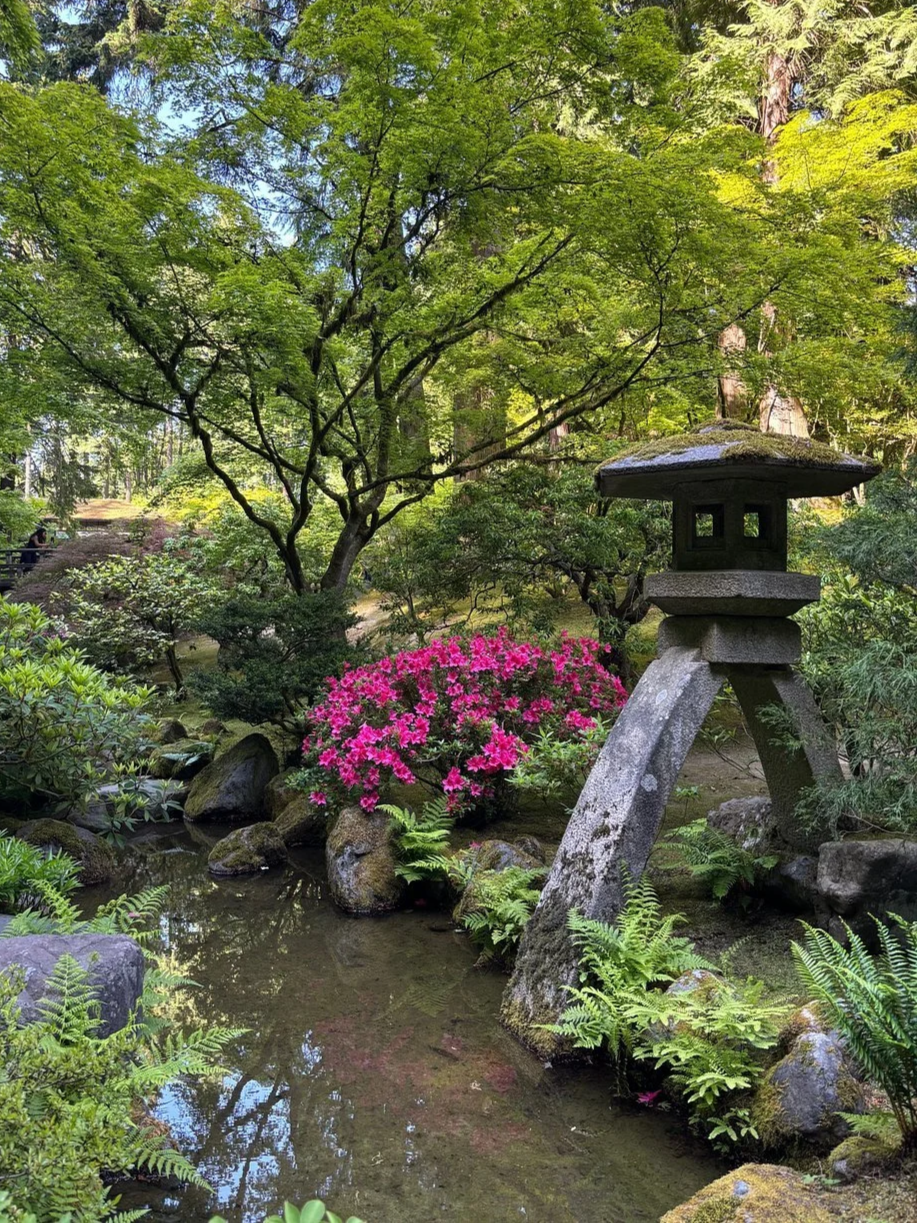
We started at the Portland Japanese Garden, which felt like a reset after a week of hiking, driving, and constantly chasing the next stop. Our pace slowed the moment we entered the garden gate—stone paths, wooden bridges, koi ponds, and layers of carefully tended greenery that make the outside world fade into the background. We spent about an hour wandering slowly, sitting when we felt like it, and finally giving ourselves time to take in everything we'd seen over the past week.
From there, we spent some time driving through downtown Portland before our flight. While there were a few interesting pockets, it wasn't a city that grabbed us. It felt a bit run-down in places, and after circling for a while, we decided we'd rather spend our remaining time elsewhere. So we headed to Clackamas and caught a movie instead.
With a few hours to spare before our flight, it ended up being exactly what we needed—air conditioning, popcorn, and two uninterrupted hours of sitting still felt surprisingly luxurious after a week spent almost entirely on the move.
Eventually, we returned the rental car and closed out a road trip that included towering waterfalls, sea lions, snow-covered mountains, coastal cliffs, wrong turns, and multiple voluntary plunges into freezing water.
Looking back, we packed an incredible amount into nine days. Oregon gave us exactly what we'd hoped for: cooler weather, unforgettable scenery, and the kind of trip we'll still be talking about years from now.
Food & Dining
Food on this trip was simple, practical, and very aligned with our usual eating habits—easy, flexible, and very much on a college-level budget. We didn’t plan our days around reservations or “must-try” restaurants. It was more like: hike first, eat when necessary, repeat.
That said, the few times we did sit down for a real meal ended up being some of our favorite stops.
Pelican Brewing (Cannon Beach, Oregon)
Coastal views, big windows fogged from the cold, and clam chowder that felt like exactly what you’re supposed to eat after getting hit with Oregon wind all day. Simple menu, relaxed vibe, and friendly locals.The Get-A-Way (Blue River, Oregon)
A casual sports bar with a slightly retro, 80s/90s feel and zero pretension. We loved this place—cozy atmosphere, comfort food done really well, and killer milkshakes.Rough & Tumble (Seattle, Washington)
A sports bar focused on women’s sports, with a lively, modern energy and a great local crowd. Tons of screens, high energy, and casual, shareable food that matched the vibe.
The rest of the trip was powered by roadside stops, gas station snacks, and grocery store runs that covered most breakfasts and lunches. It wasn’t glamorous, but it worked—and became part of the rhythm of the trip.
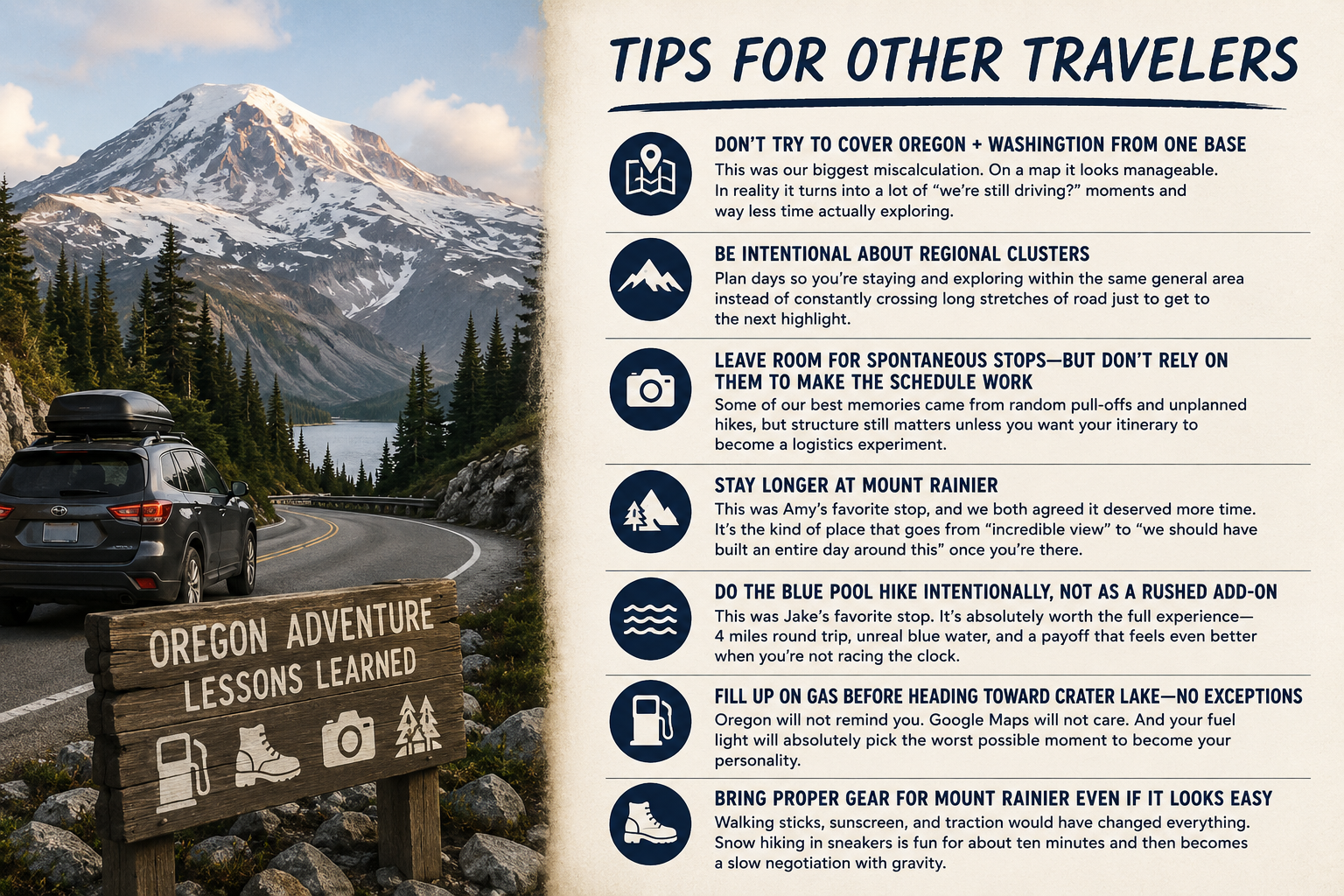
Final Thoughts
This trip was a mix of waterfalls, winding roads, questionable navigation decisions, and way too many moments of saying “wait, we’re actually doing this?”
We saw Oregon’s mossy forests and hidden waterfalls, stood at the edge of Crater Lake wondering if it was even real, hiked through slushy snow at Mount Rainier in outfits that were absolutely not designed for snow, watched sea lions pile onto rocks like it was a group hangout, and ended it all wandering through Seattle like we had somehow earned a slower pace.
It wasn’t luxury travel—and that wasn’t the point. It was about doing as much as possible on a budget, figuring things out as we went, and seeing a completely new part of the country together for the first time. Most days looked less like a perfectly planned itinerary and more like: drive, hike, eat something random, repeat, and occasionally jump into freezing water for reasons we still can’t fully explain.
We came home tired, a little sunburned, slightly disorganized, and with way too many photos to ever properly sort. We also came home with a list of places we already want to go back to—and a very real appreciation for trips that don’t go exactly as planned.
For our first big trip together, it’s hard to imagine a better version of it.
And if you’re sitting there thinking about taking a trip like this—book it. Don’t wait for the perfect timing, perfect budget, or perfect plan. You figure most of it out along the way anyway.