Two Days in Charming Münster, Germany
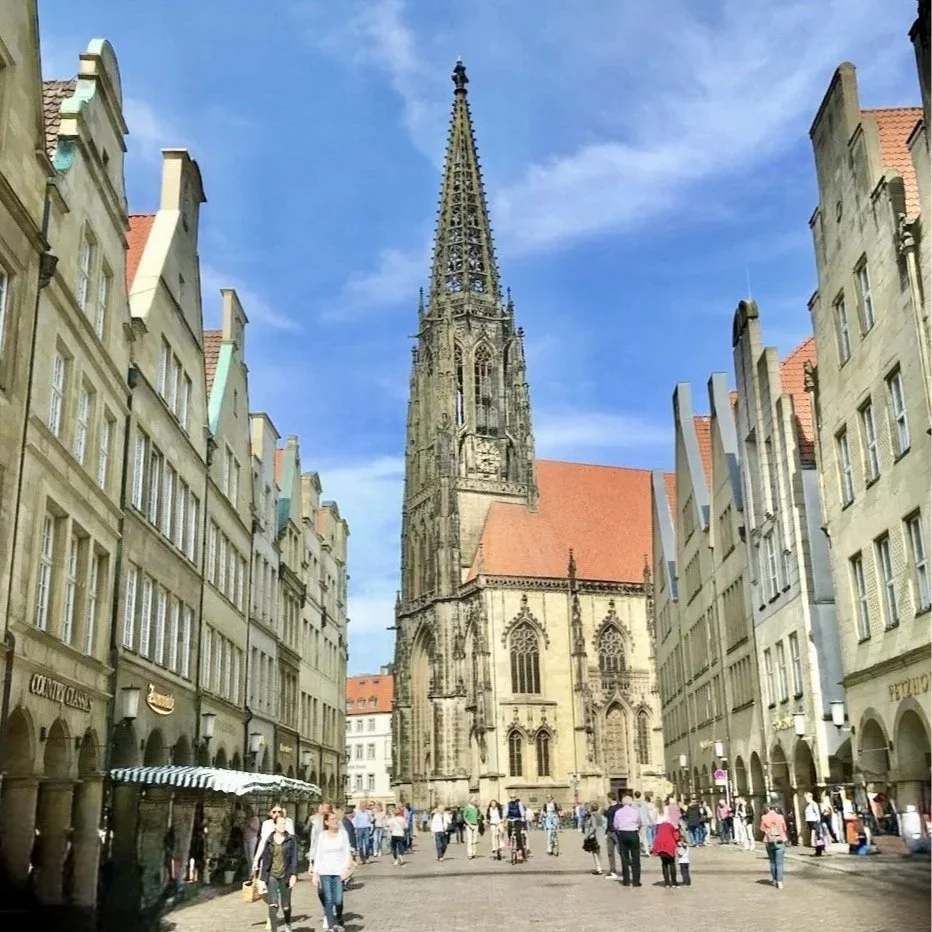
Before visiting Münster, I knew three things about the city: My aunt absolutely loved living there. Everyone biked everywhere. And in 2004, Münster was awarded the title of “Most Livable City in the World.”
Beyond that? I really had no idea what to expect.
I had traveled to Germany for my cousin’s wedding in the lakeside town of Zarrentin am Schaalsee, with plans to spend time afterward in both Hamburg and Münster. Somewhere between being Germany’s self-proclaimed cycling capital, a lively university city filled with students, and a place internationally recognized for its quality of life, Münster had developed a reputation for being exceptionally pleasant.
And somewhere between sunset bike rides around the lake, bustling market squares, rooftop cake, countryside castles, and slow evenings gathered around a garden table with family, Münster quietly stole my heart.
An Evening Bike Ride Through Münster
Shortly after arriving at their home in southern Münster, my aunt and uncle suggested we take a bike ride into the city center. It didn’t take long to realize that biking here isn’t just recreational — it’s a way of life. Locals of all ages zipped effortlessly along dedicated bike paths while baskets overflowed with groceries, flowers, backpacks, and occasionally even dogs. For visitors, Münster is incredibly easy to explore by bike thanks to its extensive cycling infrastructure and relatively flat terrain.
Everywhere we went, people greeted one another with a cheerful “Moin!” — a casual northern German greeting that essentially means “hello” and can be used at almost any time of day. Originally more common in northern Germany, the greeting has become deeply woven into daily life in Münster, and before long I found myself smiling every time I heard it shouted between cyclists or exchanged between strangers passing on the sidewalk.
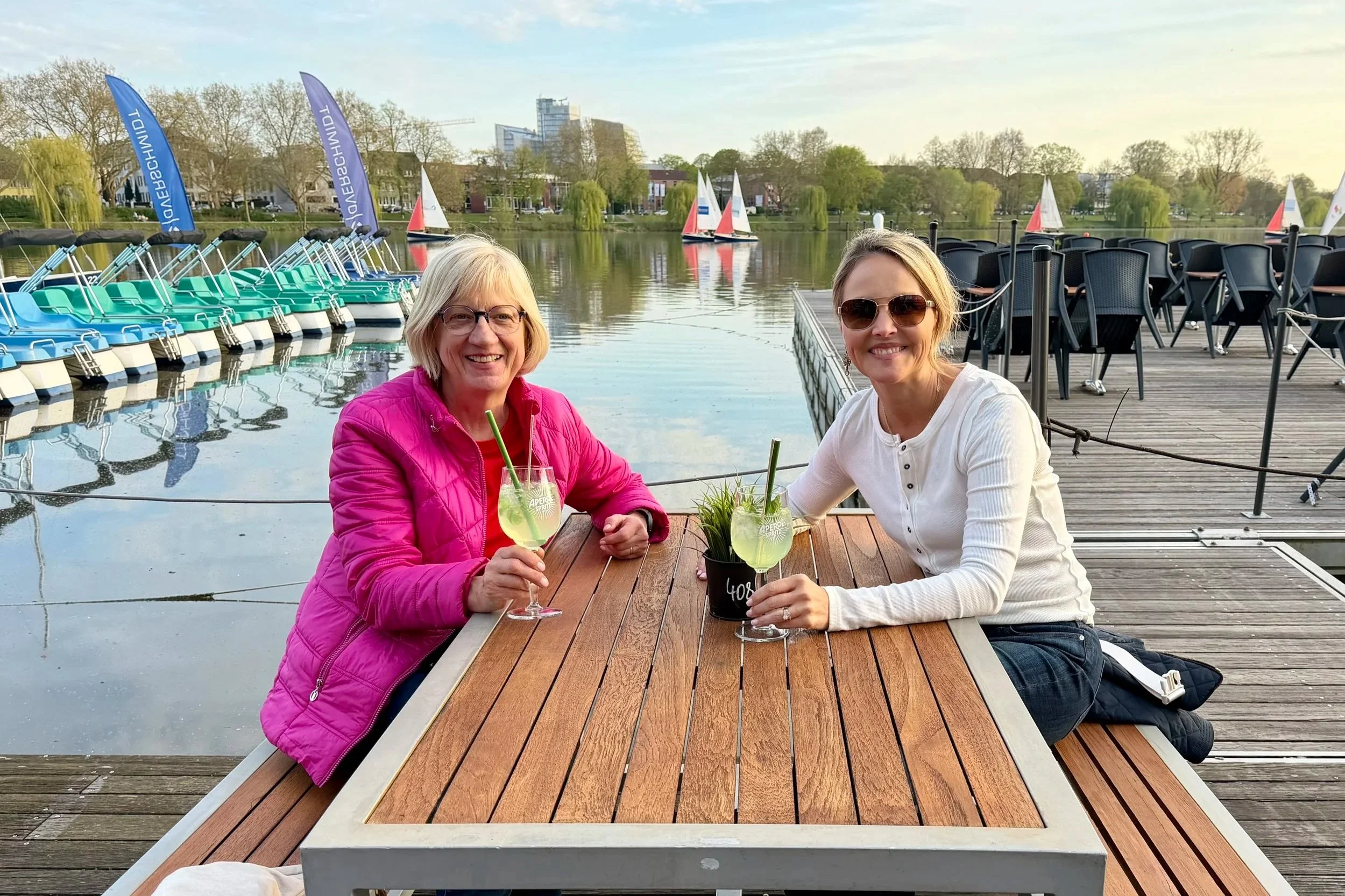
Our first stop was the beautiful Aasee, a peaceful lake just outside Münster’s historic center where locals gather to picnic, stroll, sail, paddle boat, or simply enjoy the scenery. The weather was perfect for mid-April — crisp enough for jackets but warm enough to comfortably linger outdoors — and we decided it was far too beautiful an evening to rush anywhere.
Lakeside Cocktails
So we parked the bikes at A2 am See, a popular lakeside cafe along the Aasee, ordered Hugo Spritzes, and settled in to watch the sunset shimmer across the water. The entire scene felt impossibly serene. Couples walked hand in hand along the paths while cyclists glided past the shoreline and the fading sunlight reflected softly across the lake. It was one of those simple travel moments that unexpectedly becomes one of your favorite memories.
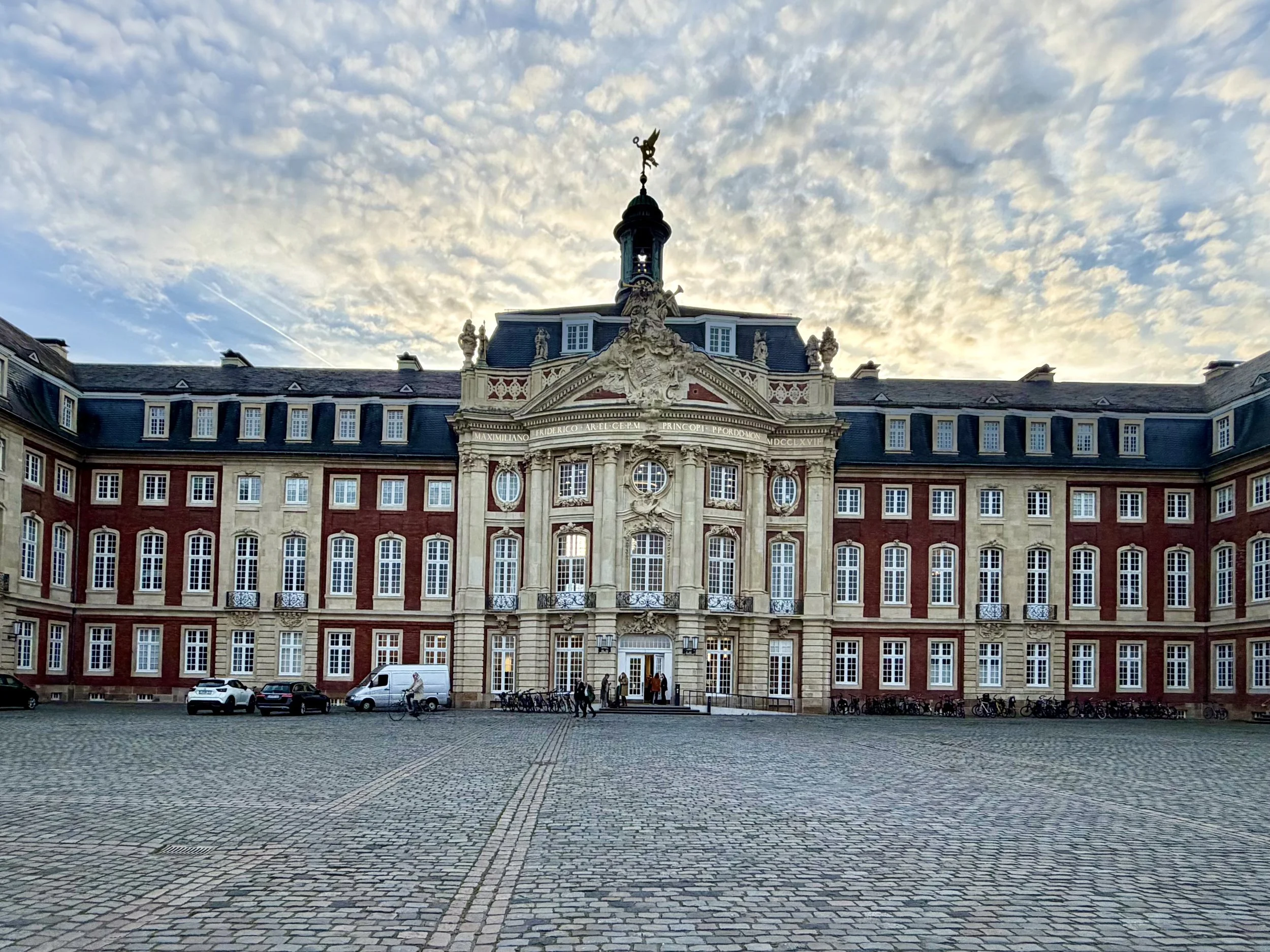
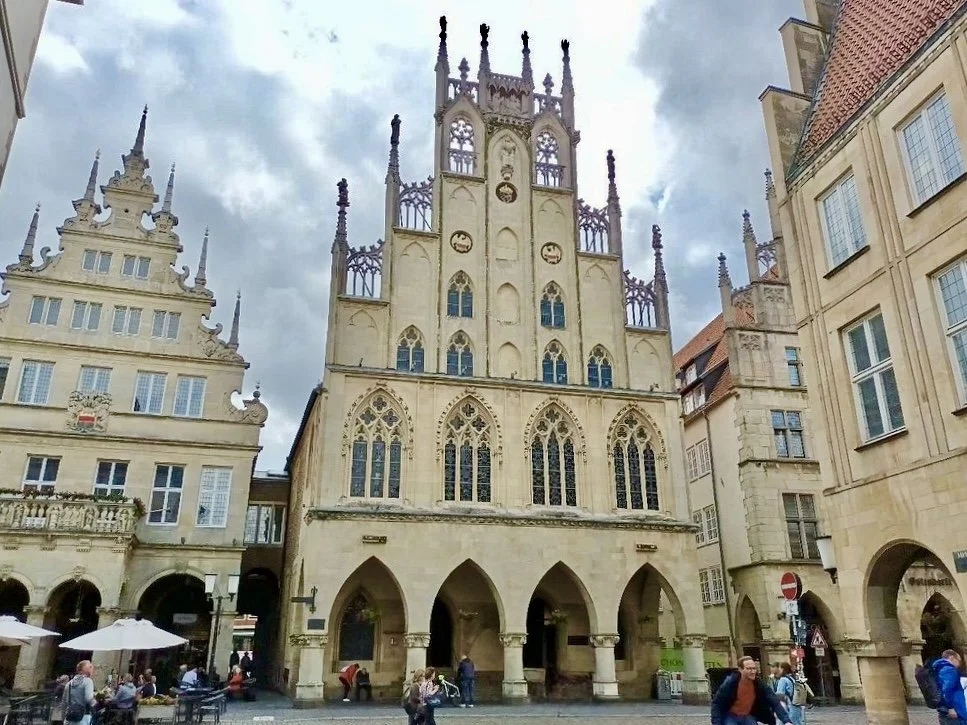
After our cocktail, we climbed back onto our bikes and continued toward Münster’s historic center, weaving past elegant landmarks like Picasso Museum Münster, the grand baroque Schloss Münster, and the city’s historic Rathaus before arriving at the cobbled arcades of Prinzipalmarkt.
Ladder to Heaven
By now dusk had settled over the city, and my cousin insisted there was still one more thing she wanted me to see — something “magical.” Naturally, I was intrigued.
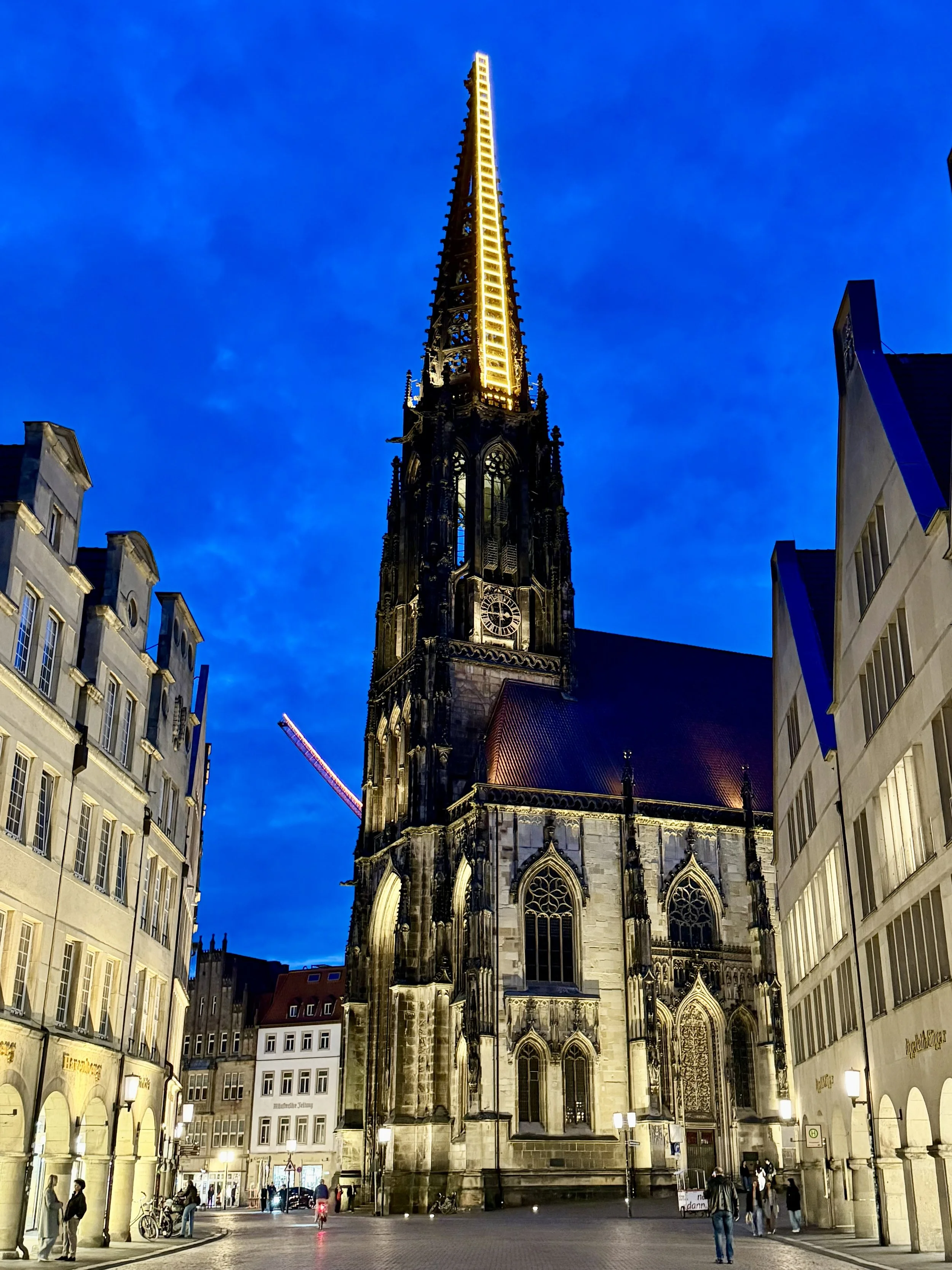
We grabbed a Stuhlmacher Lager at Gasthaus Stuhlmacher and found seats outside beneath the glow of the surrounding historic buildings. Then suddenly, high above the square, the steeple of St. Lamberti Church illuminated against the night sky.
Stretching upward along the church tower was a glowing ladder installation called the Himmelsleiter, or “Ladder to Heaven.” The artwork, created by Austrian artist Billi Thanner, symbolizes hope, peace, and the connection between heaven and earth. My aunt explained that the installation had recently returned to Münster after temporarily being displayed in Paris during the 2024 Olympic cultural celebrations, making its return to the city even more meaningful.
But beyond its symbolism, there was simply something unexpectedly enchanting about seeing the illuminated ladder glowing above the square at night. Sitting there beneath centuries-old architecture with a cold beer in hand, surrounded by conversation and laughter, it was the perfect first glimpse of Münster’s easygoing charm.
Later, we wandered closer to St. Lamberti just in time to hear the tower watchman’s horn echo through the square — continuing a centuries-old Münster tradition that still plays out nightly above the rooftops, signaling that all is well with the city.
As the square began to quiet, we biked home through the quiet streets of Münster, grateful for the intro to the city and already excited for the wedding festivities and the week ahead.
Returning to Münster After the Wedding
A week later, after the wedding festivities and a quick stop in Hamburg, we returned to Münster — this time as a lively multigenerational group of nine ranging in age from infant to grandparents.
After everyone settled into their rooms, we gathered outside in my aunt and uncle’s lush backyard, where flowers bloomed, a small water feature murmured, and the mild spring weather made it impossible to stay indoors. We sat around the outdoor table chatting for hours while the kids happily entertained themselves in the sandbox nearby.

Oddly enough, one of the biggest sources of entertainment for the evening turned out to be my uncle’s tiny automated lawnmower.
Affectionately named “Willie” after the groundskeeper from The Simpsons, the little square mower slowly zigzagged across the yard sporting oversized googly eyes my uncle had attached to the front, making it look as though it was enthusiastically devouring the grass. Considering the yard wasn’t particularly large to begin with, Willie’s dedication to the task only made it funnier.
As the evening stretched on, some people drifted off to bed while the rest of us migrated inside for a few rounds of cards… and possibly a few rounds of schnapps. By the time we finally called it a night, I had the distinct feeling the next two days of exploring Münster were going to be extra special.
Day One: Markets, Schnapps, and Castles in the Countryside
After a very German breakfast of hard-boiled eggs, fresh Brötchen, deli meats, cheeses, homemade jams, and enough varieties of Nutella to justify an entire tasting flight, we were properly fueled for the day ahead. Strong coffee flowed freely, conversations lingered around the table, and nobody seemed remotely interested in rushing anywhere — something I quickly learned was part of Münster’s charm.
One thing that struck me during our stay was how little emphasis there seemed to be on driving. In a city like Münster — often called Germany’s bicycle capital — many families share a single car or barely use one at all. My aunt and uncle typically bike everywhere, but with a group of nine, we opted for public transportation instead. And honestly? It was incredibly easy. The clean, efficient bus system dropped us near the city center just in time for Münster’s biweekly farmers market, or Wochenmarkt.
Wochenmarkt Münster
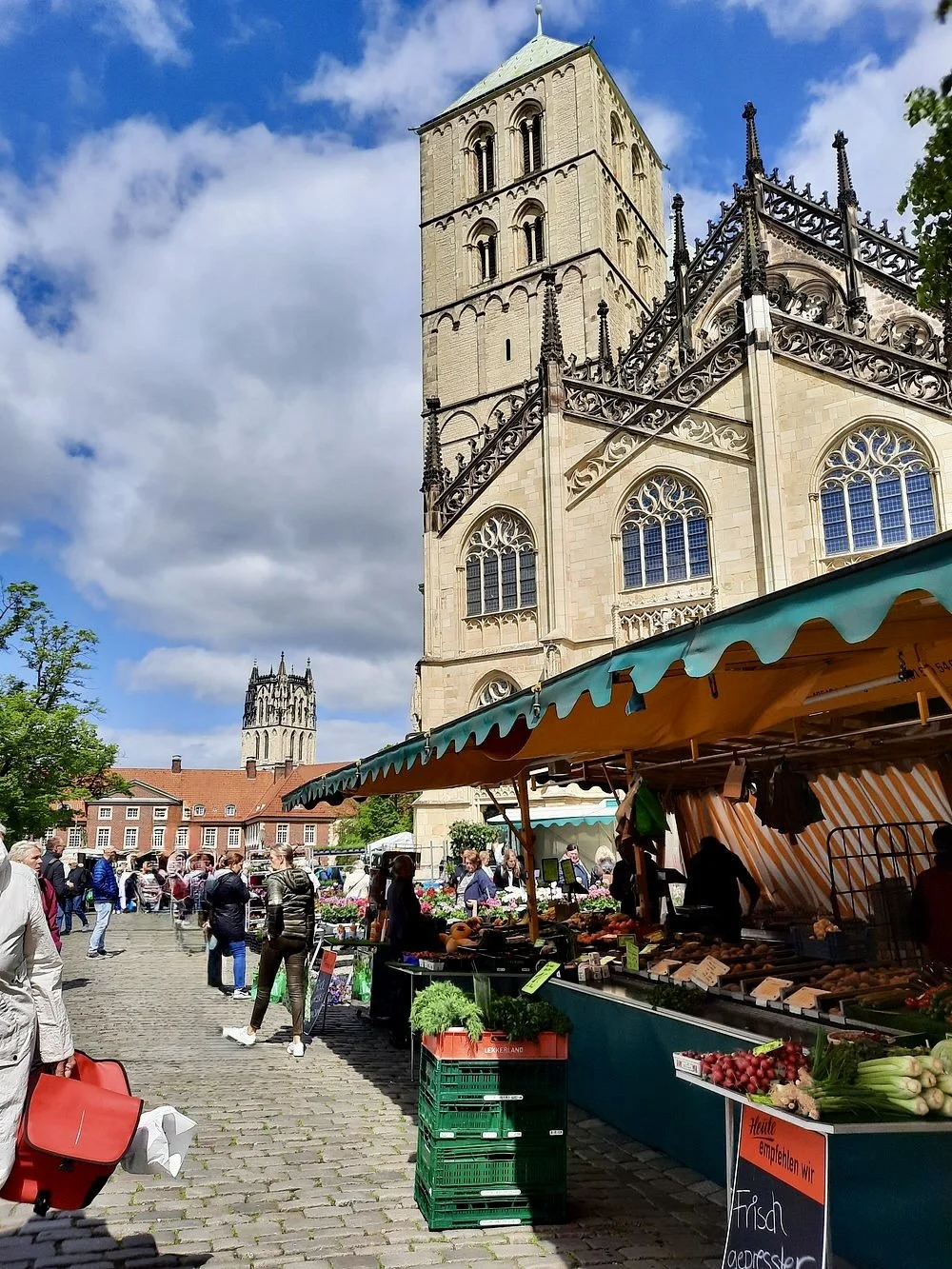
If your schedule allows, I would absolutely recommend planning your visit around one of Münster’s market days. The market takes place Wednesdays and Saturdays around the cathedral, and it ended up being one of the highlights of our entire time in the city.
Back home in the United States, a Wednesday farmers market might involve a handful of tents selling tomatoes and sourdough bread in a church parking lot. This was practically a festival.
Row upon row of vendors overflowed with impossibly vibrant organic fruits and vegetables that looked as though they’d been enhanced by cartoon-level special effects. The white asparagus alone — Germany’s beloved spargel season delicacy — was so enormous it barely looked real. In America, I’d only ever encountered sad little jarred versions tucked away on grocery store shelves.
Here, however, white asparagus was clearly a national event. Since the tough outer layer has to be peeled before cooking, vendors fed the stalks through mesmerizing little peeling machines that stripped them clean in seconds while I stood there watching in fascination.
Beyond the produce stalls, entire rows of gleaming trailers with glass display windows sold fresh meats, fish, cheeses, and baked goods, while another section was devoted entirely to prepared foods. Long lines formed for fried fish sandwiches and other local specialties, with crowds gathered at standing tables chatting over lunch and beer. Arriving hungry is highly recommended.
At one point I remember thinking: Don’t these people have jobs? Because this felt less like a routine midweek errand and more like the kind of community festival Americans plan for months in advance.
With so much to explore, we decided to split up for about an hour and wander independently before regrouping near the market square at Sasse Feinbrennerei, one of Münster’s best-known schnapps distilleries.
Sasse Feinbrennerei
Now, if there is one thing Germans seem to understand exceptionally well, it’s that a casual Wednesday afternoon can almost always be improved with schnapps. The distillery felt warm, polished, and distinctly old-world — lined wall-to-wall with beautifully labeled glass bottles, wooden shelves, tasting counters, and the kind of atmosphere that immediately convinces you purchasing “just one bottle” is wildly unrealistic. Naturally, we settled in for a tasting. One of my favorites was the Kakao mit Nuss — literally “cocoa with nuts.” Smooth, rich, and slightly dessert-like, it somehow managed to taste indulgent without crossing into the overly sweet territory that many creamy liqueurs tend to occupy.
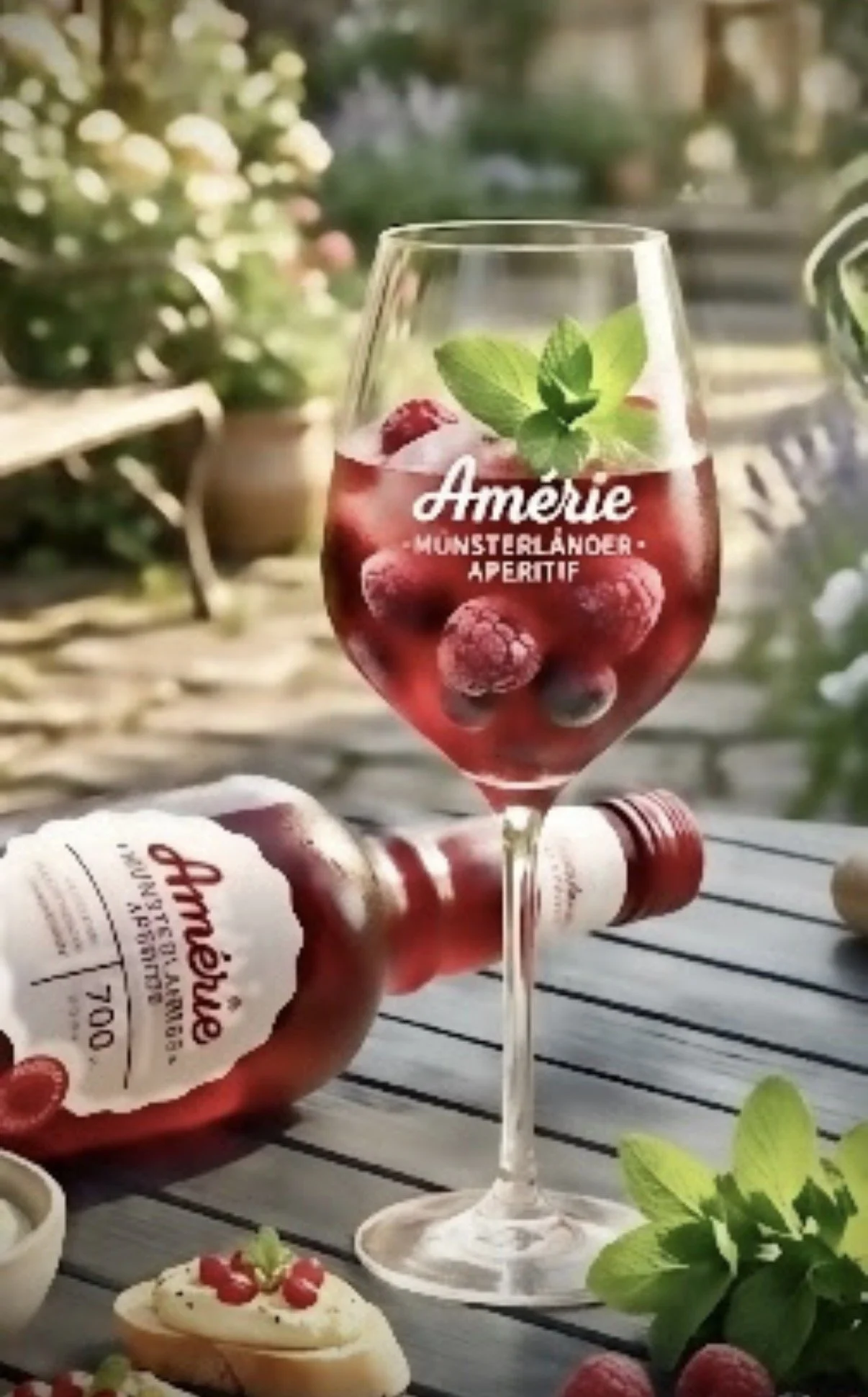
But the true standout of the tasting was the Amérie Münsterländer Aperitif. Light, fruity, floral, and slightly citrusy, it was designed to be mixed with sparkling wine to create an incredibly refreshing spritz-style aperitif. The kind of drink where you take one sip and immediately begin mentally calculating how many bottles you can reasonably fit into a suitcase.
I enjoyed it so much that I inquired about shipping a case back to the United States so I could give bottles away as gifts. Unfortunately, the shop could not ship internationally, so I reluctantly settled for a single bottle — which, months later, I’m still saving for a special occasion because opening it somehow feels too final.
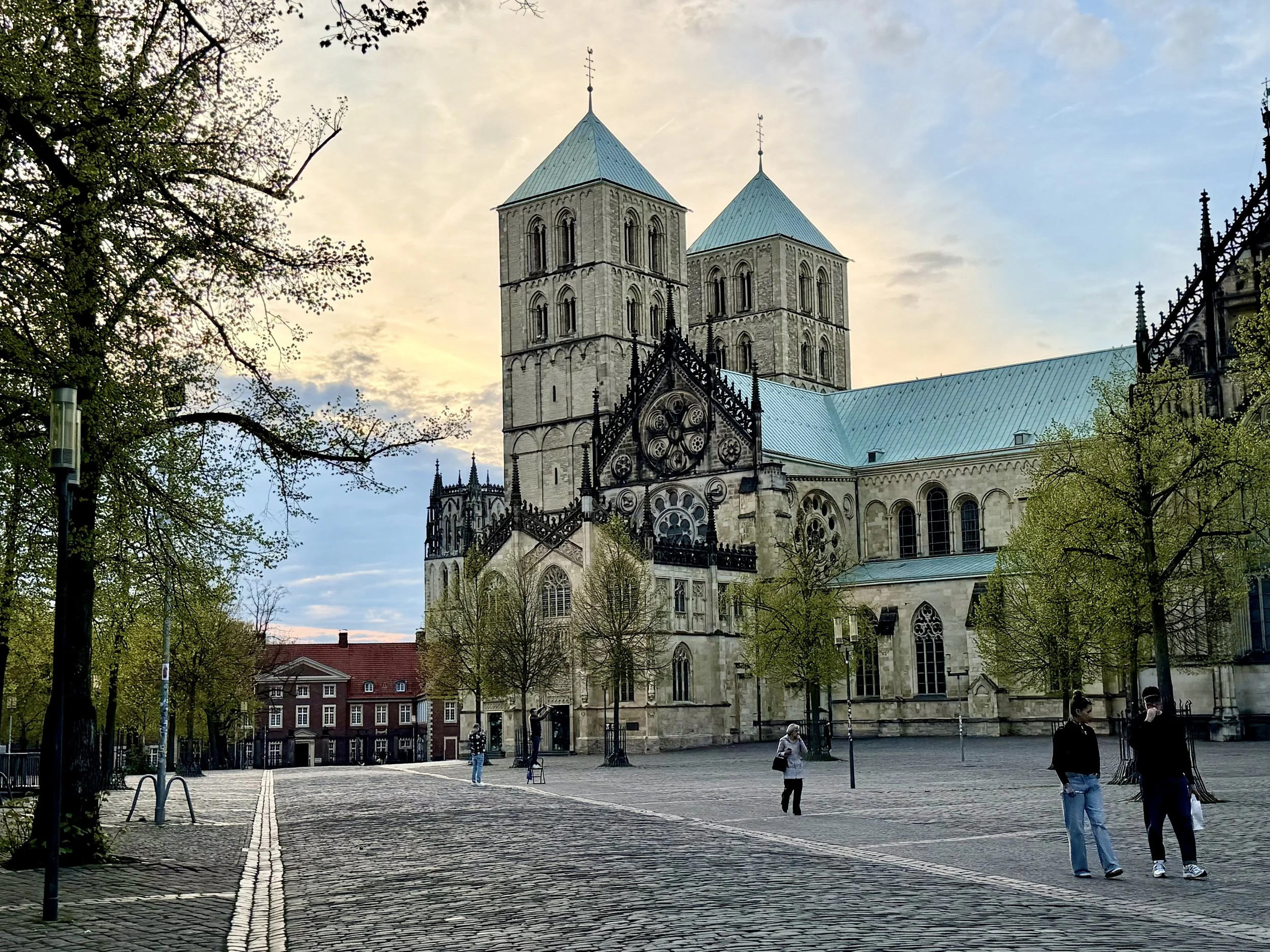
After our tasting concluded, we regrouped once again and made our way toward St. Paulus Cathedral. Stepping inside the cathedral immediately shifted the atmosphere from bustling and lively to hushed and reverent. Worshippers sat quietly in prayer as visitors wandered respectfully through the soaring interior, speaking only in whispers. We slowly admired the artwork, stained glass, and the cathedral’s famous astronomical clock — an intricate 16th-century masterpiece that not only tells time but also tracks the movements of the planets, moon phases, and religious calendar.
Eventually, I slipped into one of the pews for a few quiet moments of reflection before finding a small chapel where I lit a candle for my father — something I try to do in every church I visit while traveling. It’s become a small tradition of mine and a way to quietly thank him for instilling in me a love of travel and curiosity about the world.
With grumbling stomachs and tired feet, we made our way back to my aunt and uncle’s house for an early dinner and a brief pause in the day’s rhythm.
But the day wasn’t over yet. After dinner, my aunt gathered the ladies into the car to show us her favorite spots in the countryside surrounding Münster. What followed felt like driving through the pages of a storybook.
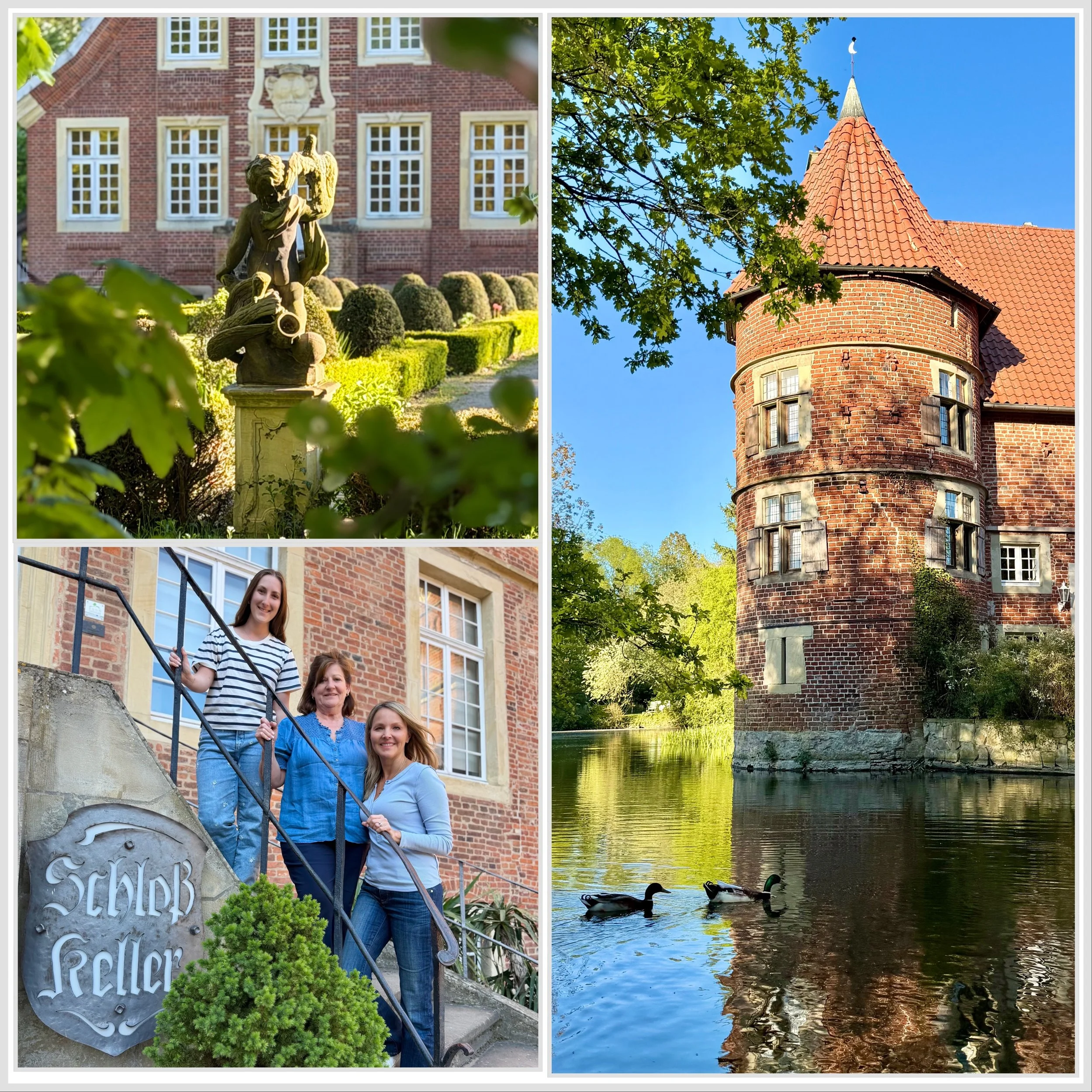
Countryside Estates
Our first stop was Burg Hülshoff, a picturesque moated castle best known as the birthplace of poet Annette von Droste-Hülshoff.
Next came Haus Rüschhaus, a smaller but equally charming baroque country estate where the poet later lived and worked. The gardens were peaceful and elegant in that distinctly European way that somehow feels both manicured and effortlessly natural at the same time.
Finally, we stopped at Haus Vögeding, a quietly beautiful moated estate set in the surrounding countryside. Once part of a centuries-old noble property with origins dating back to the Middle Ages, it felt like another hidden fairytale corner of the Münsterland landscape.
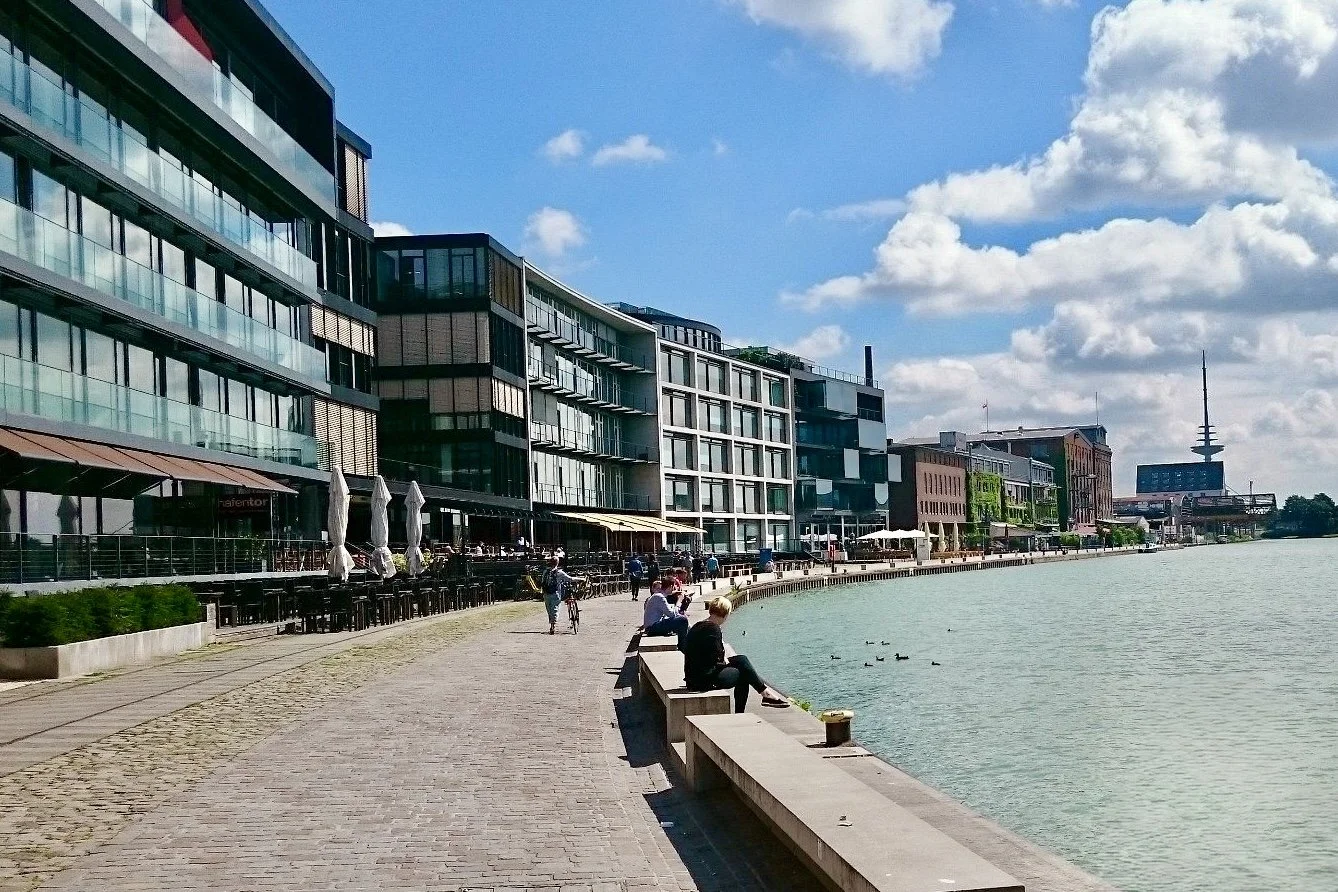
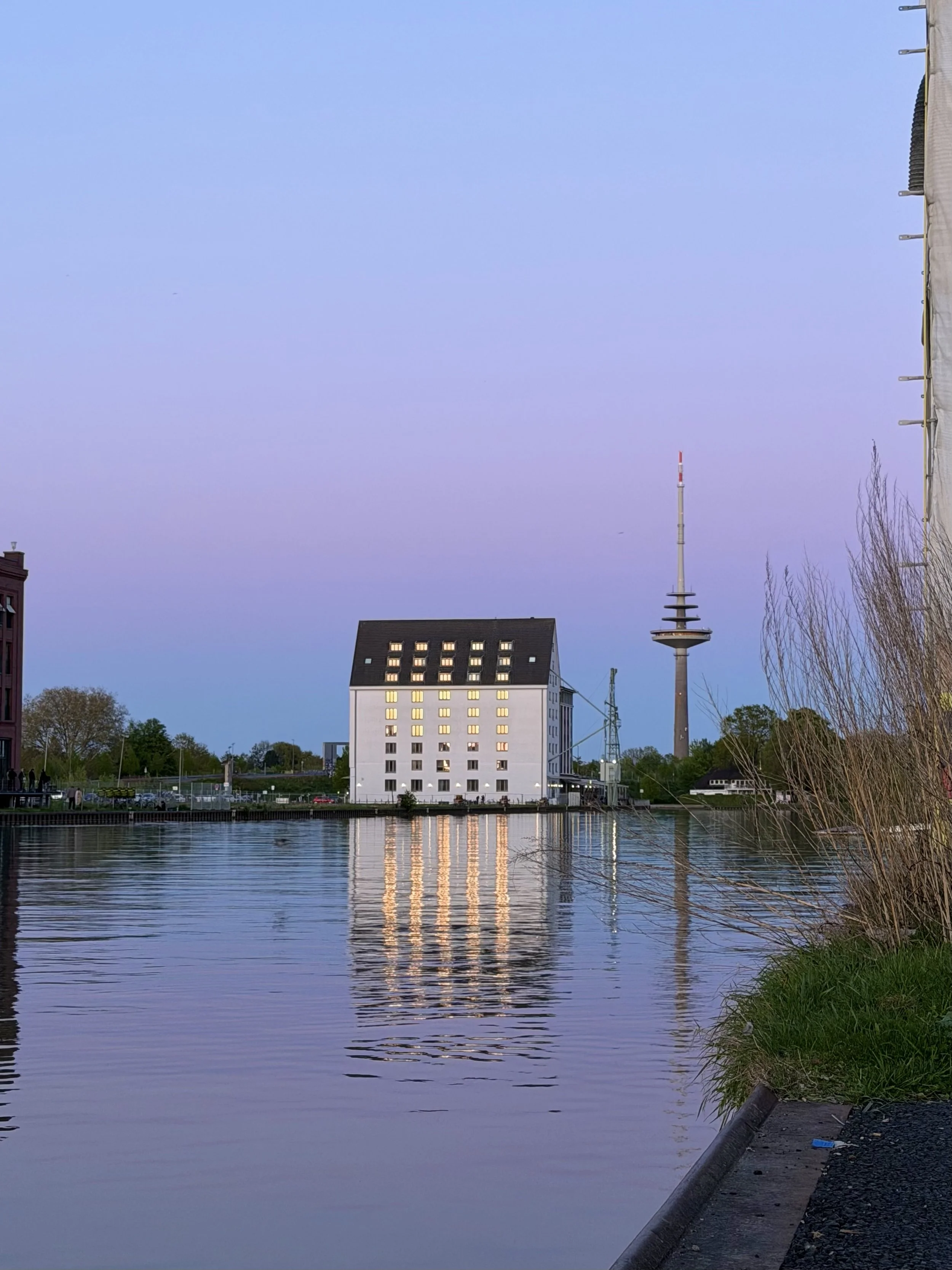
As the early evening faded into night, we made our way back to the city to meet up with the rest of our group in Münster’s harbor district, which has become one of the city’s trendier gathering spots, especially for breweries, restaurants, and waterfront hangouts. With my brother and sister-in-law being involved in a craft brewery back in the United States, there was a natural curiosity about the local craft beer scene in Münster. My uncle recommended Finne Brauerei as our meeting point after our countryside outing.
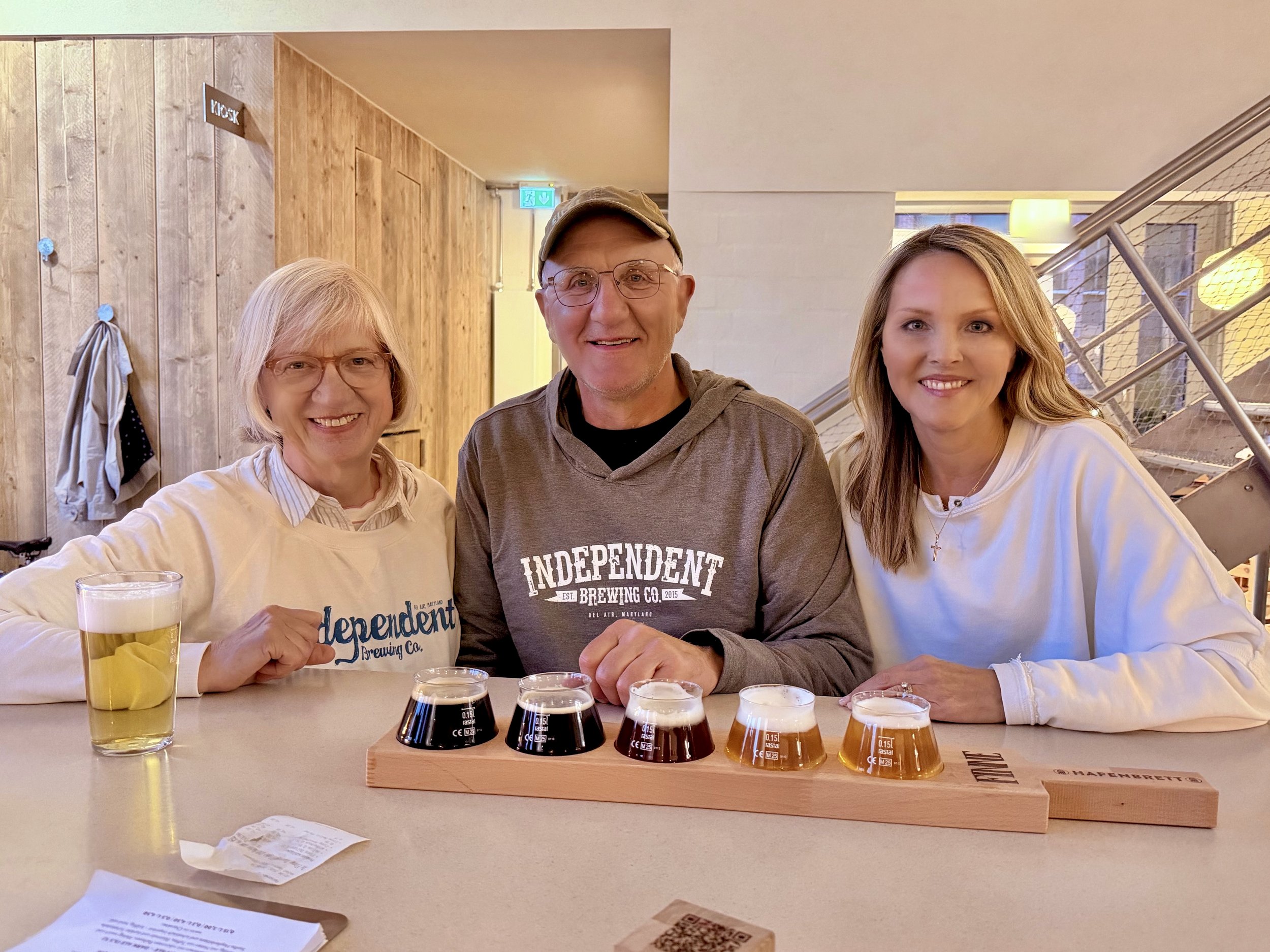
The atmosphere at Finne felt young, lively, and effortlessly cool. Industrial elements mixed with long communal tables while huge bay windows overlooked the harbor outside. As the sun slowly began setting, golden light poured through the windows while groups of friends gathered over local beers and conversation. We sampled flights of Finne’s specialty brews while watching boats drift along the water, and by that point the entire day had settled into that perfect kind of travel exhaustion — the kind where you feel completely content, slightly sleepy, and very aware that you’ve had an exceptionally good day.
Tired and happy, we eventually returned home and agreed that tomorrow would be a slower morning.
Day Two: Rooftop Cake and a Slower Münster Afternoon
The next morning, two more of my cousins arrived from Essen to spend the day with us, making our already lively multigenerational crew even bigger. After another leisurely German breakfast, we boarded the bus back into Münster’s city center for a slower day of shopping and wandering.
We spent the morning drifting through boutiques, bookstores, gift shops, and specialty stores without any real mission beyond curiosity itself — the best kind of travel shopping, in my opinion. Small souvenirs and local treats slowly accumulated in shopping bags while we admired Münster’s blend of historic charm and relaxed everyday life.
Coffee at 1648 Cafe
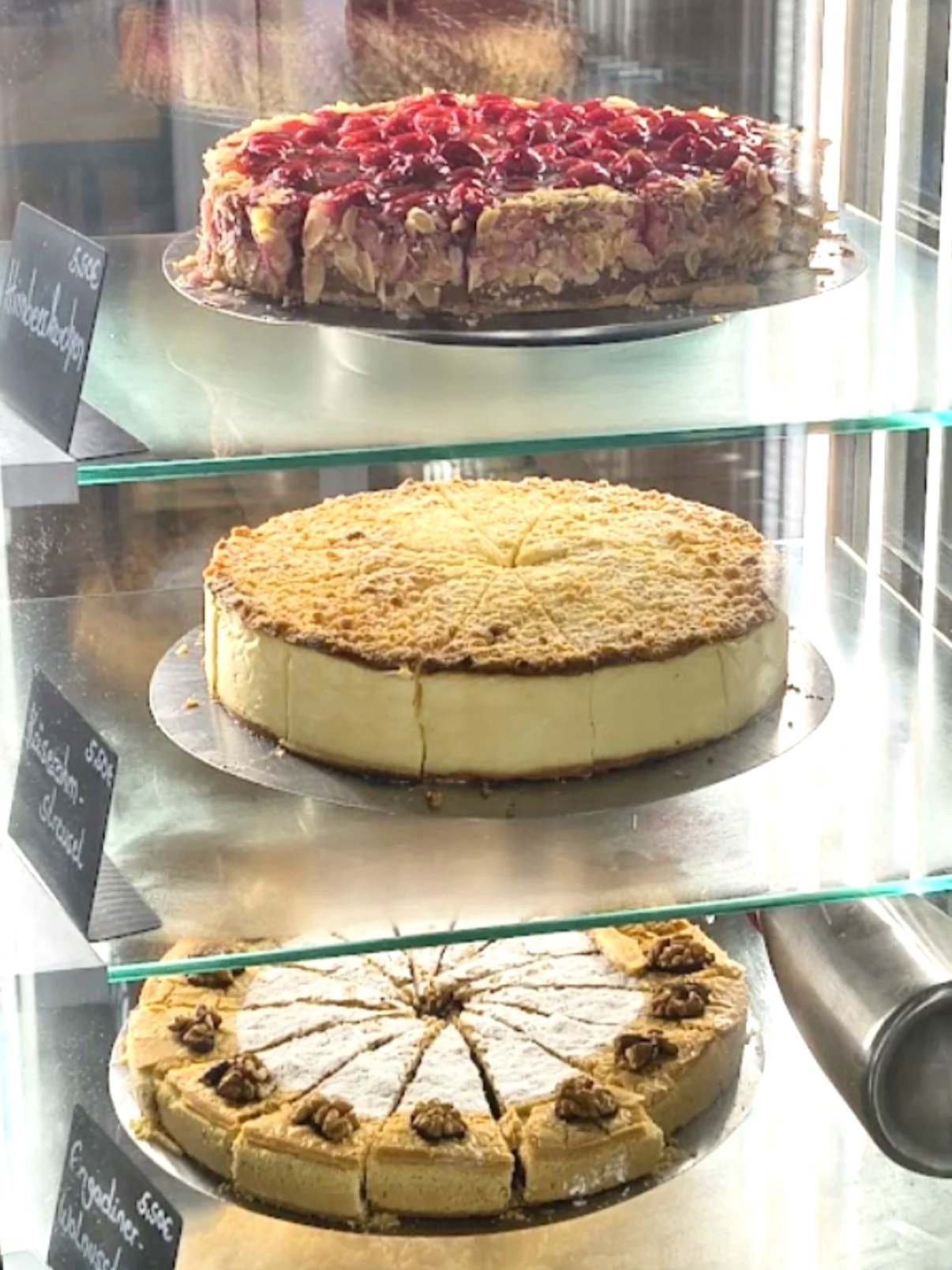
When we tired of shopping, my aunt led us to one of the best cafés we visited during the trip: 1648 Cafe is perched high above the city inside Stadthaus 1. The café itself was lovely, with panoramic rooftop views stretching across Münster’s church steeples and red rooftops, but what made it truly special was its mission. The café provides meaningful employment opportunities for individuals with disabilities, creating an inclusive and welcoming environment that felt genuinely joyful rather than performative.
Adding even more heart to the story, many of the café’s cakes and pastries are made using original recipes from the legendary Café Grotemeyer — a beloved Münster institution that operated for nearly 170 years before closing in 2019. Rather than allowing the bakery’s famous recipes to disappear, the family partnered with the inclusive café project so the desserts could continue being enjoyed by future generations. Even some former Grotemeyer employees joined the new café, helping preserve a small piece of Münster’s coffeehouse culture.
Naturally, we took this as encouragement to order an unreasonable amount of dessert. Apple cake, cheesecakes, crumb cakes, fruit tarts — our table quickly transformed into a full-scale German bakery display. No regrets.
After cake and coffee, our group split up once again. Some people felt fully recharged and eager to continue sightseeing while others — myself included — were ready for a slower afternoon back at the house.
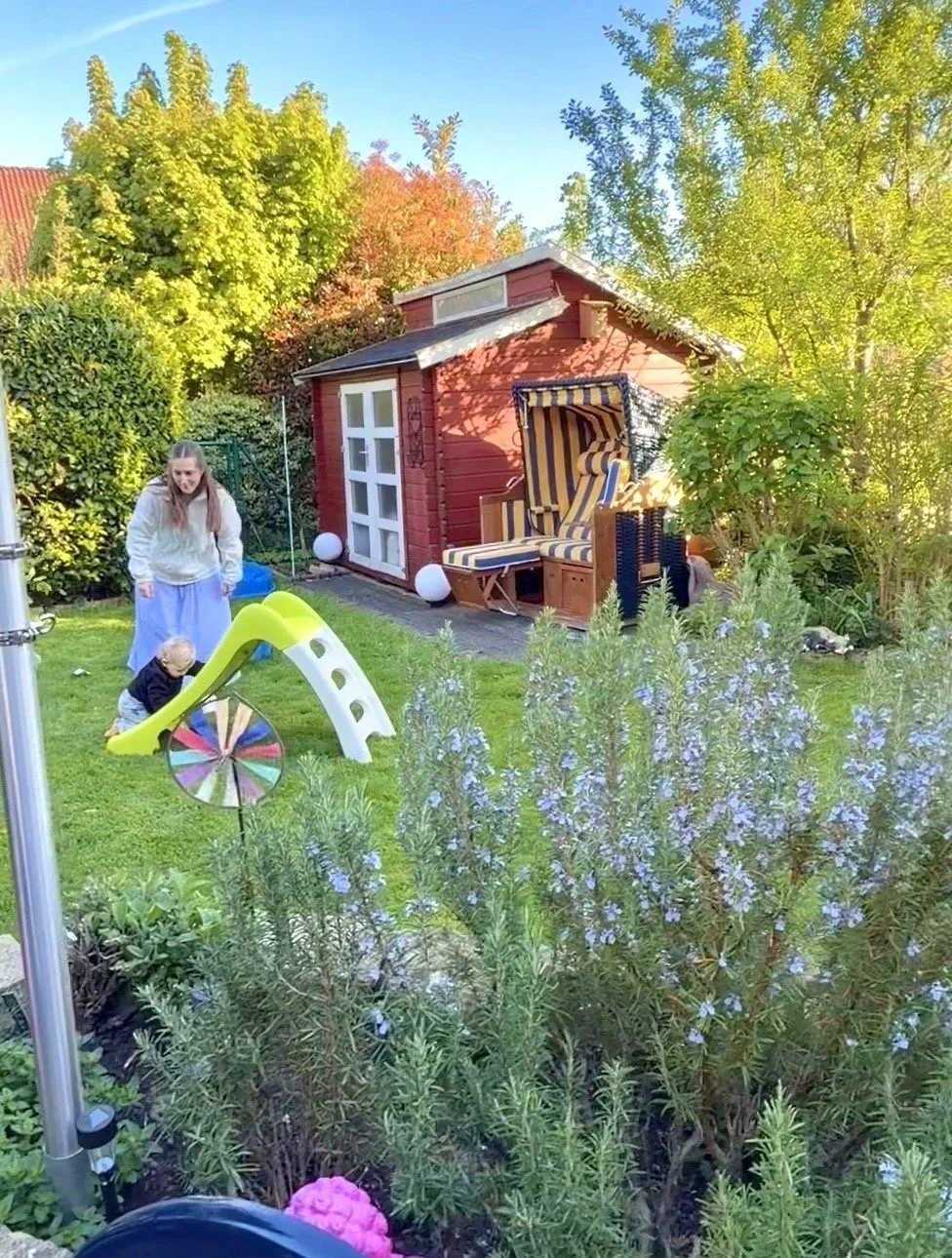
And honestly? It ended up being exactly where I wanted to be. For the next hour or so, we sat outside once again in the garden enjoying the soft spring breeze while catching up on life, family, and everything that had happened since we’d last been together. The water feature bubbled quietly in the background while the late afternoon sun filtered through the yard.
Eventually the rest of the group returned, and preparations for dinner began.
Backyard Barbecue
My uncle grilled sausages and pork loin we had purchased at the farmer’s market while my aunt prepared the giant white asparagus alongside fresh salads, including a cucumber tomato salad and a traditional ham salad. Then, my uncle proudly unveiled homemade Joppie sauce for the potatoes, after I had spent days enthusiastically talking about how much I loved the sauce during my time in Amsterdam. To my complete shock, his homemade version may have actually been even better.
As dinner stretched into evening, multiple generations gathered around the outdoor table sharing food, conversation, laughter, and clinking glasses while the garden slowly settled into dusk around us. And while I realize not everyone visiting Münster will end their trip gathered around a family table in a quiet backyard garden, that evening somehow captured exactly what made the city feel so special to me in the first place.
Not flashy. Not rushed. Not trying too hard. Just warm, welcoming, deeply livable, and quietly beautiful in all the ways that matter most.
The next morning, I would wake before sunrise for my flight back to the United States. But long after returning home, Münster remained one of the places I found myself thinking about most.
Münster may not be the first German city travelers add to their itinerary, but perhaps that’s part of its charm. There are no grand bucket-list expectations here — just bike rides by the lake, lively market squares, rooftop cake, peaceful gardens, and the kind of slow, meaningful moments that quietly become the ones you remember most.
Know Before You Go: Visiting Münster, Germany
Best Time to Visit
Spring and early summer are especially beautiful in Münster, with outdoor cafés, blooming flowers, and lively market days bringing the city to life.
Don’t Rent a Car
Münster is one of Germany’s most bike-friendly cities and is also very easy to navigate using public transportation.
Plan Around Market Days
The famous Münster market takes place Wednesdays and Saturdays around St. Paulus Cathedral and is absolutely worth experiencing.
Slow Down
Münster is best enjoyed at a relaxed pace. Leave room in your itinerary for long café breaks, wandering side streets, and simply enjoying the atmosphere.
Try Local Specialties
Spargel (white asparagus) during spring
Fried schnitzel sandwiches from the Wochenmarkt
Schnapps tastings at Sasse Feinbrennerei
A .3L of Pinkus Müller beer
Best Experiences
Sunset around the Aasee
Exploring Prinzipalmarkt in the evening
Visiting 1648 Café for rooftop views and cake
Taking a bike ride through the city like a local
