One Day in Hamburg, Germany: A Flexible HafenCity Itinerary for Cruise Passengers & Short Stays
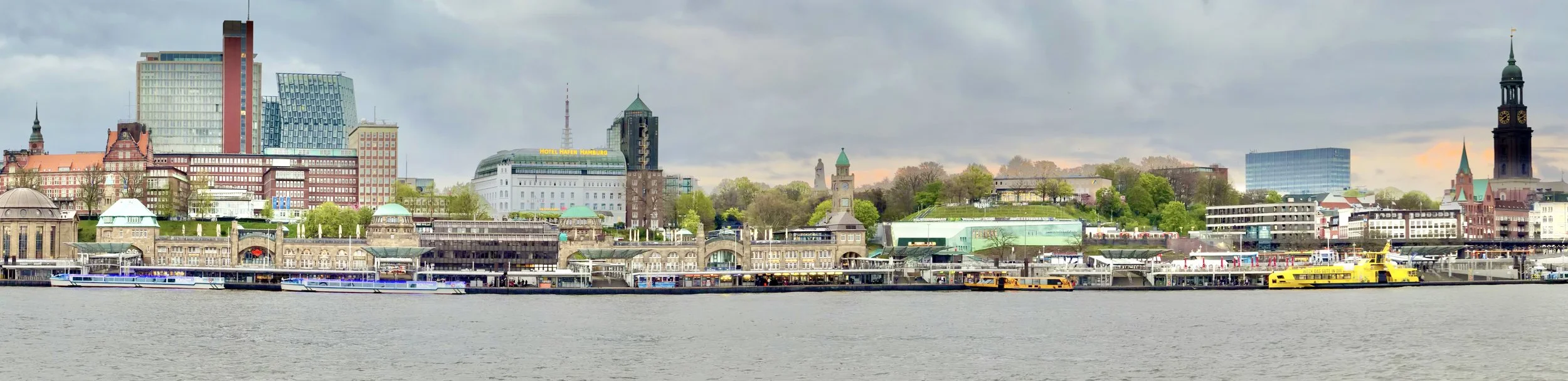
Hamburg is easily one of Europe’s most underrated cities. Germany’s second-largest city blends maritime history, modern architecture, world-class entertainment, and a surprisingly polished waterfront energy that feels different from the more tourist-saturated capitals of Europe. Home to one of the largest ports in Europe, more bridges than Venice and Amsterdam combined, acclaimed museums, buzzing nightlife, and the stunning Elbphilharmonie concert hall rising above the harbor, Hamburg feels cosmopolitan yet somehow still under the radar for many American travelers.
I was initially in northern Germany for my cousin’s wedding in the charming lakeside town of Zarrentin am Schalsee. Her husband, a proud Hamburg native, was eager to show us the city he clearly loves so much — and after one day there, it was easy to understand why.
Although we only had one full day and night in Hamburg before continuing on to visit family in Münster, we packed as much into our short stay as possible. Between the sparkling harbor views, lively waterfront restaurants, modern shopping at Westfield Hamburg-Überseequartier, immersive museums, and twinkling nighttime cruises through the port, Hamburg left us wanting to return.
If you only have one day in Hamburg — especially if you’re visiting on a cruise stop or short overnight stay — this flexible harbor-focused itinerary is perfect for travelers with diverse interests.
First Impressions of Hamburg at Night
We actually arrived in Hamburg the evening before our full day of sightseeing and quickly realized we had two great options for how to spend our first night in the city.
Most of the group had their hearts set on seeing MJ – The Musical, one of Hamburg’s most popular evening shows. But since Broadway-style productions are something I can easily see back home in the United States, I decided to go with the second option and lean fully into what felt like a more quintessential Hamburg experience: exploring the city’s waterfront at night.
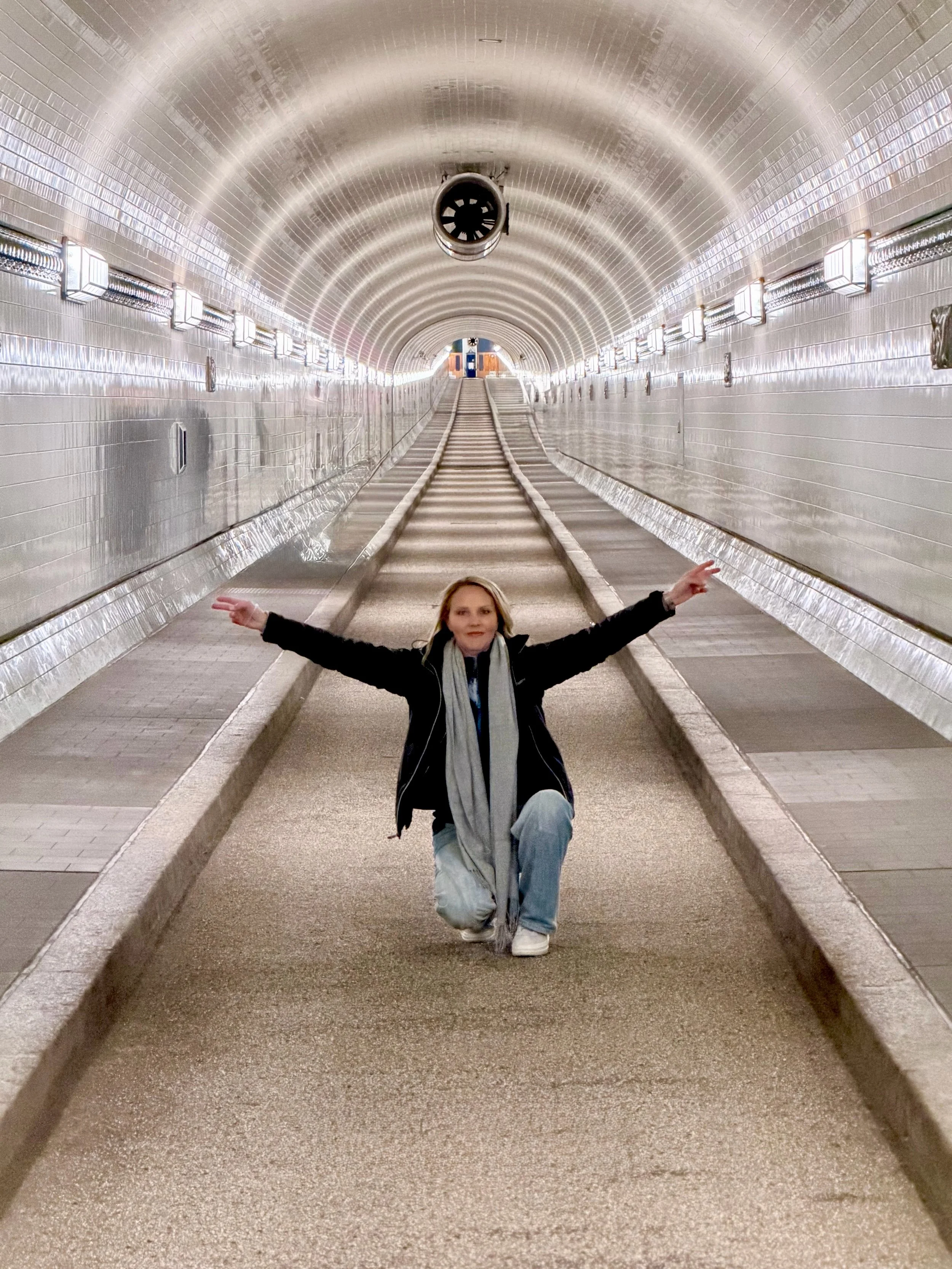
Our first stop was the historic Alter Elbtunnel, one of Hamburg’s most fascinating engineering landmarks. Opened in 1911, the tunnel stretches roughly a quarter mile beneath the Elbe River and was originally built so dockworkers could easily reach the harbor on the opposite side without relying on ferries. And somehow, over a century later, it still feels impressively cool.
After descending underground in the old elevator lifts, we walked beneath the river through the long tiled tunnel, passing cyclists, pedestrians, and the occasional echoing footsteps that made the whole experience feel oddly cinematic. The white ceramic walls, curved ceilings, and vintage details give the tunnel a distinctly old-world industrial charm — like stepping into a beautifully preserved piece of Hamburg’s maritime history.
When we emerged on the opposite side of the river, we were rewarded with panoramic nighttime views back toward the city. Across the water, the harbor glowed with ferries, restaurants, hotels, dock lights, and illuminated buildings stretching along the waterfront. It was a striking view of Hamburg from a completely different perspective.
We spent a few minutes taking it all in and snapping a handful of photos before heading back through the tunnel toward the harbor.
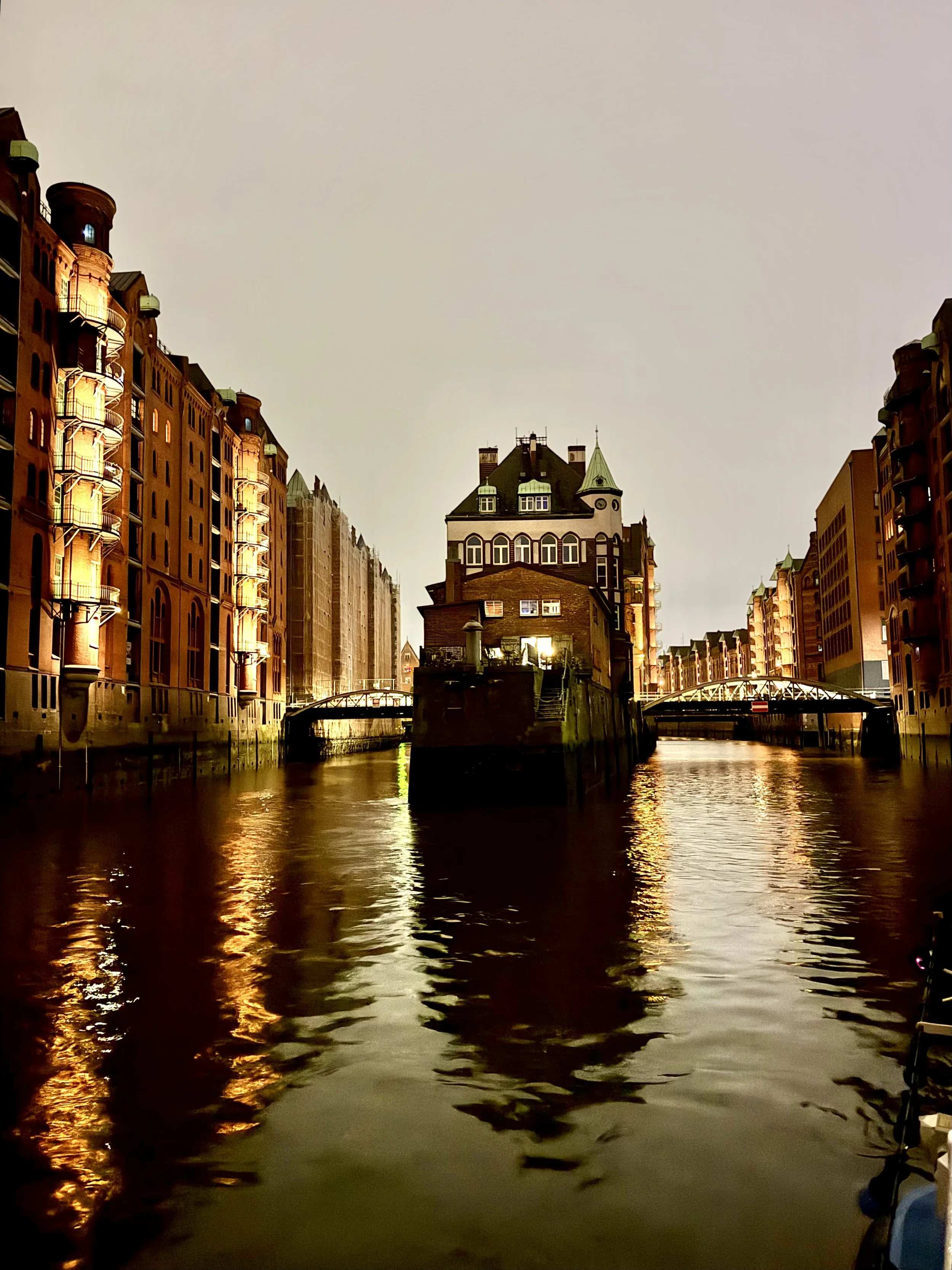
From there, we made our way to the dock for our Grand Harbor Evening Lights Harbor Cruise.
And wow… I’m so glad we opted the night cruise.
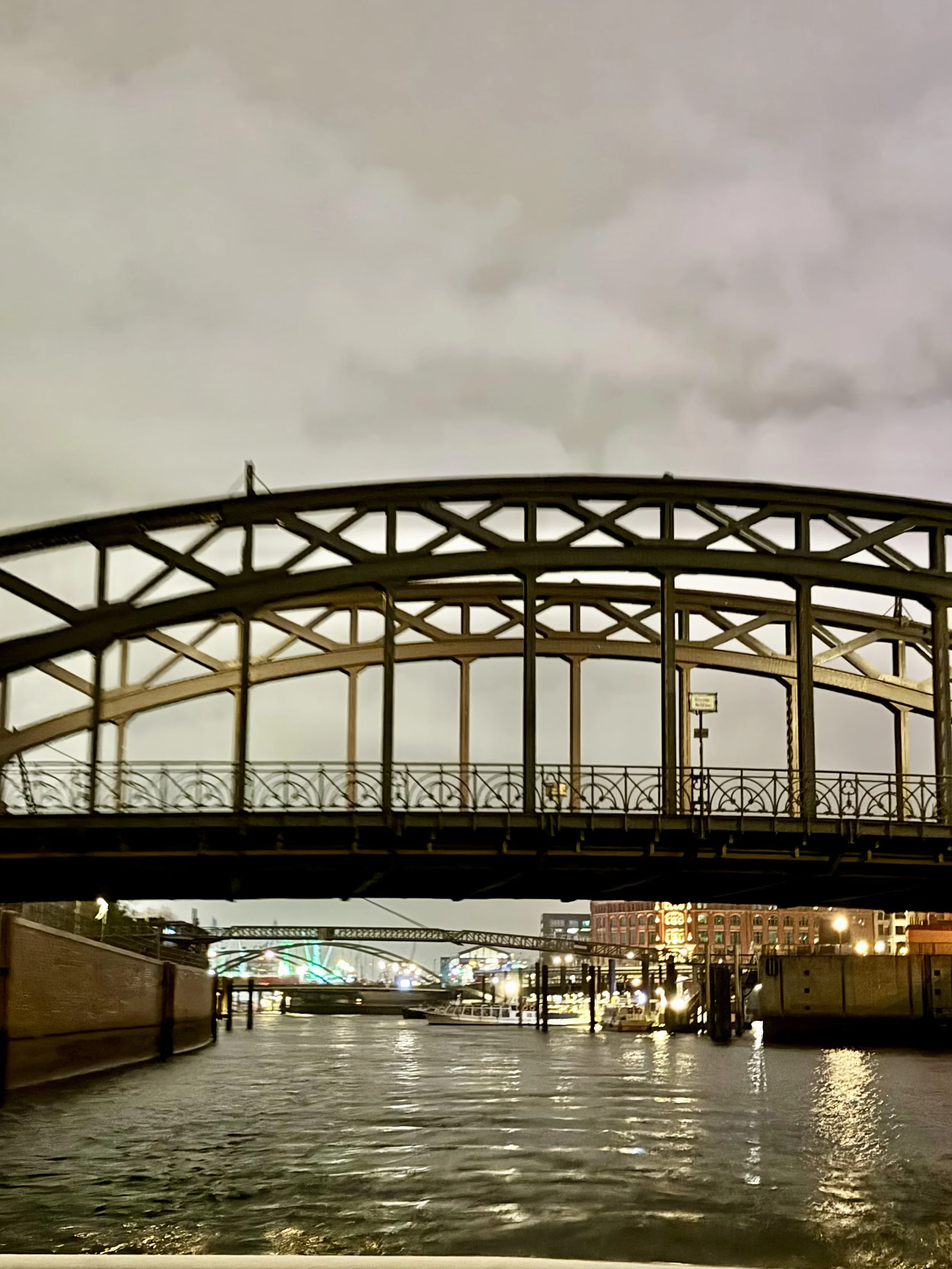
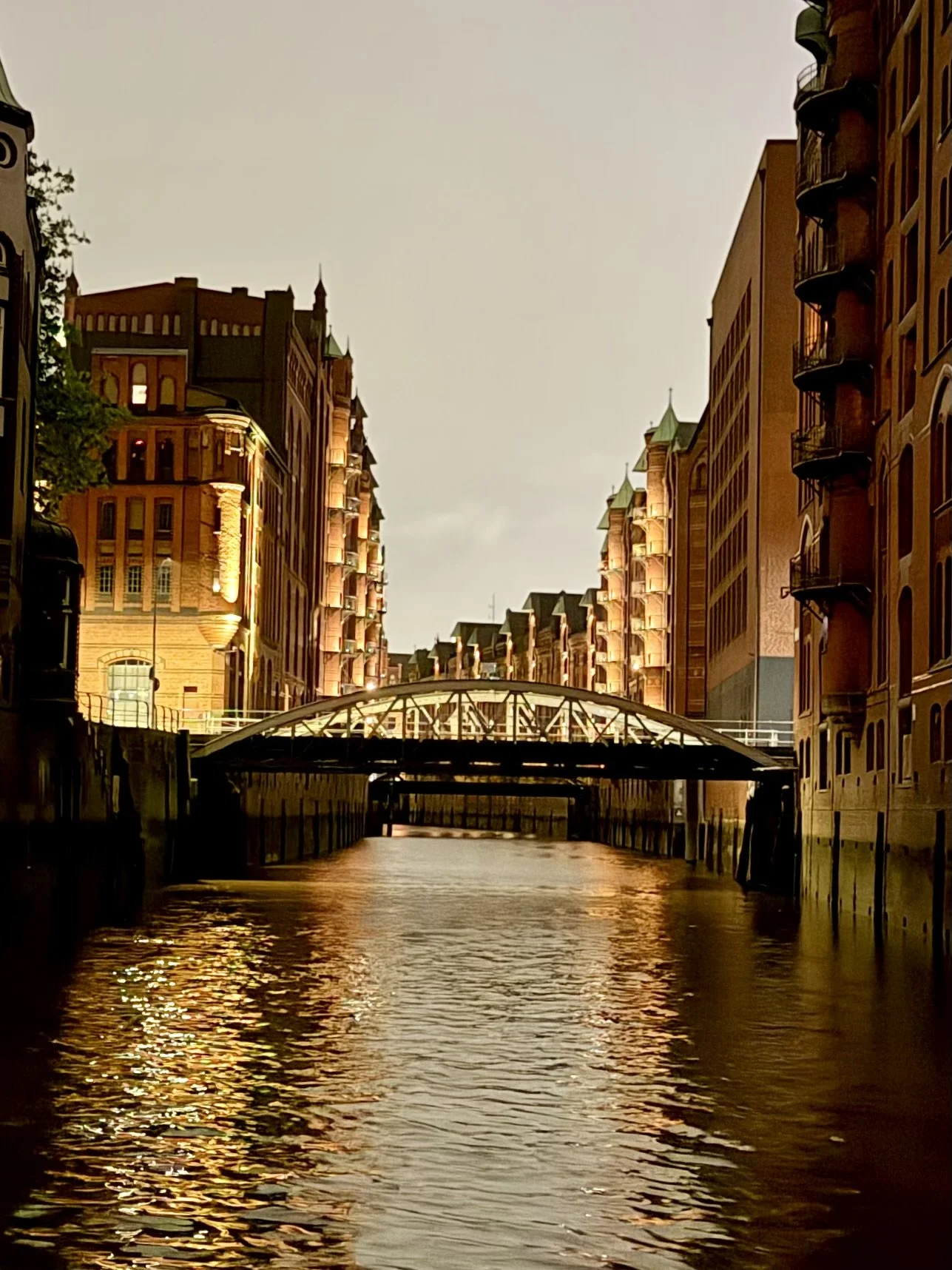
The moment our boat pulled away from the dock, Hamburg transformed into this glittering, illuminated harbor city that felt at once industrial and magical at the same time. Bridges glowed overhead, canals shimmered with reflections, and the skyline lit up in every imaginable color as it danced across the water.
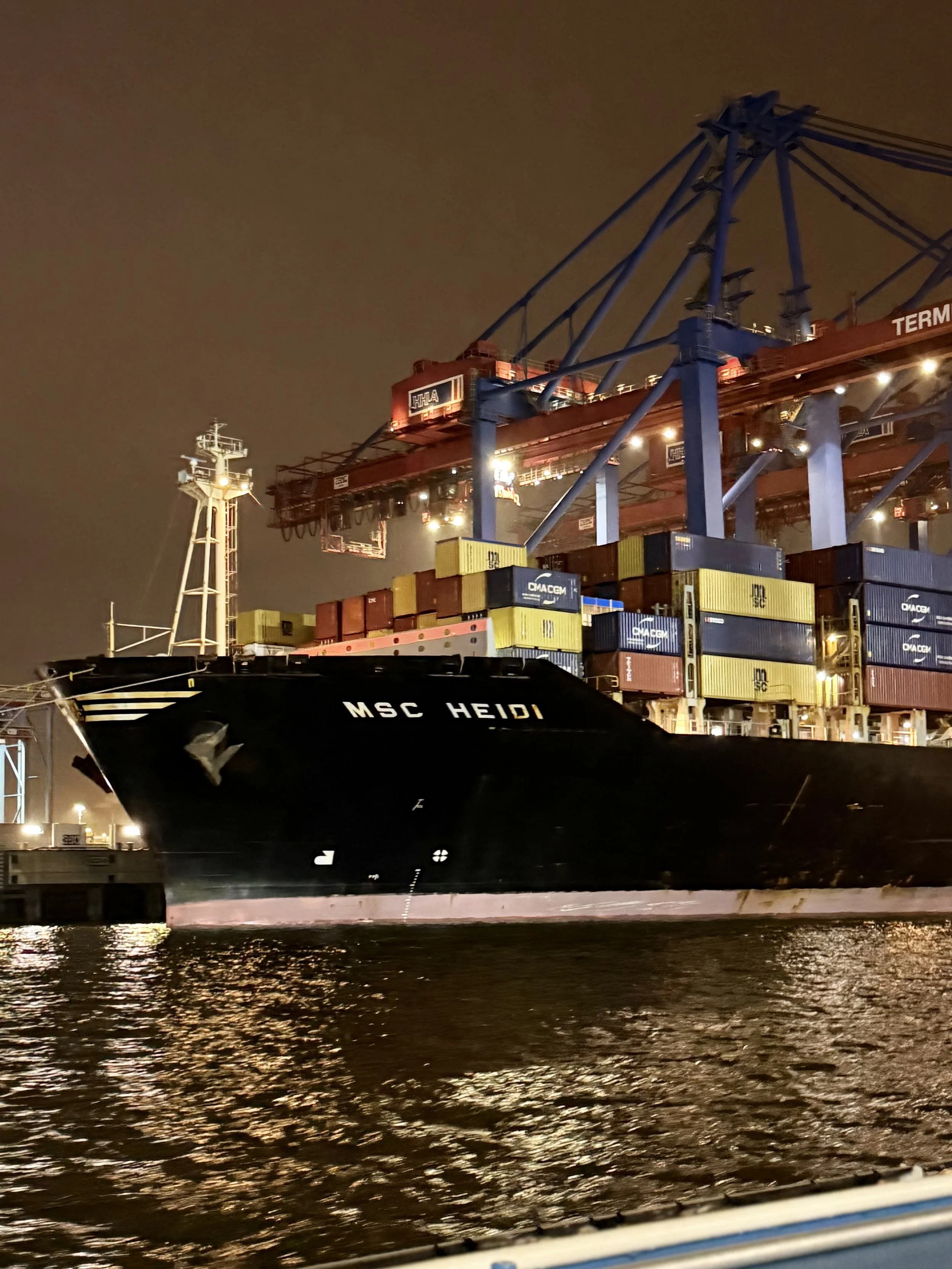
The tour carried us deep into Hamburg’s massive working harbor, passing enormous container ships, cargo vessels, ferries, and specialty ships of every kind imaginable.
At one point, we cruised past one of the largest container ships in the world, stacked with thousands upon thousands of shipping containers while giant cranes moved overhead with astonishing speed and precision. Watching these massive machines effortlessly lift containers that looked like oversized Lego bricks was strangely mesmerizing.
What surprised me most was how alive the harbor felt at night. The port doesn’t simply “close” after dark — it keeps moving. Ships arrived, cranes operated nonstop, lights flashed across the water, and commerce continued around us in this perfectly choreographed industrial ballet.
And this is coming from someone who does not typically spend vacations thinking, “You know what I’d really love to do? Observe global shipping logistics.”
Yet somehow, it was fascinating.
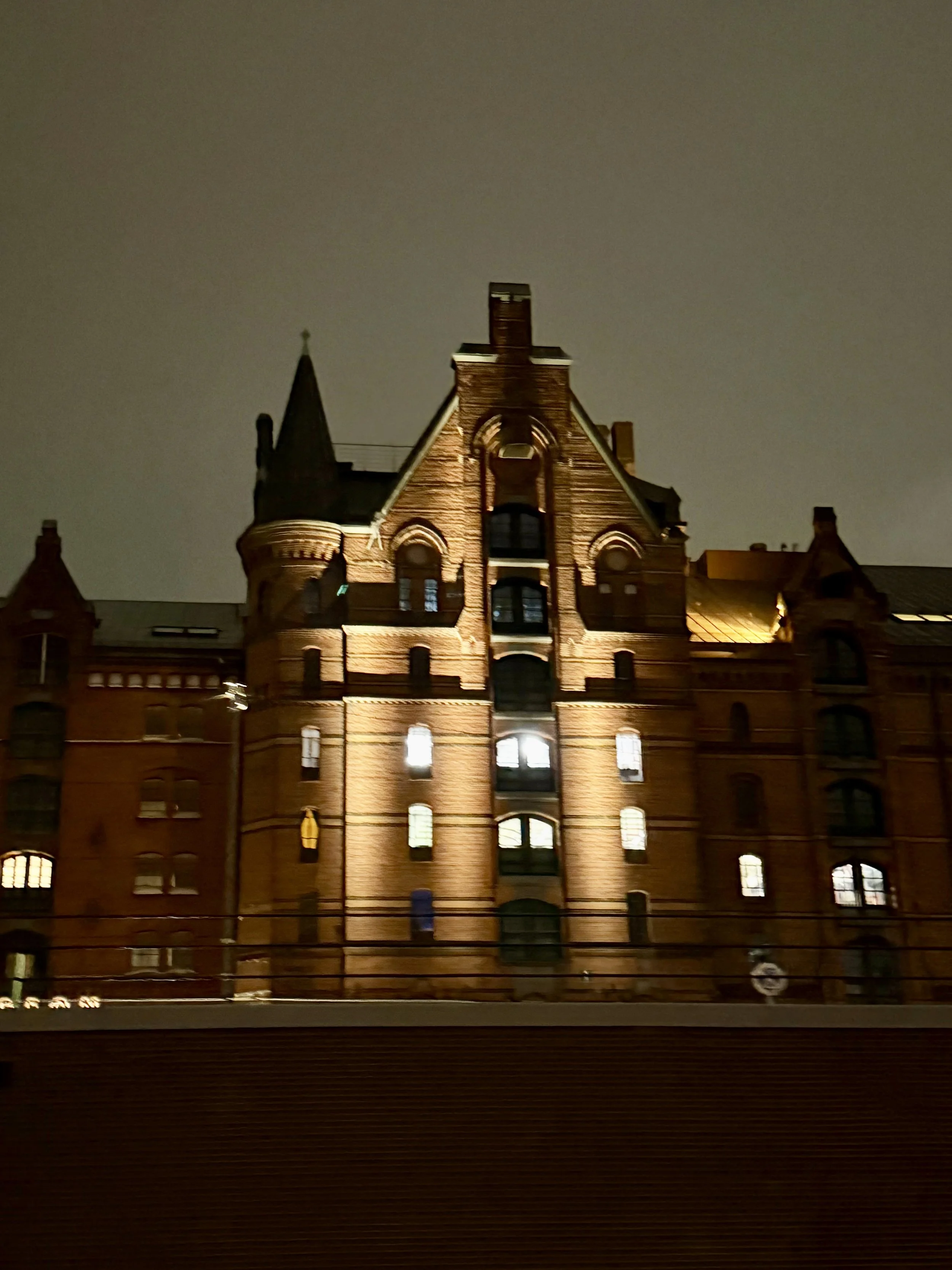
Our final stretch carried us past the glowing canals and historic warehouses of Speicherstadt, where the reflections of bridges and brick buildings danced across the water beneath the city lights.
By the time we walked back to the hotel that evening, Hamburg had already exceeded every expectation I had for it. And if Hamburg looked this impressive at night, I couldn’t wait to see it in daylight.
Why HafenCity Is the Perfect Base for a Short Stay
If you only have one day in Hamburg, the city’s sleek harbor district is the perfect place to base yourself. HafenCity feels polished, energetic, and effortlessly walkable — the kind of waterfront neighborhood where every turn seems to reveal another canal, glassy modern building, outdoor café, or massive ship gliding through the harbor.
What surprised me most was how modern the city felt. Hamburg blends striking contemporary architecture with old maritime character, all while maintaining the lively atmosphere of a city that clearly enjoys itself.
We stayed at the Holiday Inn Hamburg – HafenCity, which placed us within easy walking distance of many of the harbor district’s main attractions. Just a few minutes away was the sprawling Westfield Hamburg-Überseequartier, a sleek multi-level shopping and dining complex that quickly became our unofficial orientation point for the neighborhood.
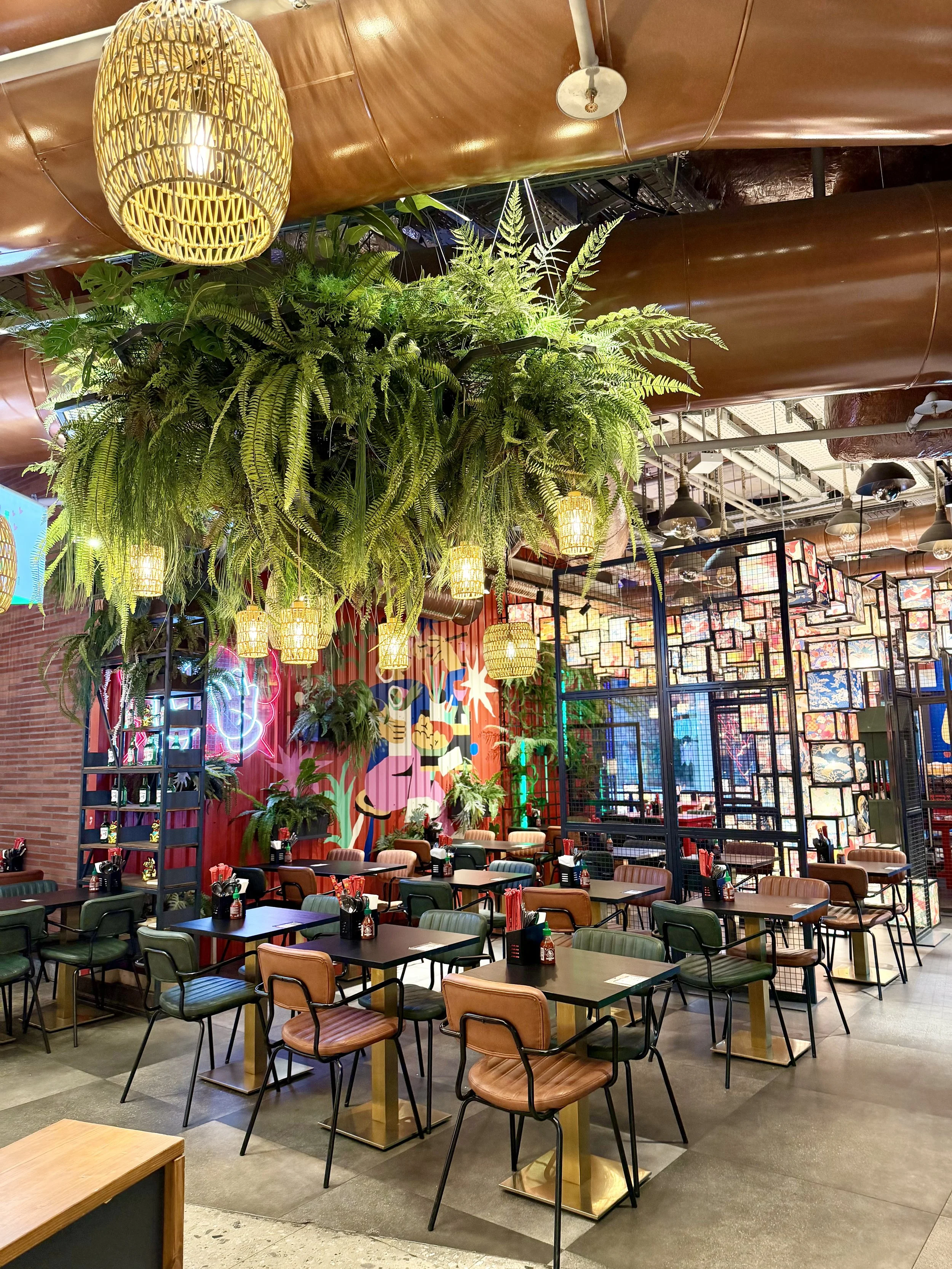
Sure, we could have simply grabbed breakfast at the hotel. But when you’re in Europe, there’s something deeply satisfying about starting the day with flaky pastries, strong coffee, and outdoor seating while the city slowly comes to life around you.
The mall itself is far more than just a shopping center. Inside are cafés, restaurants, casual dining spots, and a large upstairs food hall perfect for travelers looking for a quick lunch or rainy-day escape. Beneath it all sits a conveniently located subway station, making it easy to venture into other parts of Hamburg without needing a car.
Still, we didn’t linger too long over breakfast. Hamburg was waiting.
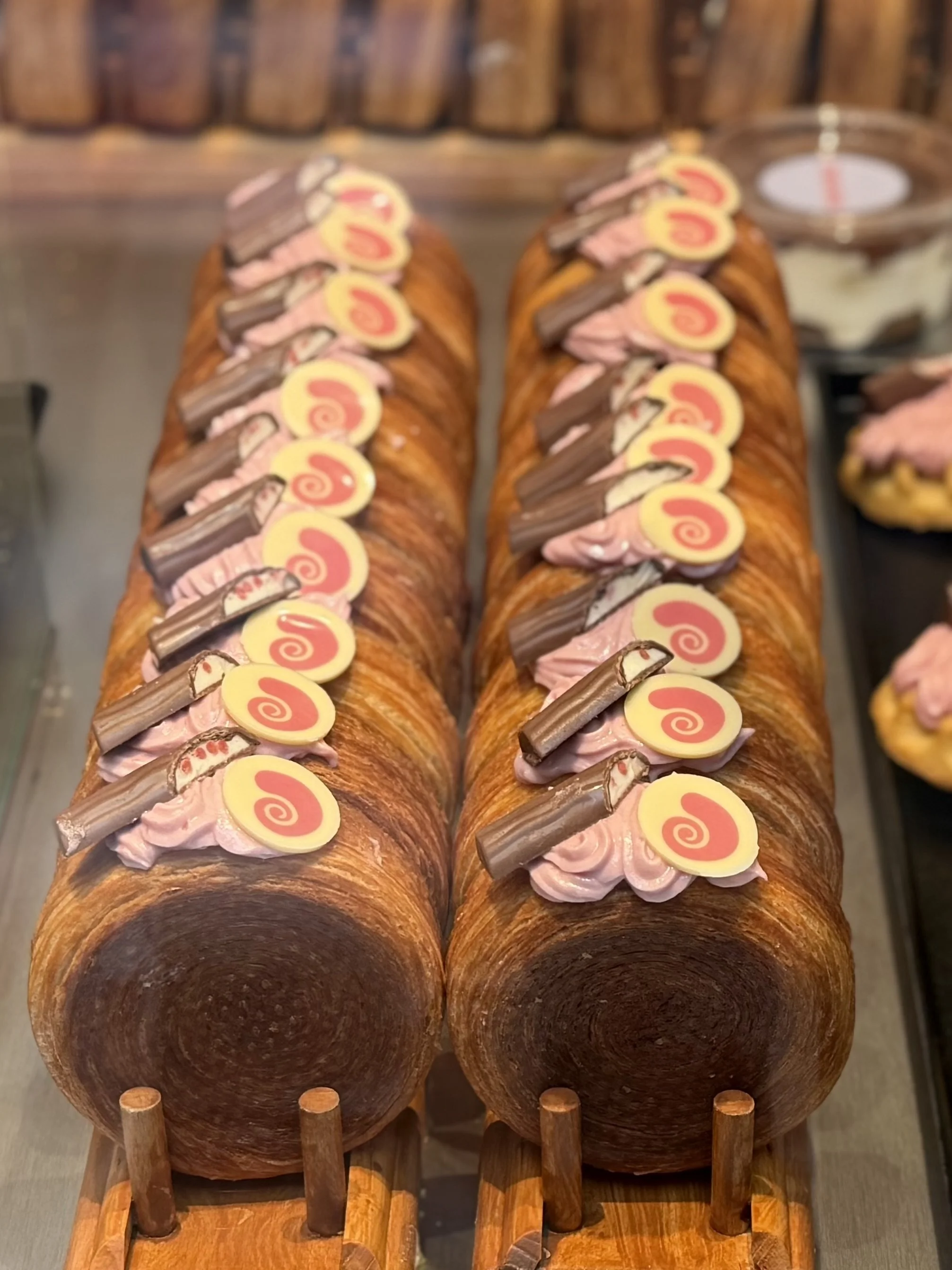
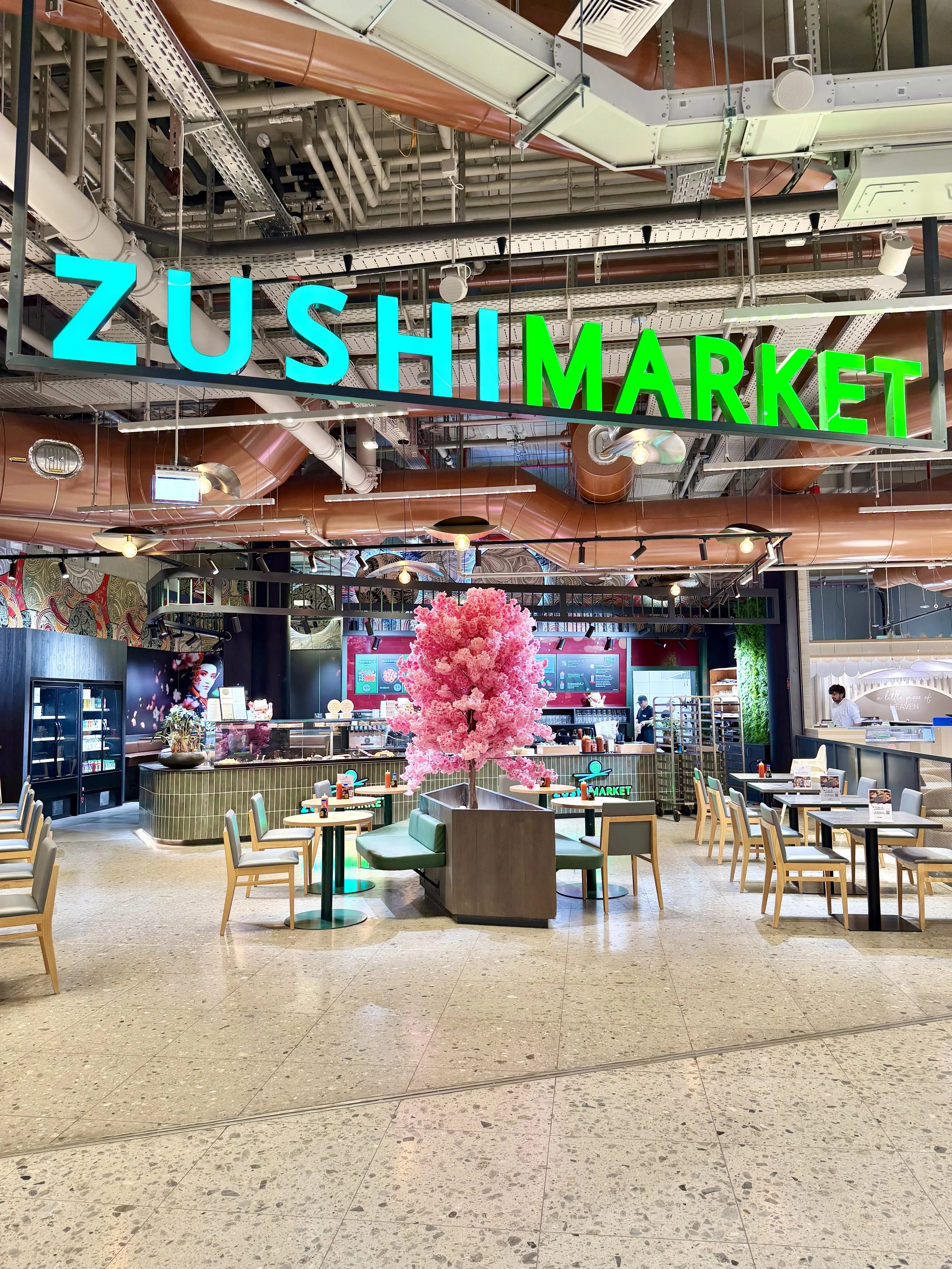
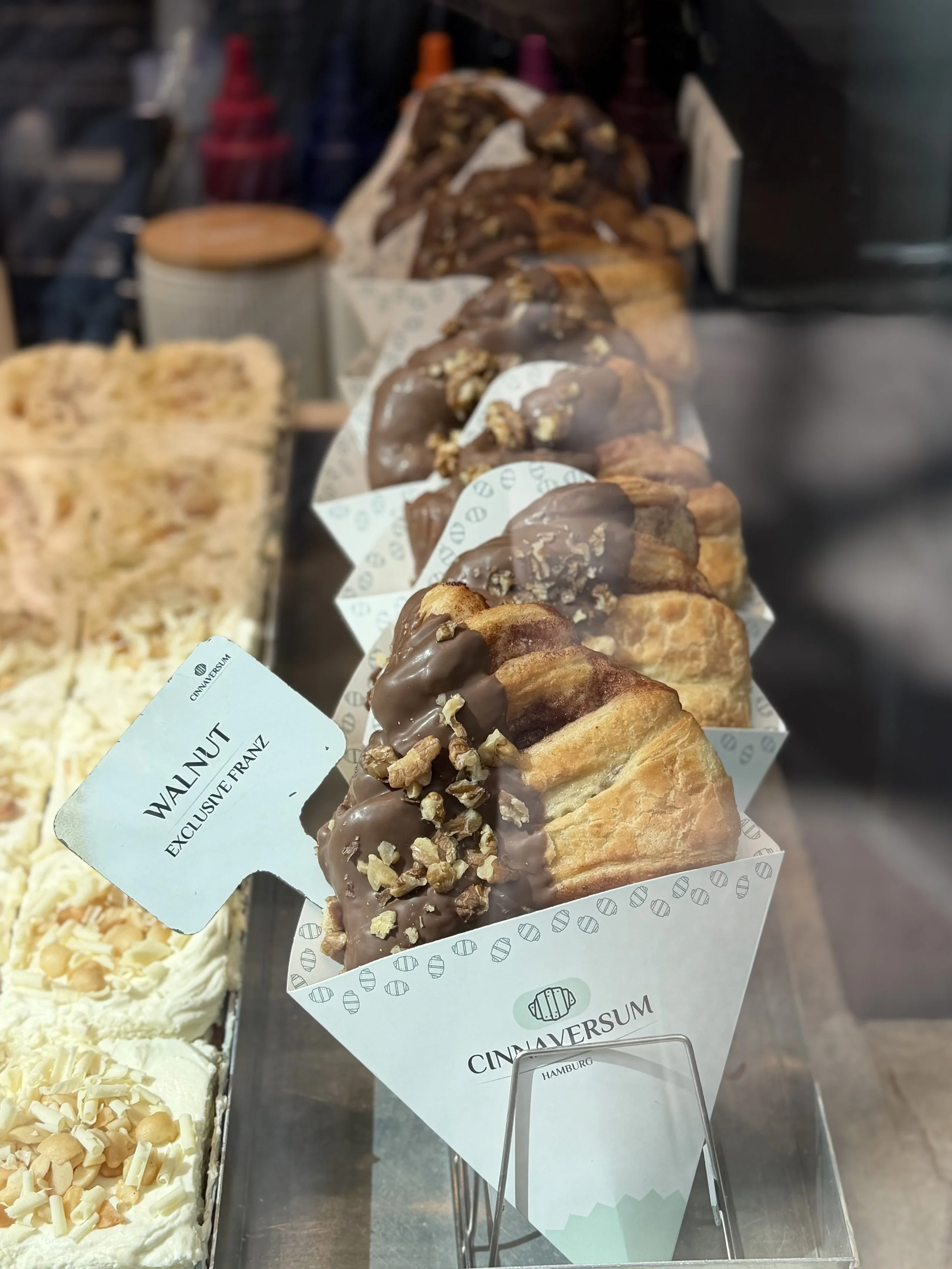
A Scenic Morning Stroll Through HafenCity
After breakfast, we followed the waterfront promenade toward Elbphilharmonie, and with every step, the city seemed to open up a little more around us.
To our left was a peaceful green park wrapped around a small lake, complete with benches and sweeping views of the Elbphilharmonie rising across the water like a glass wave against the skyline. To our right were sleek modern buildings, quiet canals, and what felt like an endless number of bridges connecting the neighborhood together.
What struck me most was how incredibly clean and polished everything felt.
As we continued walking, we passed areas connected to Speicherstadt, Hamburg’s historic warehouse district and a UNESCO World Heritage Site. For decades, imported goods like coffee, tea, spices, and carpets arrived through Hamburg’s busy port and were stored in these red-brick warehouses before being distributed throughout Europe.
Just as we were fully embracing our waterfront stroll, we passed Miss Sophie, a soft-serve ice cream shop nestled in a shaded waterfront area. With harbor views nearby and plenty of tempting Nutella-heavy options, it quickly turned into one of those unplanned but perfect travel pauses.
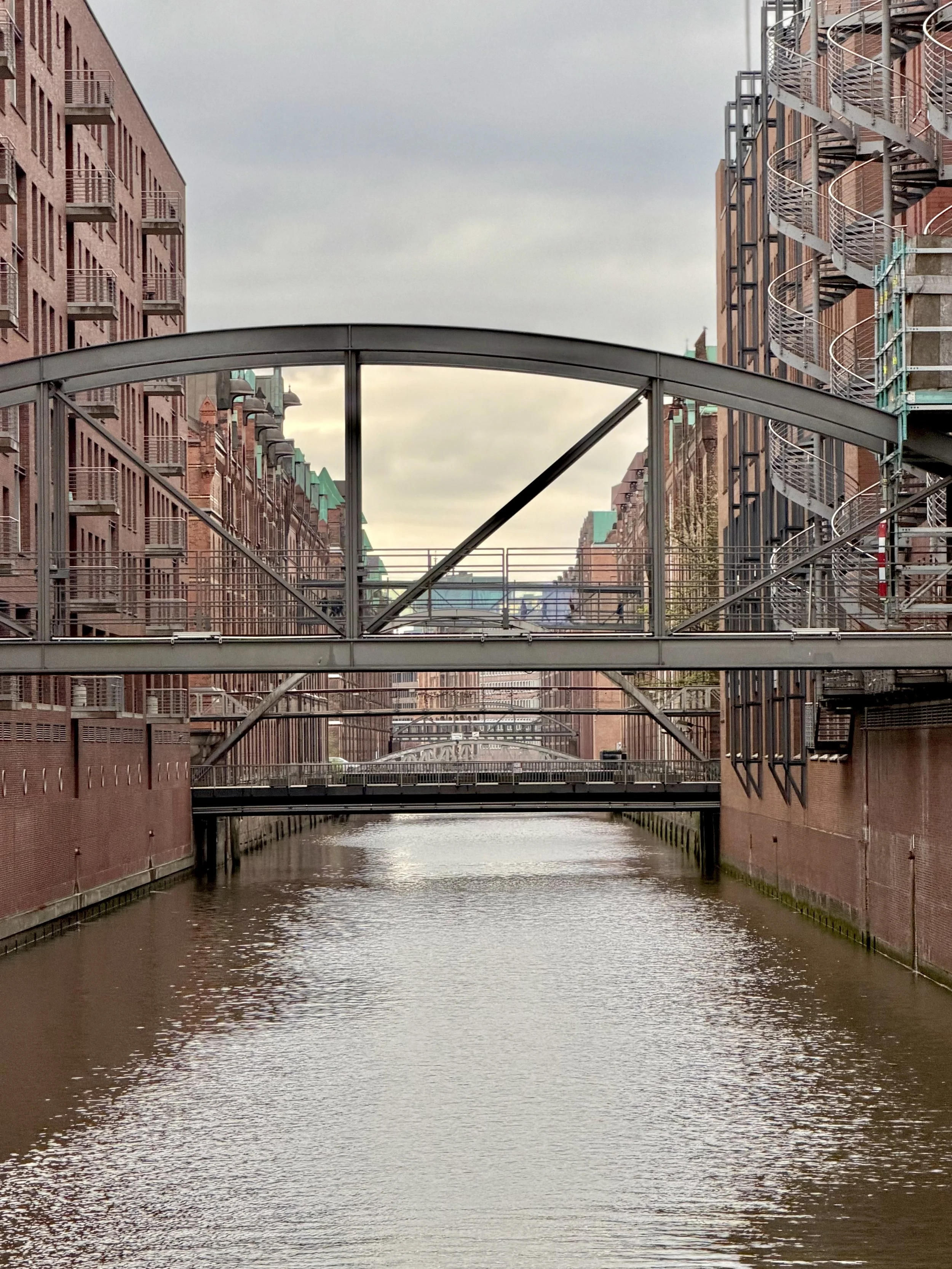
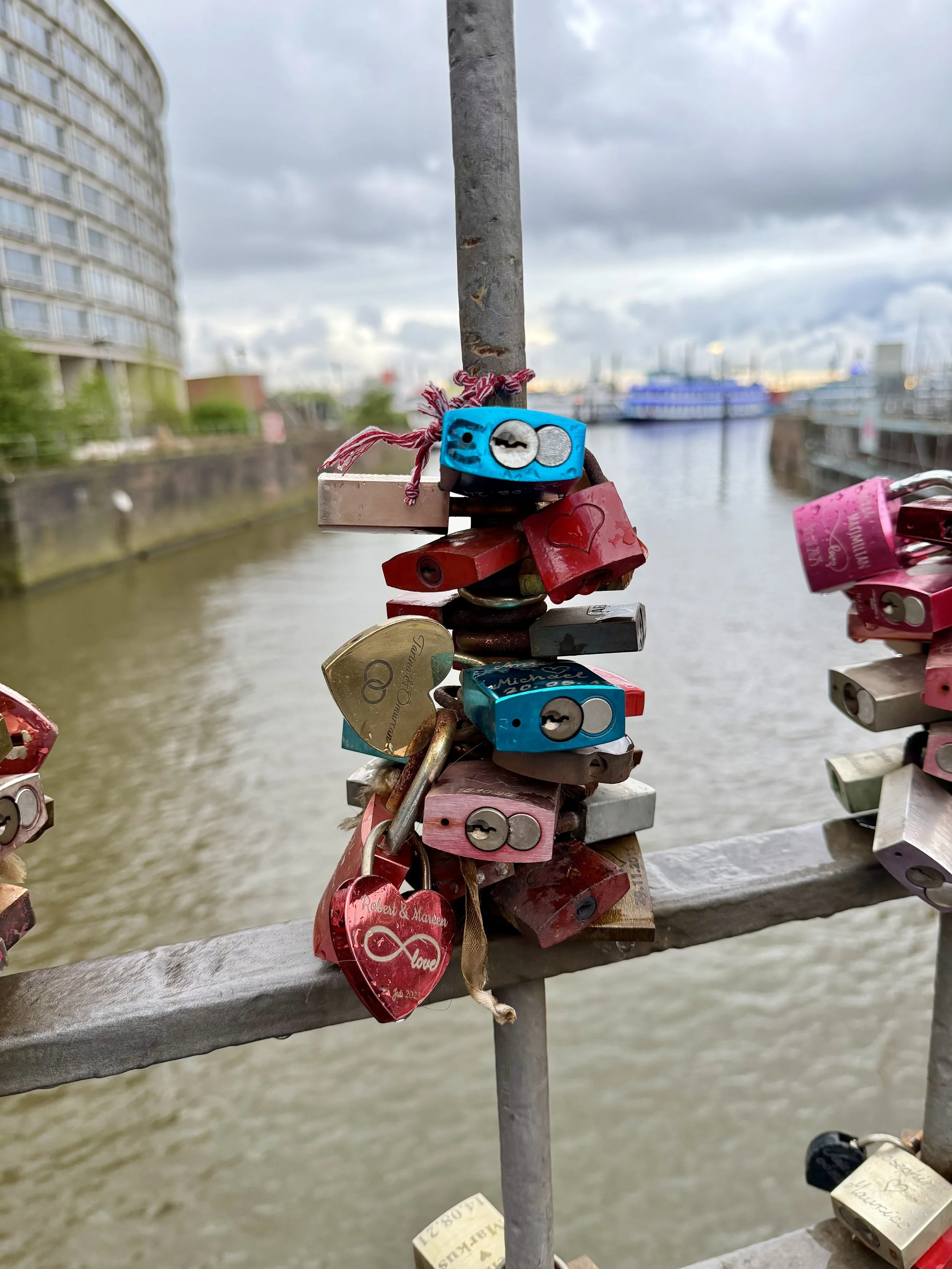
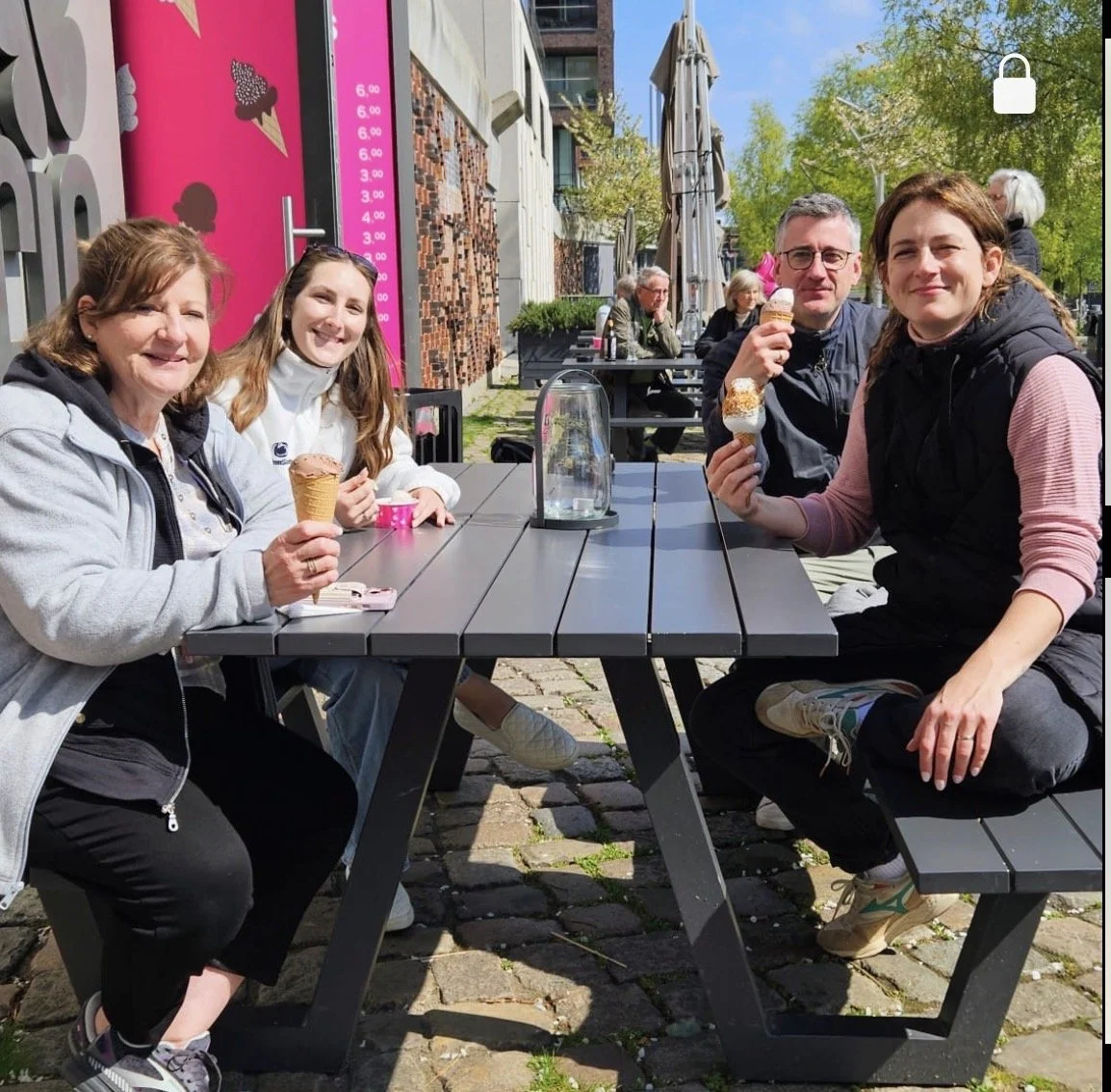

Fun Fact: One of Hamburg’s most iconic contrasts is how seamlessly historic Speicherstadt blends into ultra-modern Hafencity - with the futuristic Elbphilharmonie rising dramatically above both.
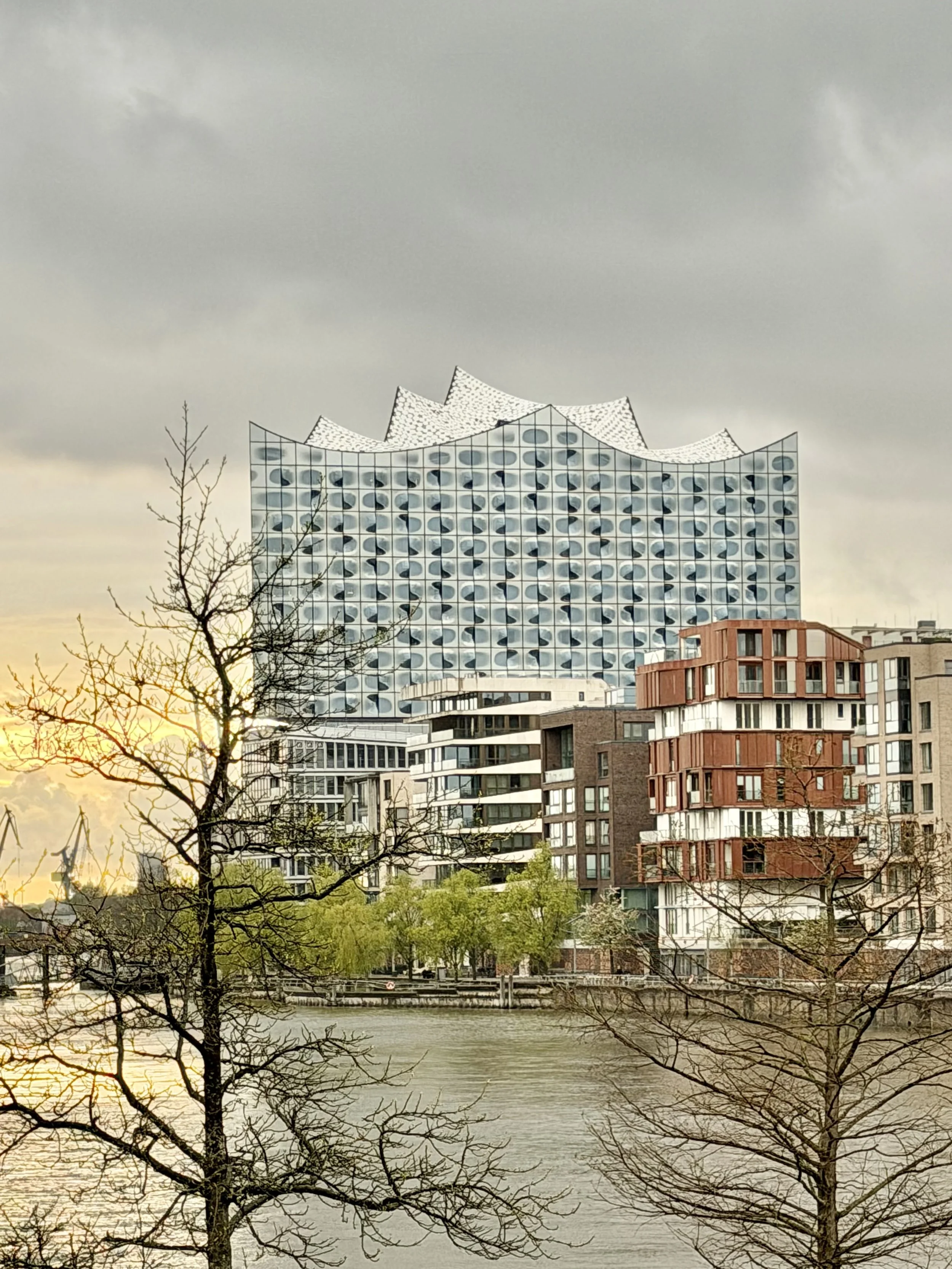
Visiting the Elbphilharmonie
The Elbphilharmonie isn’t just a concert hall — it’s an architectural flex on an absolutely massive scale.
Rising dramatically above the harbor like a giant glass wave, the building has become the modern symbol of Hamburg. Constructed on top of an old brick warehouse, its shimmering glass façade curves and catches the light in constantly changing ways. And in true “major European landmark” fashion, the project took far longer than expected and went wildly over budget before finally opening in 2017.
Even the escalator ride up feels like part of the attraction.
After purchasing tickets to the viewing platform, we stepped onto the Elbphilharmonie’s famous curved escalator tunnel known as “The Tube,” which slowly carried us upward through a glowing white tunnel that felt oddly futuristic.
From there, elevators and additional escalators brought us to the public viewing platform, where we spent nearly an hour wandering the entire perimeter of the building and taking in sweeping 360-degree views of Hamburg.
Inside, there’s also a café, restaurant, and gift shop, making it easy to linger awhile before continuing your day.
Choose Your Own Hamburg Adventure
This is where Hamburg really opens up — and where your day can easily bend depending on your interests, energy level, or travel group.
If you want to stay on the water, a harbor cruise is one of the best ways to experience the scale of the city’s working port. Most cruises last about 1 to 2 hours and take you through the active harbor where container ships, cranes, ferries, and cargo terminals are all in constant motion. It’s less about “sightseeing stops” and more about watching Hamburg’s maritime engine in real time.
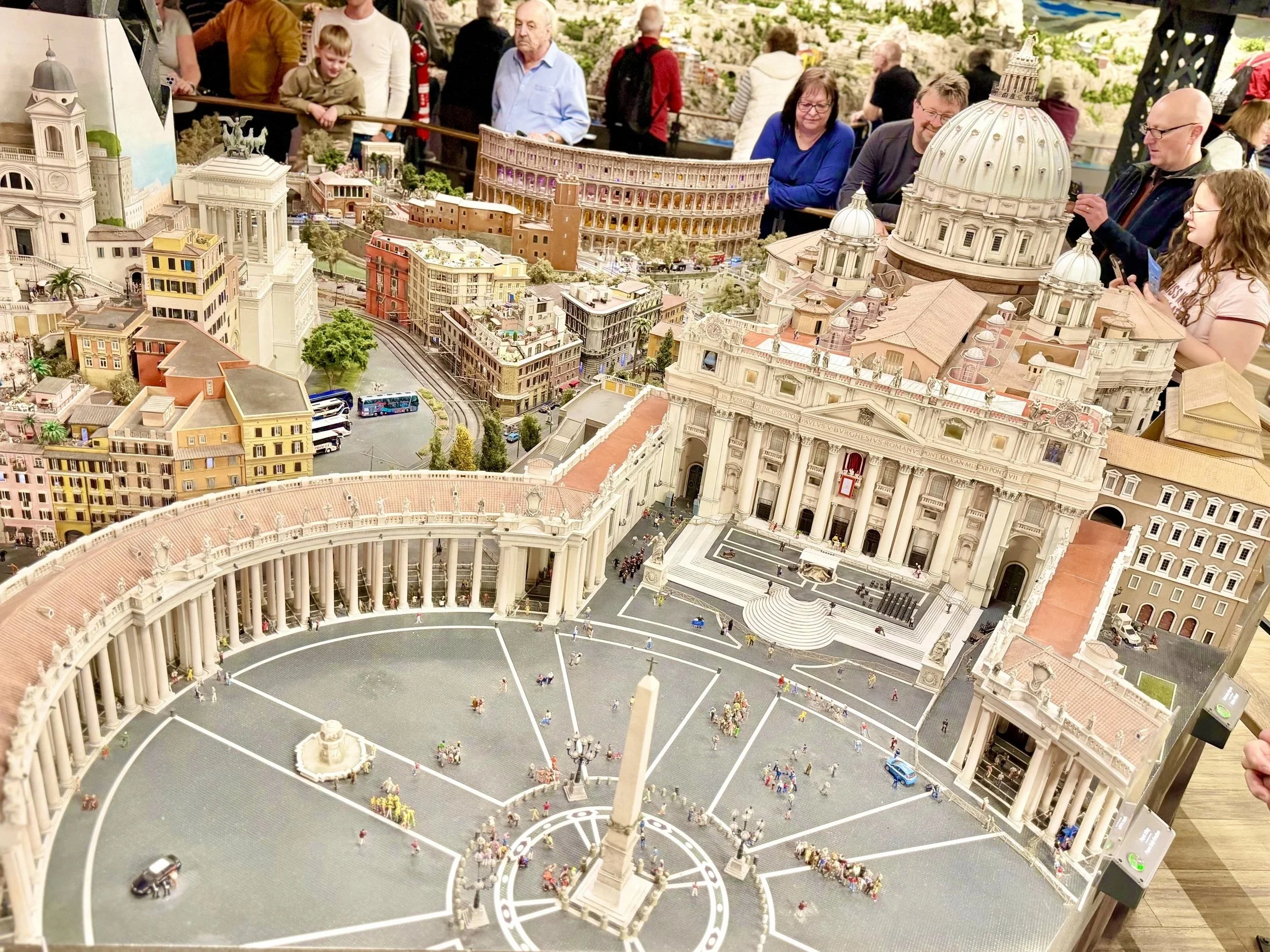
For something more immersive and unexpectedly absorbing, Miniatur Wunderland is one of the city’s standout attractions and deserves at least two hours to explore properly. It’s the world’s largest miniature railway exhibition, but that barely does it justice — entire cities, airports, mountain regions, and tiny moving worlds are recreated in astonishing detail. Purchase tickets in advance during peak season.
If your goal is simply to slow down, this is also where Hamburg is easy to enjoy without a strict agenda. Waterfront cafés, cocktail terraces, and long walks along HafenCity all work just as well as structured sightseeing. The city is designed in a way that makes “doing less” feel like an activity in itself.
And if you do want to venture further out, Hamburg’s public transportation system makes it easy to reach the city center within minutes — perfect if you want to add a more traditional old-town experience to contrast the modern harbor district.
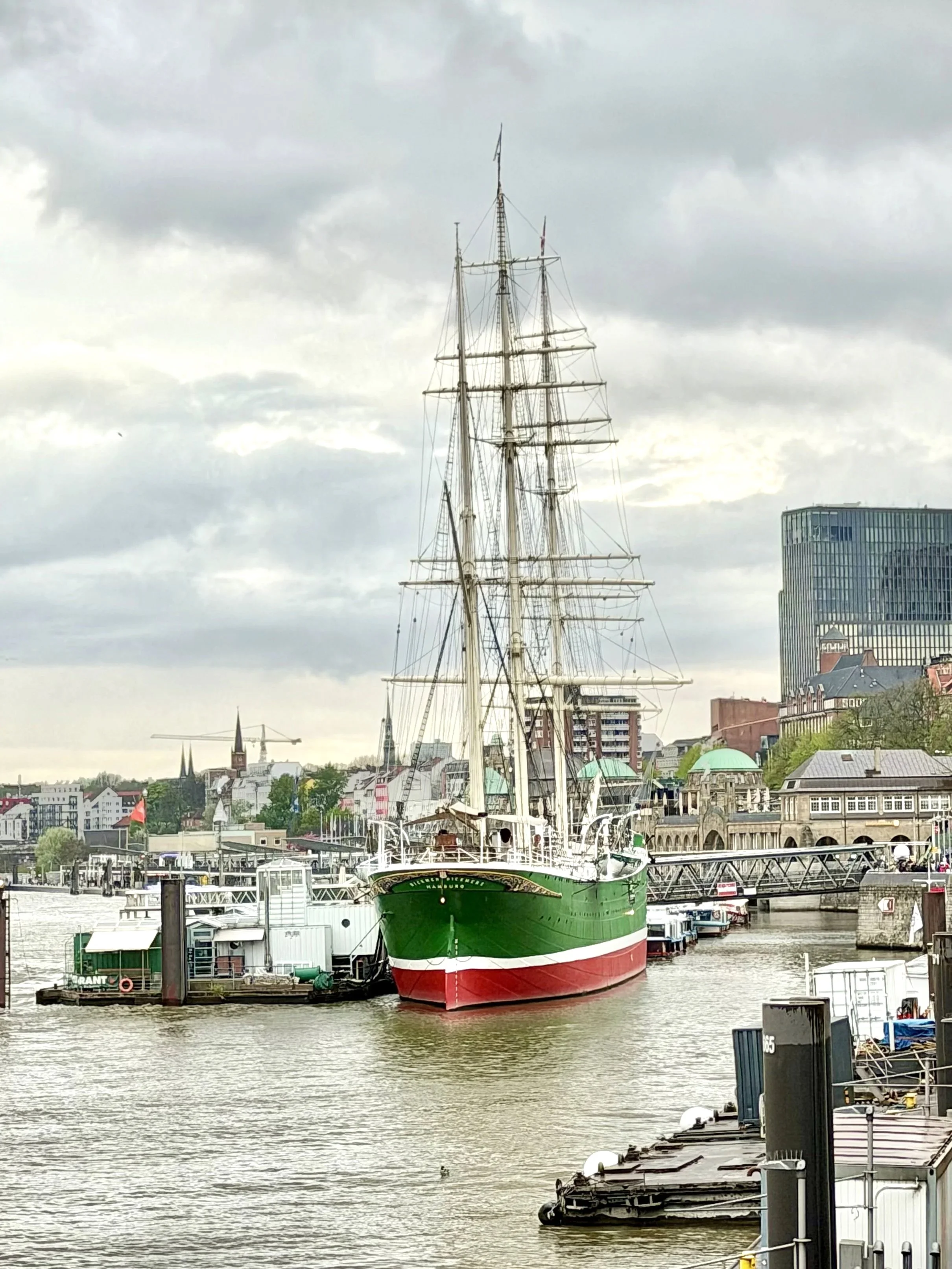
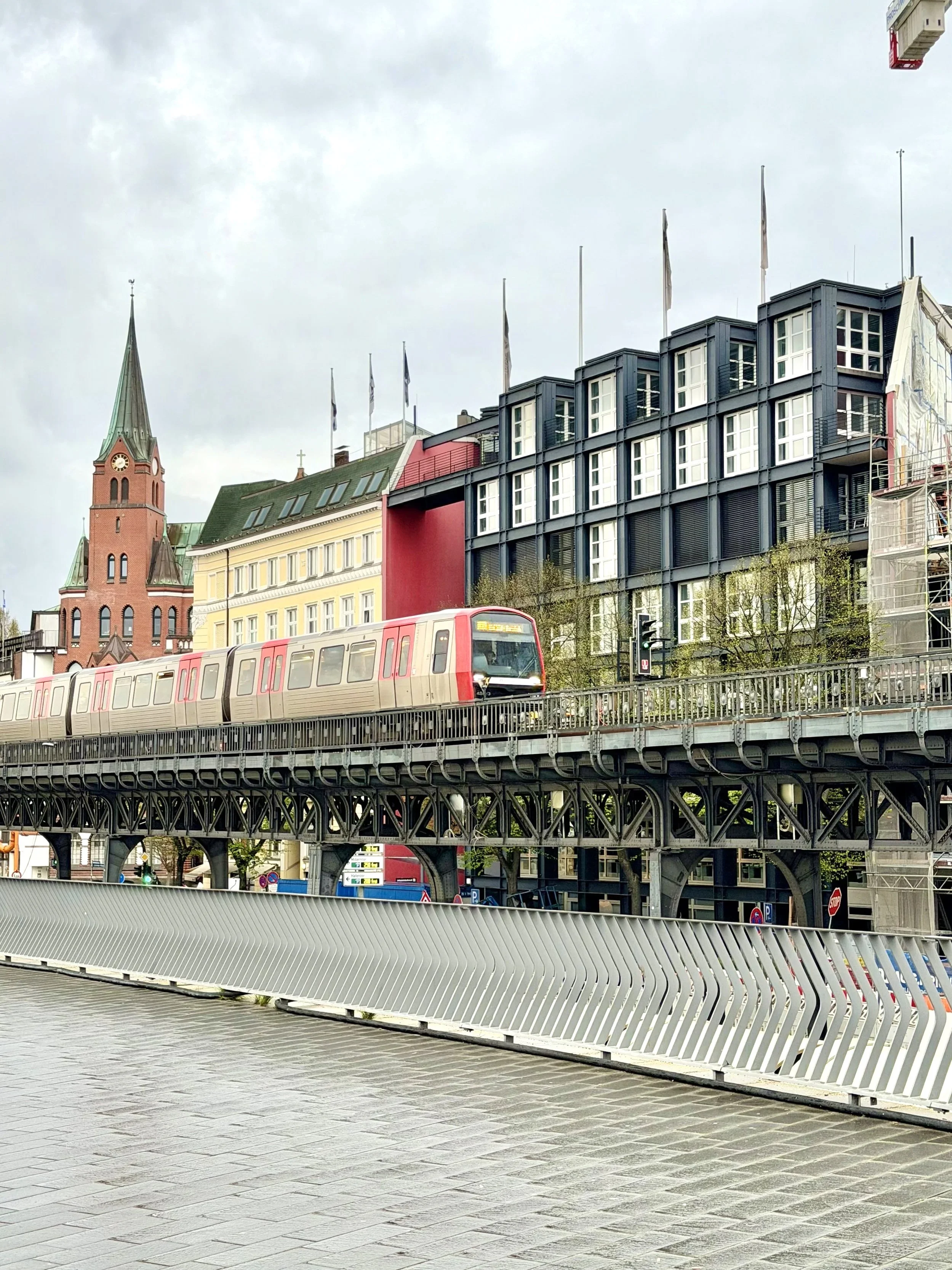
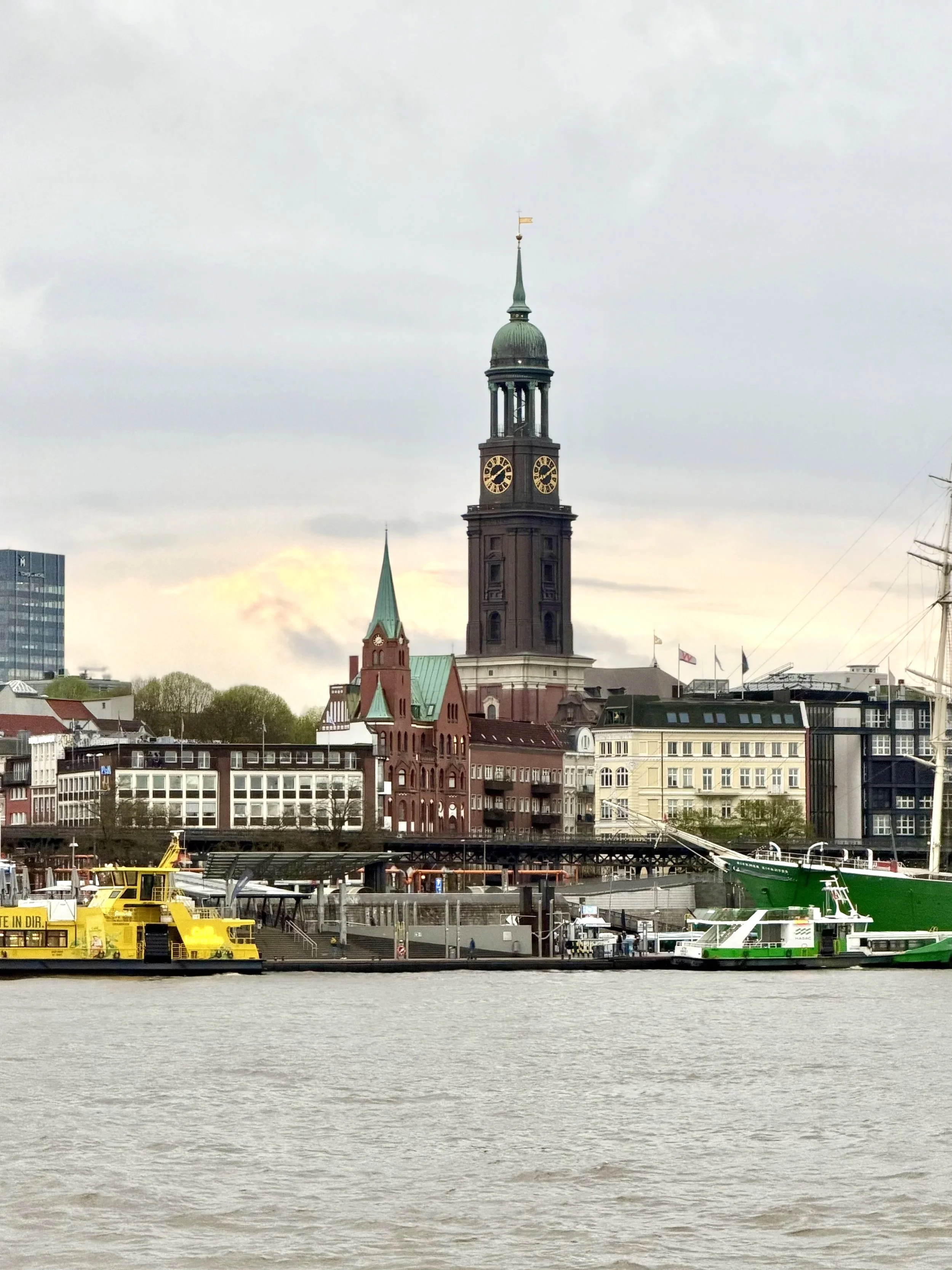
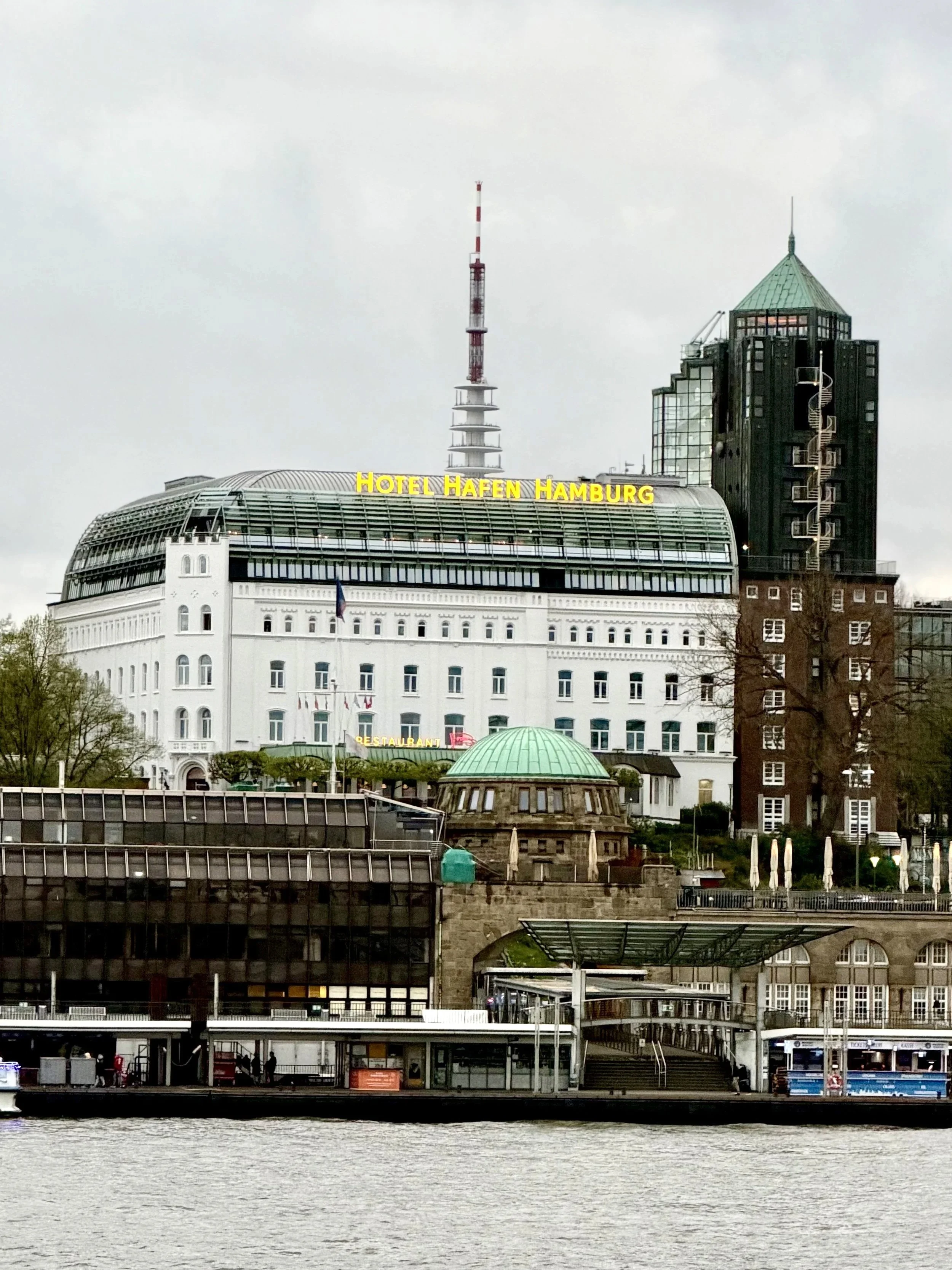
Fun Fact: Much of HafenCity is surprisingly new. Over the last two decades, this former industrial dockland has been transformed into one of Europe’s largest urban redevelopment projects - proving that apparently even entire harbor districts can get a very successful glow-up.
Dinner, Drinks & Hamburg After Dark
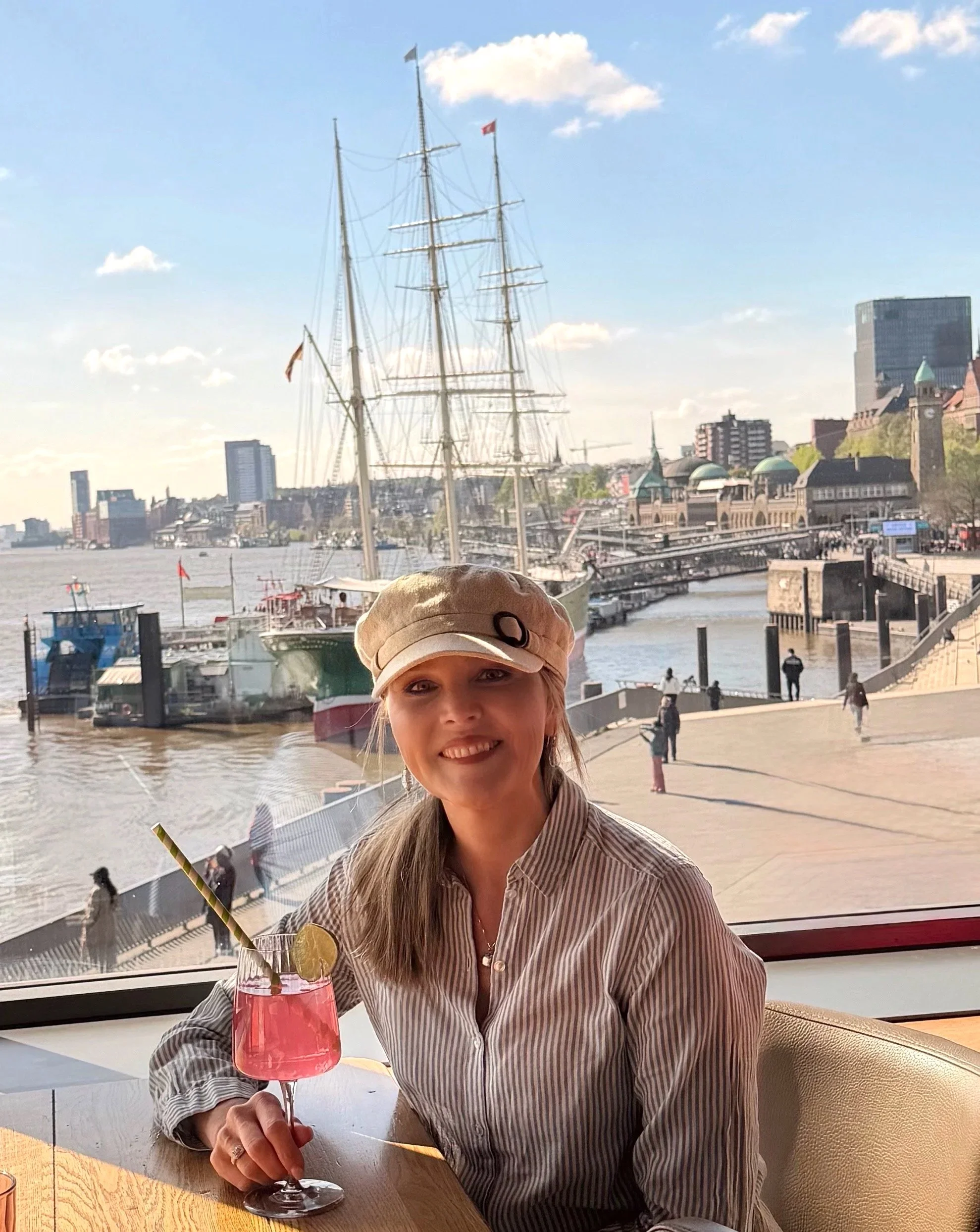
By late afternoon, we were more than ready to slow the pace a bit and properly enjoy Hamburg’s waterfront atmosphere.
Some of the adults settled in for cocktails at ALEX Hamburg Überseebrücke, an upstairs café and restaurant with sweeping harbor views that practically begs you to linger longer than intended. From our table, we watched ferries glide across the water while the afternoon light softened over HafenCity, giving the entire waterfront a calm, almost cinematic glow.
It was one of those rare travel pauses where nobody rushes, nobody checks the time, and everyone is just content to sit back, relax, and take it all in.
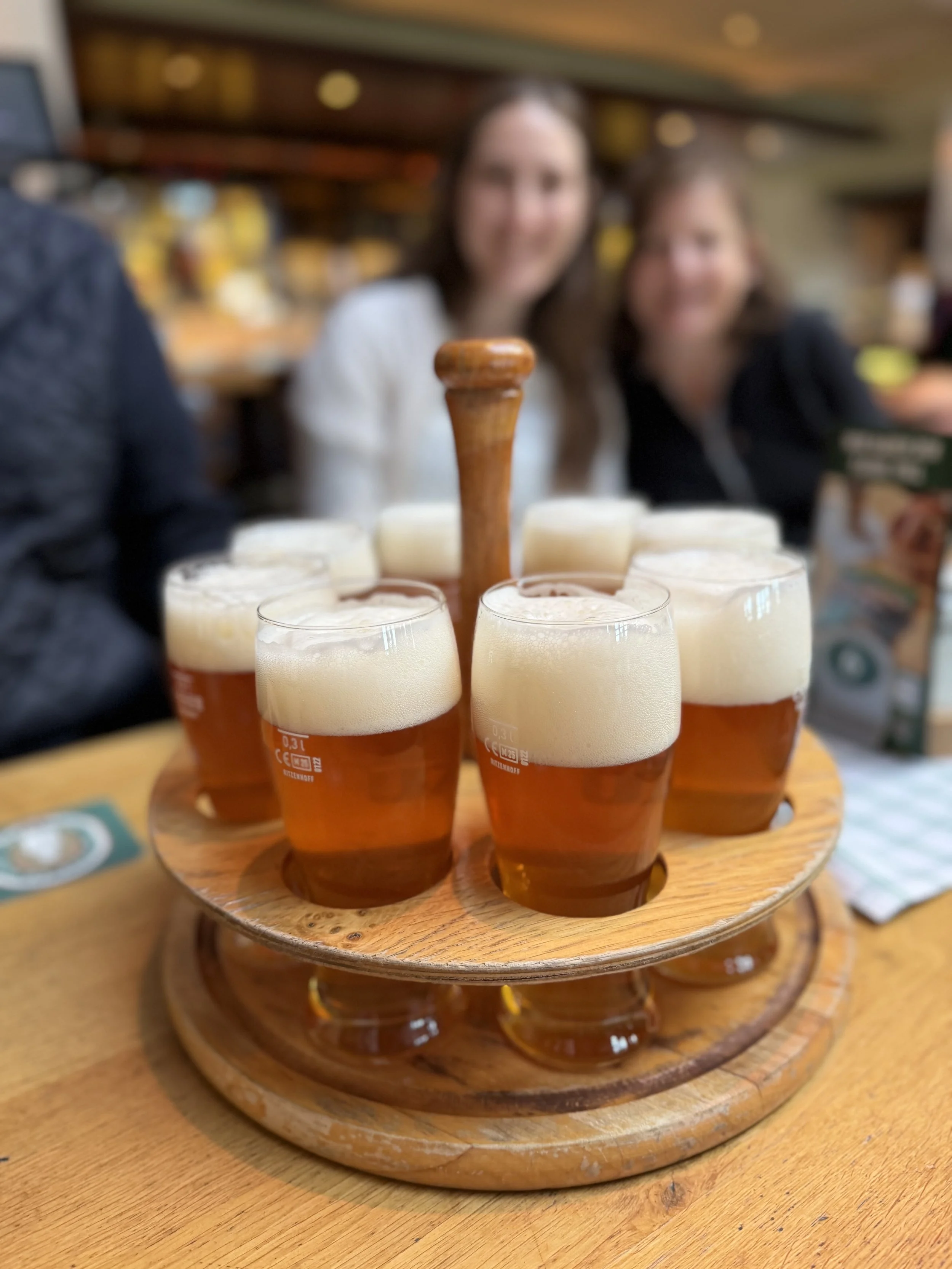
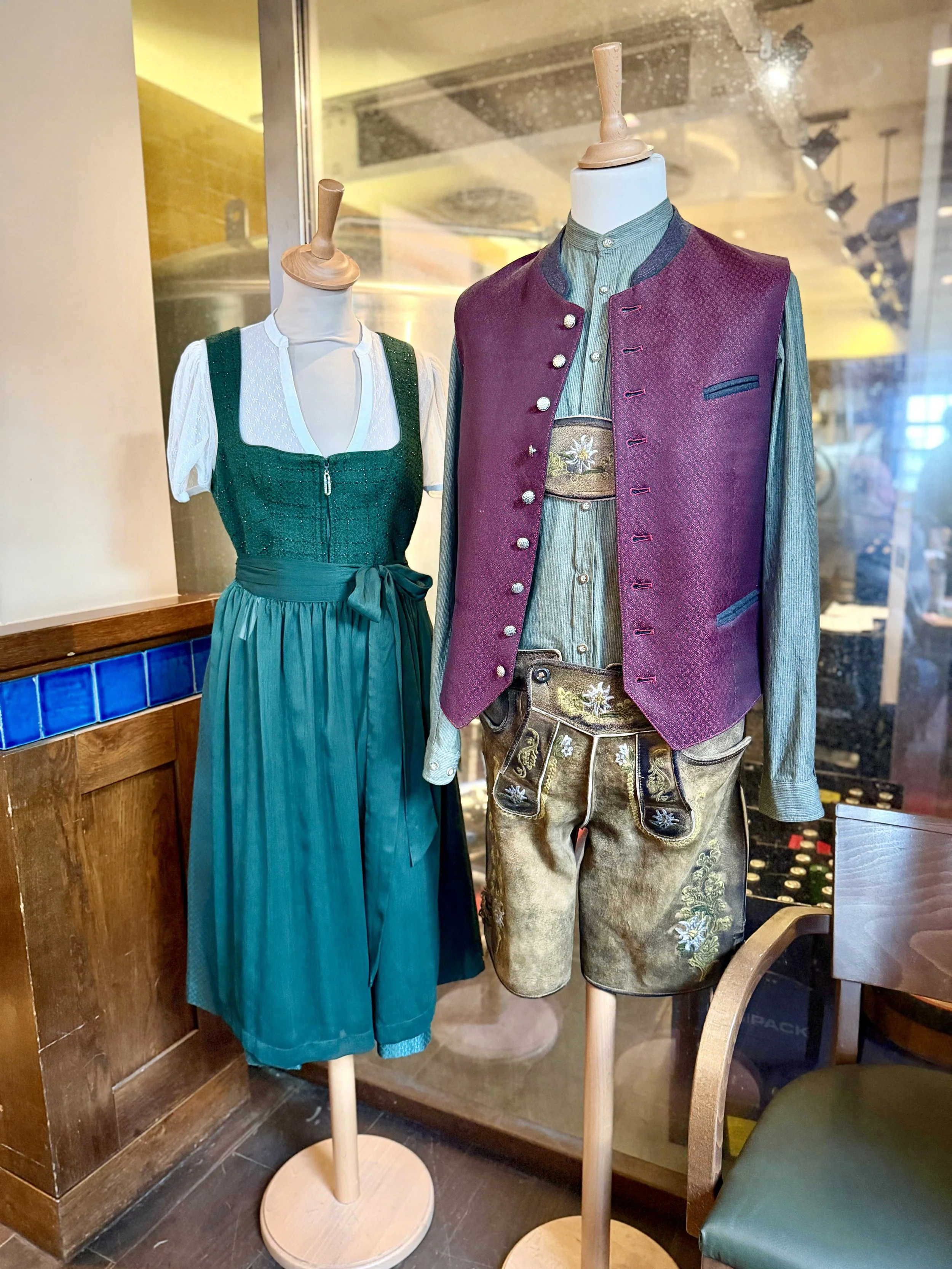
Eventually, we regrouped and made our way down the block for dinner at Blockbräu, a lively waterfront brewery restaurant right by the harbor. If HafenCity feels sleek and modern, Blockbräu is its warmer, more traditional counterpart — all wood beams, industrial-brewery charm, and big windows looking out toward the constant movement of the port. Inside, the atmosphere is energetic but cozy, the kind of place where the hum of conversation rises as the evening goes on and nobody is in any hurry to leave.
The menu reflects exactly that kind of easygoing variety. Classic German comfort food sits alongside lighter options, seafood, schnitzels, sausages, burgers, salads, and oversized pretzels — basically a “something for everyone” situation that works perfectly for a large, multi-generational group. And of course, the beer is front and center, brewed on-site and served in generous glasses that feel very on-brand for a harbor city that takes its traditions seriously.

Note: Children’s faces have been intentionally blurred for privacy
After dinner, we moved to the terrace for another round of drinks and settled in as the evening unfolded over the water. The harbor lights began to glow outside the windows, and the energy shifted from daytime sightseeing to a slower, more reflective rhythm. It became one of those travel moments where you’re no longer actively “doing” anything — just talking, laughing, and replaying the highlights of the day while Hamburg quietly sparkled outside.
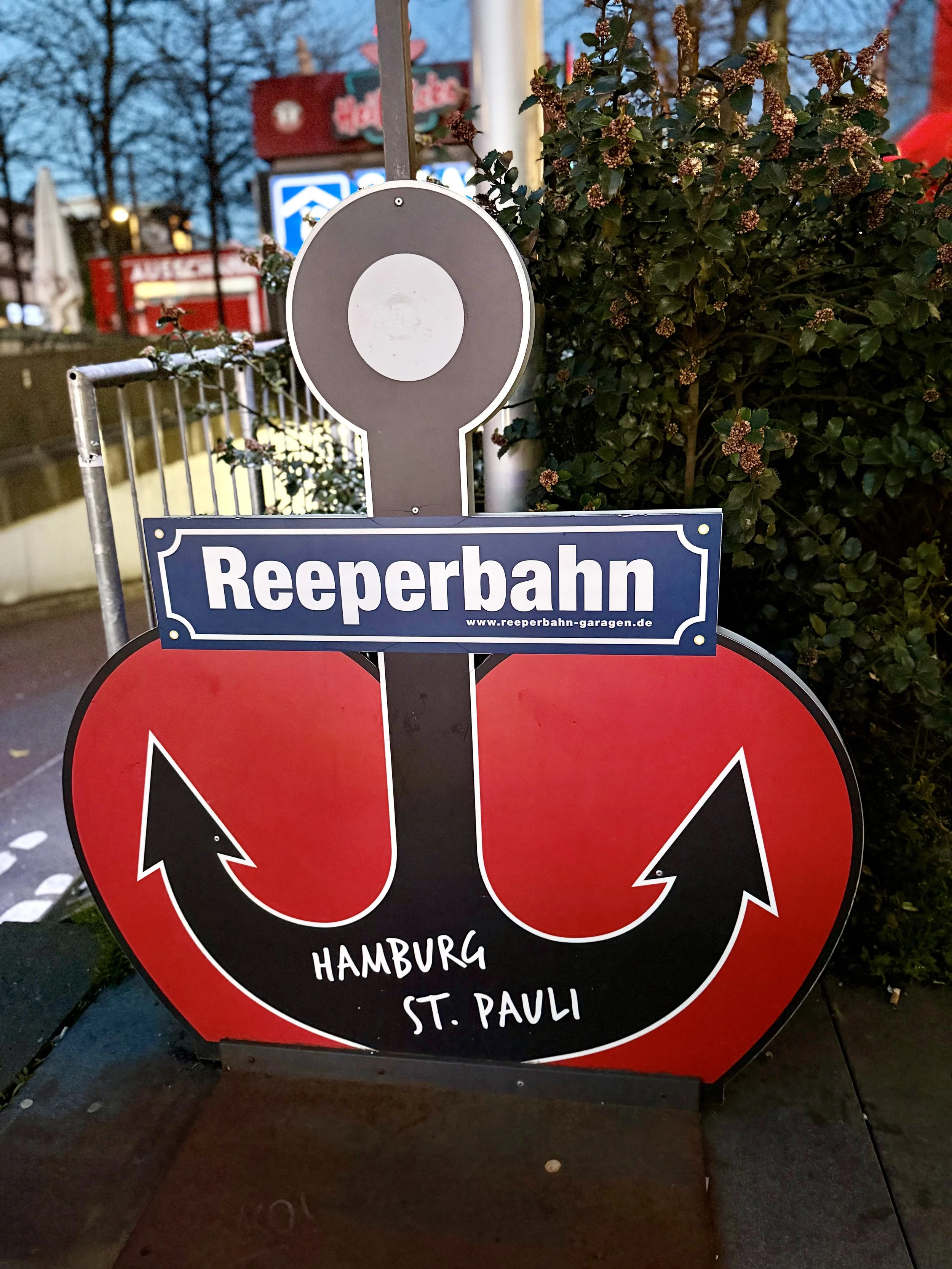
From there, our group naturally split again. Everyone with children headed back to the hotel, while six of us decided to wander a little further into the evening and walk toward Reeperbahn.
The Reeperbahn is Hamburg’s most famous nightlife district — a neon-lit stretch known for bars, clubs, music venues, and its well-established red-light scene. It’s energetic, loud, and unmistakably nightlife-focused, drawing everything from curious visitors to full-on party crowds. We mostly stayed along the edges, just walking through to get a feel for the atmosphere rather than diving into it.
After a long day of sightseeing, we decided we had seen enough and began the walk back toward the hotel. We could have easily taken public transport at that point, but Hamburg at night was too beautiful to rush. The harbor lights, quiet streets, and evening energy made the walk feel like a calm final chapter to an otherwise full day — the kind of ending that lingers a little longer than expected.
Final Thoughts on Hamburg’s Harbor District
What makes HafenCity work so well for diverse groups of travelers is that there’s not one “perfect” itinerary. You have options.
Want architecture and museums? Hamburg has that. Prefer waterfront cocktails and harbor cruises? Also covered. Traveling with toddlers who require emergency ice cream stops every few hours? Hamburg can accommodate that too.
Our group of thirteen — spanning infants, a preschooler, twenty-somethings, parents, and older adults — somehow all found things we genuinely enjoyed, even while frequently splitting up throughout the day.
That’s what makes this such a great one-day itinerary for couples, families, multigenerational groups, or cruise passengers stopping in Hamburg for a port day.
And while we technically only scratched the surface of Hamburg, I actually think that worked in the city’s favor. Instead of feeling like we “checked Hamburg off the list,” the experience left me genuinely curious to return.
Because somewhere between the glowing harbor cruises, endless bridges, giant ships, waterfront cafés, and surprisingly polished modern skyline, Hamburg stopped feeling like a convenient stop between destinations and started feeling like a destination in its own right.
Also, I’m still thinking about the Nutella gelato.
