3-Day Lucerne Itinerary: The Perfect Introduction to Switzerland
If you've already read my article, The Perfect 14-Day Switzerland Itinerary, then you know Lucerne was our very first stop after landing in Zürich—and it could not have been a better introduction to Switzerland. In this guide, I’ll share exactly how we spent three days in Lucerne, including where we stayed, what we ate, the excursions we chose, and a few lessons learned along the way. As you continue planning your trip, be sure to check out our detailed itineraries for the Jungfrau Region, Montreux, Zermatt, and Zürich, where we share everything from hotels and dining recommendations to our favorite hikes, excursions, and hidden gems.
In preparation for this trip, I spent an embarrassing number of hours researching Switzerland. I compared train routes, mountain excursions, hotel locations, restaurant reviews, weather patterns, and enough itinerary variations to make my browser question my sanity. Consider this the condensed version of all that research so you don't have to repeat it.
This adventure was part bucket-list trip, part 50th birthday celebration, and part excuse to spend two weeks chasing mountain peaks, glacier views, charming villages, and lakeside promenades across Switzerland. While Bryan and I experienced this itinerary as a couple, nearly everything in this guide could easily be adapted for families, multi-generational groups, or other travelers looking for a well-paced introduction to the country.
Before diving into our day-by-day itinerary, here’s a quick destination snapshot and look at why Lucerne earned the honor of being our first stop.
Destination Snapshot
Time Spent: 3 Nights
Best For: First-time visitors, couples, families, scenic train travel, and travelers who want a mix of culture, nature, and outdoor adventure
Home Base: Lucerne
How We Arrived: Regional train from Zürich Airport (approximately 1 hour)
Major Excursions: Mount Pilatus, Mount Titlis
Transportation: Walking, trains, boats, cogwheel railway, cable cars, and funiculars
Swiss Travel Pass Worth It? Absolutely
Would We Stay Here Again? Without hesitation
Why We Chose Lucerne
We chose Lucerne because it embodied the Switzerland we had been imagining long before we booked our flights: a walkable historic city set against a backdrop of mountains and water.
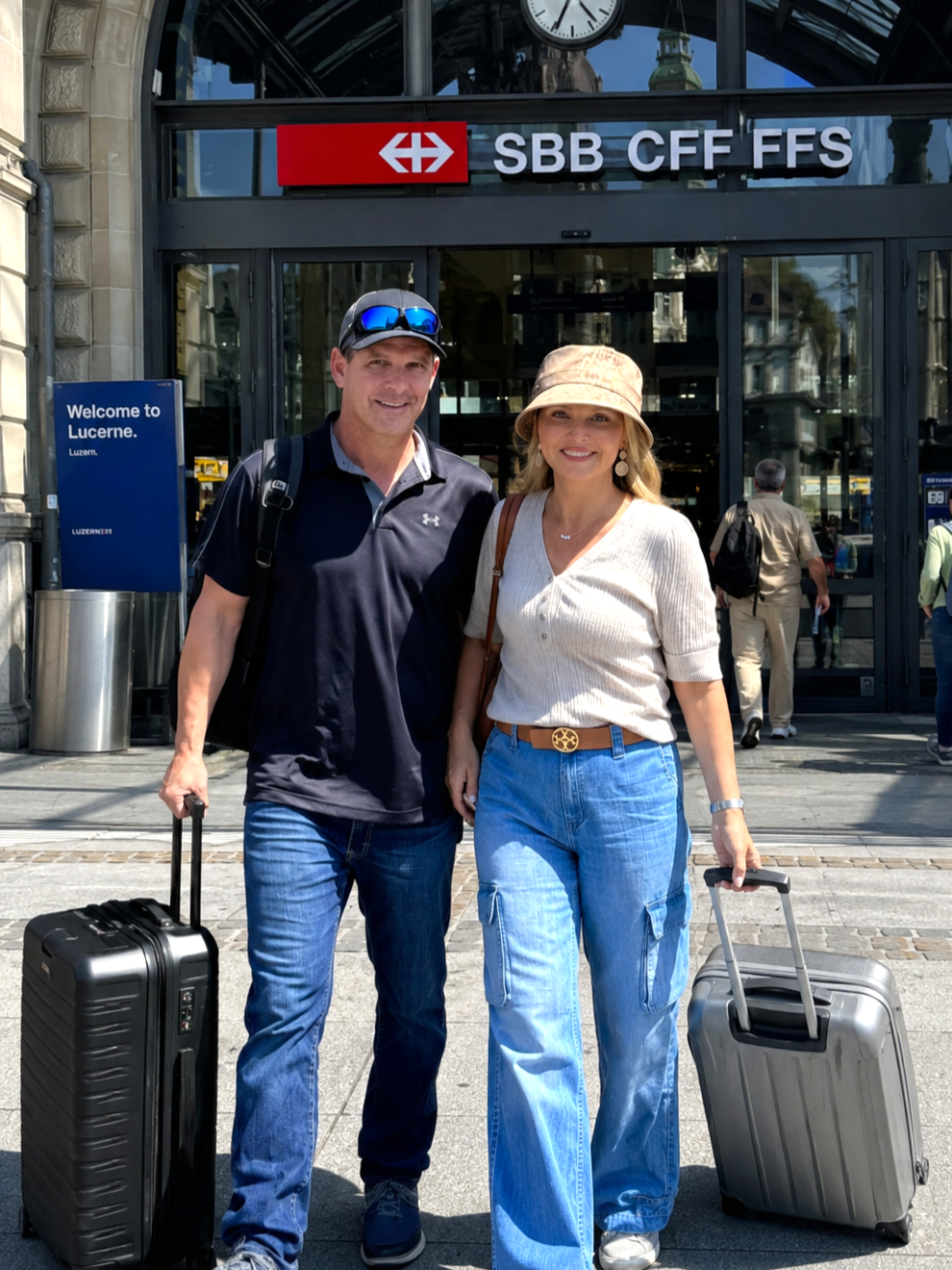
Although we flew into Zürich from the United States, we had no desire to start our adventure in a large city. After an overnight flight, we wanted our first Swiss experience to feel unmistakably Swiss — and Lucerne delivered exactly that.
Nestled along the shores of Lake Lucerne and surrounded by mountain peaks, the city offered the perfect balance of natural beauty, history, culture, and outdoor adventure. We were looking for a destination with lake views, mountain access, charming streets to wander, excellent public transportation, and easy access to iconic Swiss excursions. Lucerne checked every box.
It also couldn't have been easier to reach. After landing at Zürich Airport, we simply boarded a regional train and arrived in Lucerne about an hour later—one of the most seamless airport-to-destination transfers we've ever experienced.
Long before we finalized our itinerary, we had our hearts set on visiting both Mount Pilatus and Mount Titlis. Pilatus promised dramatic alpine scenery and the unforgettable Fräkmüntegg alpine slide, while Titlis offered glaciers, snow-covered peaks, and the chance to explore an ice cave—even in summer.
Looking back, Lucerne was the perfect place to ease into the rhythm of Swiss travel. It gave us time to recover from the journey, settle into the country, and immediately immerse ourselves in the landscapes that had inspired this trip in the first place.
Where We Stayed
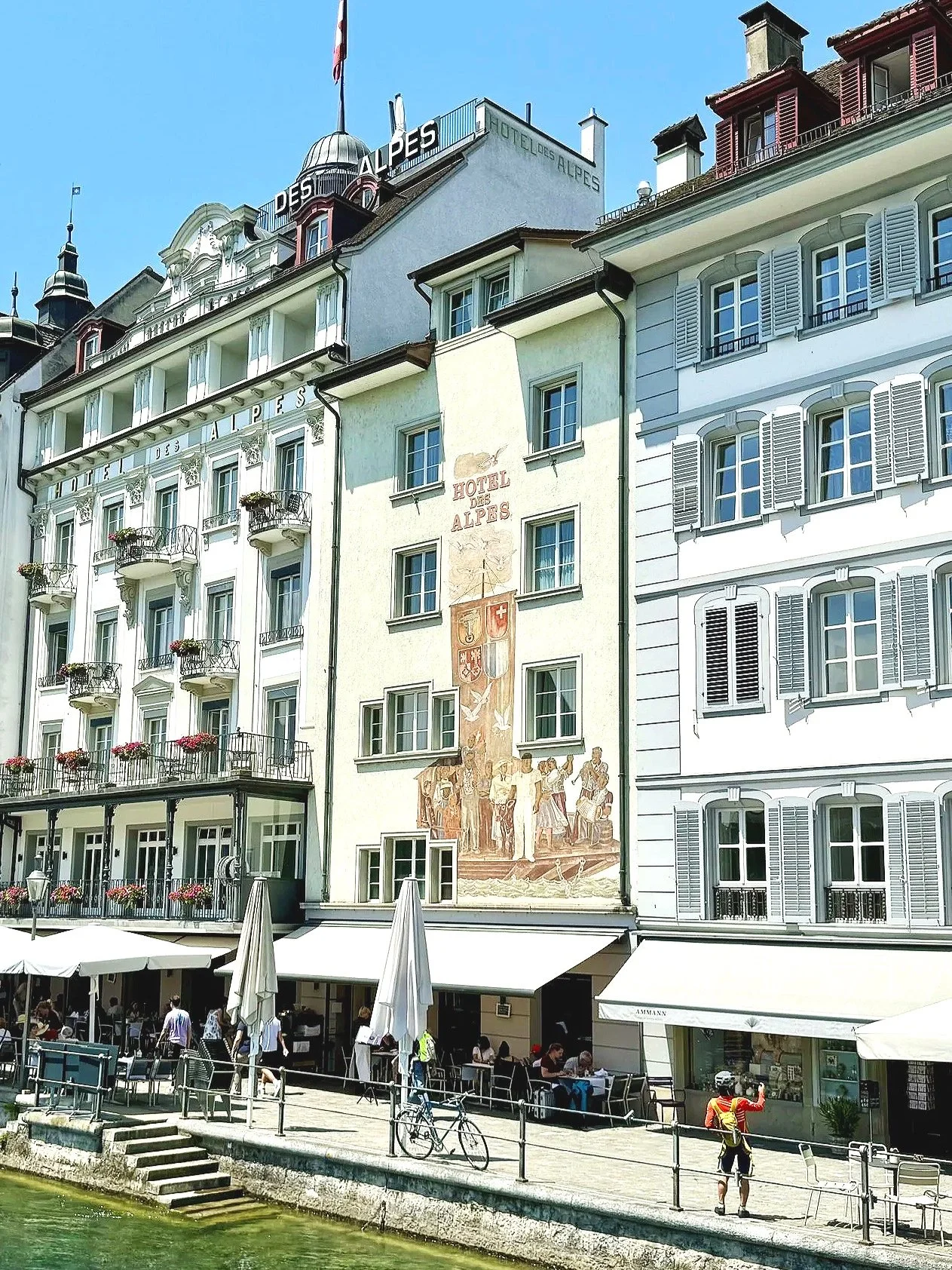
For our three nights in Lucerne, we stayed at Hotel des Alpes, and for our travel style, it was exactly the right choice.
When planning this trip, our top priority wasn't luxury—it was location. We knew we'd spend most of our time exploring, so we wanted a hotel that made it easy to reach trains, buses, restaurants, and the city's main attractions.
Hotel des Alpes delivered on all fronts.
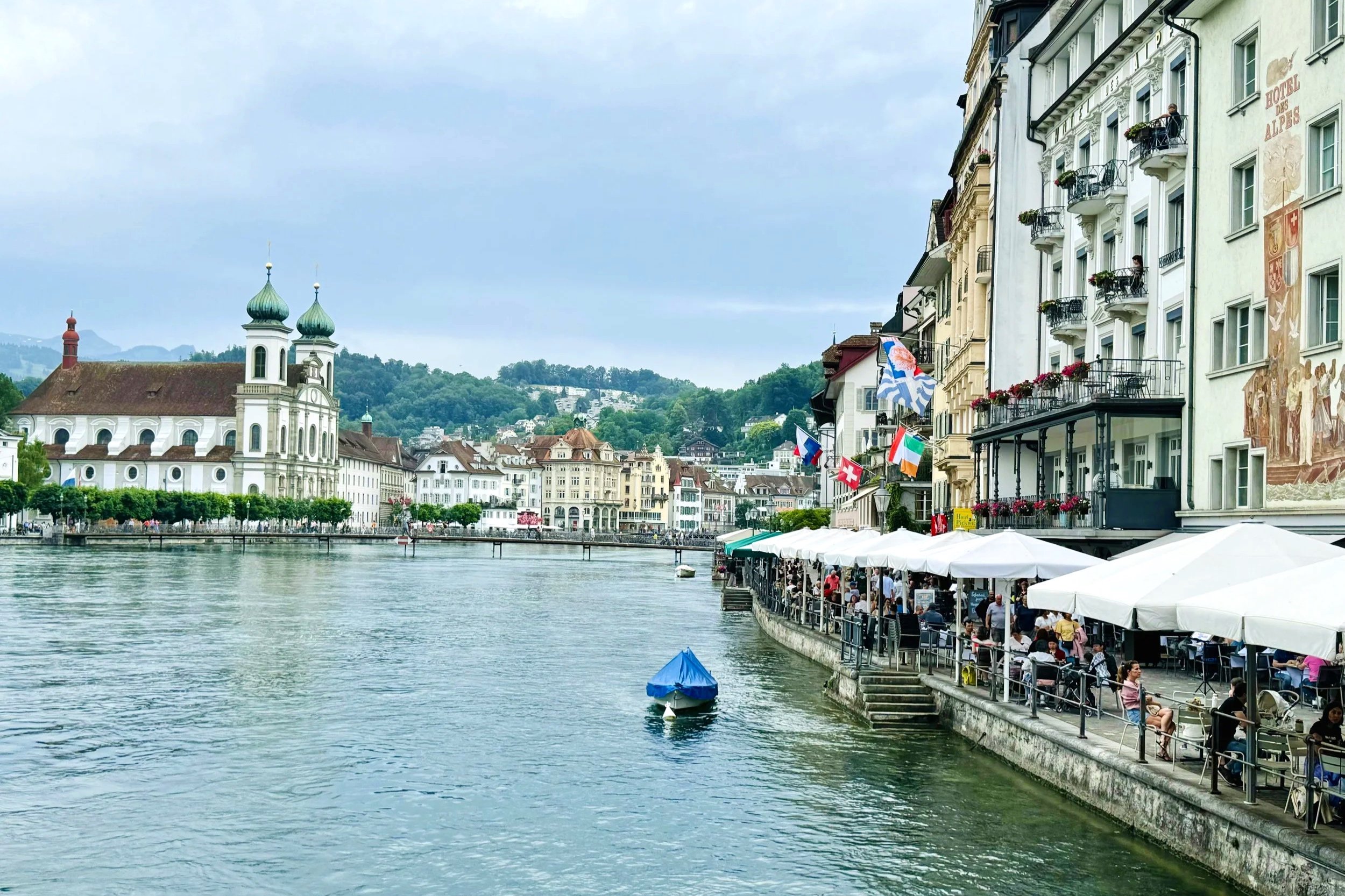
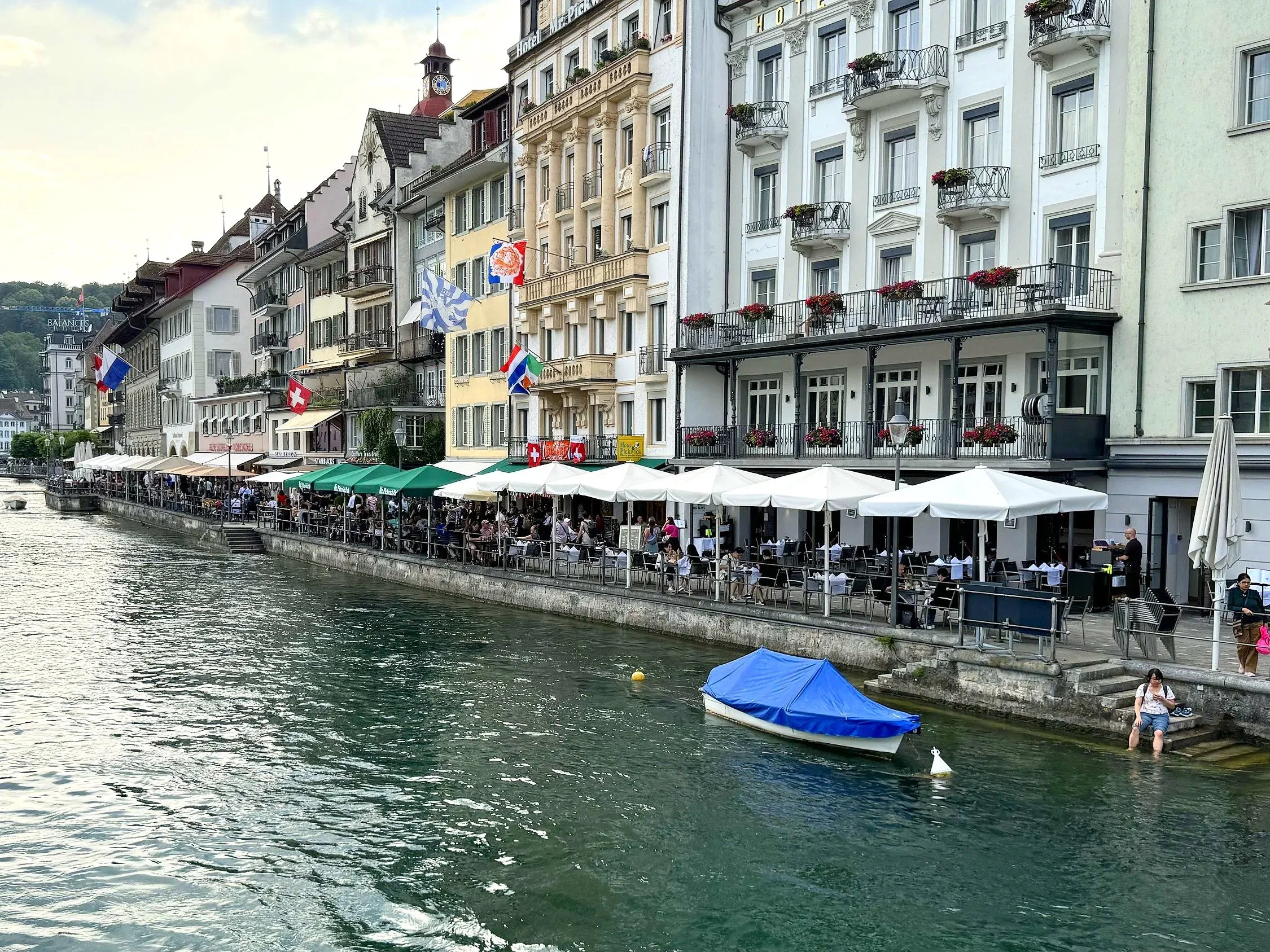
Located along the Reuss River in the heart of Lucerne, the hotel is within easy walking distance of the train station, Chapel Bridge, the lakefront promenade, Old Town, and countless restaurants and shops. Having so much within reach made exploring the city incredibly convenient.
One of our favorite features was the view. Waking up to the river and historic buildings each morning felt like stepping into a postcard.
While Hotel des Alpes isn't a luxury property, it was clean, comfortable, centrally located, and offered excellent value for the price. For travelers who prioritize walkability, convenience, and spending their days out exploring rather than lounging at the hotel, it's an excellent choice.
Looking back, we would happily stay here again.
Getting Around Lucerne (and Why Switzerland Makes It Ridiculously Easy)
One of the biggest surprises about Switzerland was just how effortless it was to get around. The transportation system is efficient, reliable, and somehow manages to make even the journey itself part of the experience.
For this trip, we traveled exclusively by train between cities and relied primarily on walking once we arrived in Lucerne.
The Swiss Travel Pass turned out to be one of our best purchases. It covers unlimited travel on trains, buses, and boats throughout much of the country, offers discounts on many mountain excursions, and includes admission to numerous museums. As you'll read later, one of those included museums became an unexpected highlight of our time in Lucerne.
Even for first-time visitors, the system is remarkably easy to navigate. Signage is clear, schedules are reliable, and everything quickly becomes second nature—even when you're running on just two hours of sleep.
Within Lucerne, we walked almost everywhere, including the Old Town, lakefront promenade, and Chapel Bridge area.
Getting to our major excursions was equally straightforward. For Mount Pilatus, we took a bus to Kriens, ascended by gondola, descended via the famous cogwheel railway, and returned to Lucerne by boat across the lake. For Mount Titlis, we simply boarded a train to Engelberg before continuing upward by cable car into the Alps.
By the end of the trip, transportation wasn't something we had to think about—it simply became part of the rhythm of travel. And in Switzerland, even getting from Point A to Point B comes with spectacular scenery.
Our Lucerne Itinerary

Day 1: Arrival in Lucerne — First Impressions & Chapel Bridge
By early afternoon we stepped off the train in Lucerne., running on a combination of airport coffee, airplane sleep, and sheer willpower. After landing in Zürich from Orlando and taking the one-hour train ride into Lucerne, we stepped out of the station expecting the usual post-flight fog of exhaustion. Instead, we were greeted by the sight of Lake Lucerne shimmering just beyond the platform.
That was the moment everything shifted.
The walk from the train station to our hotel took about ten minutes, crossing the river via one of the pedestrian bridges and passing straight into the heart of the city. It was exactly the kind of arrival that quietly resets your entire energy level without you even realizing it—fresh air, mountain views in the distance, and a city that looks like it was designed specifically to recover jet lag.
Lucerne is often described as one of the most beautiful cities in Switzerland, and it doesn’t take long to understand why. With its medieval architecture and bustling waterfront, it manages to feel both historic and alive at the same time. After dropping our bags since our room wasn’t ready yet, we did what felt like the only logical thing — we went straight back out into the city.
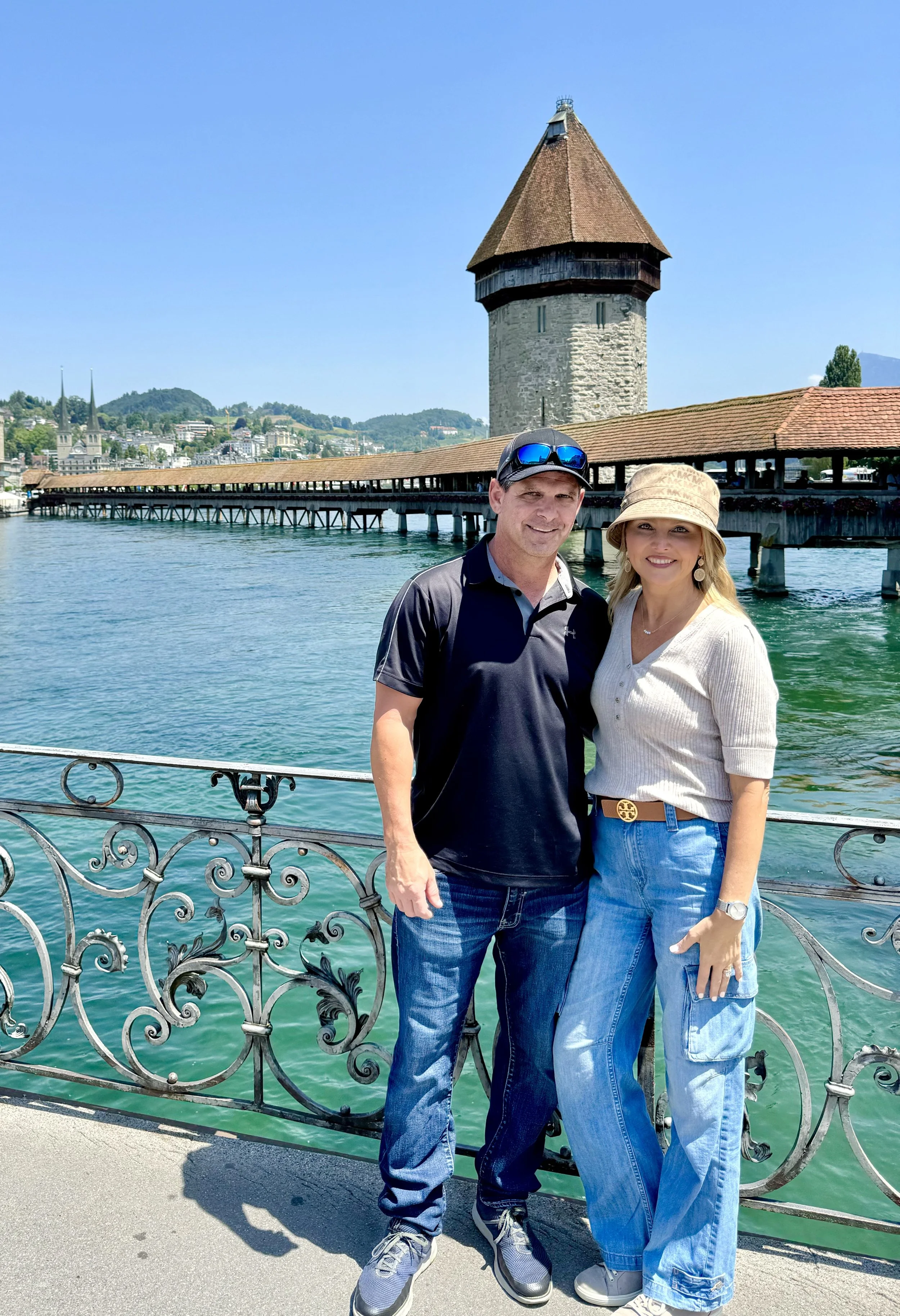
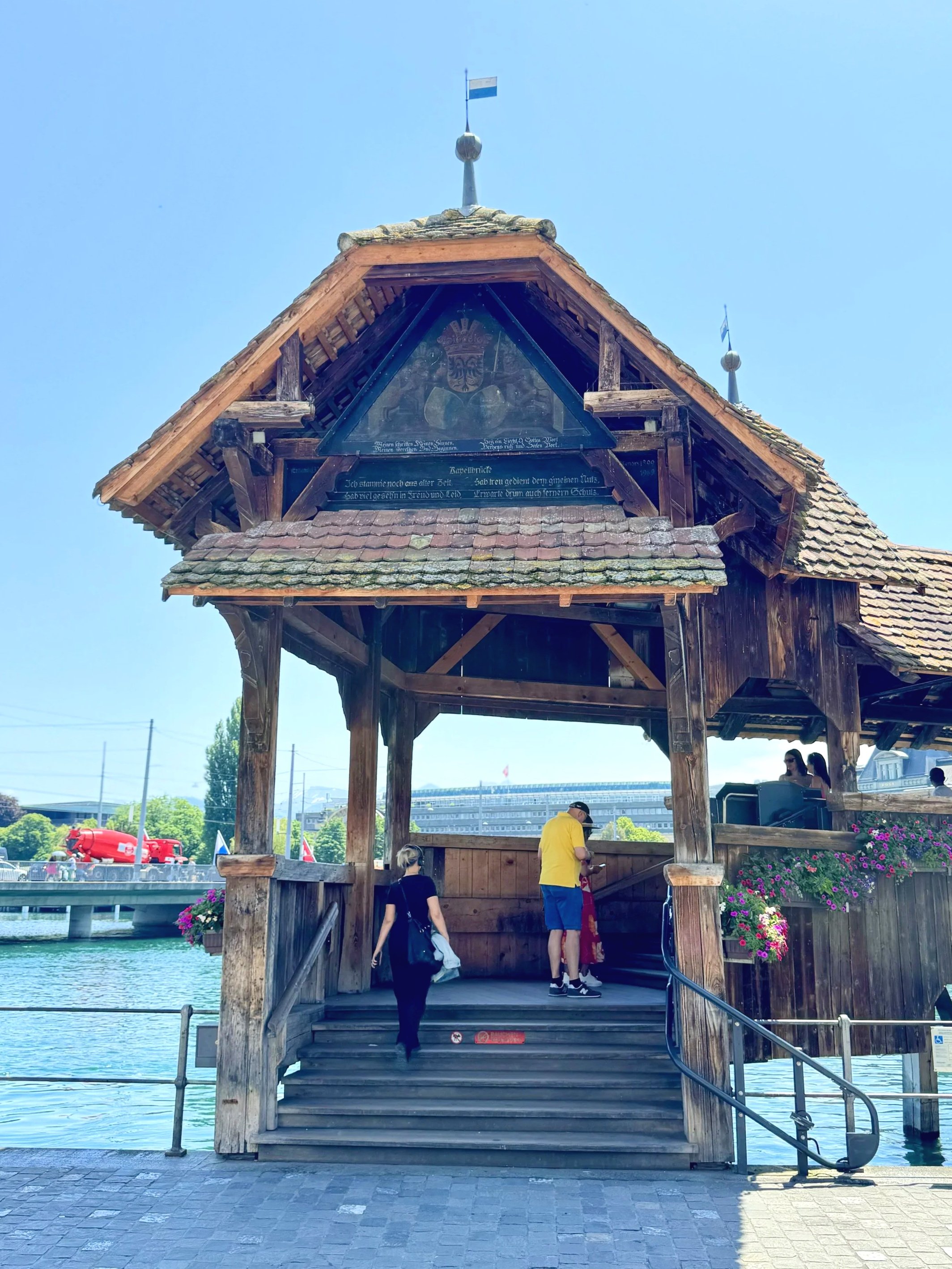
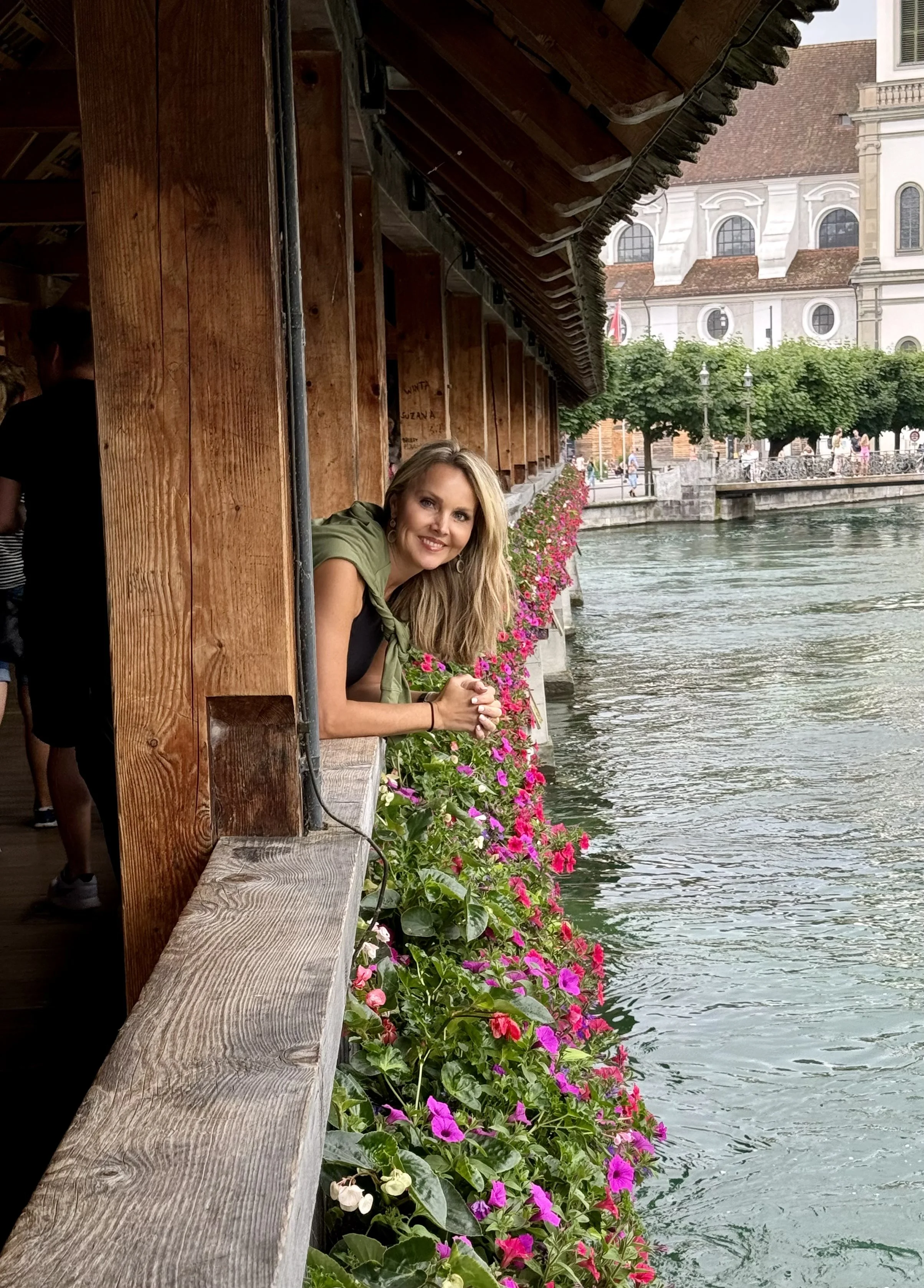
Our first stop was Chapel Bridge (Kapellbrücke), the iconic wooden bridge originally built in 1333 and considered one of the oldest covered wooden bridges in Europe. Inside, the roof is lined with 17th-century painted panels depicting scenes from Lucerne’s history and legends. Walking through it feels less like crossing a bridge and more like moving through an open-air museum. We slowly made our way across, pausing often to admire the painted panels and take in panoramic views of the city. On the far side of the bridge, the promenade opened up along the left river bank, with cafés, swans drifting past, and postcard-level views in every direction.
We looped back to the hotel to check in at 3 p.m., took a short reset, and made a very intentional decision not to nap. Jet lag is powerful, but we were more committed to defeating it than respecting it. A shower and quick rest later, we headed back out again for round two.
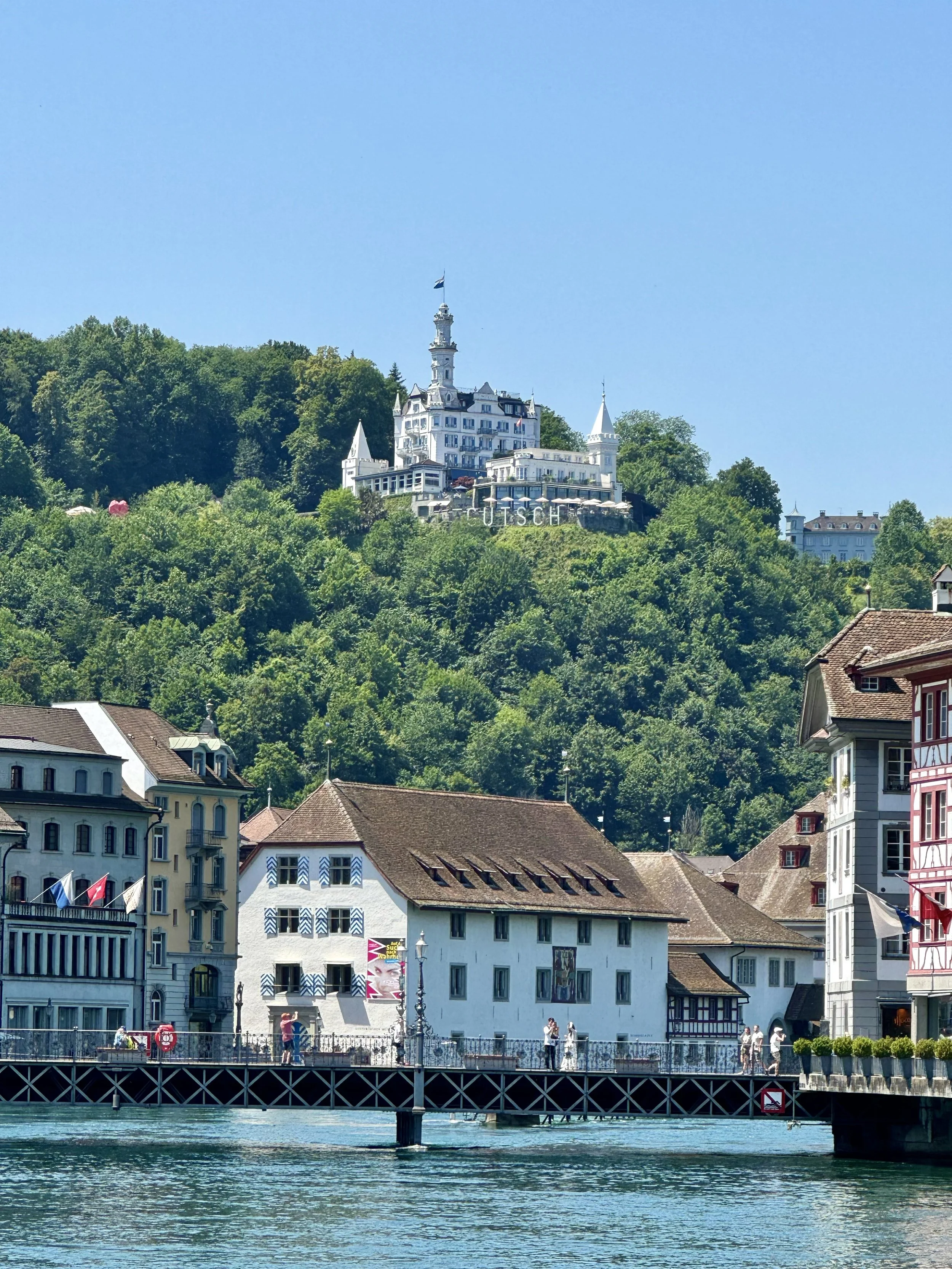
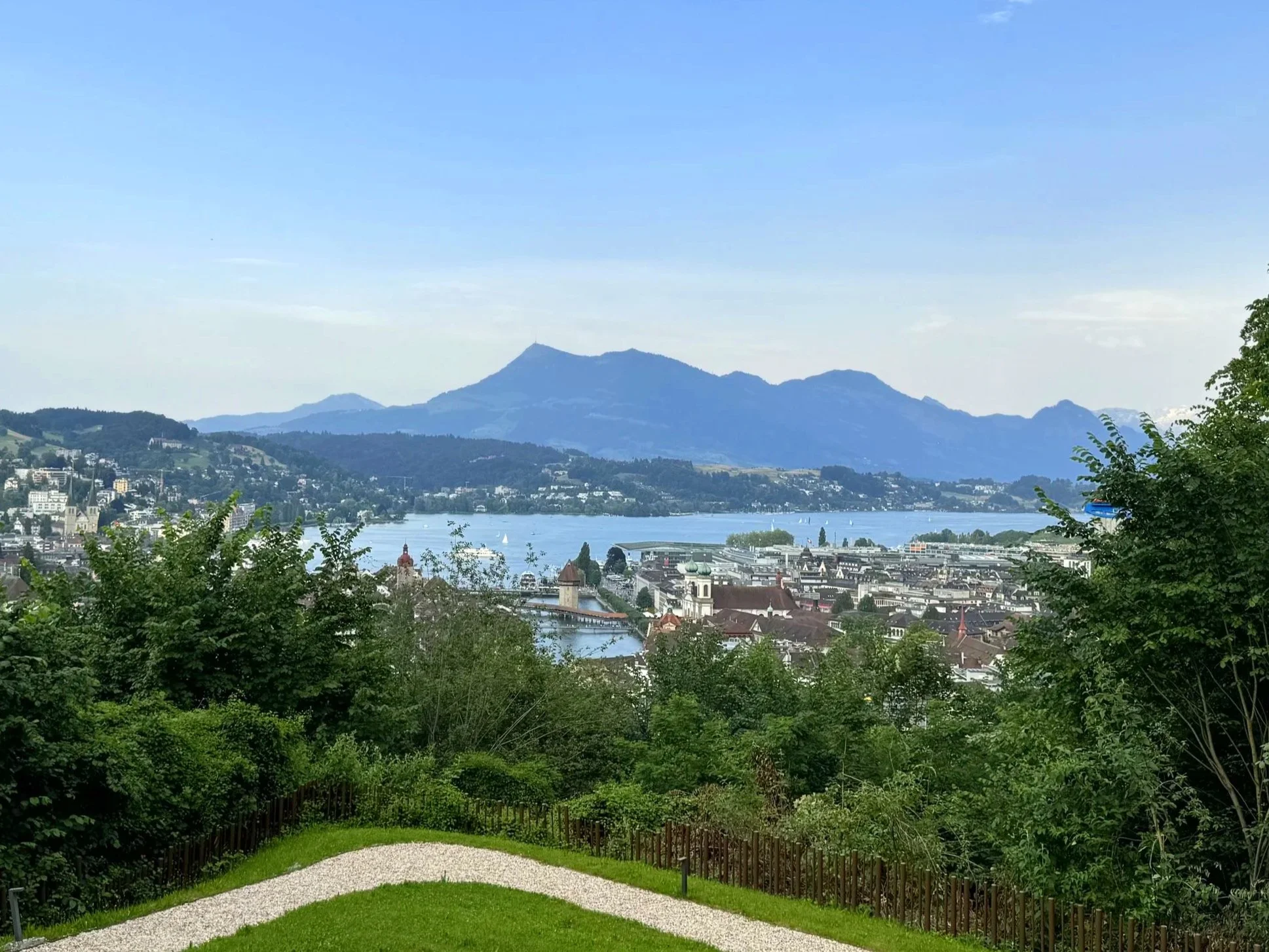
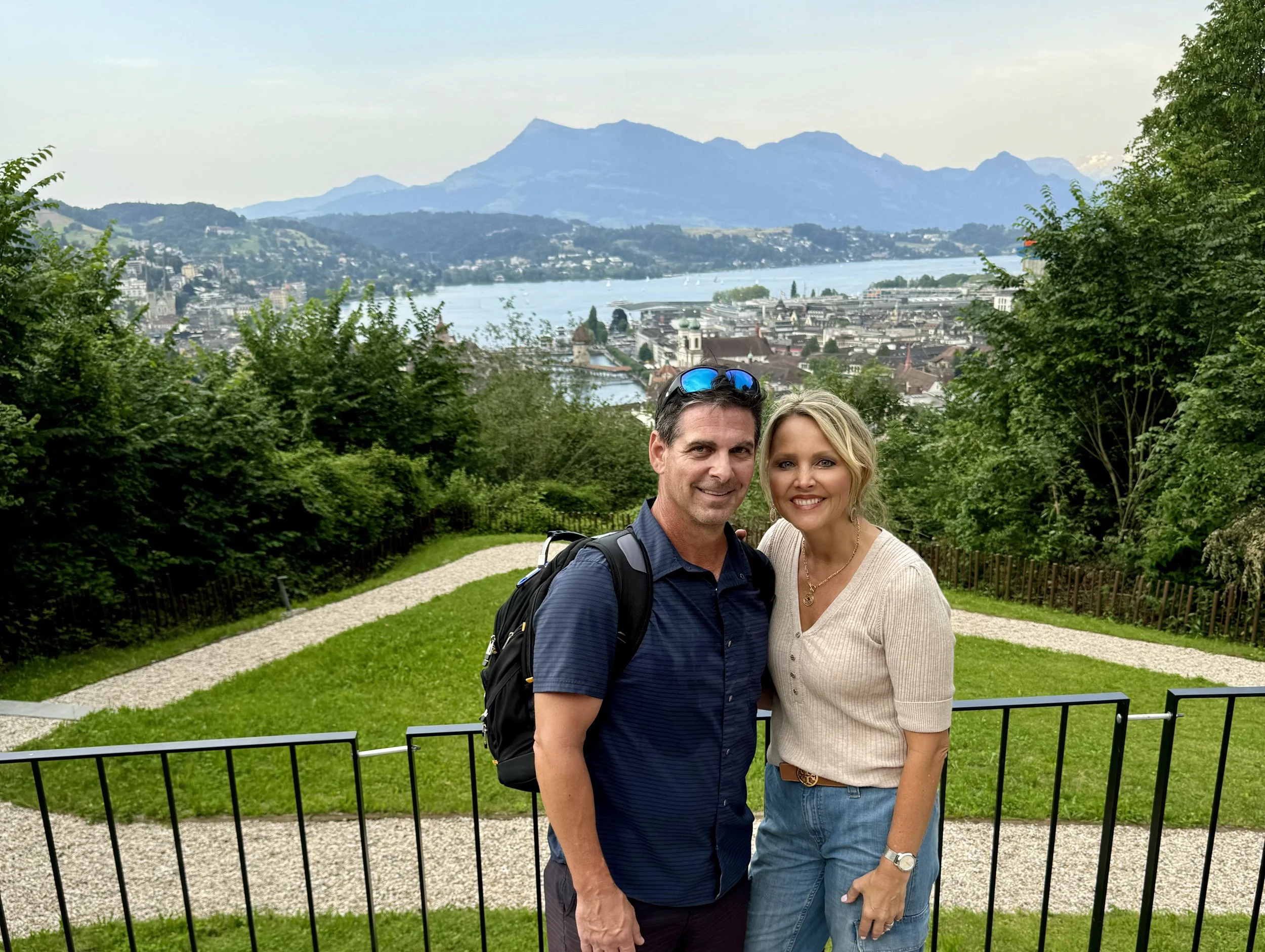
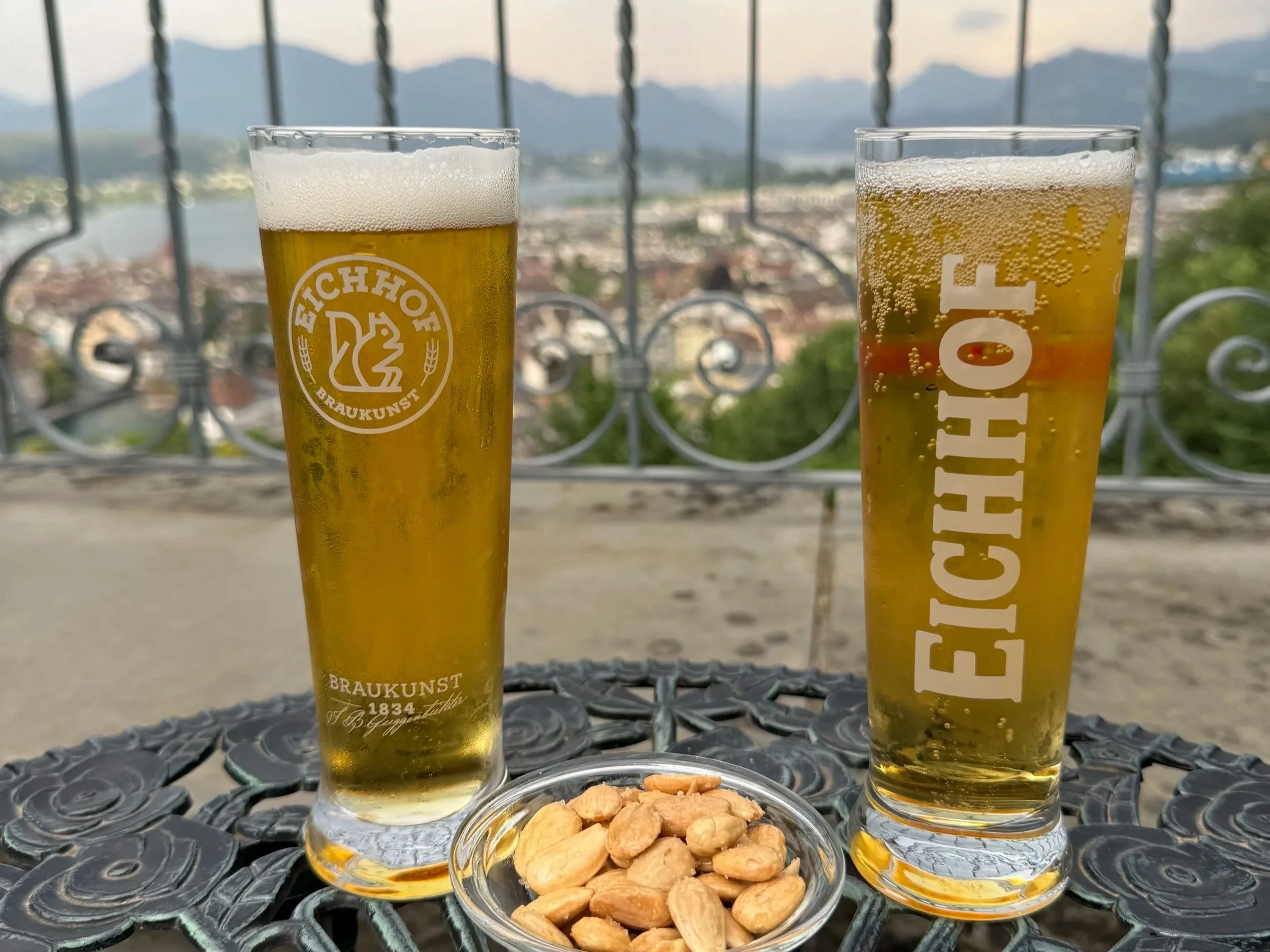
From the riverfront, we continued the day with a short uphill walk toward Château Gütsch, curious to see Lucerne from above. With its turrets, terraces, and storybook silhouette, it feels like something between a castle and a movie set. At the top, we had drinks and a light bite while looking out over the lake and rooftops below, watching the light shift across the city as the day wound down. It was one of those moments where you realize you’ve finally arrived somewhere worth slowing down for.
We returned to the hotel in the early evening, tired but grateful, already oriented to the city, and quietly excited for what was next: our first alpine excursion to Mount Pilatus.
Pro Tip: Resist the urge to nap after arriving in Lucerne from an international flight. A little fresh air, a stroll through town, and an early bedtime will do far more for your jet lag than a 3 pm “quick nap” that turns into a four-hour coma.
Day 2: Mount Pilatus, Alpine Thrills & An Unexpected Lucerne Highlight
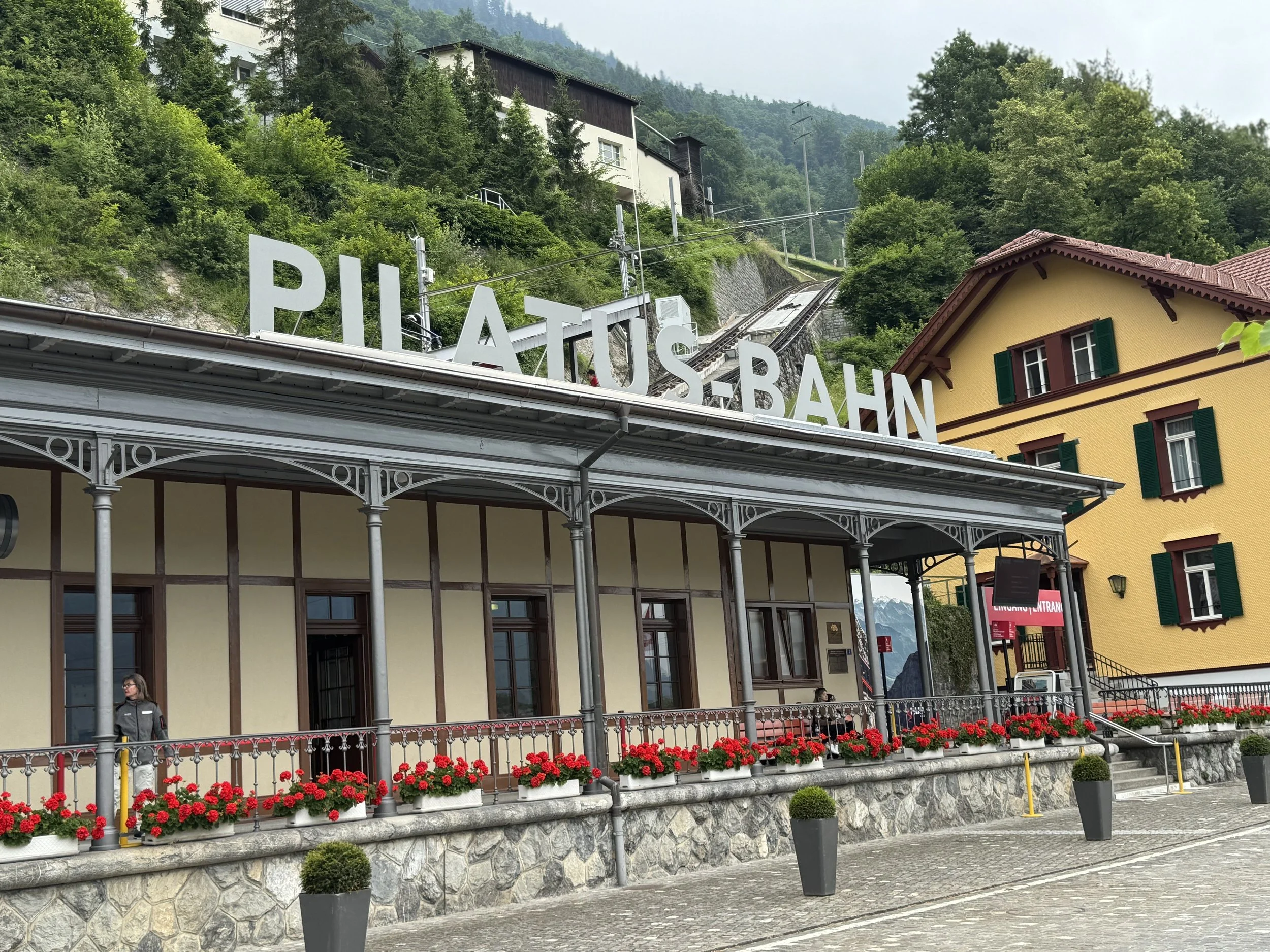
If Day 1 was our introduction to Switzerland, Day 2 was when Switzerland decided to show off. We were up early for the famous Golden Round Trip to Mount Pilatus, an excursion that combines buses, gondolas, a cogwheel railway, and a scenic boat cruise into one spectacular day.
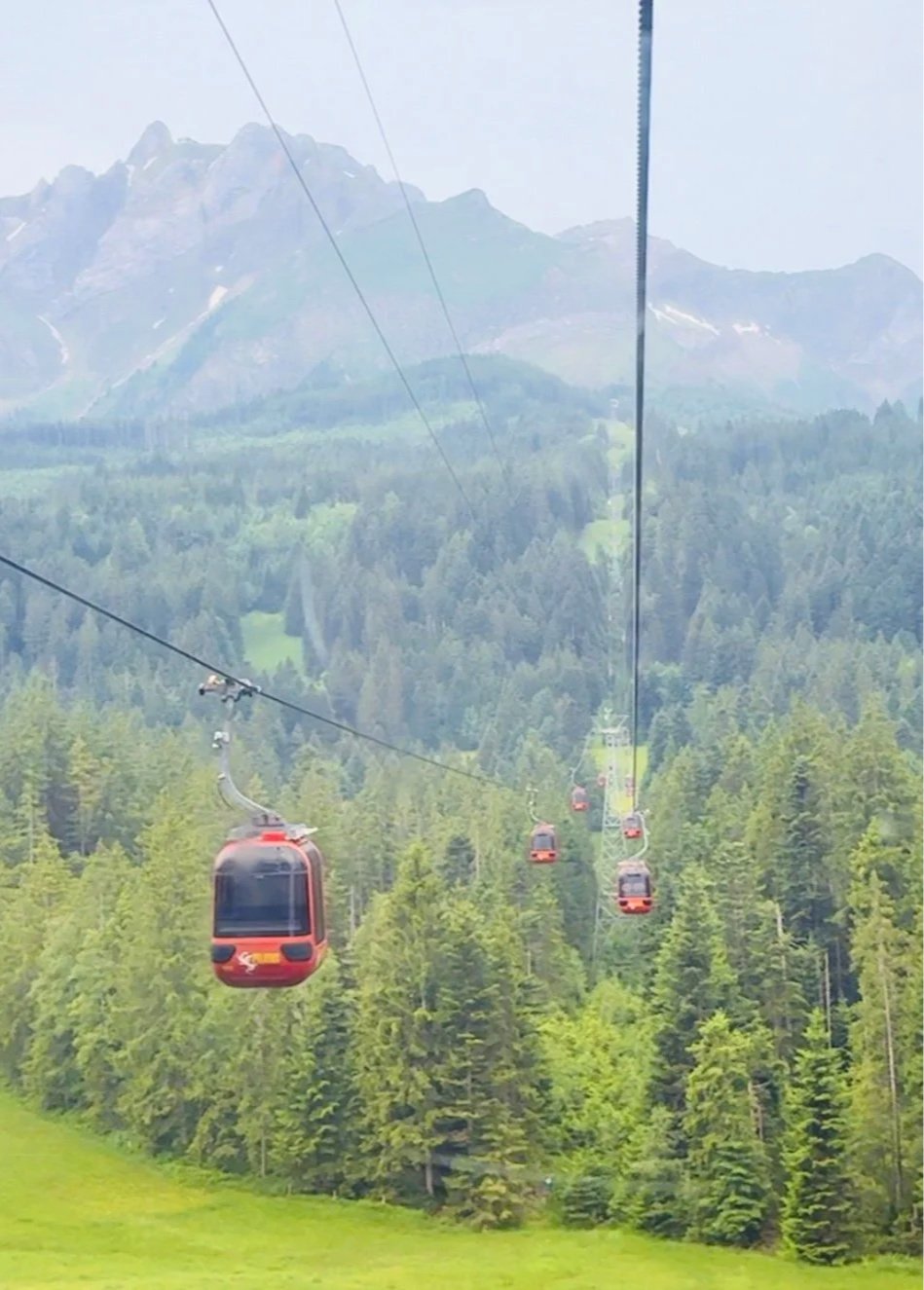
From Lucerne, we caught a short bus ride to Kriens and made our way to the Pilatus gondola station. The moment the cable car doors closed and we began rising above the valley, it became clear that this wasn't simply transportation. It was sightseeing.
As we climbed higher, green hills gave way to dramatic ridgelines, evergreen forests stretched into the distance, and clouds drifted between mountain peaks like they were deliberately posing for photographs.
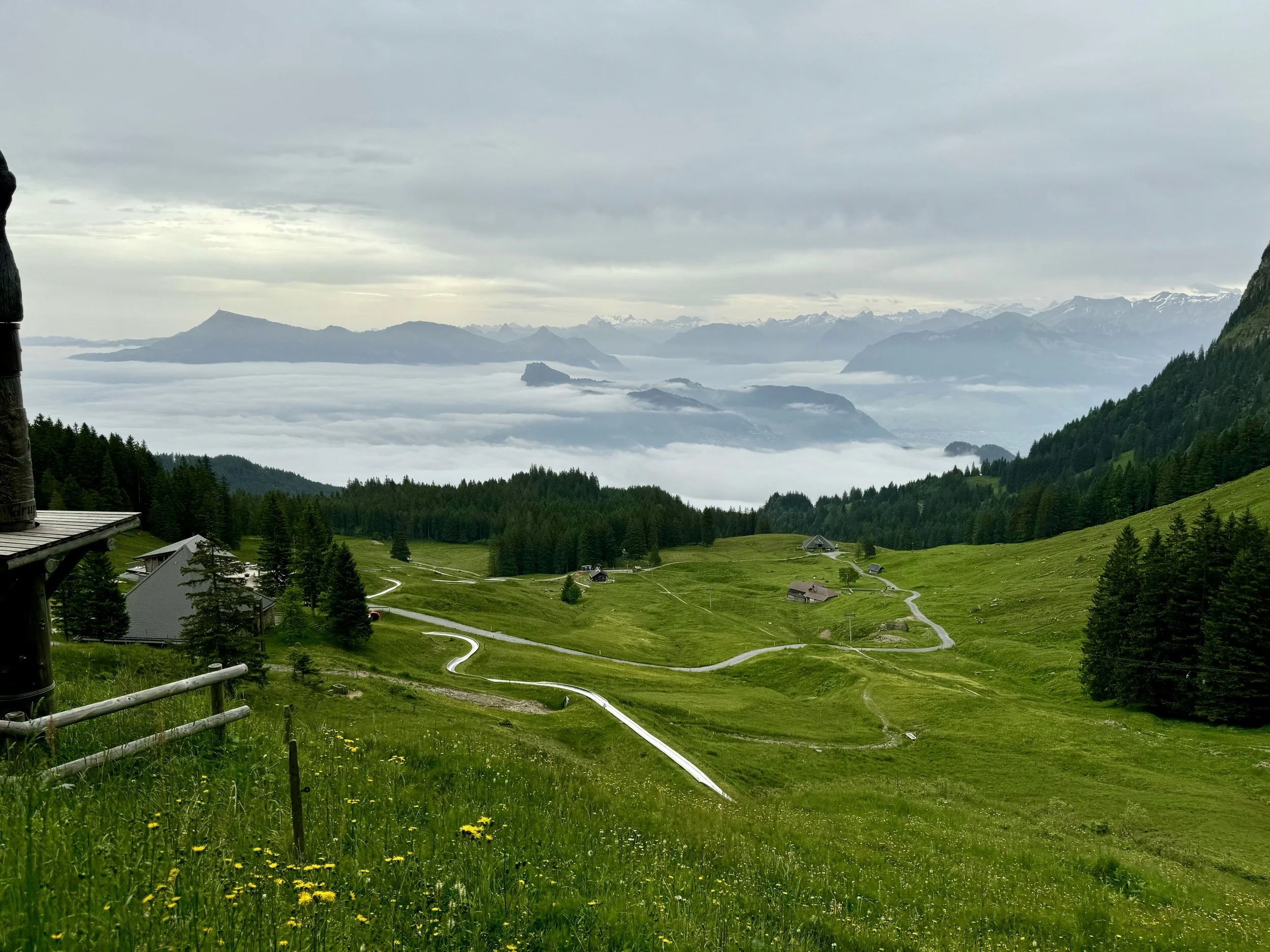
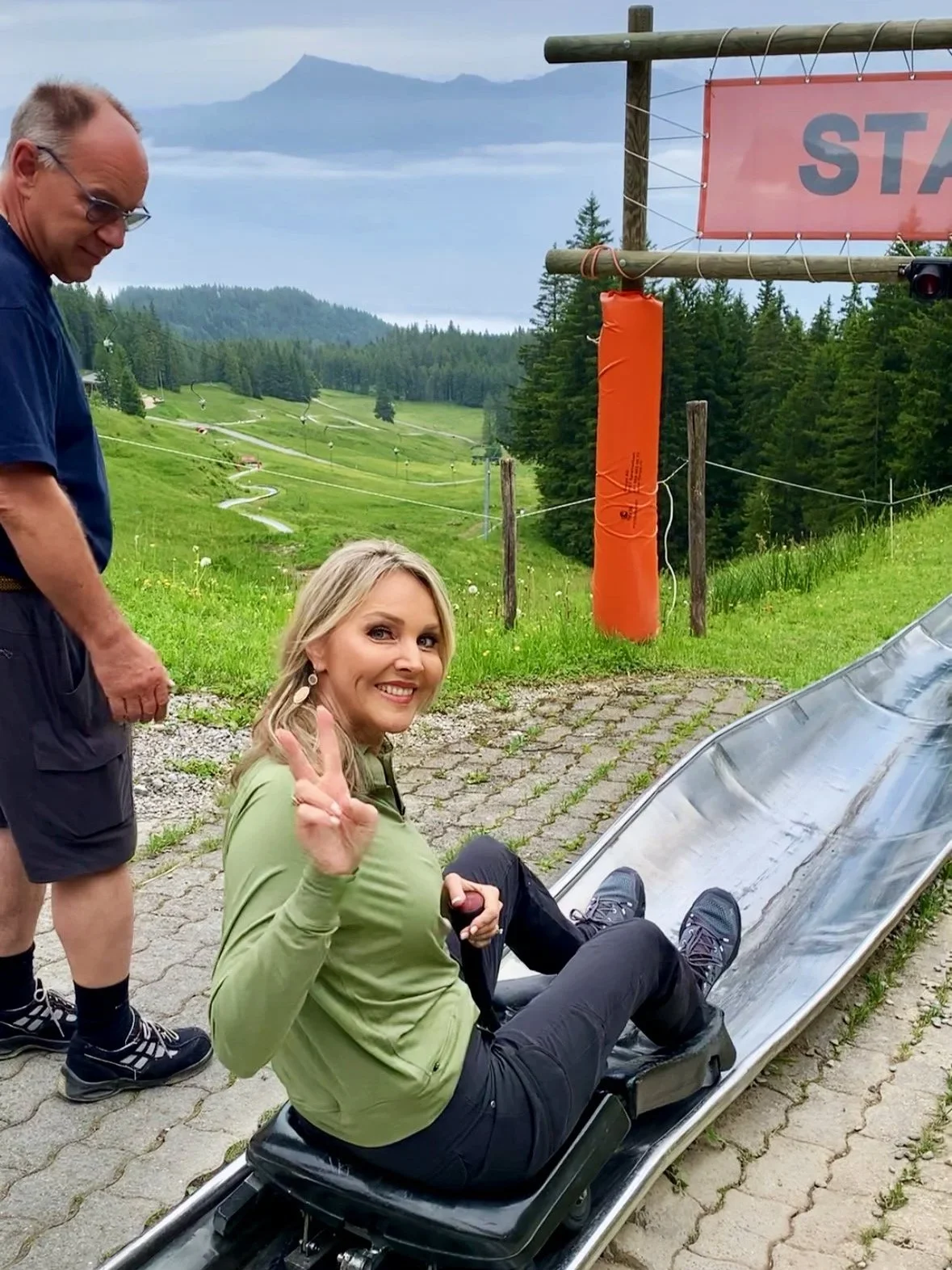
Partway up the mountain, we made an optional stop at Fräkmüntegg for one very important reason: the alpine toboggan. I had no idea that one of my favorite memories in Switzerland would involve hurtling down a mountainside in a tiny sled, but here we are. The Fräkmüntegg toboggan is an extra-cost attraction, and I would pay for it again without hesitation. It was equal parts adrenaline, laughter, and spectacular scenery.
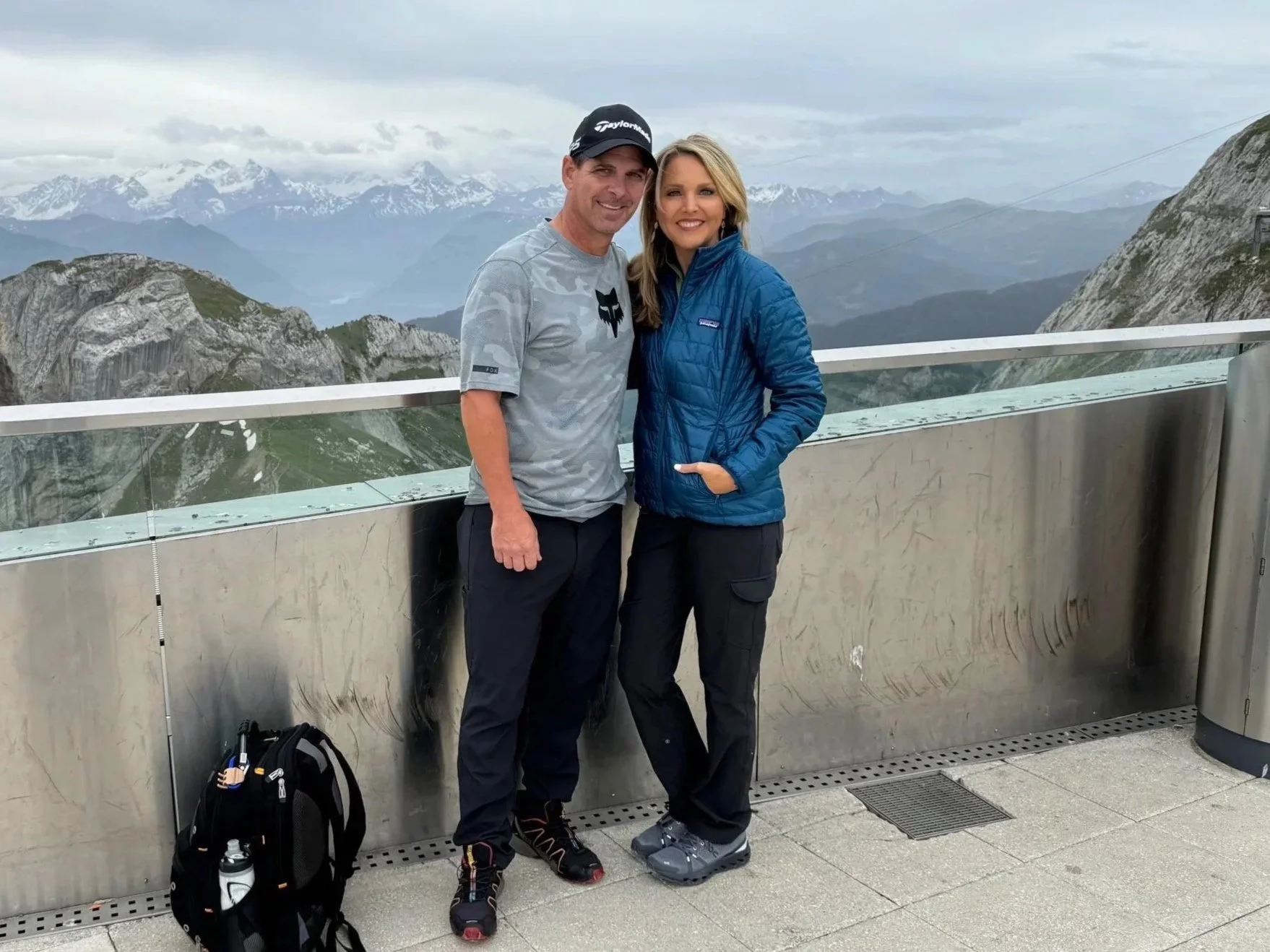
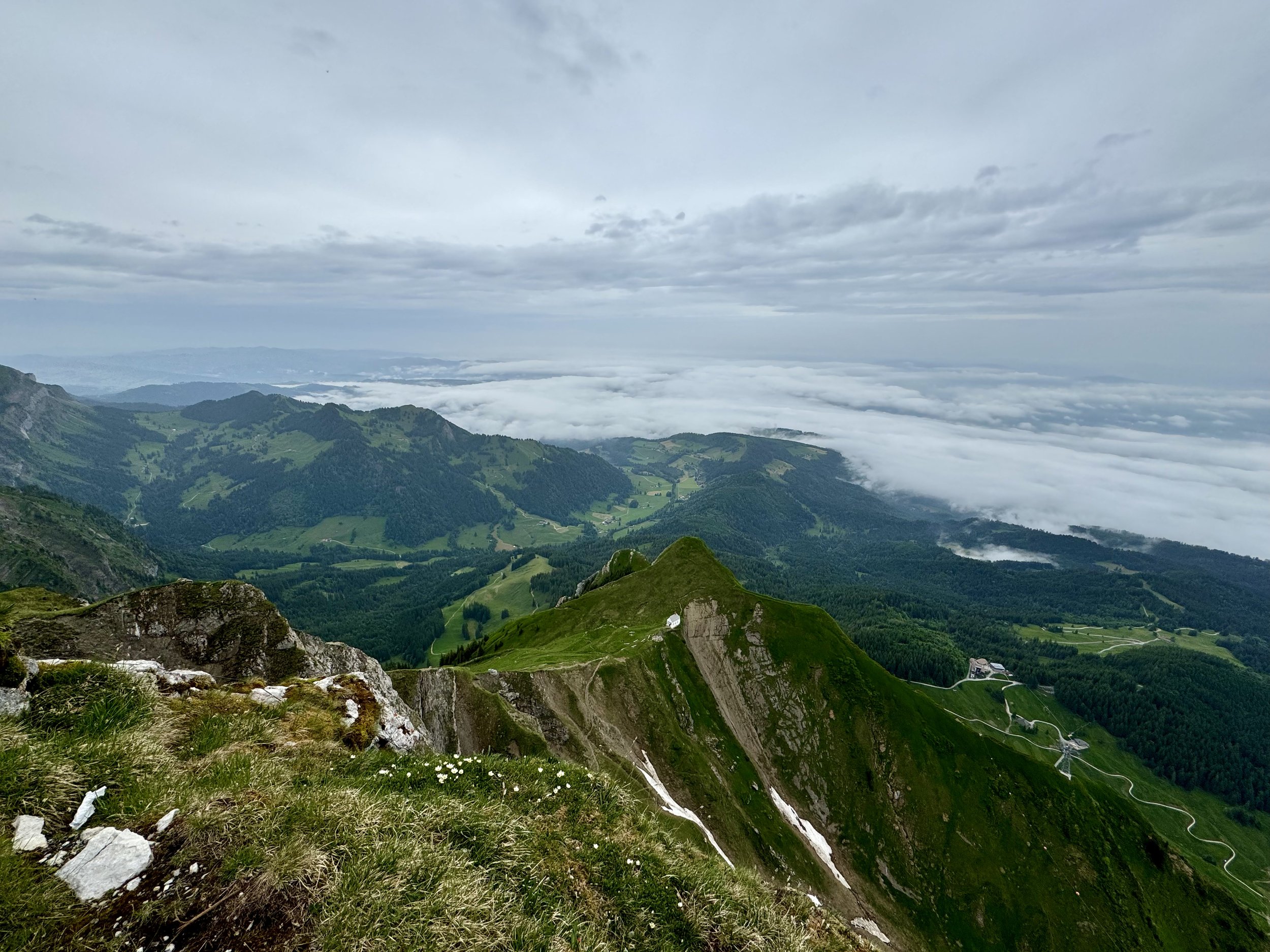
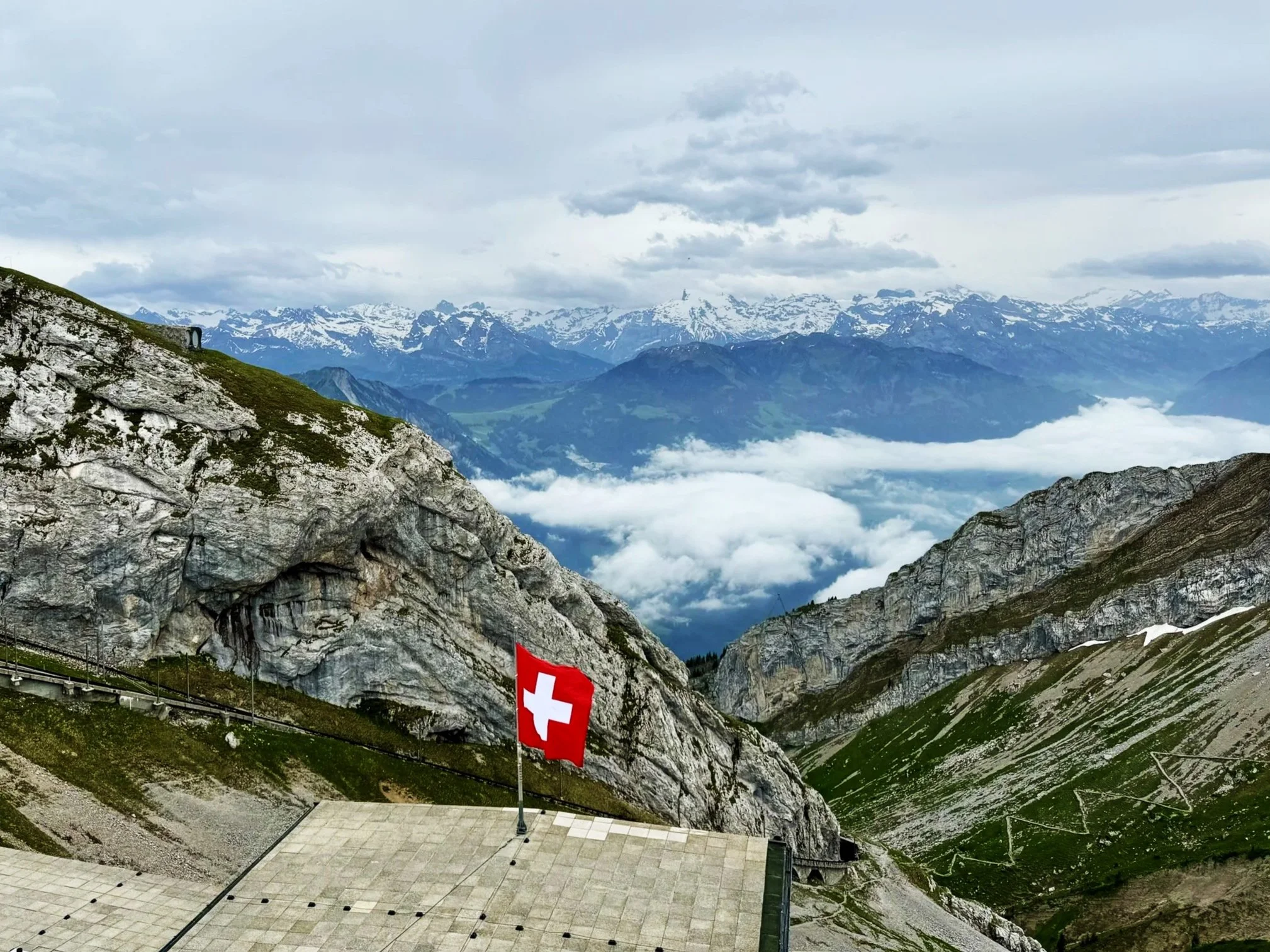
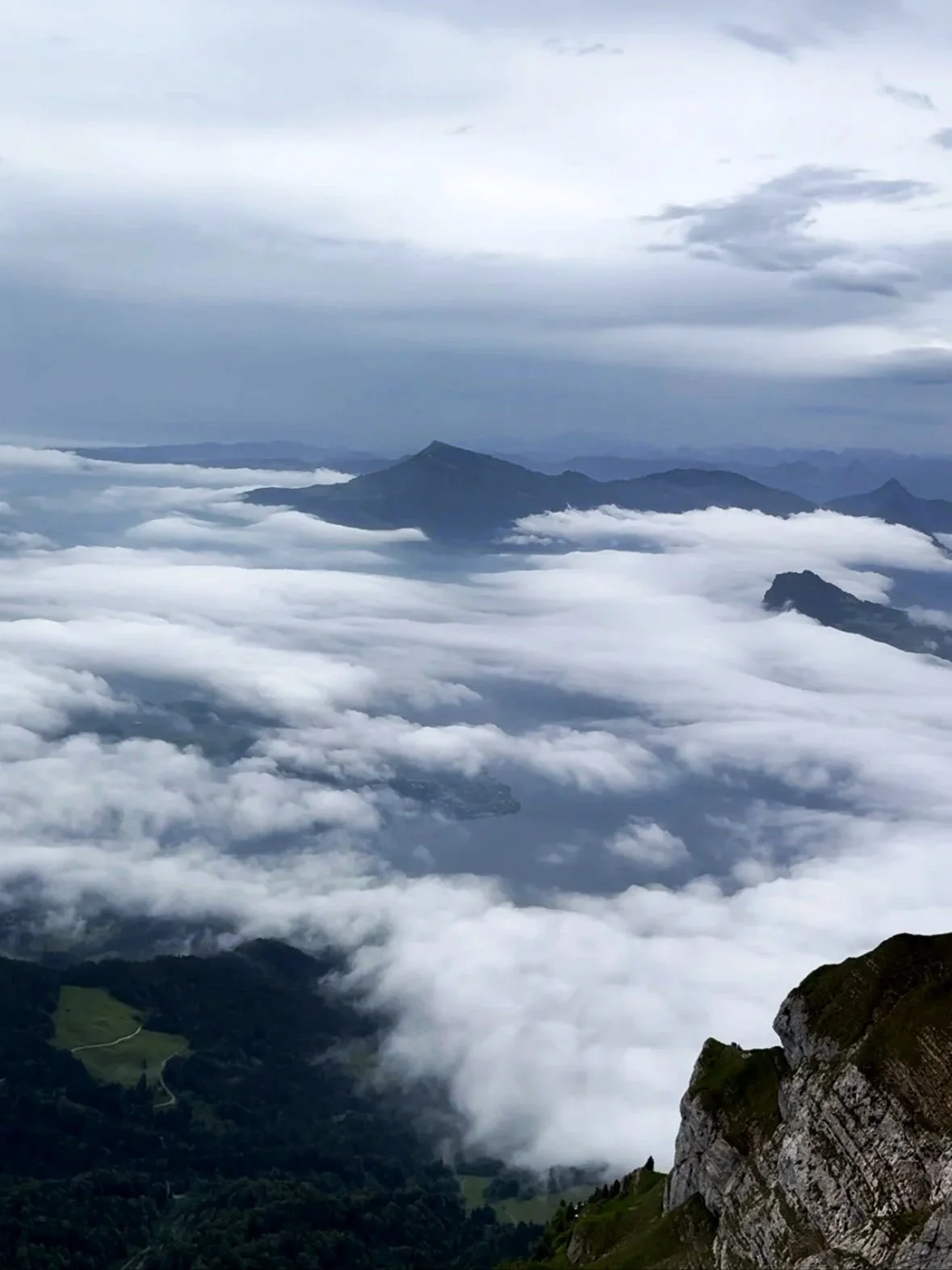
Eventually, we continued our ascent toward the summit of Mount Pilatus. Standing at over 6,900 feet (2,128 meters), Pilatus delivers exactly the kind of view people imagine when they dream about Switzerland. Jagged mountain peaks stretched in every direction. Clouds drifted below us. Lake Lucerne shimmered far beneath the cliffs. At one point, I found myself simply staring into the distance, feeling both incredibly small and incredibly fortunate to be standing there.
After exploring the summit, we descended via the famous Pilatus cogwheel railway—the steepest cogwheel railway in the world. The ride itself was an attraction. Sitting near the back of the train, we watched the mountains slowly recede as we wound our way down toward the lake.
And just when we thought the excursion was over, Switzerland added one more transportation mode to the day. A boat. From Alpnachstad, we boarded a scenic cruise across Lake Lucerne, gliding past villages, mountains, and lakeside homes as we made our way back toward the city. By mid-afternoon, we had traveled by bus, gondola, cogwheel train, and boat—all before most people would have finished their lunch.
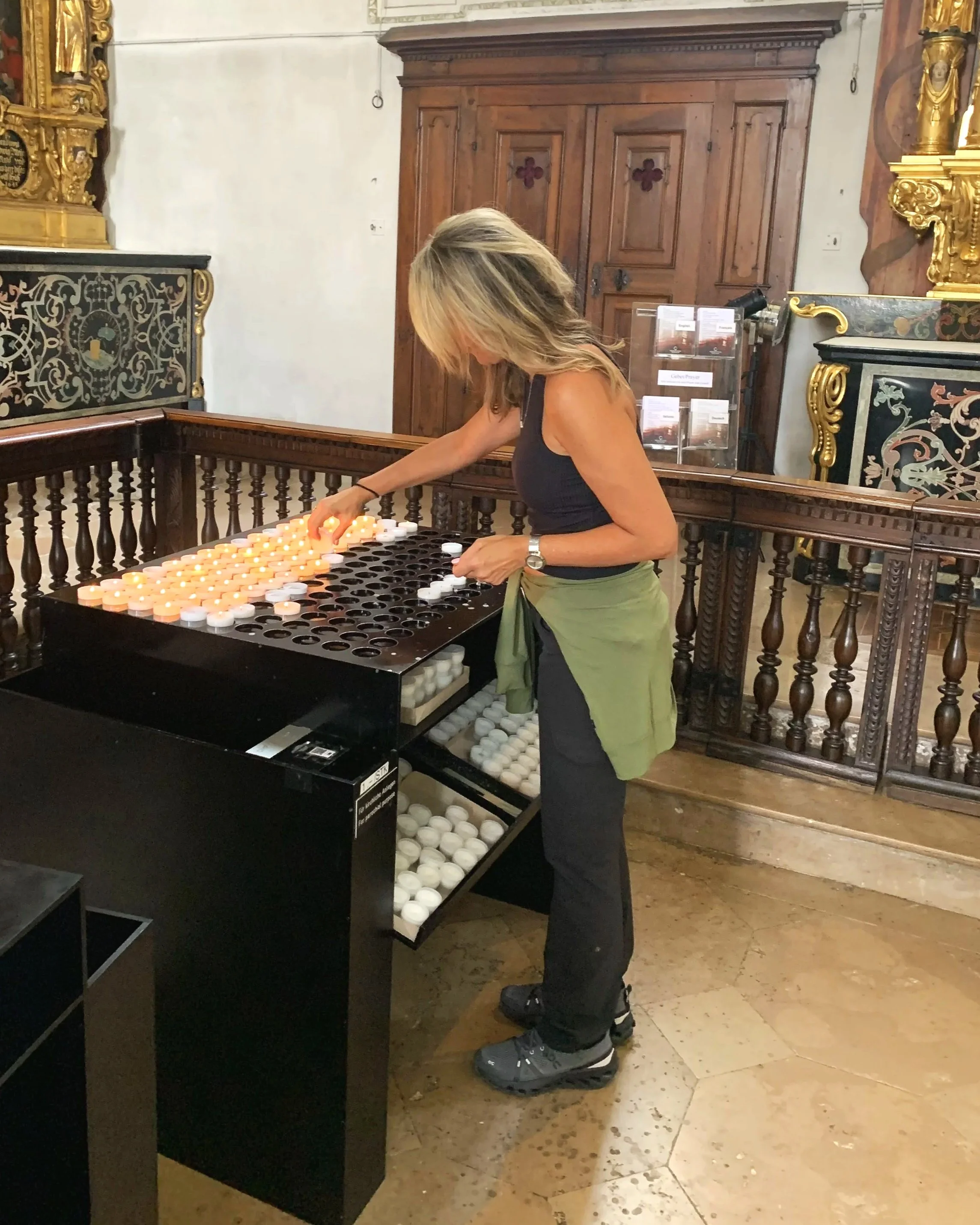
Back in Lucerne, we spent the remainder of the afternoon exploring some of the city's historic landmarks. We stopped at St. Leodegar Church, whose elegant interior offered a peaceful contrast to the excitement of the morning. As I often do when visiting churches during my travels, I lit a candle for my late father and spent a few quiet moments reflecting and thanking him for giving me my love of travel in the first place.
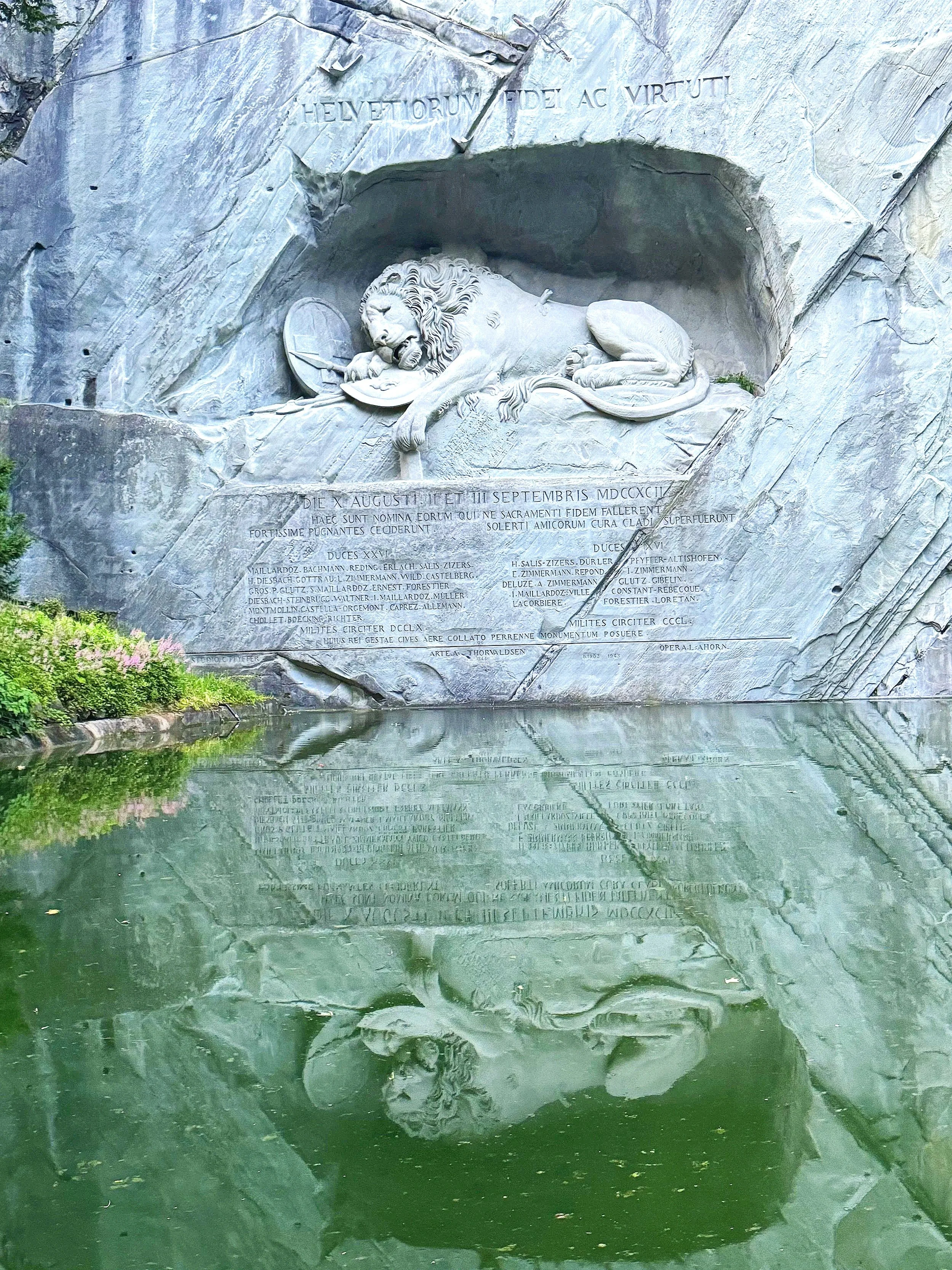
From there, we continued to the Lion Monument, one of Lucerne's most famous landmarks. Carved directly into the rock face, the wounded lion is both beautiful and surprisingly moving in person. Then came one of the biggest surprises of our entire stay. The Glacier Garden. To be completely honest, if admission hadn't been included with our Swiss Travel Pass, we probably would have walked right past it. That would have been a mistake.
The Glacier Garden offers a fascinating glimpse into Switzerland's geological past, with glacial potholes carved thousands of years ago, exhibits explaining the region's formation, and beautiful viewpoints overlooking the city.
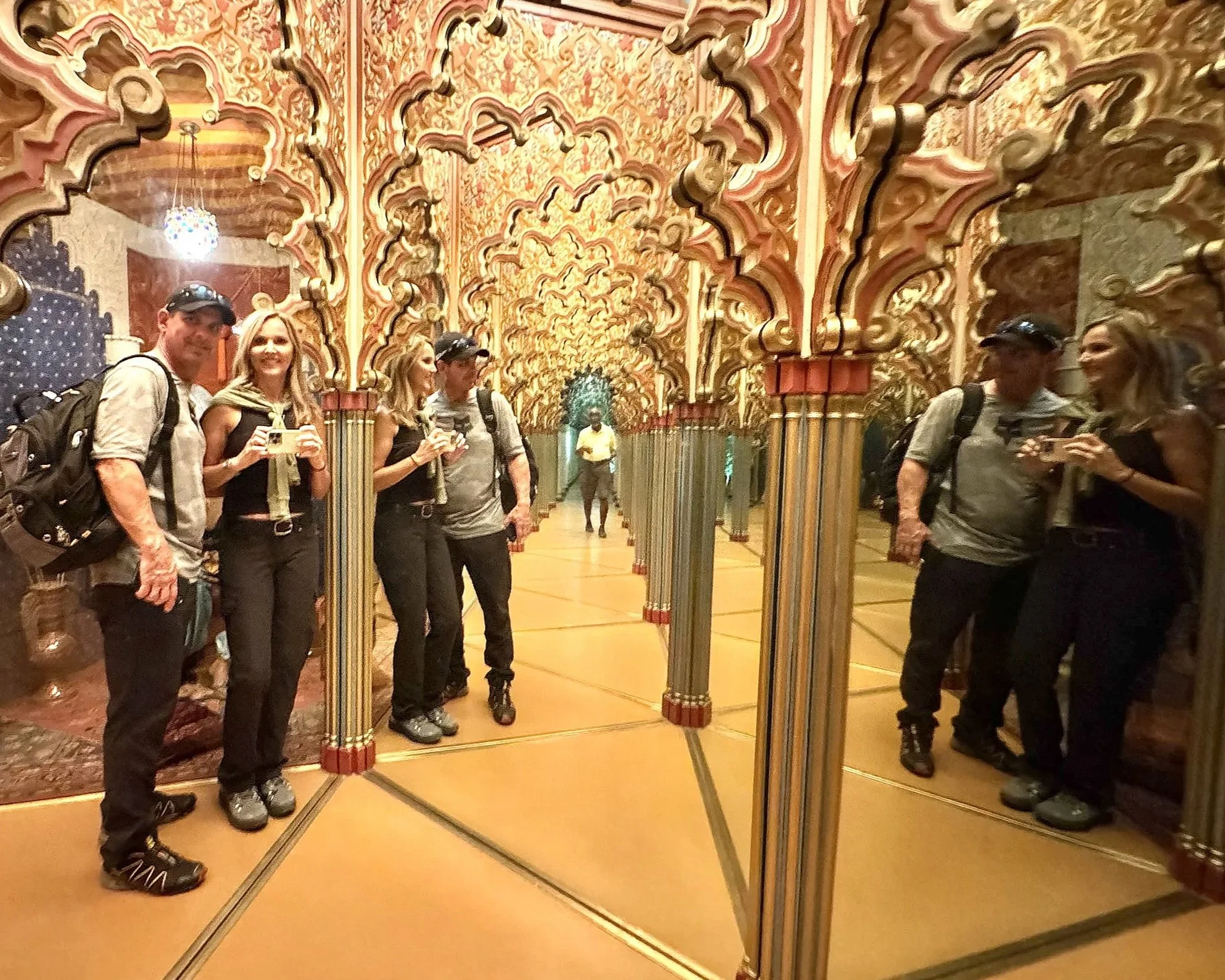
Alhambra Mirror Maze
But the real star of the show—at least for us—was the Mirror Maze. Included with admission, this labyrinth of mirrors transformed two supposedly mature adults into giggling children within minutes. We walked into walls, lost each other repeatedly, and laughed far harder than either of us expected. It ended up being one of those completely unplanned travel moments that becomes oddly memorable years later.
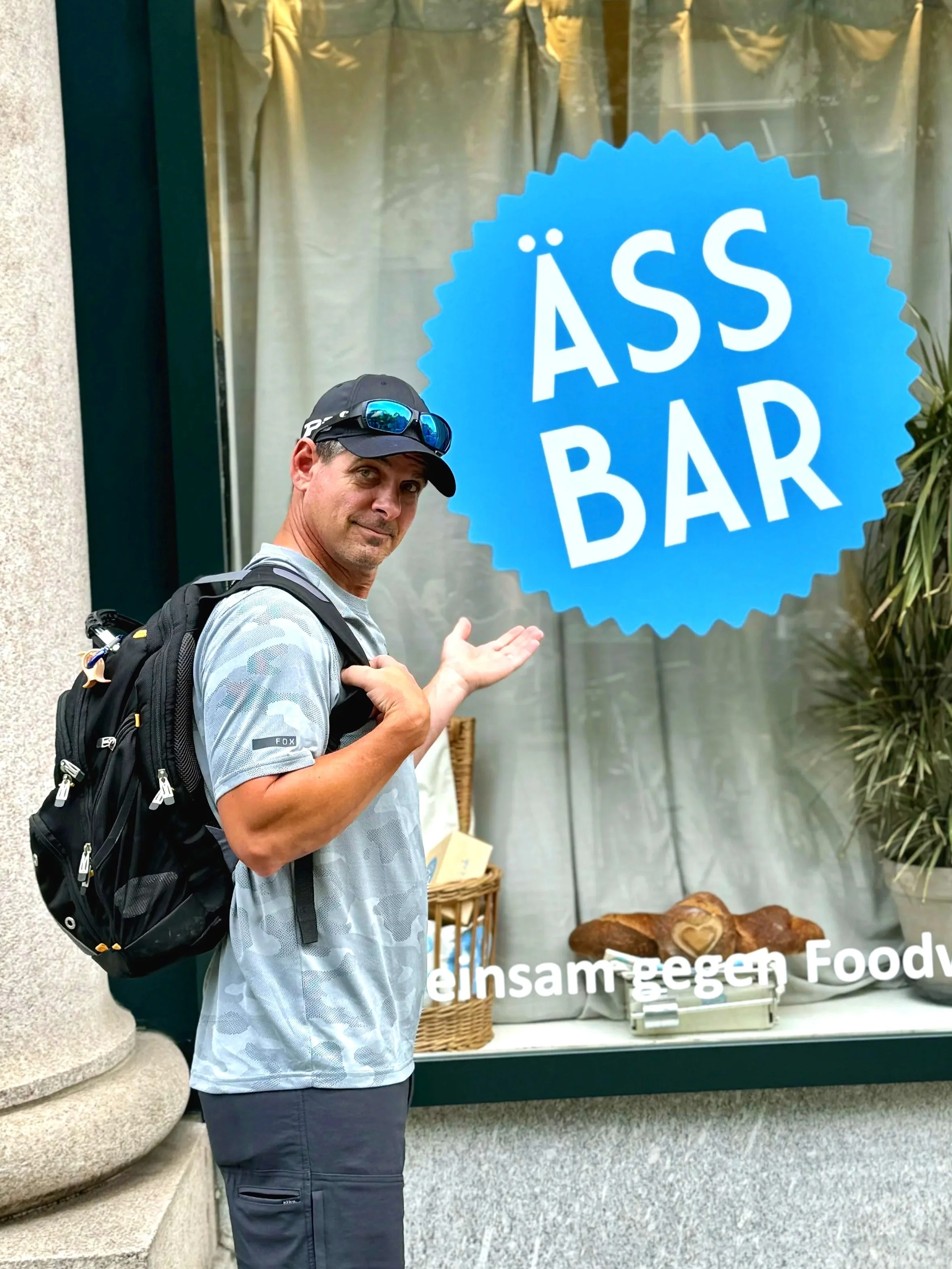
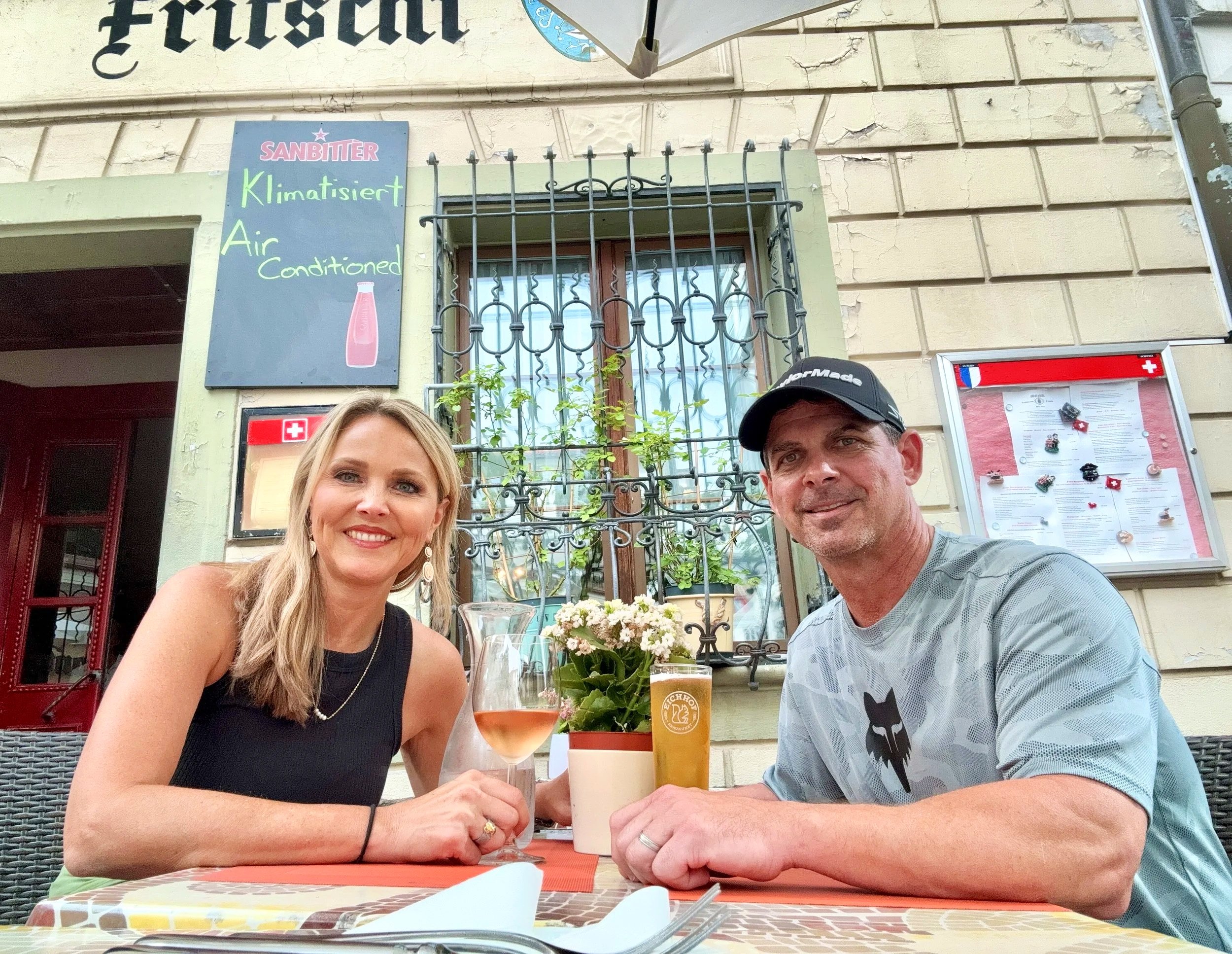
As evening approached, we wandered through Lucerne's Old Town shopping district, browsing a mix of souvenir shops, boutiques, chocolatiers, and specialty stores selling everything from Swiss Army knives to locally made gifts. If shopping is your thing, this area is well worth exploring. The pedestrian-friendly streets are lined with historic buildings, and it's the kind of place where you can easily lose track of time while "just popping into one store." Eventually our stomachs reminded us that we’d been running around Switzerland all day, so we stopped for dinner at Restaurant Fritschi before continuing our evening exploration of the city.
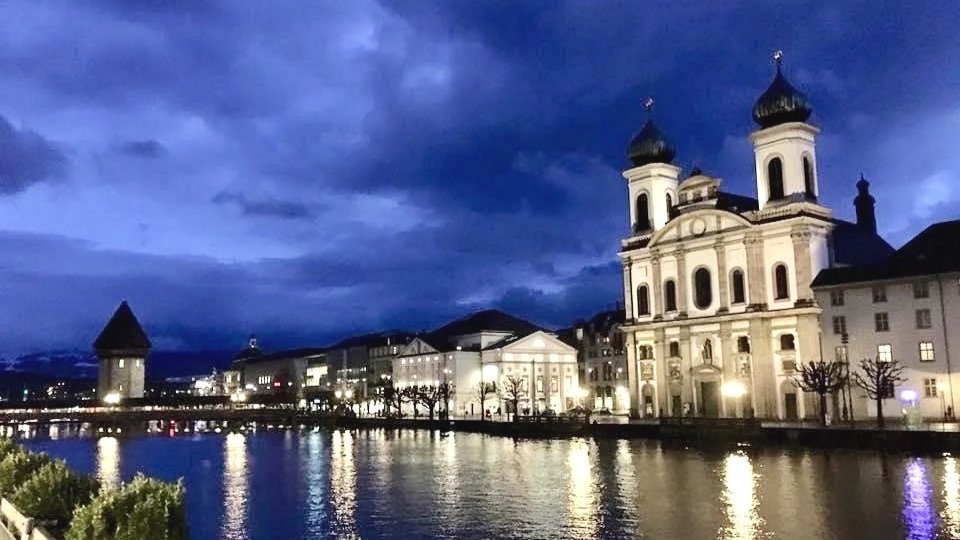
Afterward, we crossed Chapel Bridge once again—this time fully awake and no longer operating through a haze of jet lag. Near the Jesuit Church, we stumbled upon an outdoor choral performance. The music echoed across the river while the evening light reflected off the water and historic buildings surrounding us. It wasn't on our itinerary. It wasn't in any guidebook. And yet it became one of the moments I remember most vividly from our time in Lucerne. Sometimes the best travel memories aren't the attractions you spend months planning. They're the unexpected moments that find you along the way.
We headed back to the hotel that evening tired, happy, and more than ready for the next day's adventure to Mount Titlis.
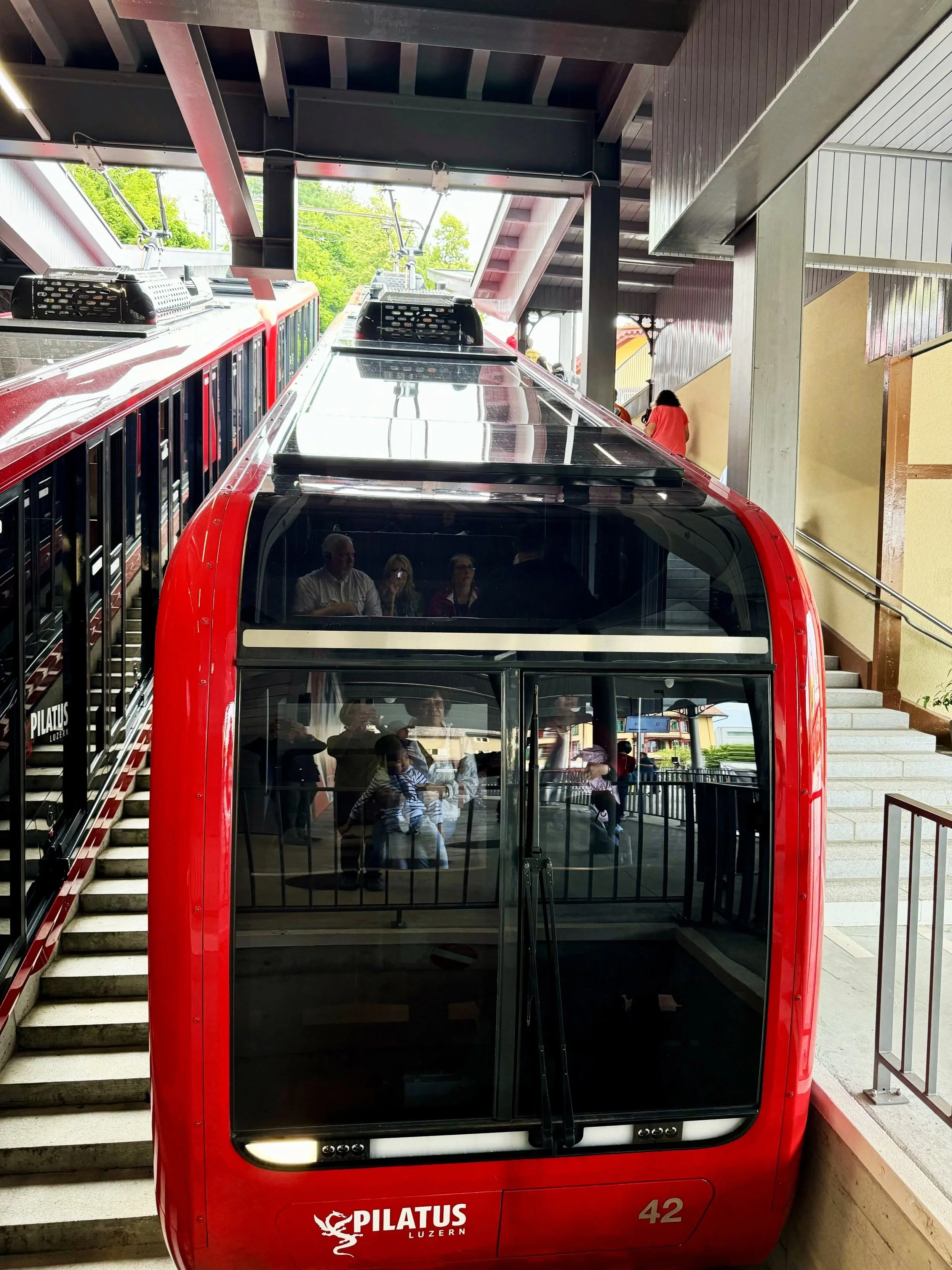
Pro Tip: If you’re visiting Mount Pilatus, consider doing the Golden Round Trip. The combination of gondola, cogwheel railway, and boat cruise turns transportation into part of the attraction.
Day 3: Mount Titlis, Snow in Summer & One Last Lucerne Adventure
By our third morning in Lucerne, we had apparently decided that sleep was optional and mountain excursions were mandatory.
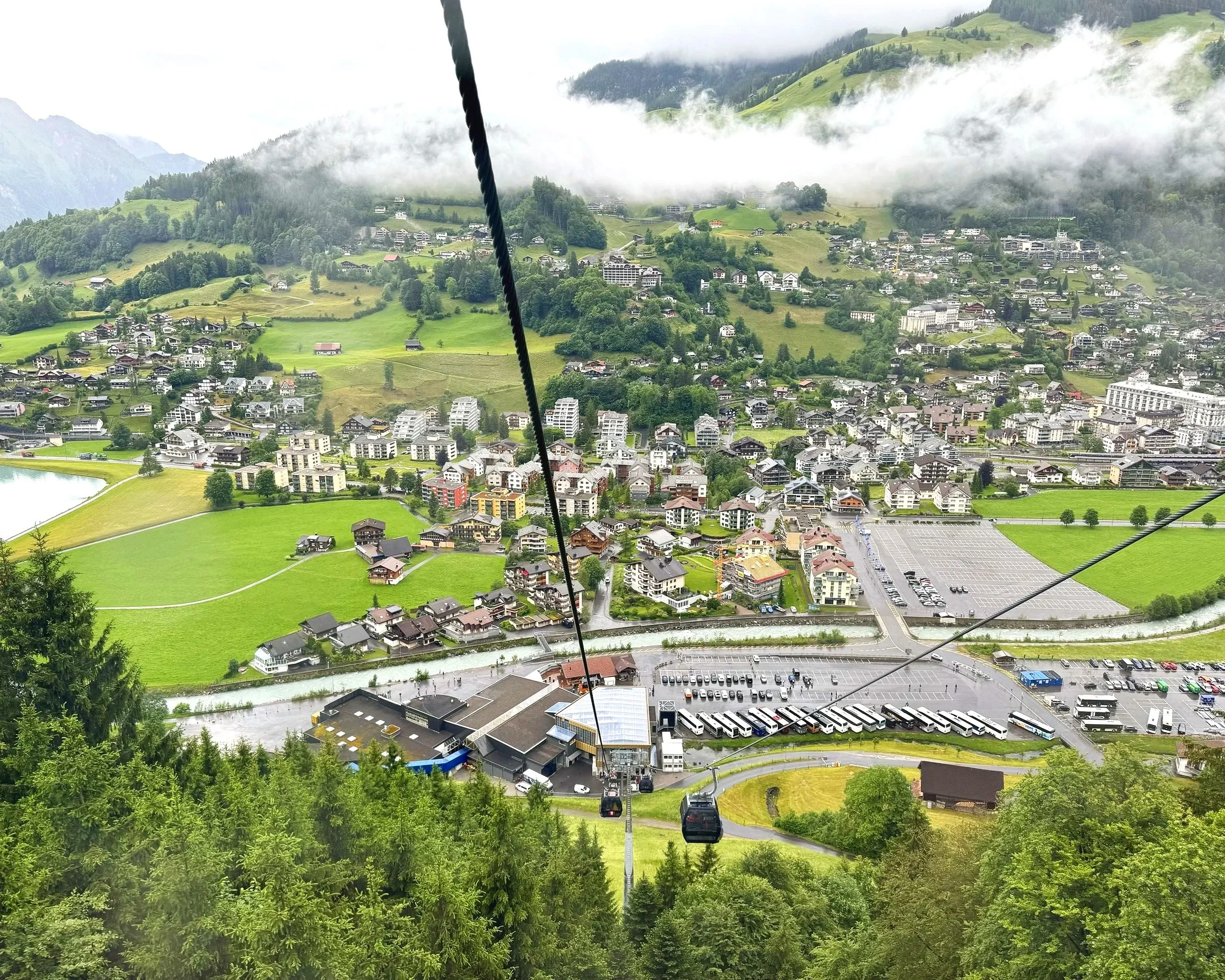
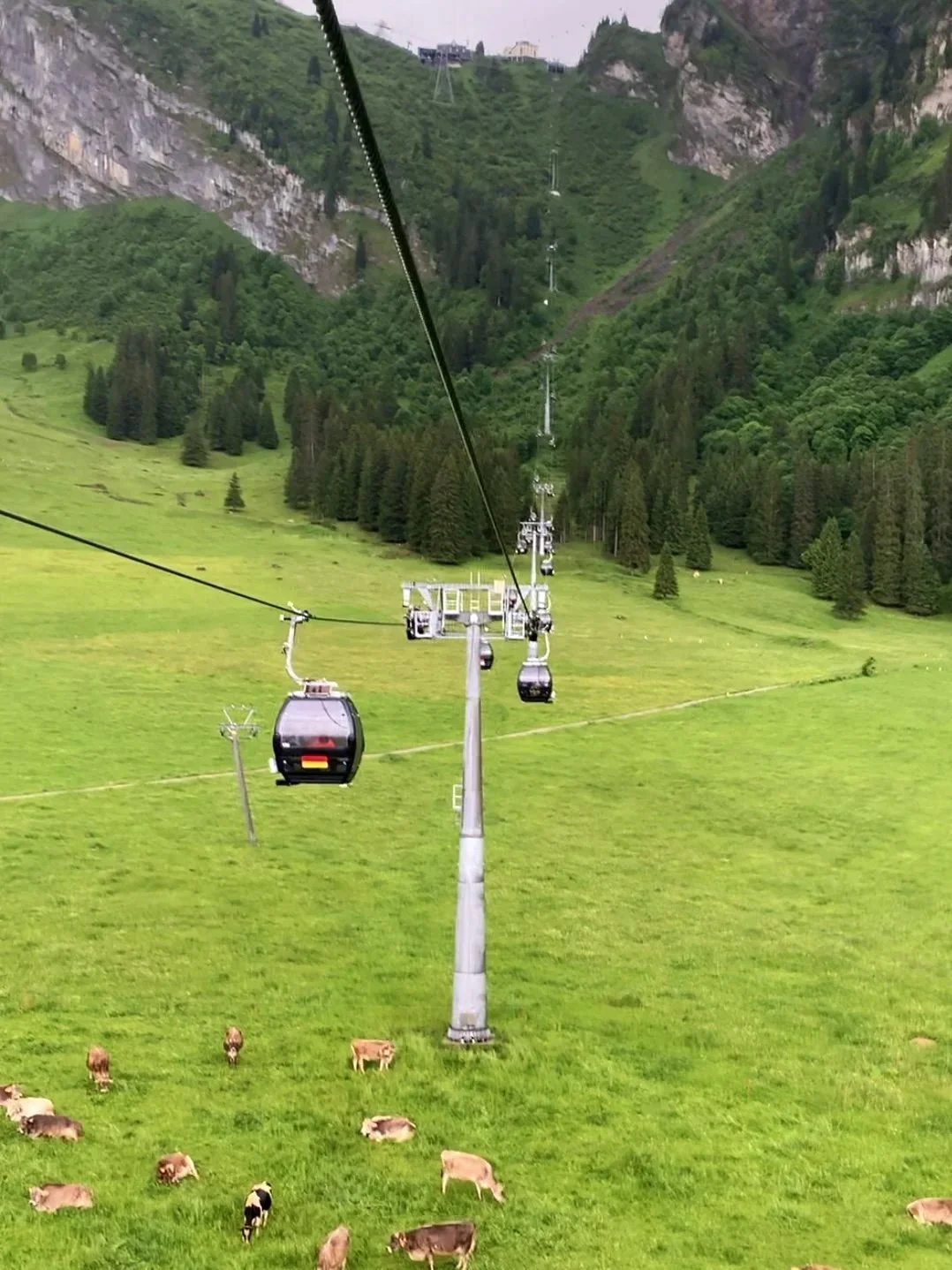
This time, our destination was Mount Titlis. We boarded an early train to Engelberg, a picturesque mountain town about 45 minutes from Lucerne, and from there began the journey upward via a series of cable cars.
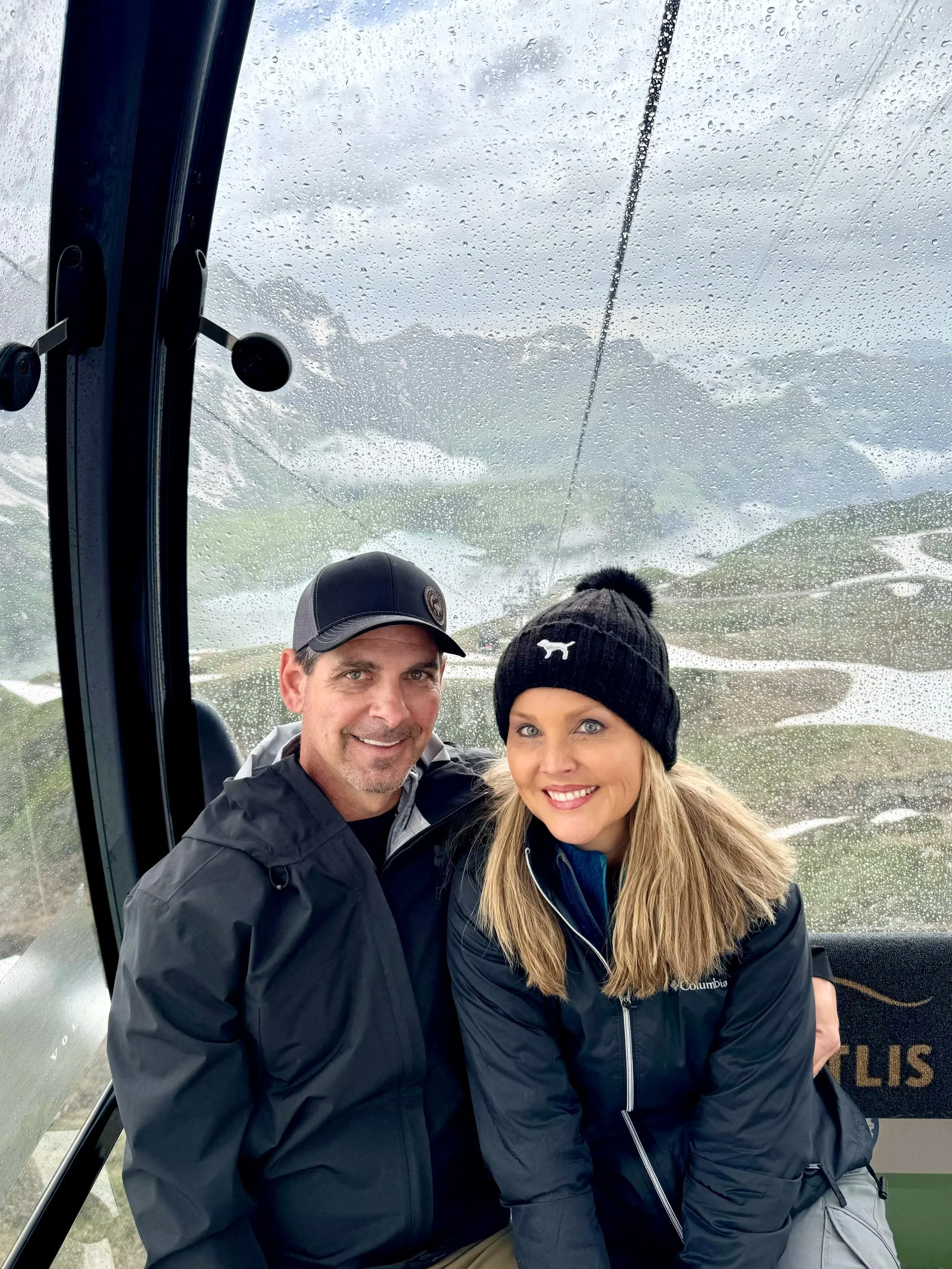
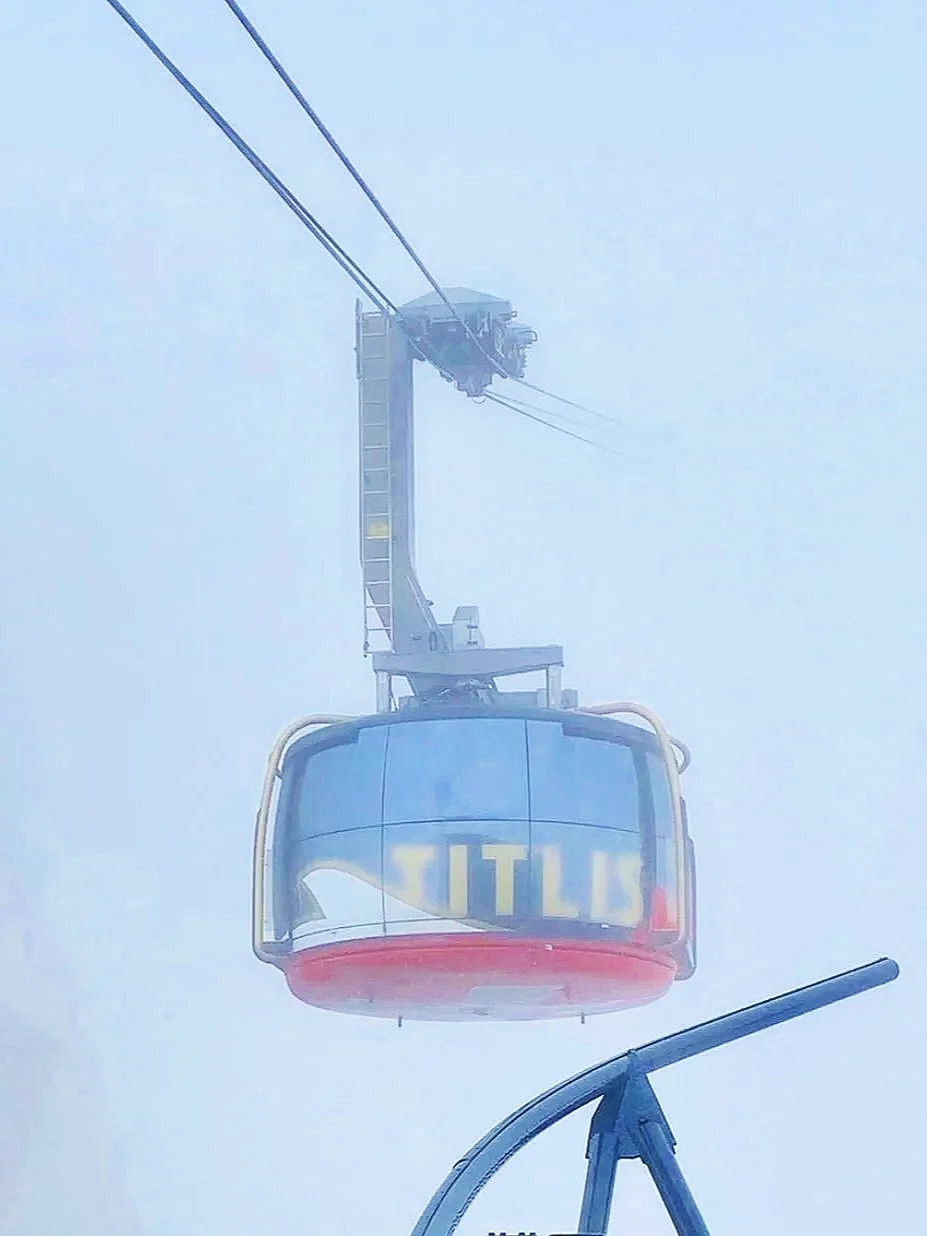
The final leg is the famous Titlis Rotair—the world's first revolving cable car.
As the cabin slowly rotates during the ascent, every passenger gets uninterrupted panoramic views without having to fight for a window seat. Snow-covered peaks, rocky cliffs, glaciers, and deep alpine valleys unfolded in every direction. It felt less like transportation and more like a flying observation deck. By the time we arrived at the summit, however, reality delivered a less exciting view.
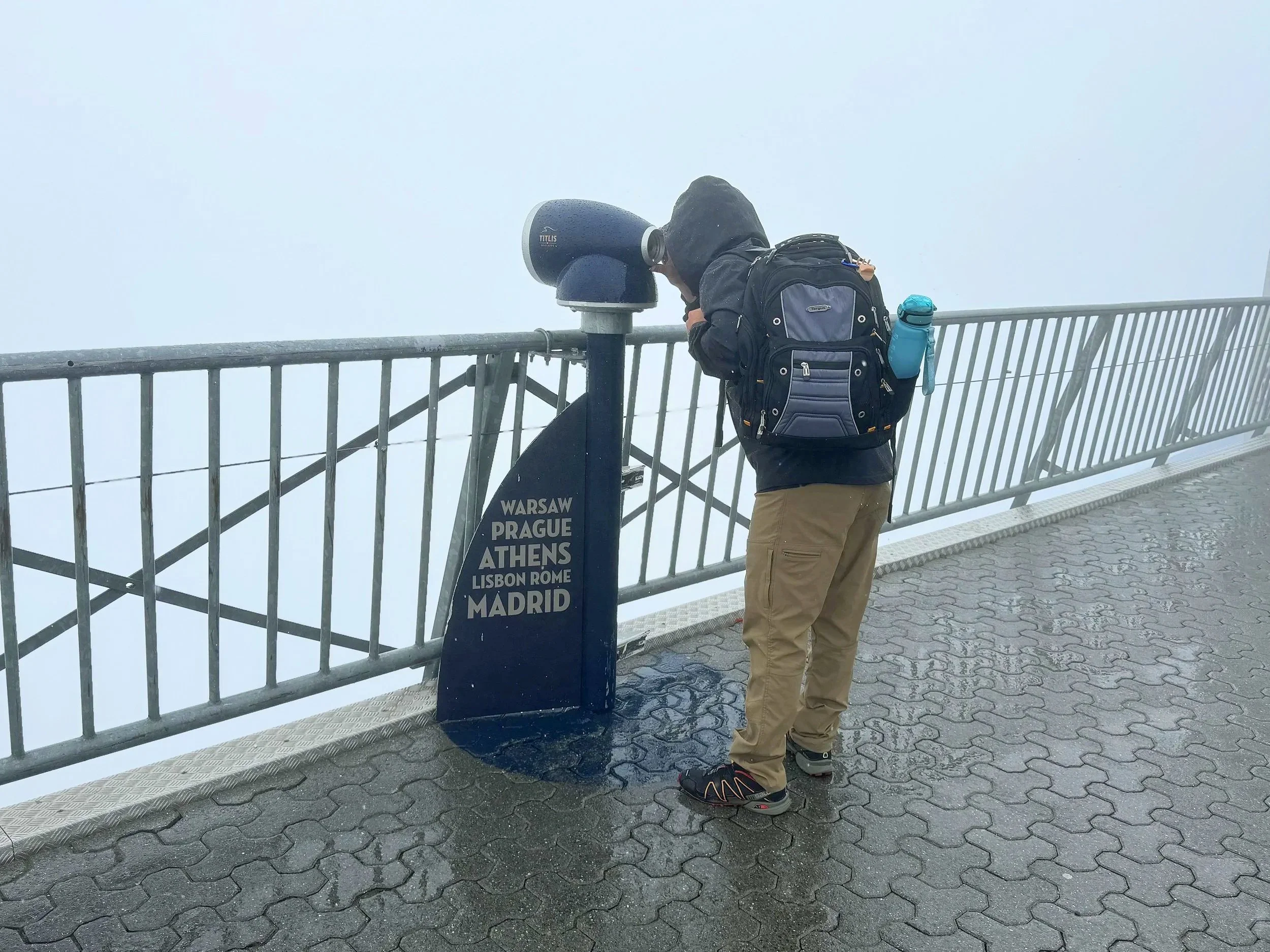
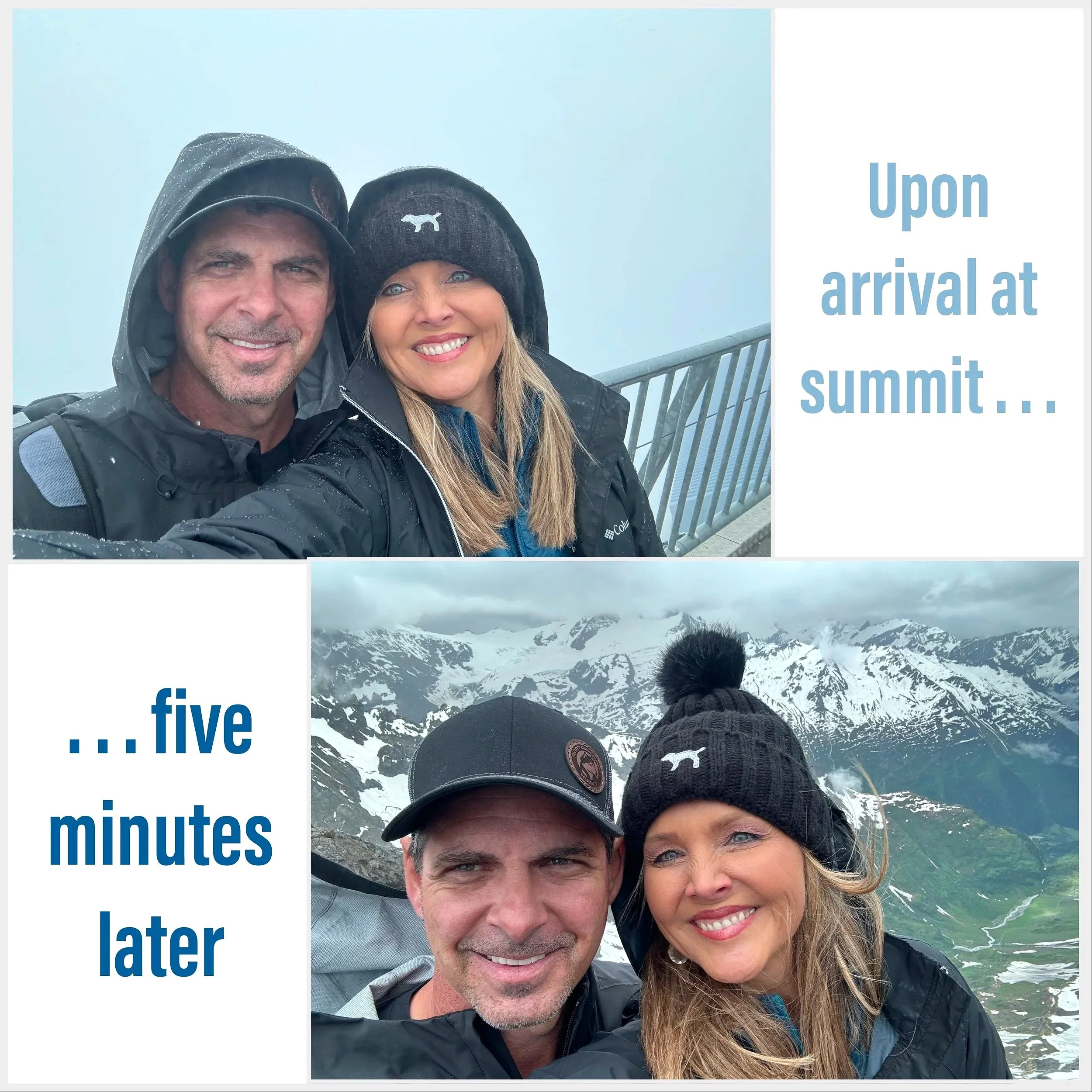
Fog. Lots of it. The mountains had completely disappeared behind a wall of white. We knew this was a possibility. Mountain weather changes quickly, and we'd been watching the forecast closely. Still, after traveling all the way to Titlis, it was hard not to feel disappointed.
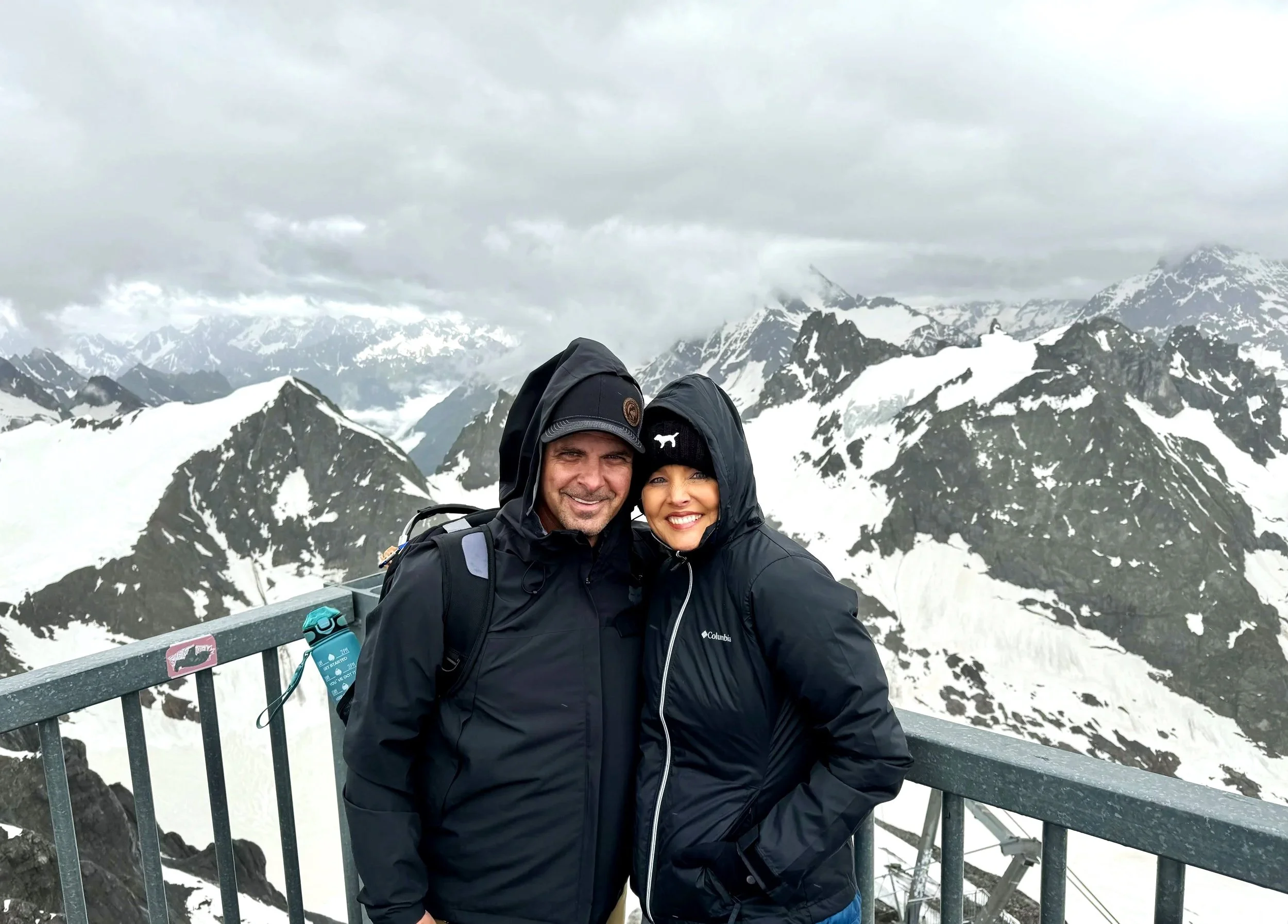
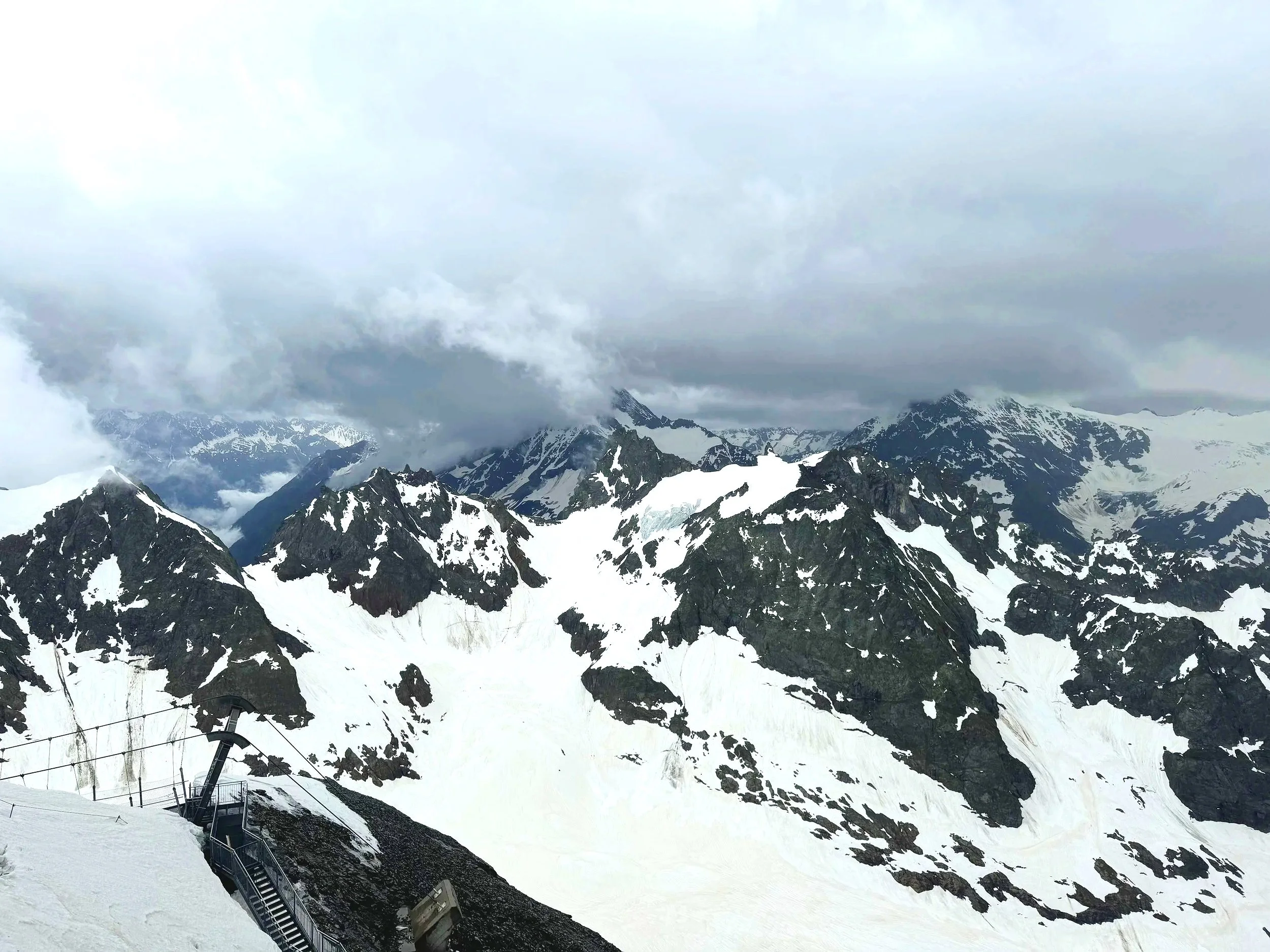
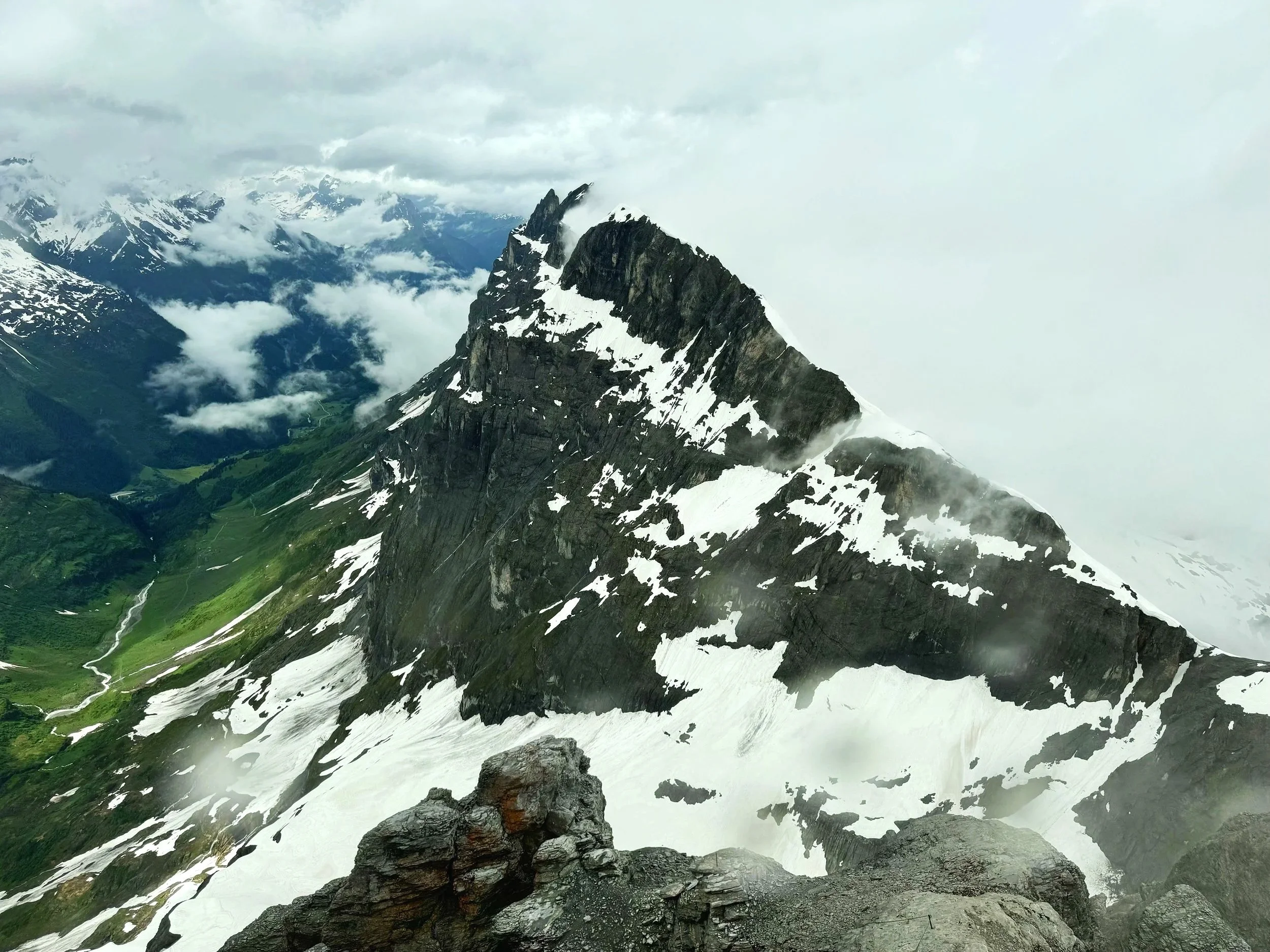
We sipped on hot cocoa inside the alpine lounge, praying for better weather, and almost as suddenly as it appeared, the fog lifted. The mountains emerged. The glacier appeared. The views exploded into existence. And Bryan and I practically sprinted back outside before the weather had a chance to change its mind.
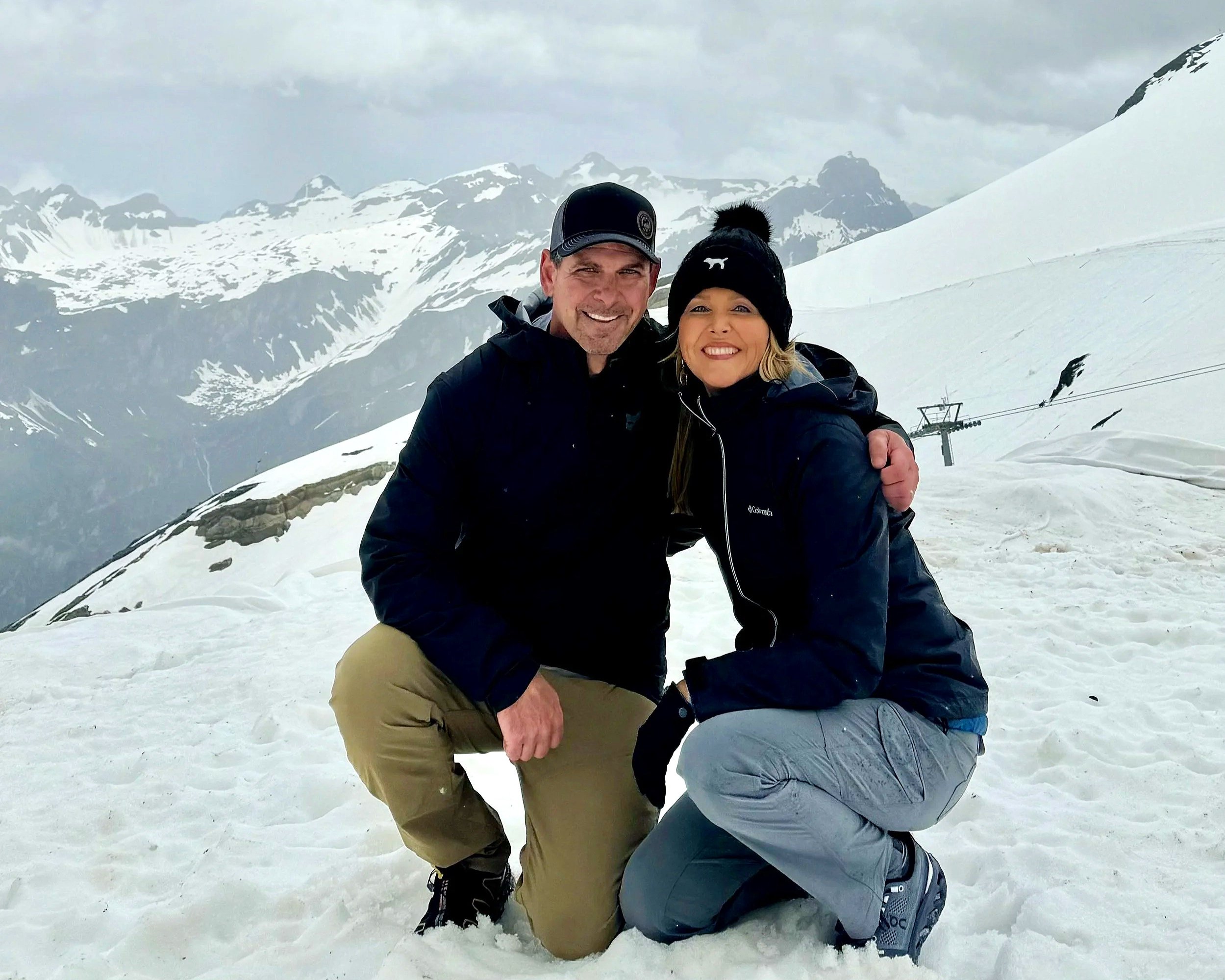
Standing at over 10,600 feet (3,238 meters), Mount Titlis felt like an entirely different world from the green hills and lakes surrounding Lucerne. Jagged peaks stretched toward the horizon while snow and ice covered the landscape in every direction. It was one of those views that instantly justifies the effort required to reach it. We made our way to one of the summit lookout points, battling fierce winds and surprisingly slick snow along the way. The conditions were cold enough that we didn't linger long, but the short trek was worth every frozen finger.
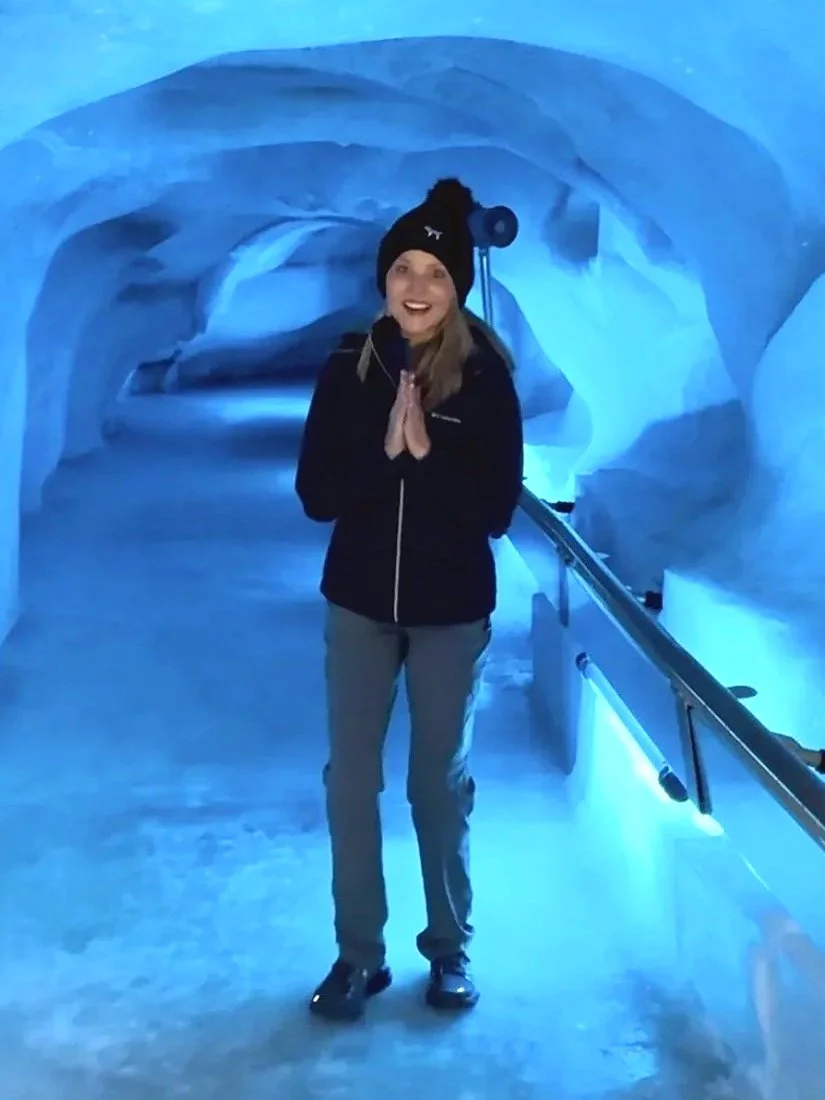
From there, we headed into the Titlis Glacier Cave. Carved deep within the glacier, the cave winds through glowing blue ice that is estimated to be thousands of years old. Walking through its frozen tunnels felt almost surreal—as if we had accidentally wandered into another planet hidden beneath the mountain. Eventually, the cold won. Despite the incredible scenery, there comes a point when your body reminds you that glaciers are, in fact, cold. Very cold.
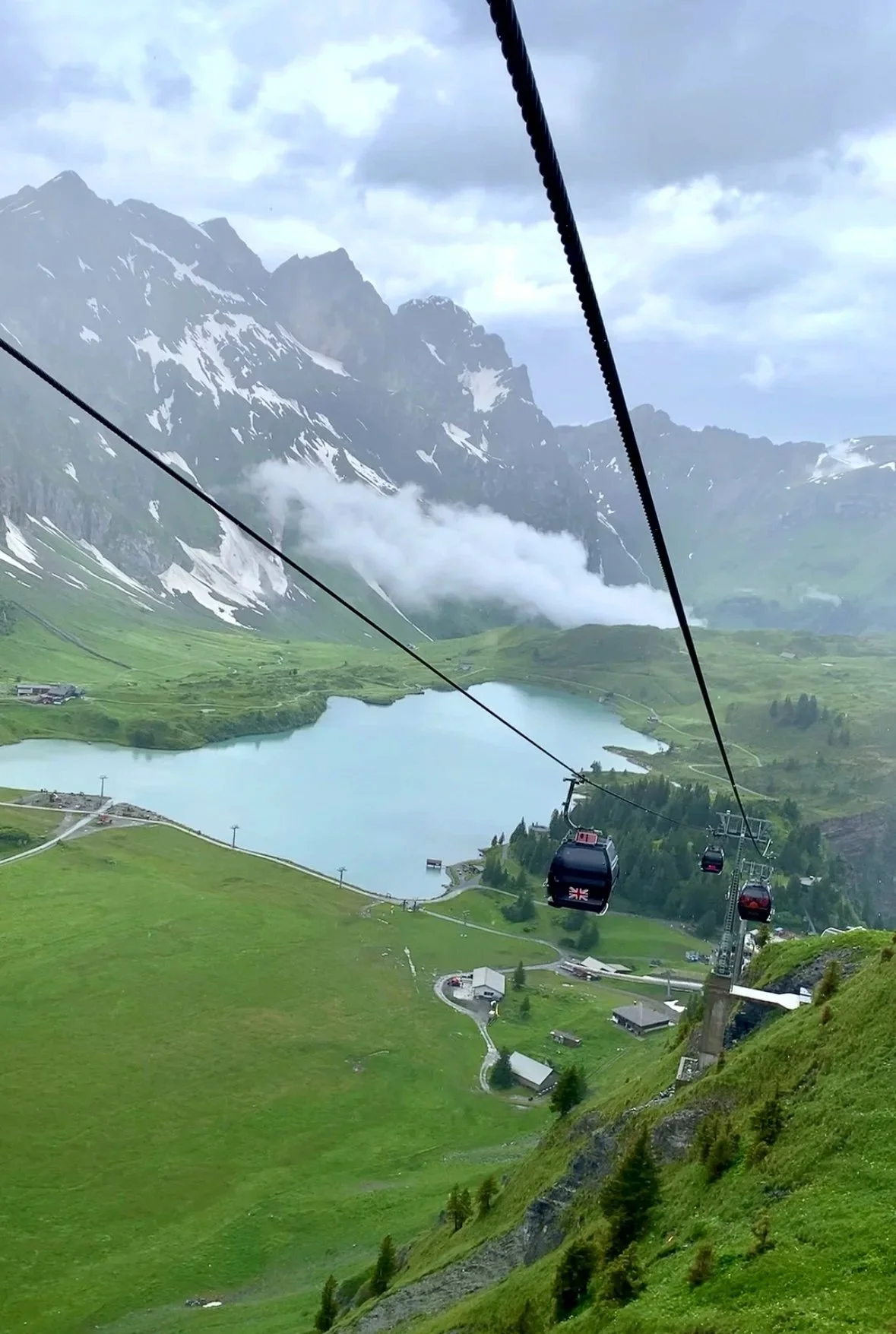
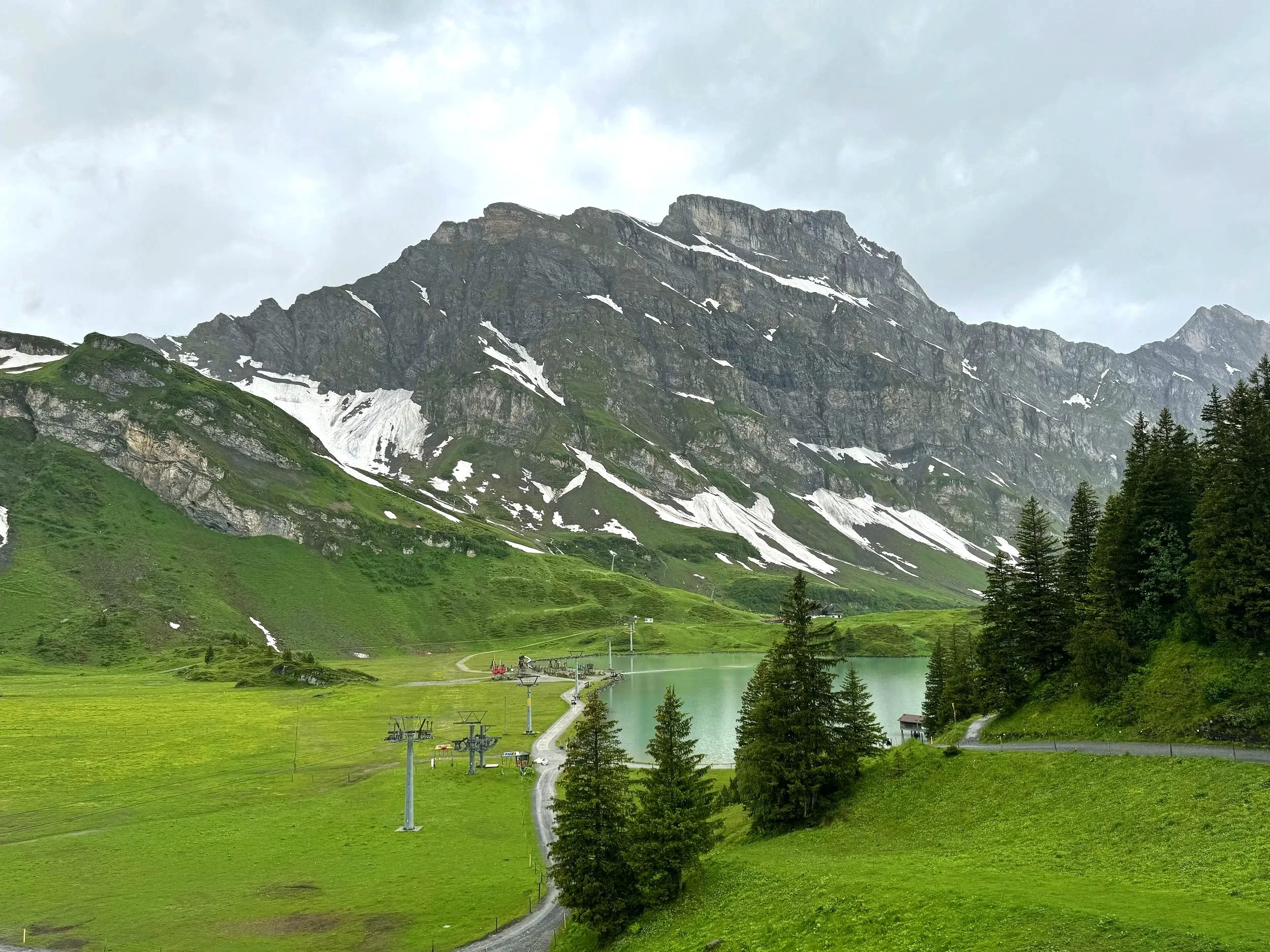
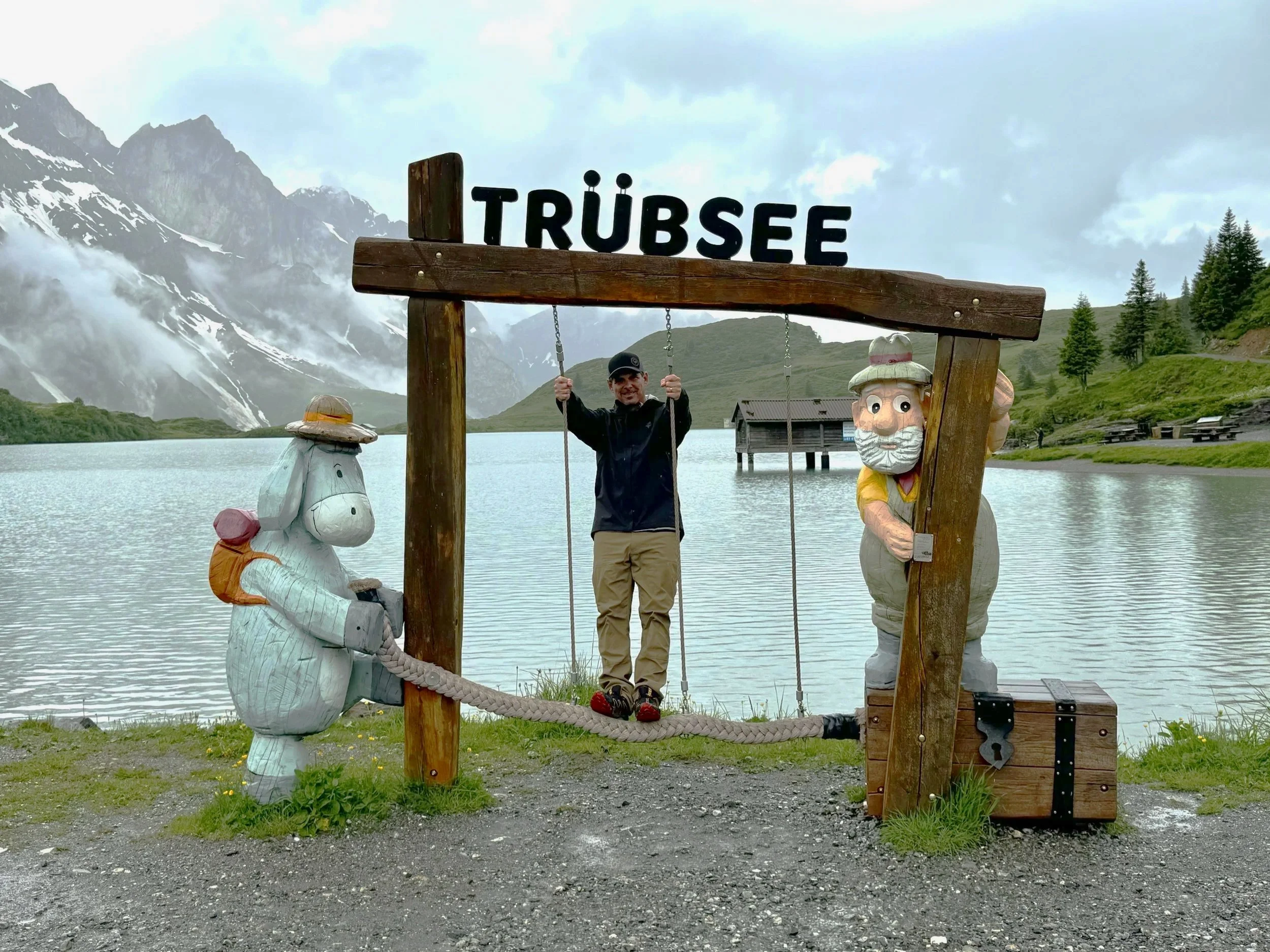
So we began our descent. On the way down, we noticed a stunning turquoise lake far below and immediately wondered why no one seemed to be talking about it. That lake was Trübsee. Fortunately, we discovered that we could simply step off the cable car and explore. Surrounded by mountain peaks, walking trails, and family-friendly recreation areas, Trübsee felt like an entirely different world from the glacier we had just left behind. The water glowed a remarkable shade of blue-green, and despite the drizzle that had settled in, the scenery remained beautiful. Had the weather been sunnier, we probably would have stayed even longer.
By the time we finally returned to Engelberg and caught the train back to Lucerne, we were thoroughly exhausted. Over the course of a single day, we'd experienced fog, sunshine, glaciers, snow, wind, rain, alpine lakes, and some of the most spectacular mountain scenery we'd ever seen. Not bad for a Tuesday.
Back at the hotel, we warmed up with hot showers, enjoyed one final evening in Lucerne, and packed our bags for the next chapter of the trip. The following morning, we would leave the city behind and head deeper into the Alps for what would become our favorite region in all of Switzerland: the Jungfrau Region.
Pro Tip: If clouds are hiding the views at Mount Titlis, be patient. Mountain weather changes quickly, and what looks like a complete whiteout can transform into a postcard-worthy panorama in a matter of minutes.
Food & Dining in Lucerne
While Lucerne offers everything from casual cafés to traditional Swiss restaurants, these were the spots we personally visited and would recommend during a three-day stay. Like most things in Switzerland, dining ranges from quick bites to scenic splurges—but even the simplest coffee stop tends to come with a view.
Breakfast & Coffee Stops
Sip Café Weinmarkt. Our go-to morning stop for coffee and pastries before early excursions. Grab-and-go, Old Town location, and exactly what you need before a day of trains, boats, and mountain adventures.
Gelateria Bakery at the Quai. A convenient waterfront café perfect for a quick coffee, pastry, or an impromptu ice cream break while wandering along Lake Lucerne.
Scenic Lunch Stops
Hotel Bellevue (Mount Pilatus). A relaxed stop for light lunch and drinks after exploring the Pilatus summit area. The food is simple, but the sweeping alpine views are the real highlight.
Panorama Restaurant Titlis. A straightforward mountain café serving sandwiches and light bites, but with absolutely unreal panoramic views that make even a quick lunch feel like an experience.
Dinner Highlights
Château Gütsch. On our first evening in Lucerne, we made our way up to Château Gütsch for light bites and drinks overlooking the city. Perched above Lake Lucerne, it’s one of those places where the view quietly steals the show as the city begins to glow below.
Restaurant Fritschi. A classic Old Town restaurant serving traditional Swiss dishes in a warm, historic setting. We ordered a few local specialties and shared everything, which turned out to be the perfect way to sample the cuisine after a full day exploring Mount Pilatus and Lucerne.
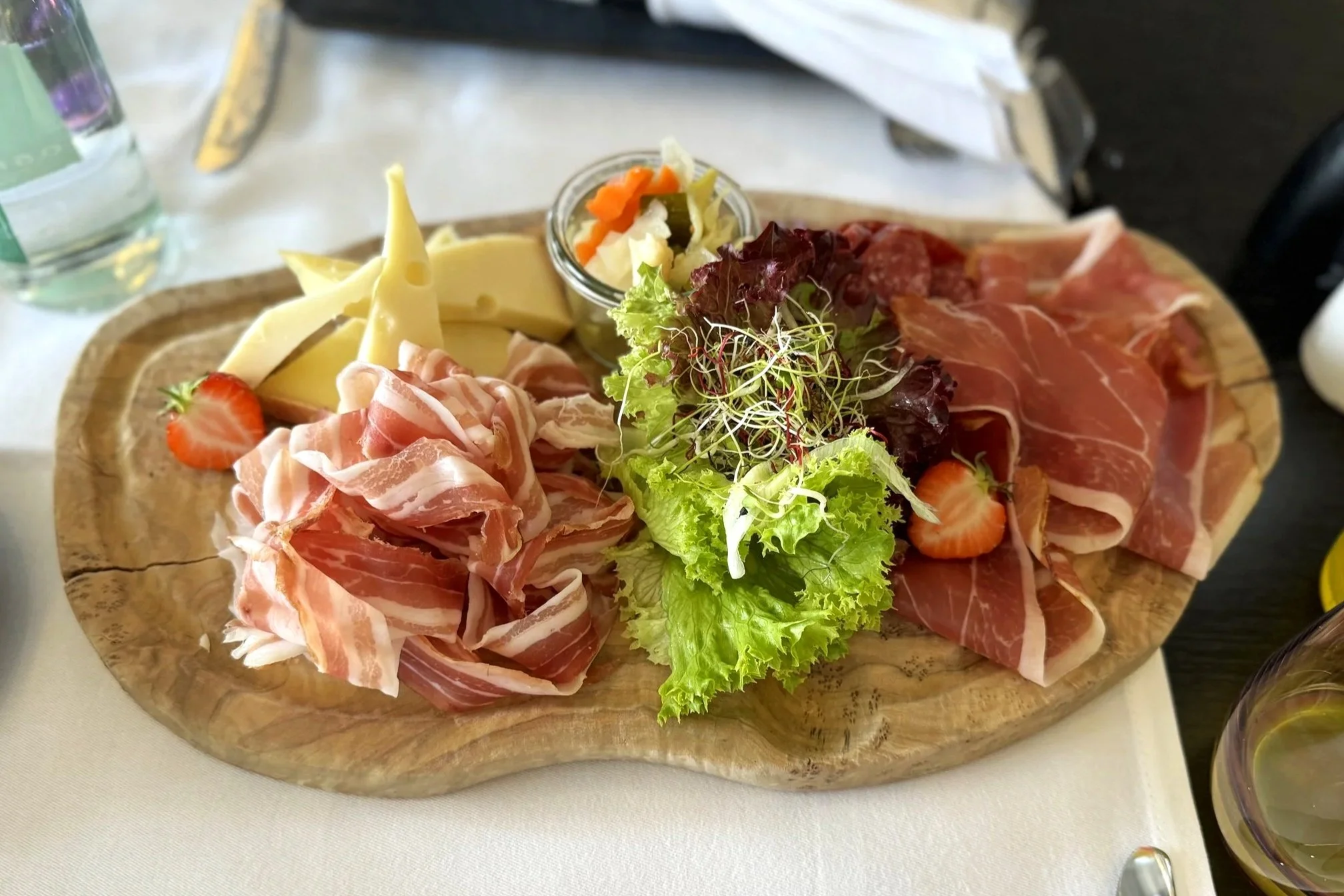
Restaurant des Alpes. Our final dinner in Lucerne was intentionally simple: a shared charcuterie board with local meats, cheeses, fruit, and accompaniments. No overthinking—just an easy, satisfying meal after a full day on Mount Titlis.
Evening Cocktails
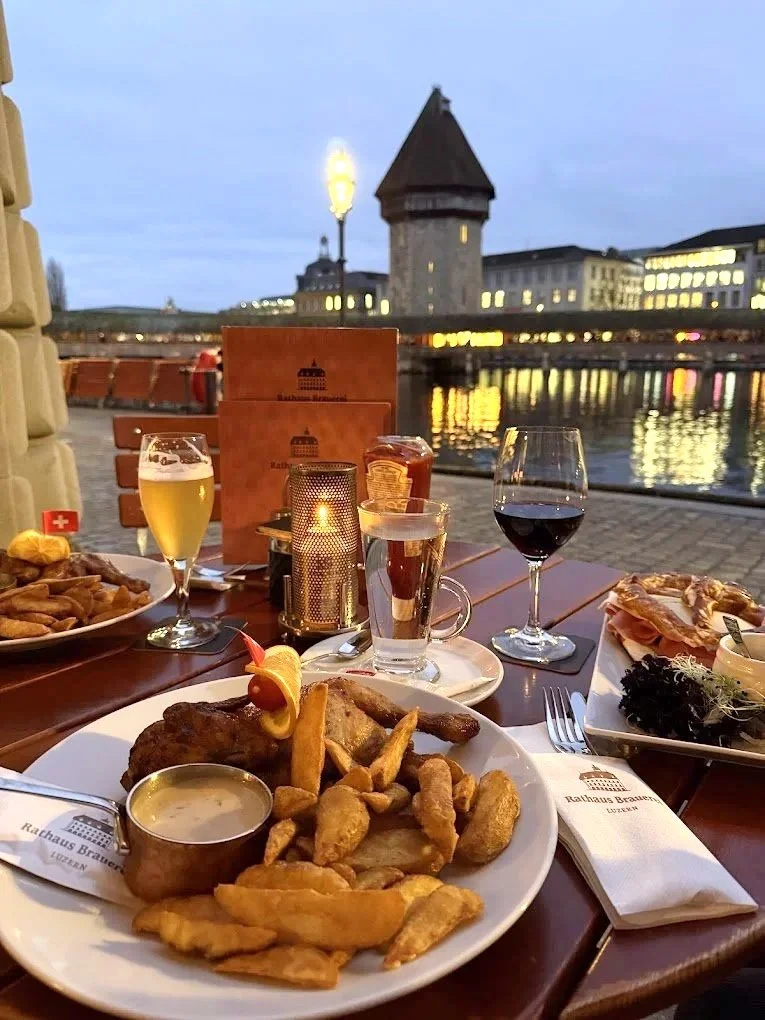
Rathaus Brauerei. On our final evening, we settled into the outdoor seating area at Rathaus Brauerei for one last slow exhale in Lucerne. The setting is historic and atmospheric—wooden beams, stone details, and a riverside location where the lights of the Old Town shimmer across the water. The hum of conversation, clinking glasses, and soft evening energy gave it a relaxed, almost cinematic feel.
We grabbed drinks, sat under the covered outdoor area, and stayed longer than we planned—just talking, watching the reflections on the river, and playing cards we’d brought down from the hotel.
It was the perfect final pause before leaving Lucerne behind.
Tips for Other Travelers
Stay at least 3 nights in Lucerne to enjoy both the city and nearby mountain excursions without rushing.
The Swiss Travel Pass made trains, boats, and buses effortless and was worth it for this itinerary.
Weather changes quickly in the mountains—don’t skip excursions based on a cloudy morning forecast.
Stay near the train station if possible; everything in Lucerne is extremely walkable from there.
Don’t miss the Glacier Garden and Mirror Maze—they were unexpected highlights for us.
Final Thoughts
Looking back, Lucerne wasn't just a stop on the itinerary — it was the perfect introduction to Switzerland: charming, historic, and perfectly positioned between lake and mountains. It offered everything we were hoping for—waterfront views, Old Town streets, and easy access to unforgettable excursions like Mount Pilatus and Mount Titlis, all seamlessly connected by Switzerland’s public transportation system.
Evenings along the riverfront were especially memorable, with soft lighting, reflections on the water, and a relaxed, romantic energy that made the city feel both vibrant and peaceful at the same time. While it’s absolutely a great destination for couples, we also saw plenty of family-friendly activities, restaurants, and easy day trips that make it flexible for different types of travelers. This itinerary can easily be adapted depending on travel style—whether you prefer slower cultural exploration or a more adventure-focused trip.
As much as we loved Lucerne, it was just the beginning of our journey. Next up: the Jungfrau Region, where we based ourselves in Wengen and spent several days surrounded by what can only be described as peak Switzerland.
For more details on that portion of the trip—including accommodations, dining, and our full day-by-day itinerary—click here for our Perfect 4-Day Jungfrau Itinerary.