The Perfect 2-Day Montreux Itinerary
If you've already read my article, The Perfect 14-Day Switzerland Itinerary by Train, you know our Swiss adventure began in Lucerne before taking us deep into the heart of the Jungfrau Region. After four incredible days of alpine hikes, waterfalls, mountain trains, and enough jaw-dropping scenery to fill a lifetime of Instagram posts, we boarded a train bound for Montreux.
From the second we stepped off the train, it felt like we'd arrived in a completely different country.
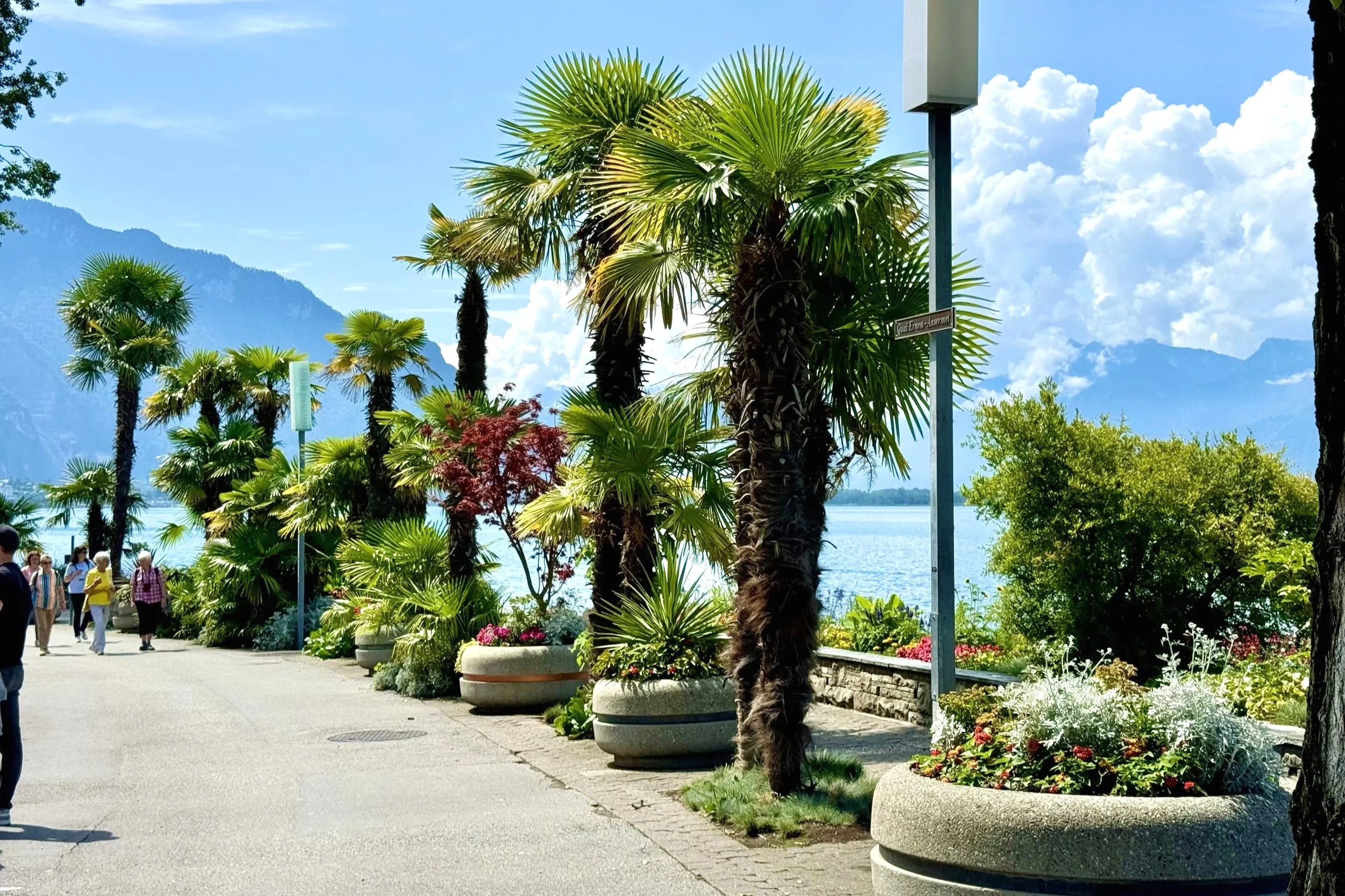
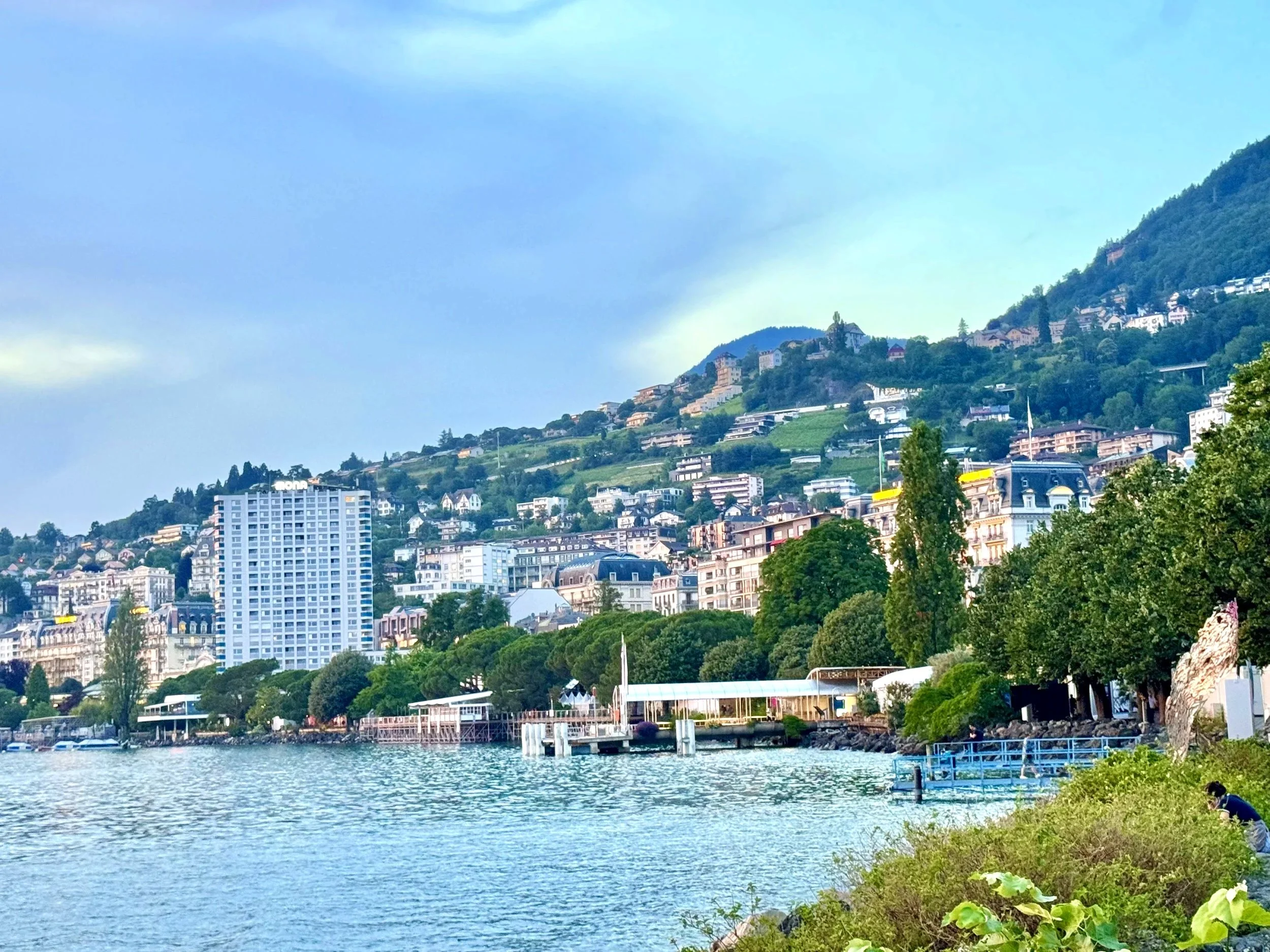
Gone were the cow-dotted meadows and dramatic mountain villages. In their place were palm trees, grand Belle Époque hotels, vineyards cascading down hillsides, and sparkling views across Lake Geneva. If the Jungfrau Region felt like Switzerland's rugged outdoor playground, Montreux felt like its sophisticated lakeside cousin.
Over the next two days, we explored a medieval castle straight out of a fairy tale, sampled enough cheese and chocolate to test the limits of human self-control, and wandered some of the most beautiful waterfront promenades in Europe.
If you're planning your own Swiss adventure, be sure to check out my other Switzerland guides:
Before diving into our day-by-day itinerary, here’s a quick destination snapshot and look at why Montreux earned a place on our itinerary.
Destination Snapshot
Location: Swiss Riviera, on the shores of Lake Geneva
Region: Canton of Vaud
Best For: Lakeside scenery, castle visits, food experiences, day trips
Ideal Stay: 2–3 days
Walkability: Excellent in town center and along the promenade
Transportation: Trains, buses, boats, and walking
Why We Chose Montreux
When planning our Switzerland itinerary, I knew I wanted to experience more than just the Alps.
Don't get me wrong—I could happily spend weeks staring at mountains. But one of the things that makes Switzerland so fascinating is how dramatically the scenery changes from region to region. Montreux checked all the boxes.
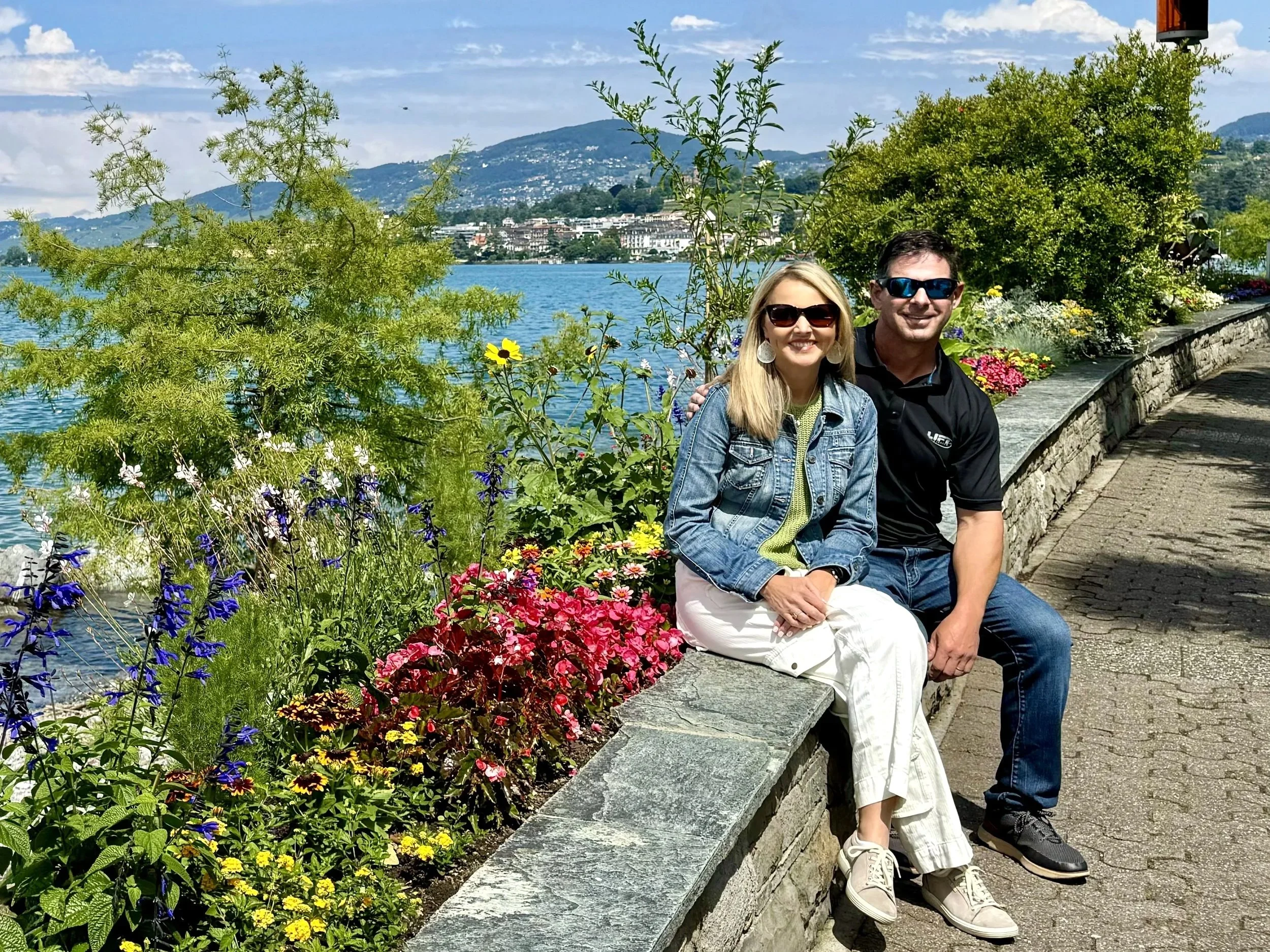
It offered a completely different landscape than what we'd experienced in Lucerne and the Jungfrau Region, with its palm-lined waterfront, vineyard-covered hillsides, and stunning Lake Geneva setting. It also served as the perfect base for several bucket-list experiences that had somehow made their way onto my Switzerland must-do list: touring a medieval castle, visiting a famous Swiss chocolate factory, and seeing how authentic Gruyère cheese is made.
And as a culinary enthusiast, any destination that encourages you to pair chocolate and cheese in the same day deserves serious consideration.
Montreux ended up being one of the most pleasantly surprising stops on our entire trip. It combined natural beauty, history, food, and easy day trips in a way that felt completely different from anywhere else we visited in Switzerland.
Where We Stayed
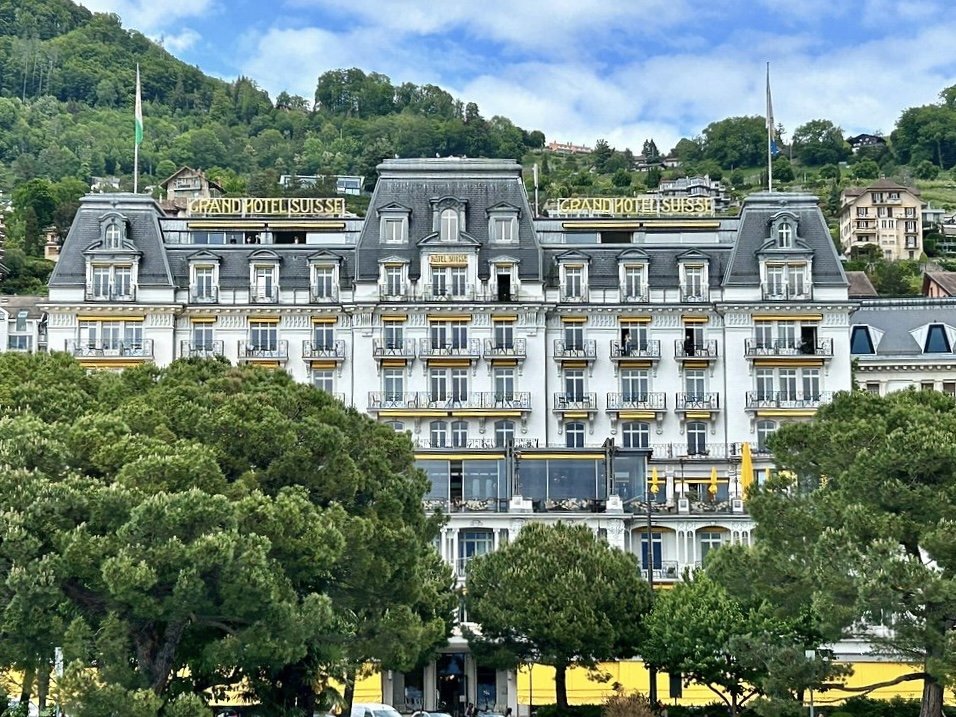
For our two nights in Montreux, we stayed at the historic Grand Hotel Suisse Majestic, a beautiful Belle Époque hotel perched above Lake Geneva.
The biggest selling point? The view.
From our room and the hotel's terrace, we enjoyed sweeping panoramas of Lake Geneva, sailboats gliding across the water, and mountains rising beyond the shoreline. After several days in the Alps, it was a completely different—and equally stunning—Swiss landscape.
The location was just as impressive. Situated directly across from the train station and only a short walk from Montreux's famous lakeside promenade, it made exploring the area effortless. Whether we were heading out for a waterfront stroll, catching a train to a nearby town, or returning after a full day of sightseeing, everything felt conveniently within reach.
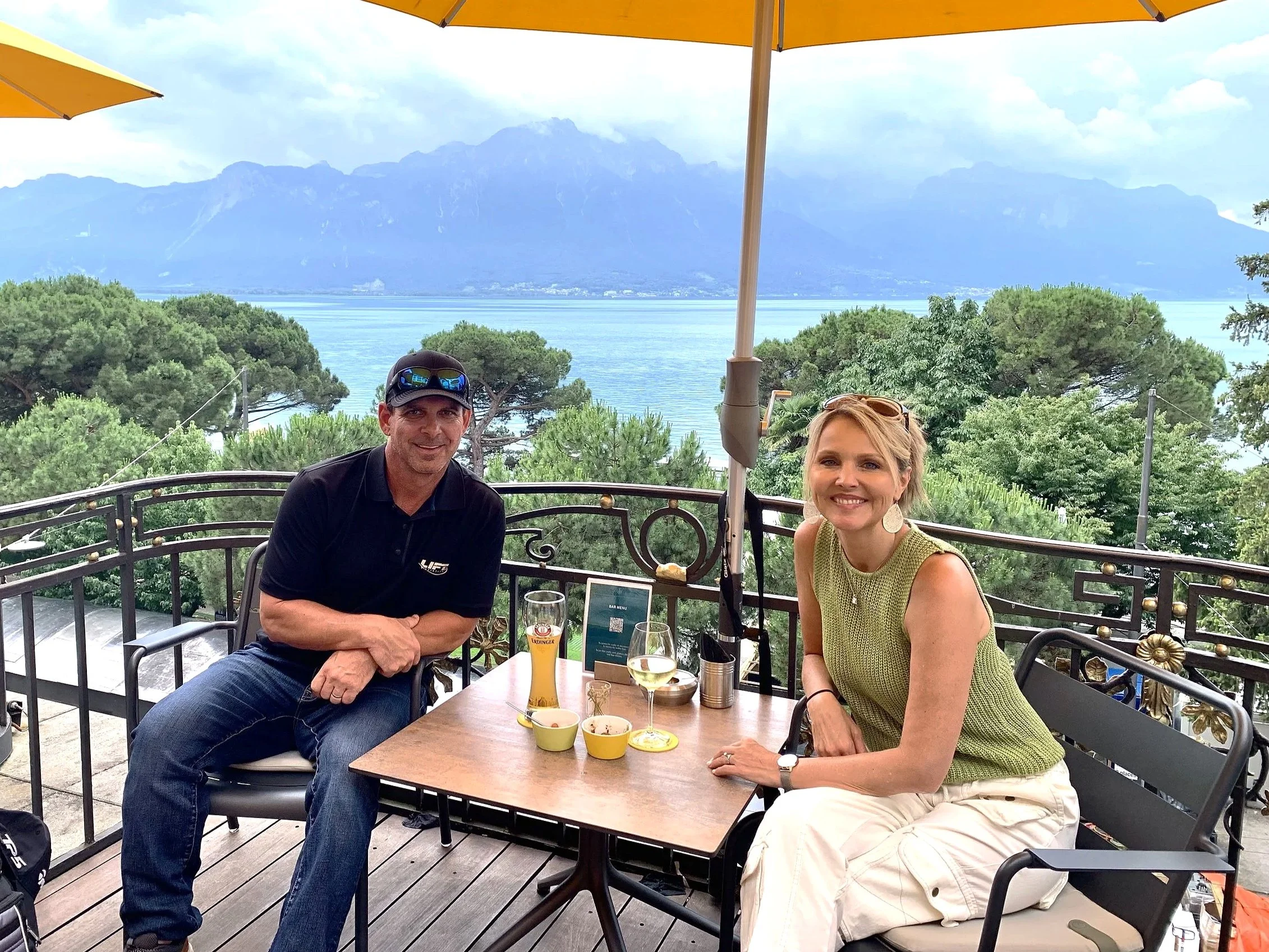
The hotel offers comfortable rooms, an excellent breakfast, a fitness center, and a spectacular terrace restaurant overlooking the lake. But what we remember most is ending each day with a drink on the terrace, watching the evening light dance across the water and wondering how Switzerland kept finding new ways to impress us.
Getting Around Montreux
One of the questions I get most often about Switzerland is whether you need a rental car. After spending 14 days traveling across the country—from Lucerne to the Jungfrau Region, Montreux, and beyond—my answer is simple: absolutely not.
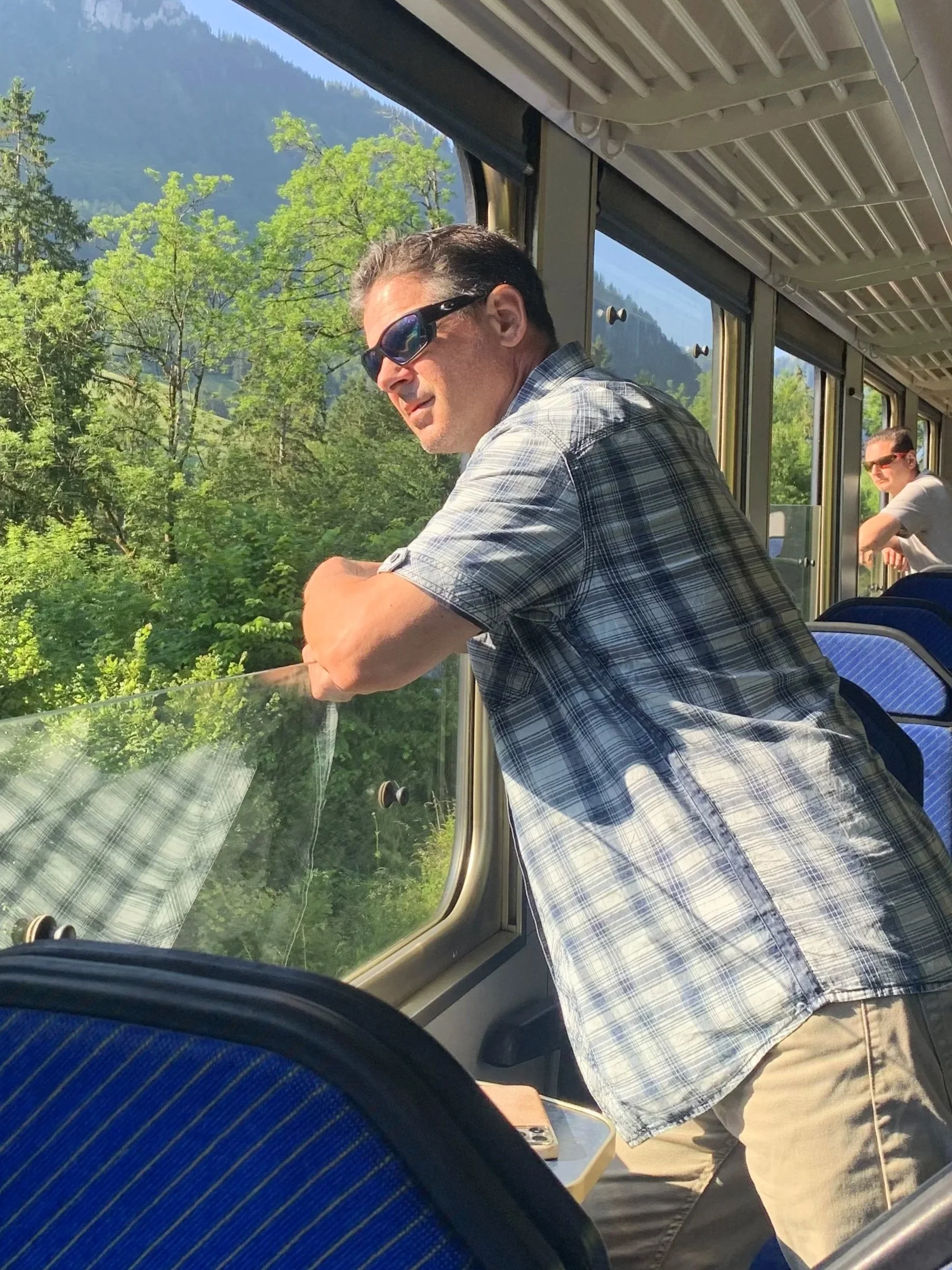
In fact, we completed this entire two-week adventure using nothing but Switzerland's outstanding public transportation system. Trains, buses, boats, funiculars, cable cars—you name it, we rode it. At no point did Bryan or I find ourselves wishing we had rented a car. Quite the opposite. We were too busy enjoying the scenery while someone else did the driving.
For this trip, we purchased the Swiss Travel Pass, and it was one of the best travel investments we made. The pass covered most trains, buses, and boats throughout the country, included admission to many museums, and provided discounts on several mountain excursions and attractions. Not having to constantly purchase tickets or figure out fares made traveling around Switzerland remarkably stress-free.
Montreux was particularly easy to navigate. Most of our time was spent on foot, wandering the beautiful lakeside promenade and exploring the town center. For our day trips, we took the train to Gruyère, hopped on a bus to nearby Broc for the Cailler chocolate factory, and later continued by train to Lausanne.
The entire experience was so seamless that by the time we arrived in Montreux, boarding trains and making connections had become second nature. Switzerland's transportation system is so efficient that it almost makes travel feel like cheating.
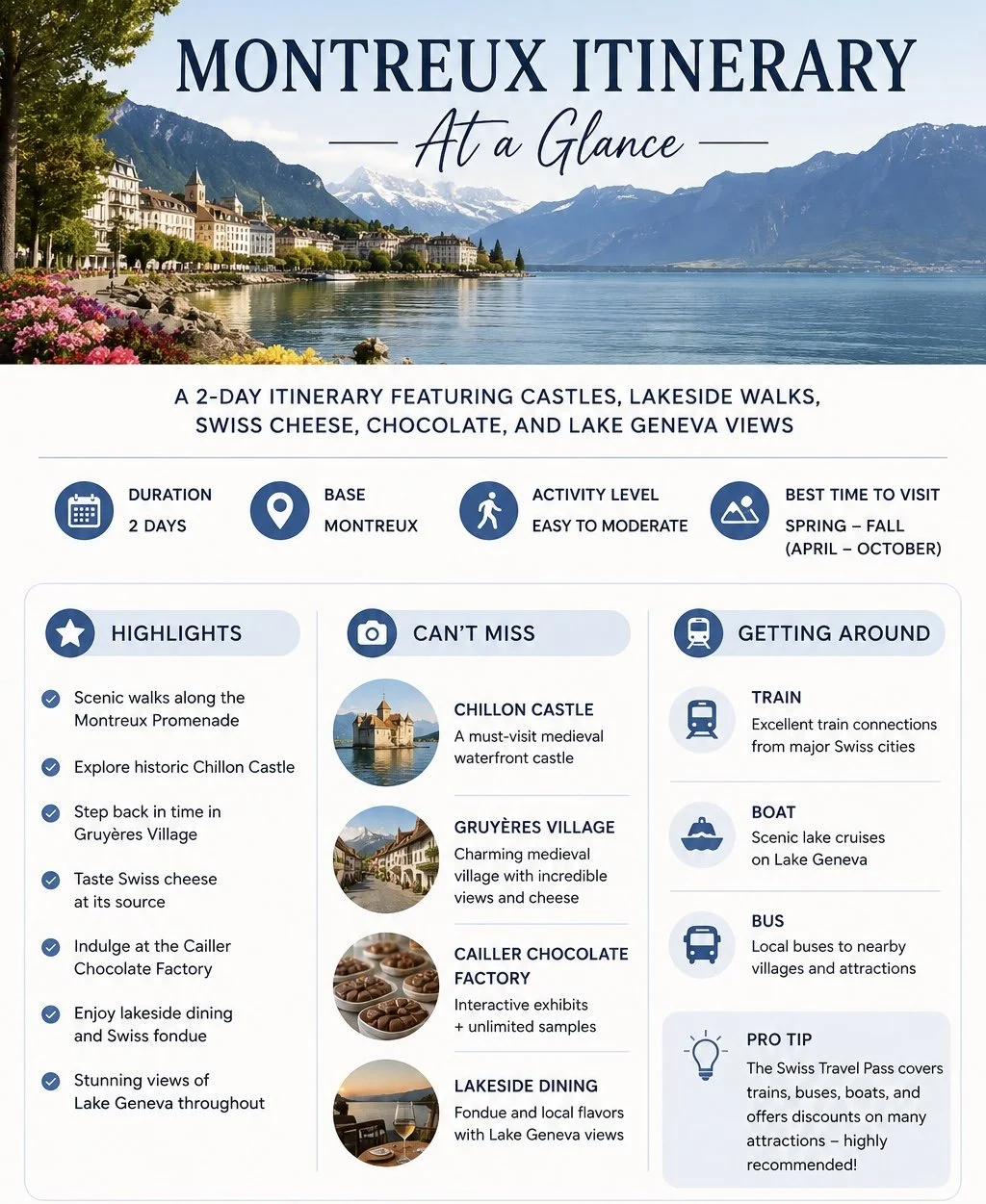
Day-by-Day Details
Day 1: Montreux & Chillon Castle
Our first day in Montreux began exactly as it should: a slow wander along the lakeside promenade with coffee in hand and no real agenda beyond following the edge of Lake Geneva and seeing where it led.
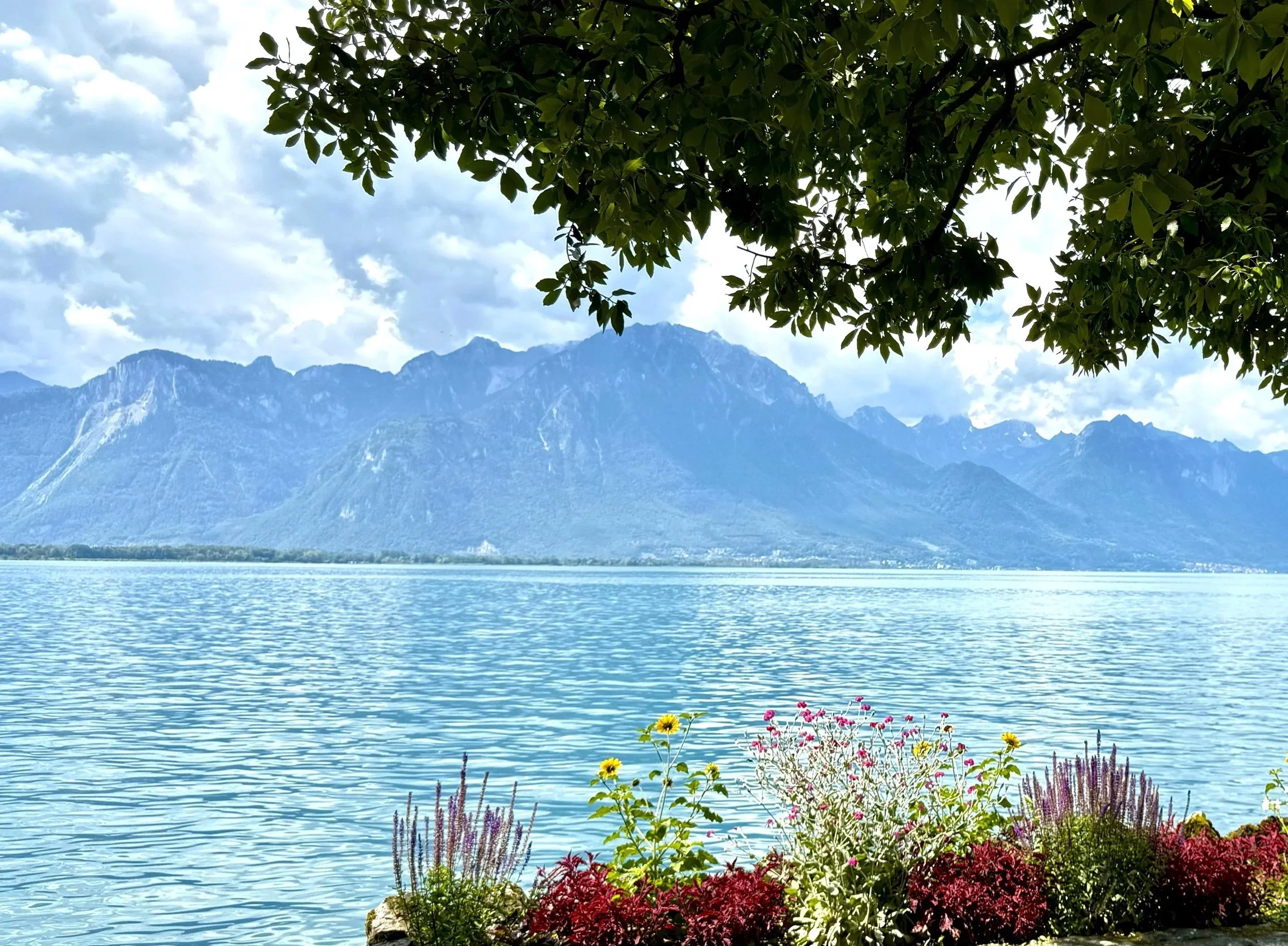
The promenade stretches along the waterfront past flower gardens, modern sculptures, grand hotels, and a steady stream of postcard-worthy viewpoints. With the Alps rising dramatically across the water, it didn’t take long before we stopped pretending we were “just walking” and started stopping every few minutes for photos.
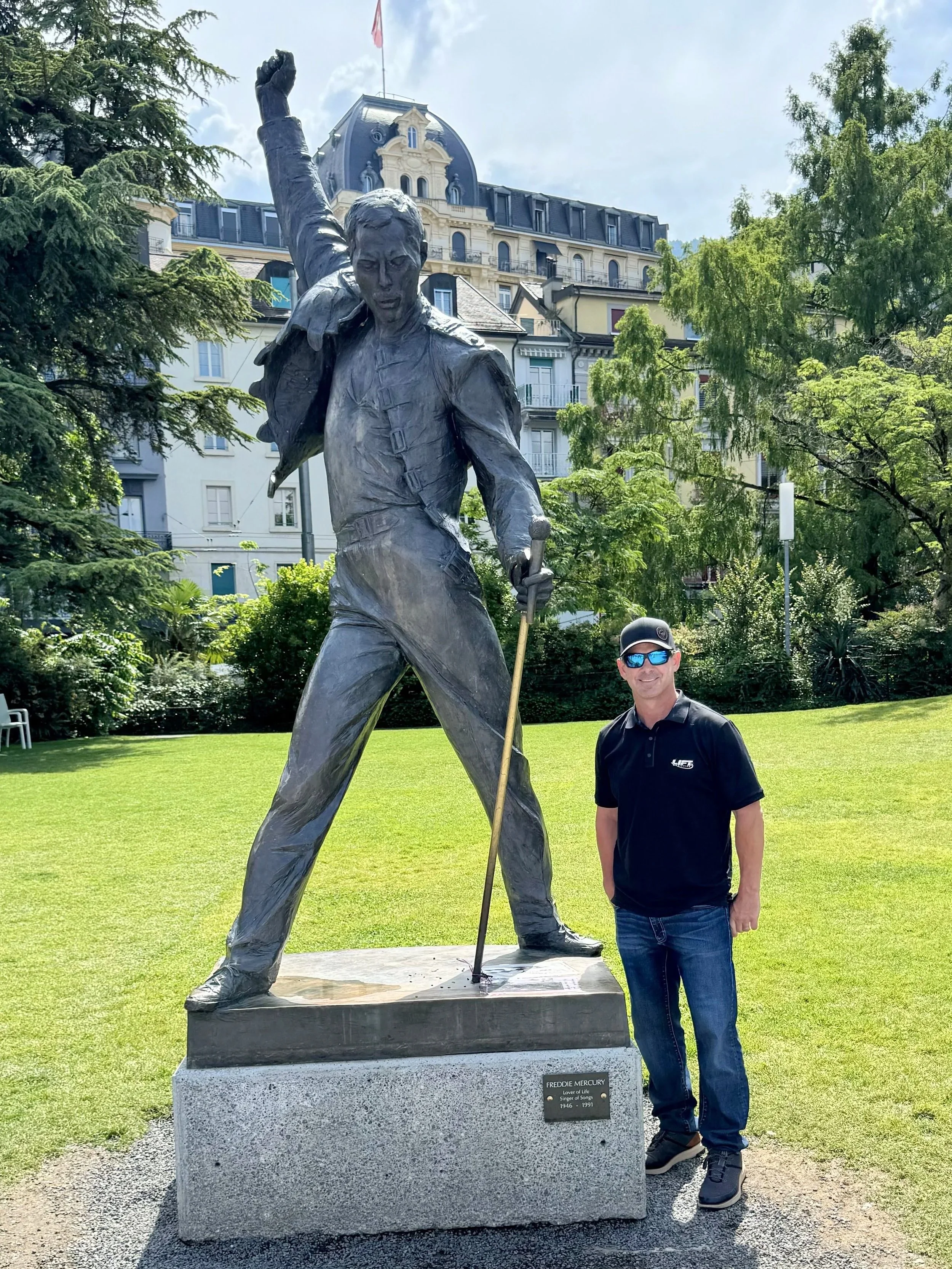
One of the first landmarks we passed was the Freddie Mercury statue, standing right on the waterfront like he never left the stage. Freddie Mercury, the legendary frontman of Queen, spent a significant amount of time in Montreux recording at Mountain Studios, and the town has clearly adopted him as part of its identity. A few steps later, we passed additional sculptures and waterfront installations that give the promenade the feel of an open-air gallery with a very distracting view.
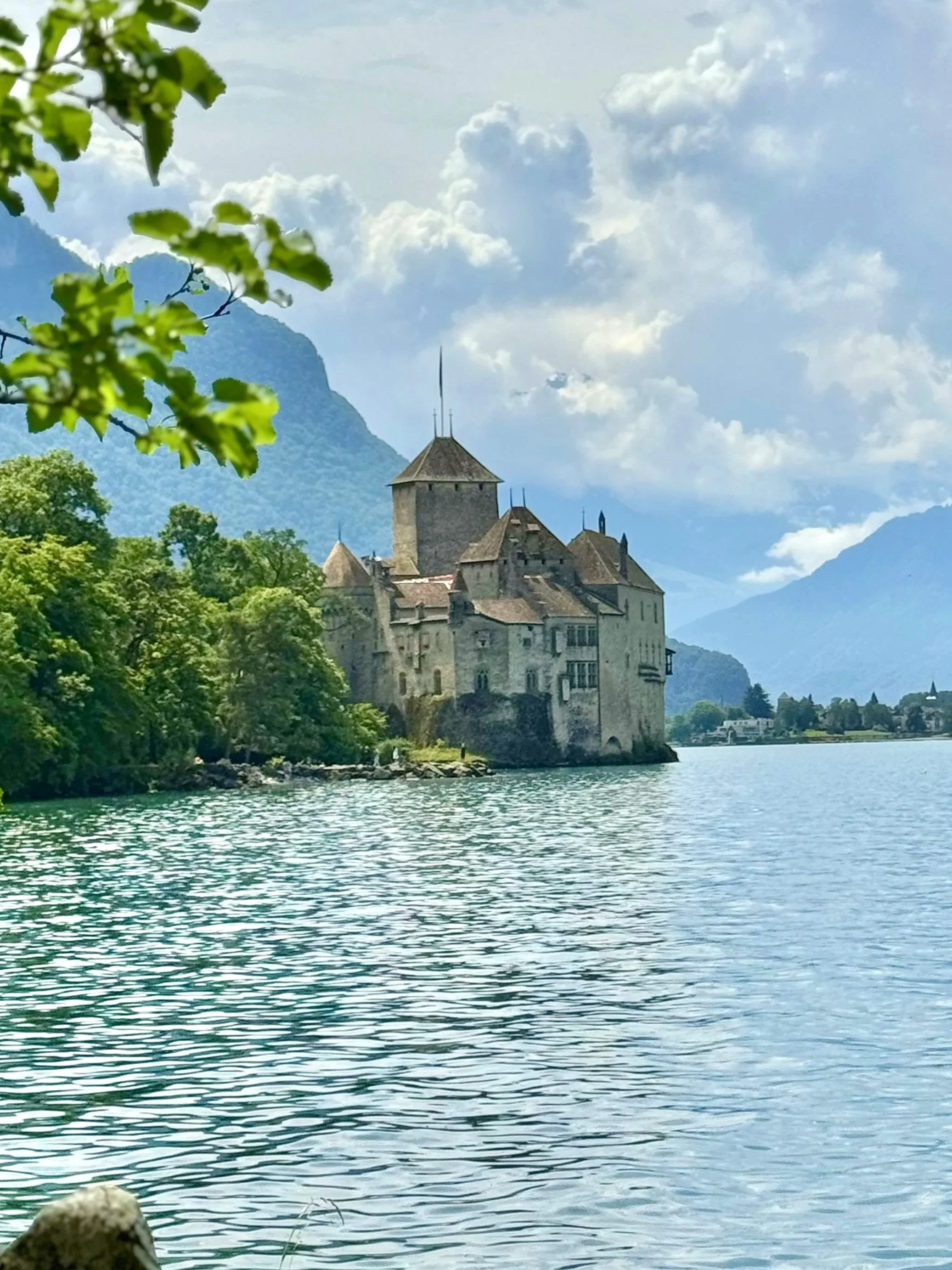
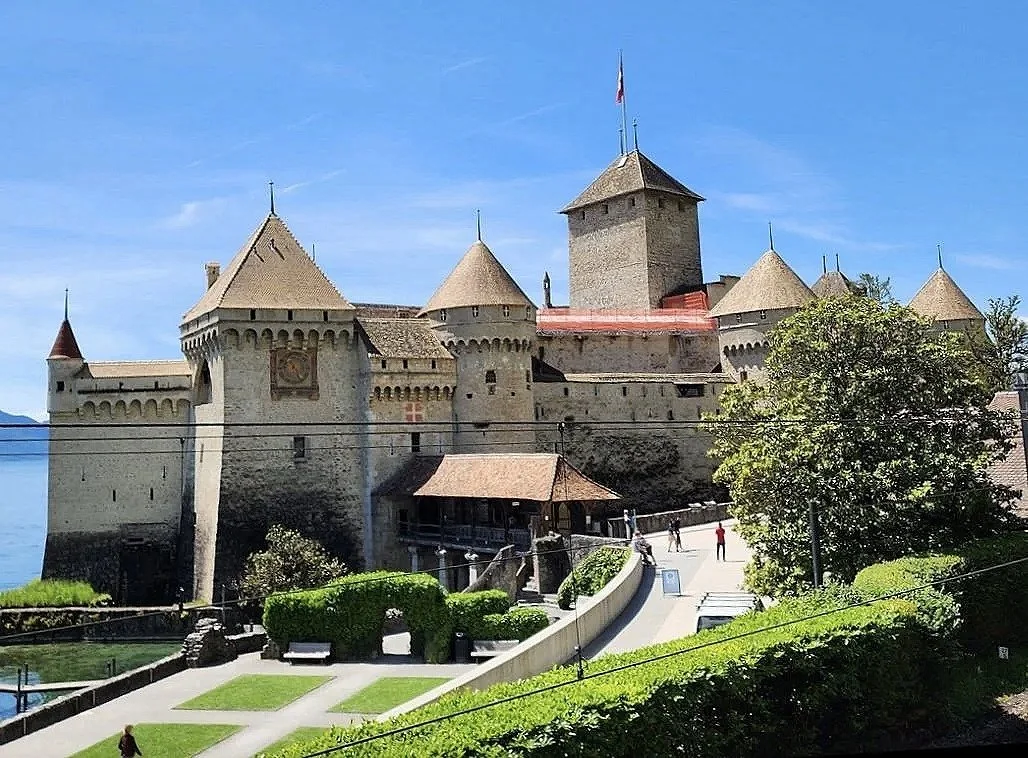
From there, the path naturally carried us toward Château de Chillon—about a 45–50 minute walk (roughly 3.5 km) from the hotel. It’s the kind of walk that feels less like exercise and more like a slow-moving highlight reel of Lake Geneva.
Chillon itself appears almost too perfectly placed to be real. The medieval fortress dates back to the 12th century and sits on a rocky island just offshore, originally positioned to control the narrow passage between lake and mountains. It’s both strategically intimidating and unintentionally cinematic.
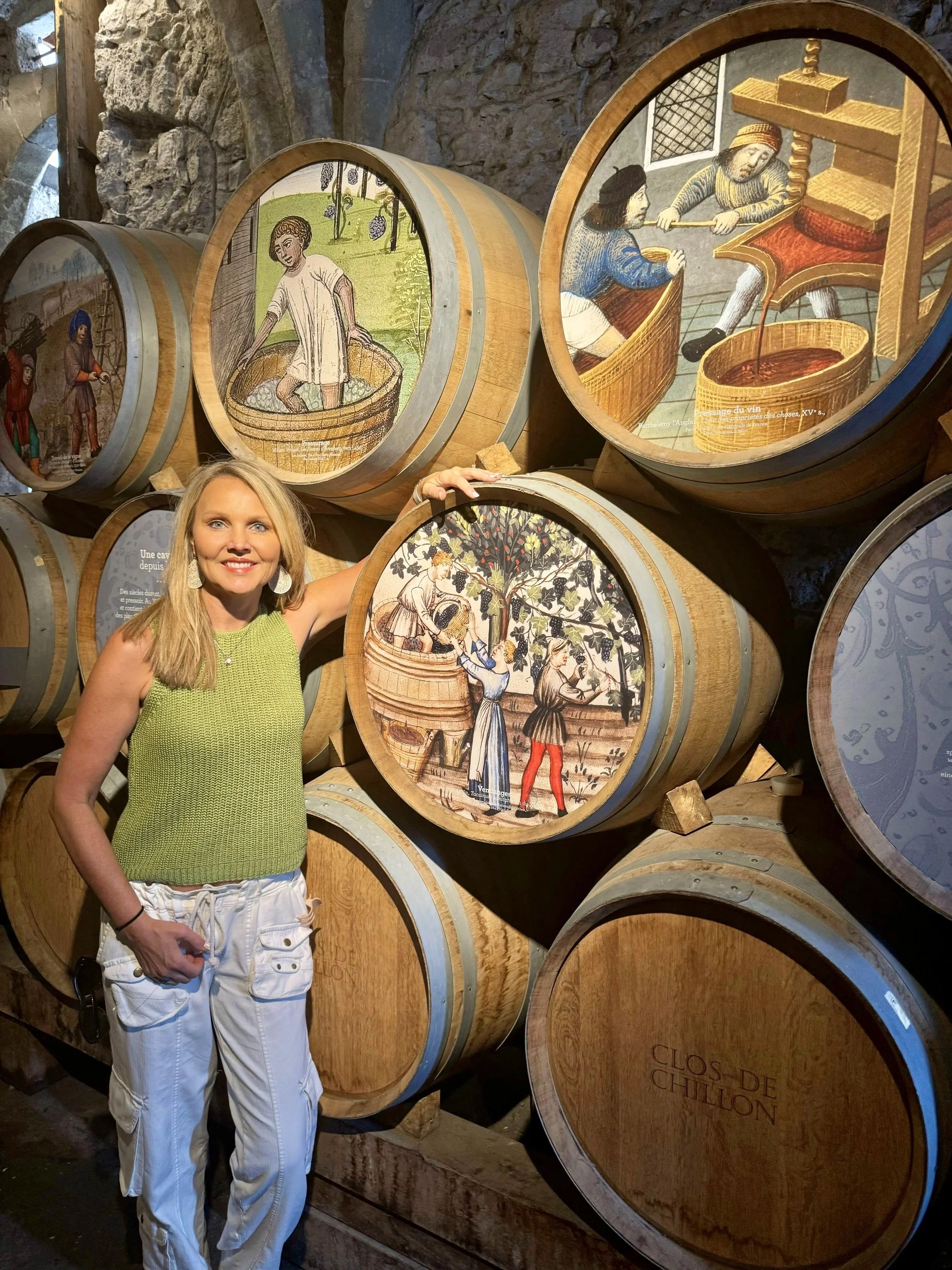
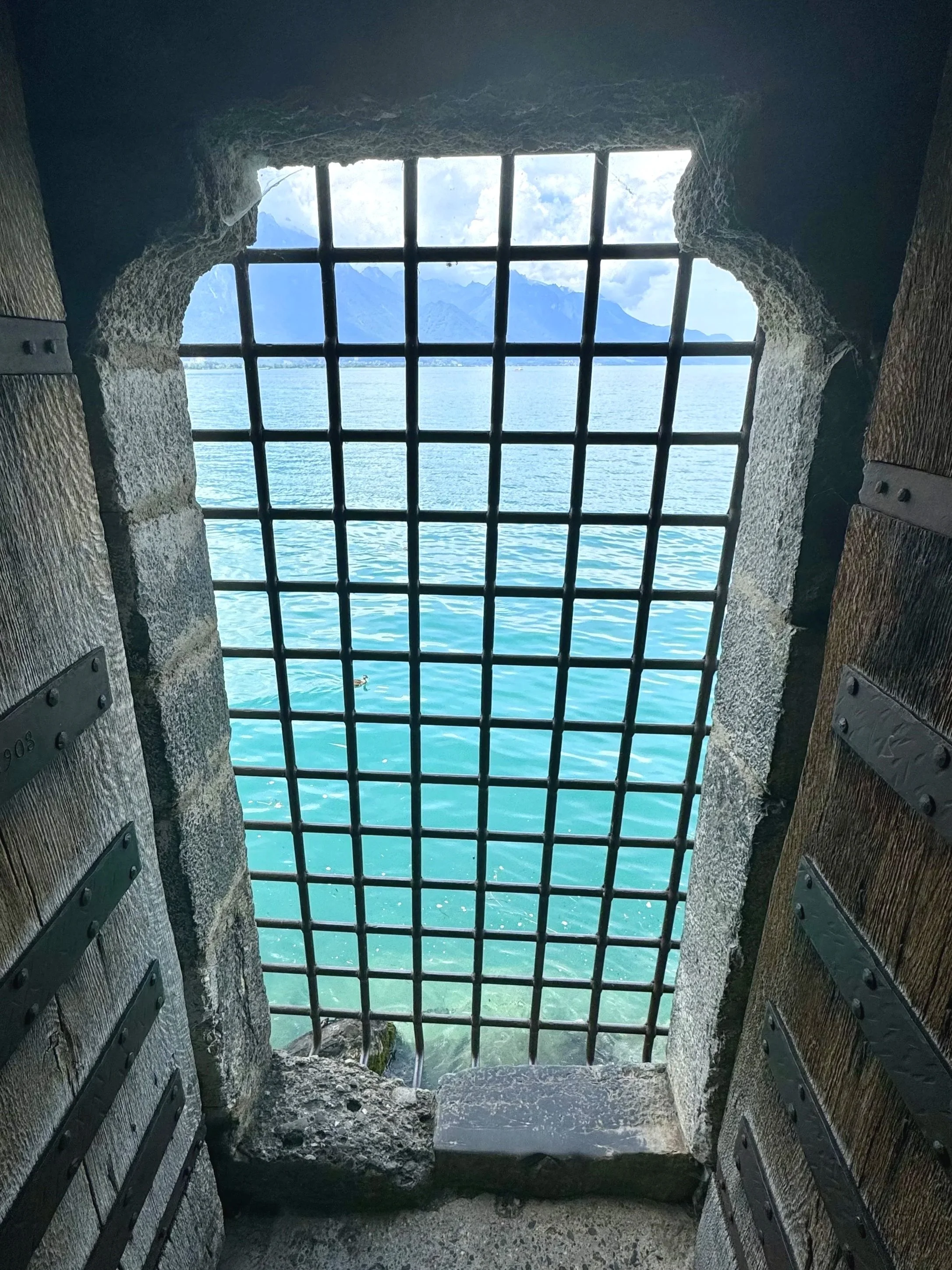
Inside, the experience moves from stone corridors into vaulted halls and atmospheric underground wine cellars that feel far older than the castle’s actual visitor flow suggests. The small chapel, with its faded frescoes, is especially striking—quiet, simple, and almost shockingly intimate compared to the fortress above it.
By the time we made our way back along the lake, the light had softened over Lake Geneva in that unmistakable Swiss way that makes you consider moving your entire life closer to water.
We ended the day on the terrace at 45 Grill & Health at the Grand Hotel Suisse Majestic, where dinner came with its own competing attraction: panoramic views over the lake and surrounding mountains. As the sun dropped behind the peaks and the water turned to gold, Montreux once again delivered the kind of evening that doesn’t feel like it should be allowed to be this pretty.
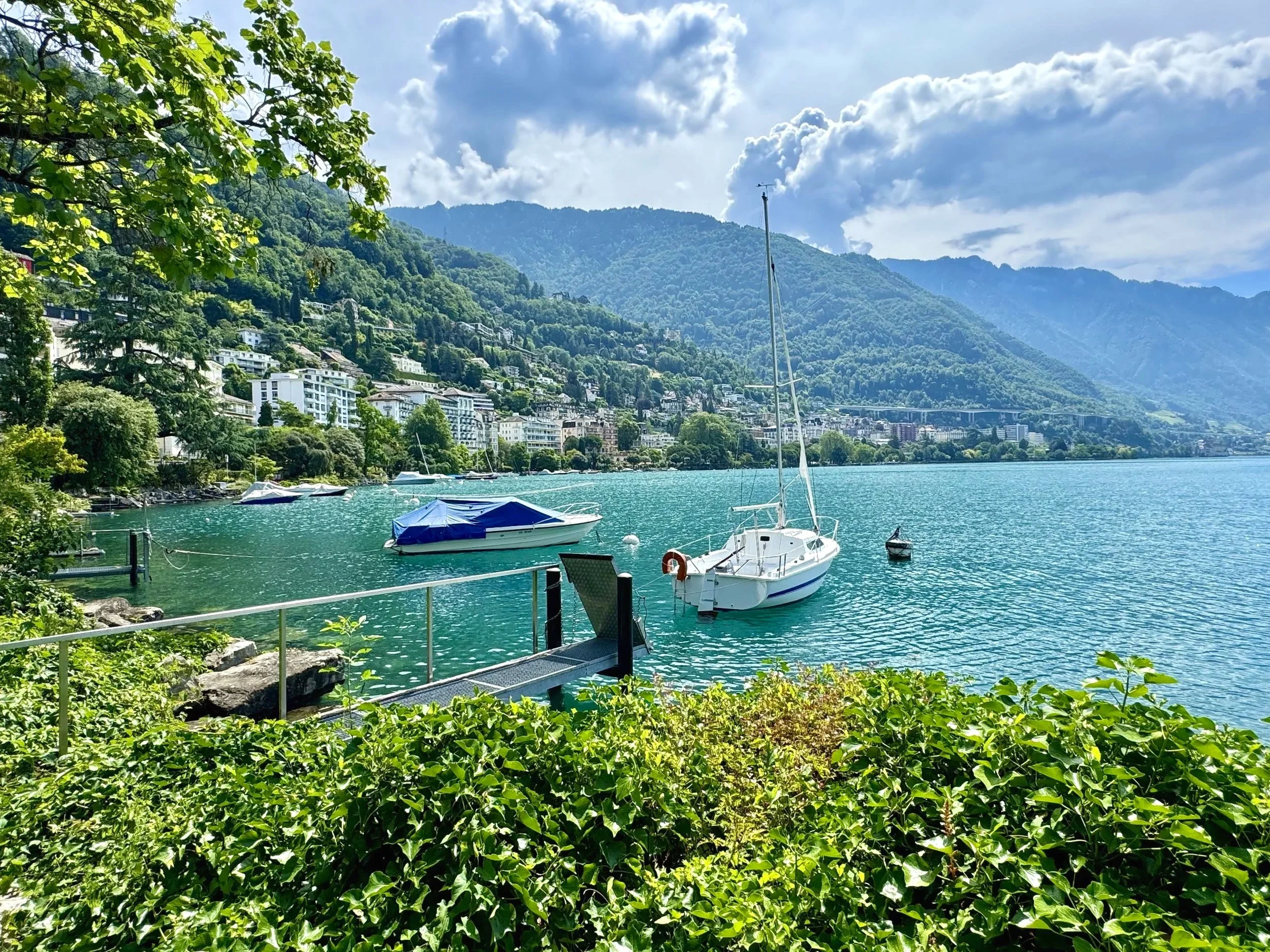
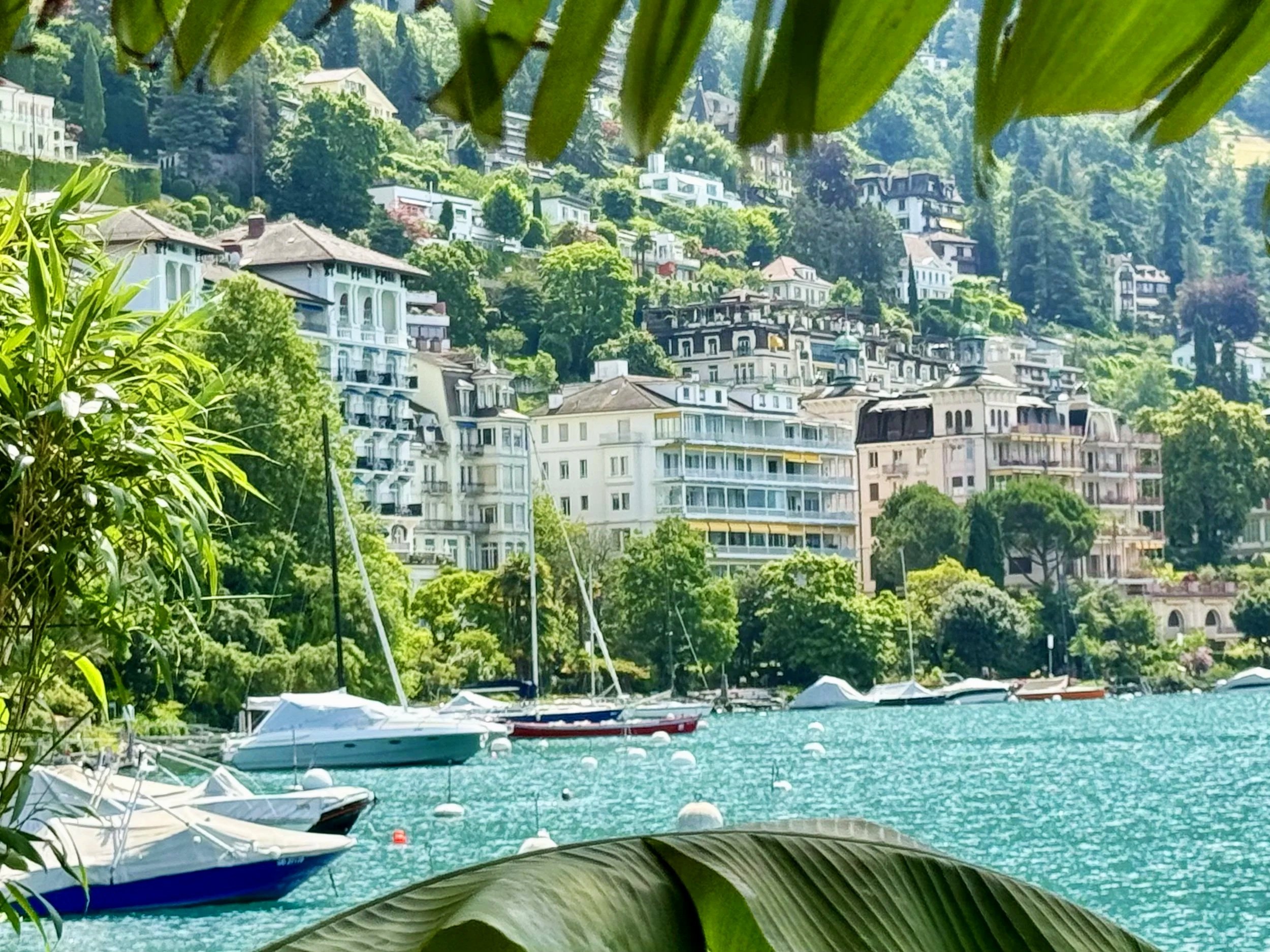
Pro Tip: Start your promenade walk early—it only gets busier later, and the walk to Chillon is longer (and more photo-heavy) than it looks.
Day 2: Chocolate, Cheese & Lausanne
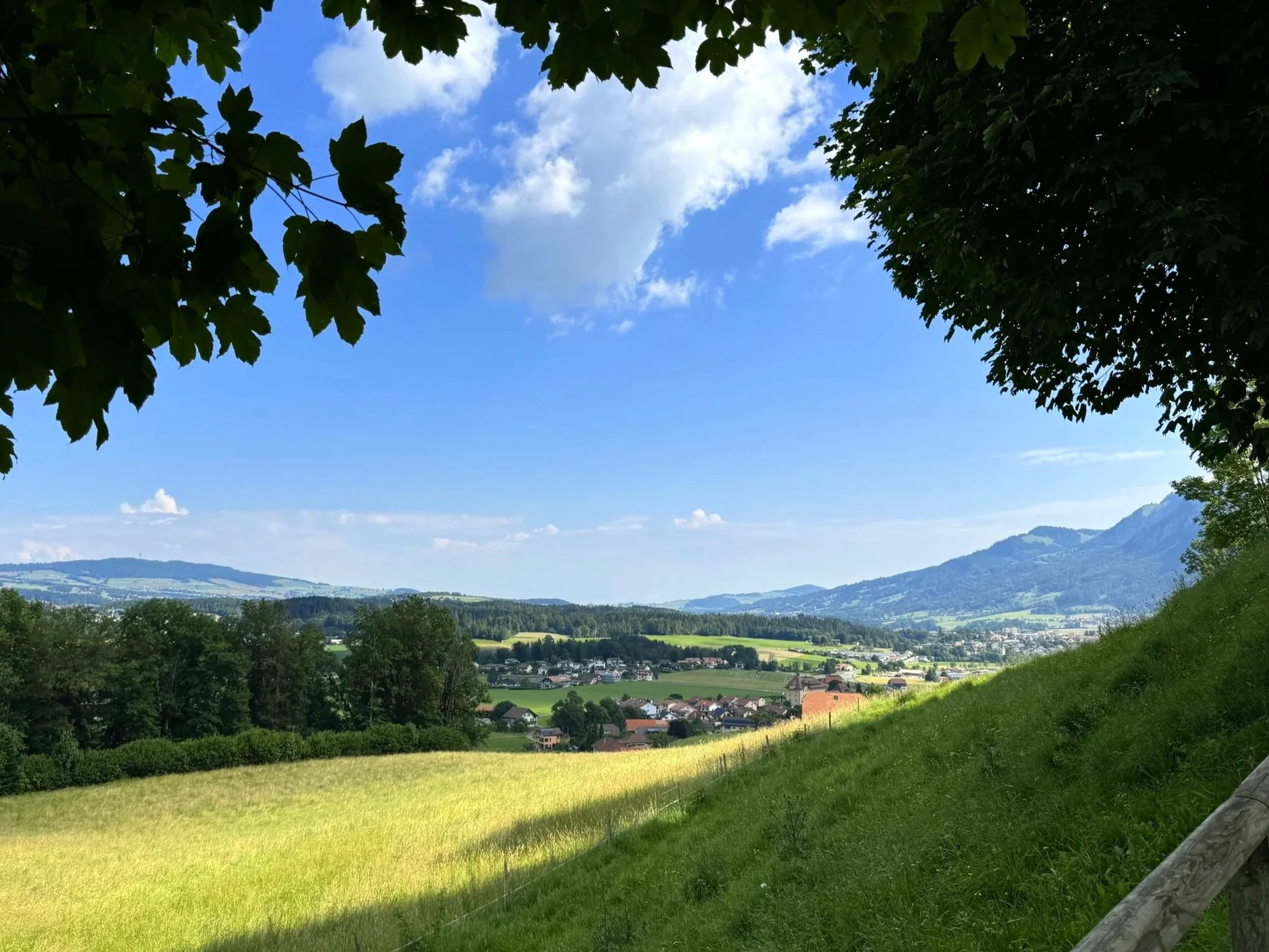
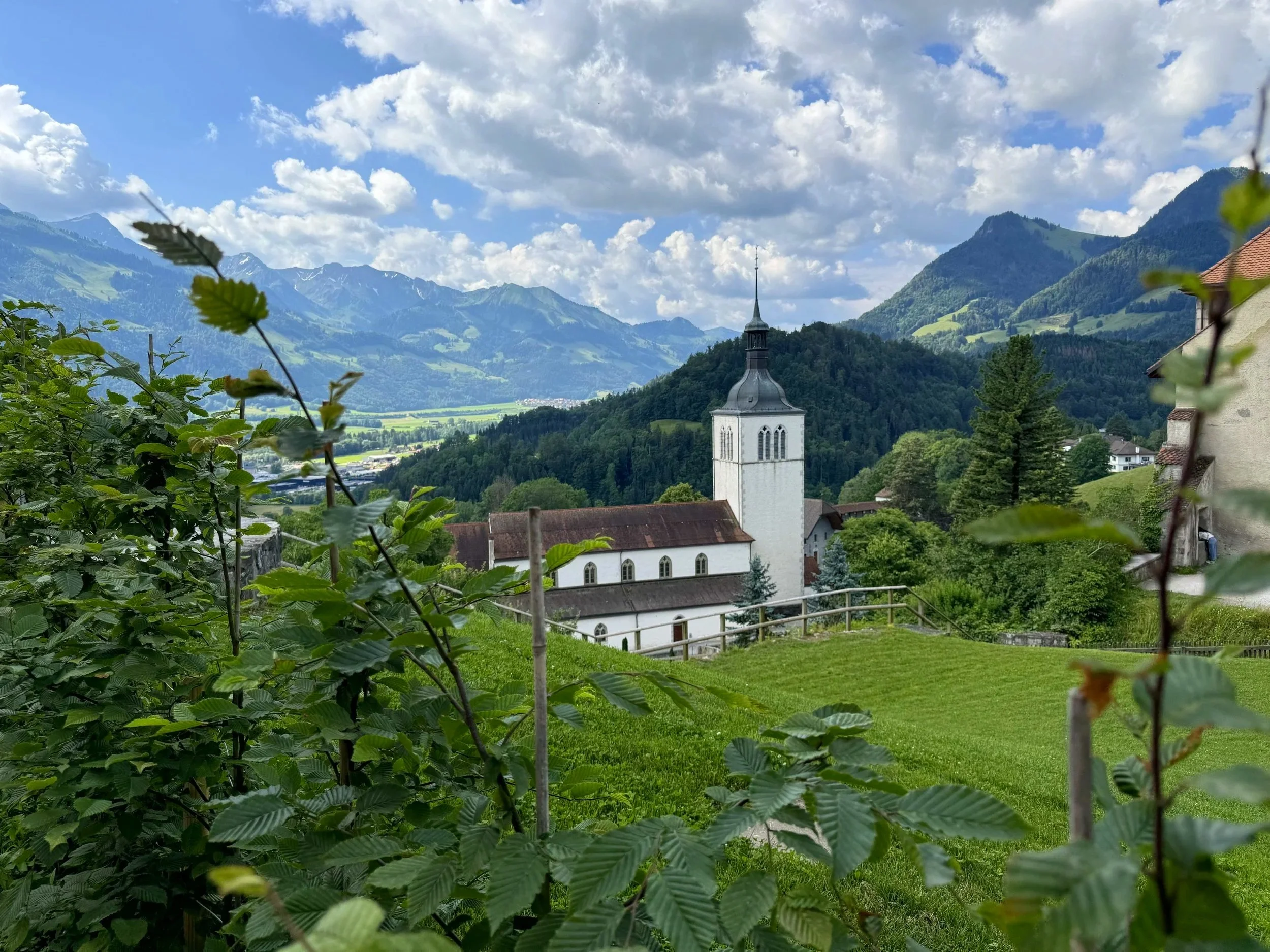
Day two began with a train ride into what feels like Switzerland’s dedicated “storybook setting” region: the medieval hilltop town of Gruyères.
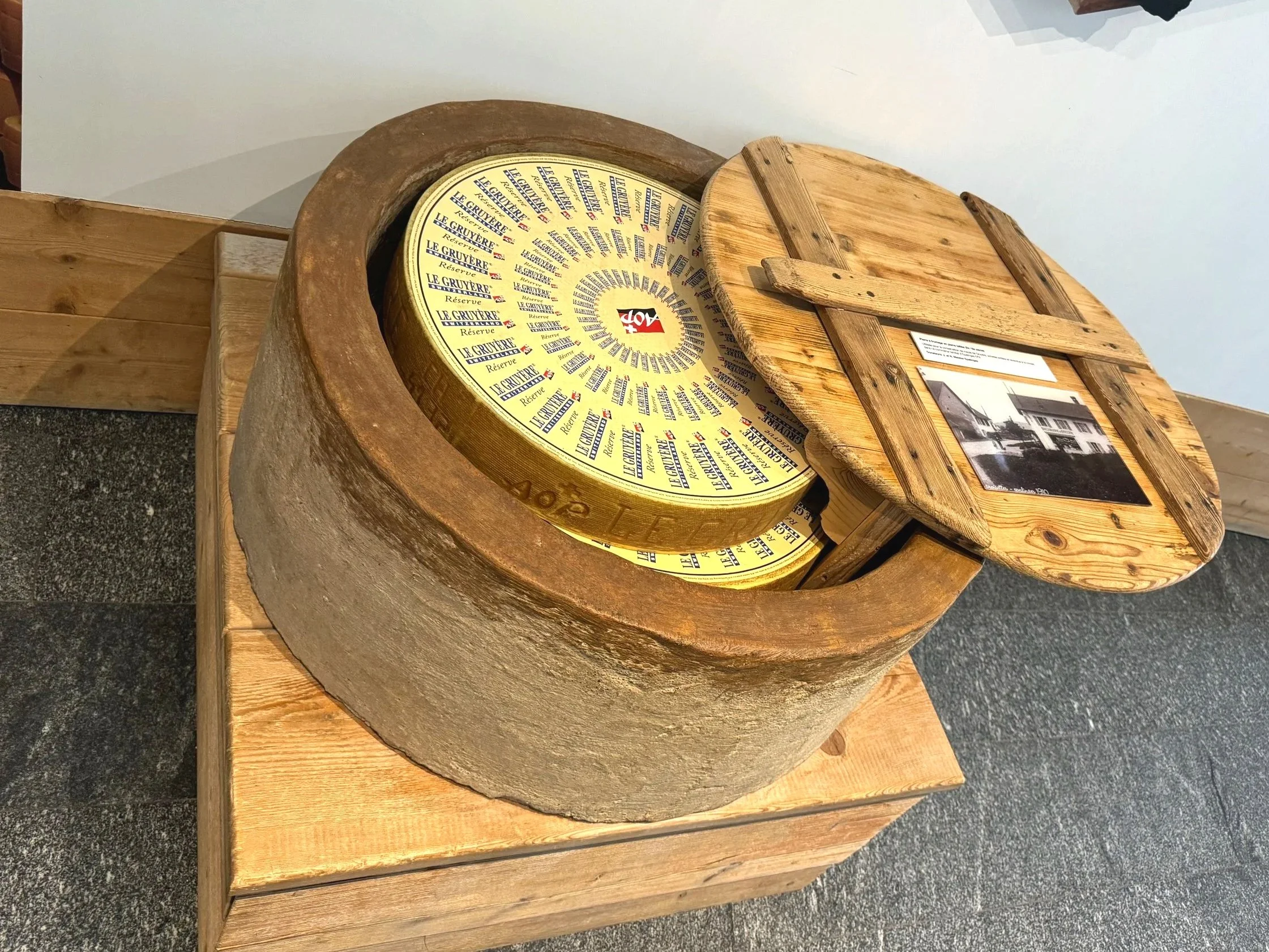
With its cobblestone streets, stone façades, and castle perched above rolling countryside, Gruyères looks like it was designed to make modern life feel slightly unnecessary. We started at a traditional cheese factory, where we learned the surprisingly precise—and slightly mesmerizing—process behind Gruyère cheese. It’s equal parts tradition, science, and waiting… followed quickly by tasting, which is where everything suddenly makes sense.
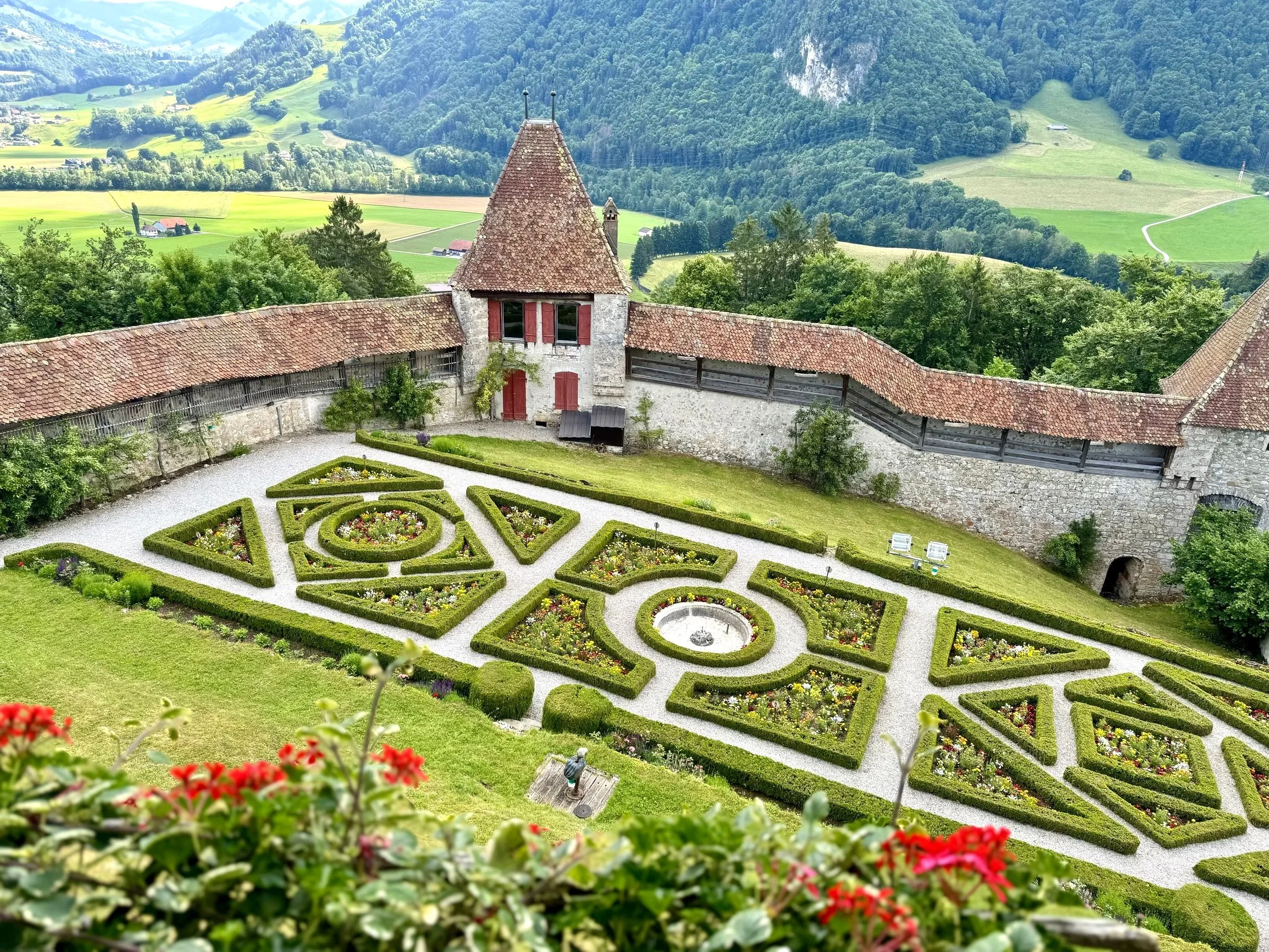
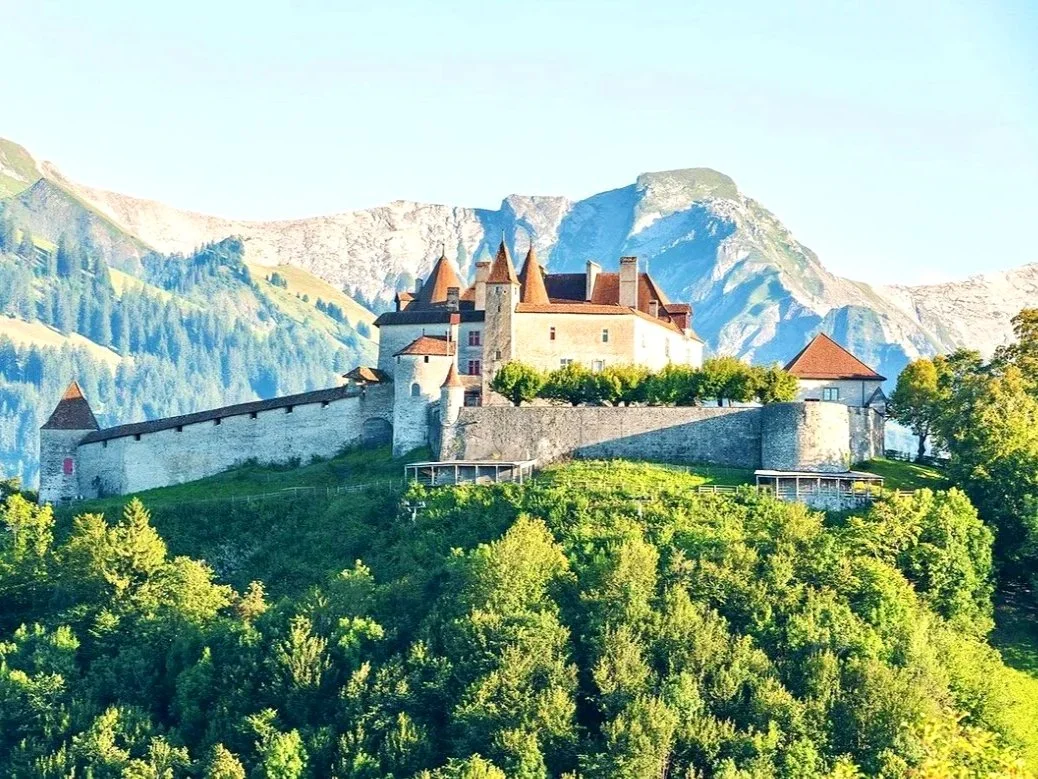
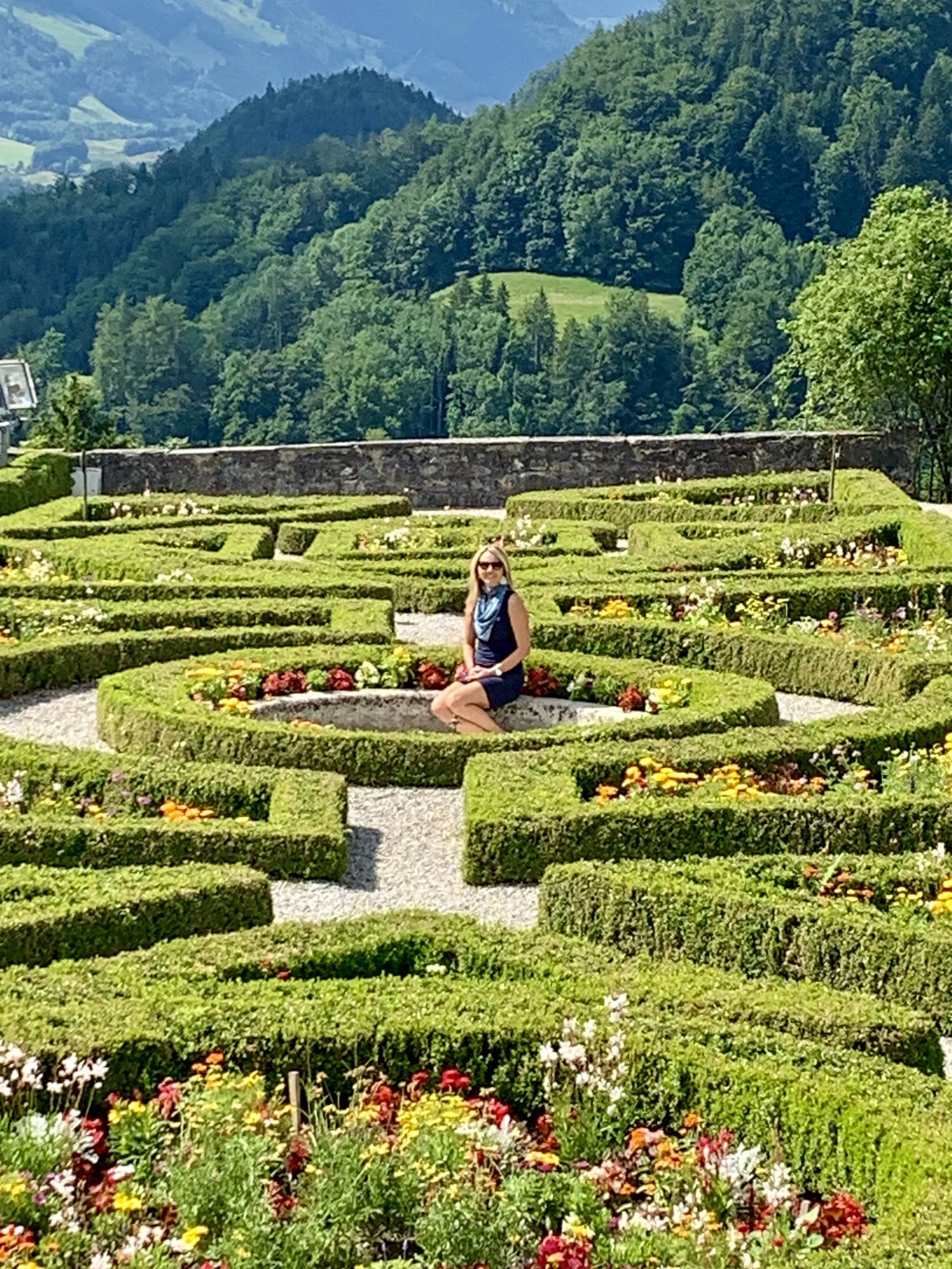
From there, we wandered the medieval village, ducking into small shops and pausing far too often at viewpoints that made it very difficult to stay on schedule. The highlight was Château de Gruyères, sitting above the town with sweeping valley views. Inside, the castle moves between historic rooms, tapestries, and artwork that feel beautifully preserved without feeling staged, all framed by windows that constantly remind you where you are.
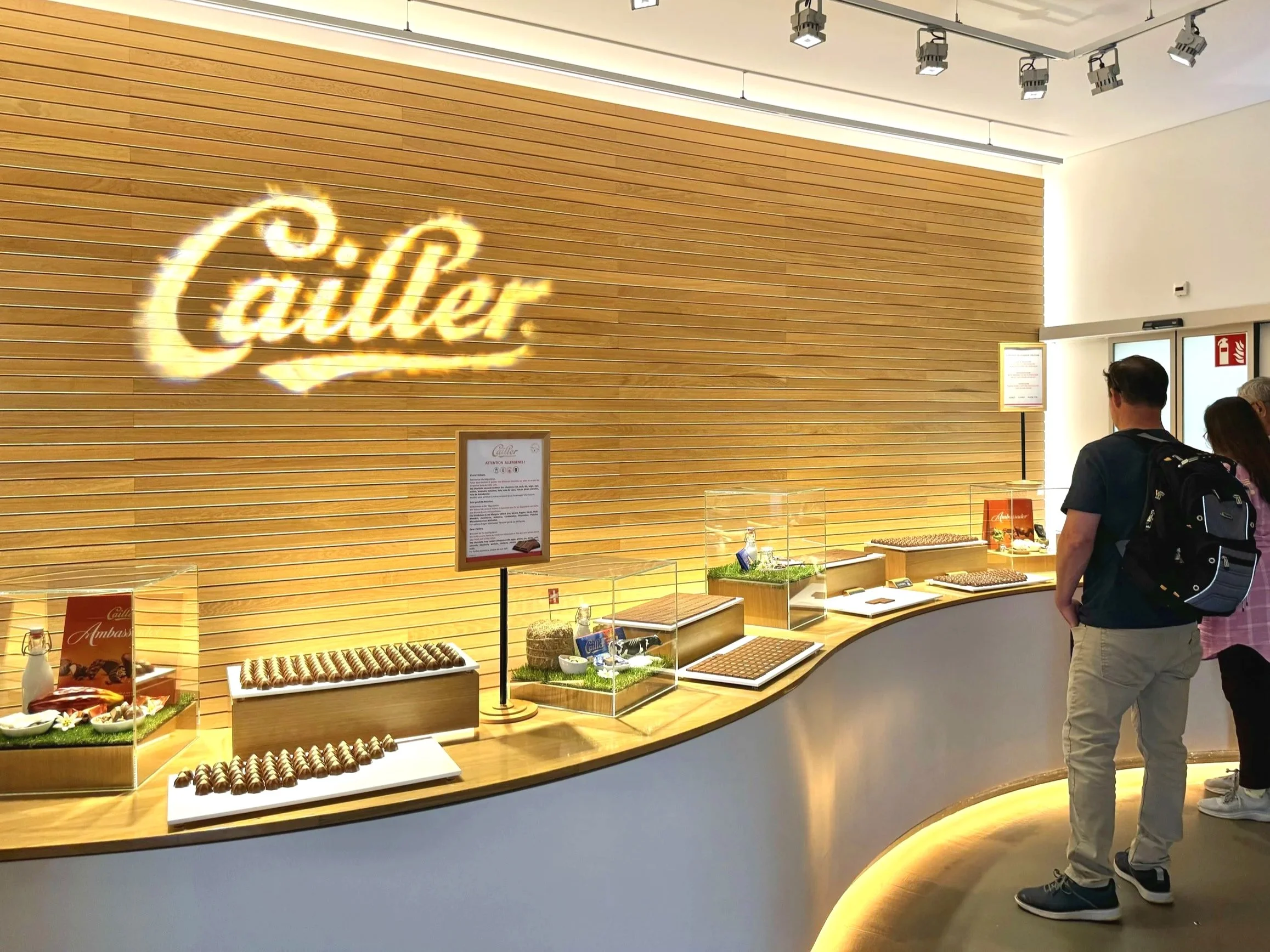
Next, we hopped on a bus to Broc for the Cailler Chocolate Factory, which leans fully into its identity as a place where restraint goes to die. The tour walks you through the history of Swiss chocolate before gently (and repeatedly) directing you toward a tasting room that requires absolutely no encouragement to overachieve. If you like chocolate—or enjoy breathing—you should go.
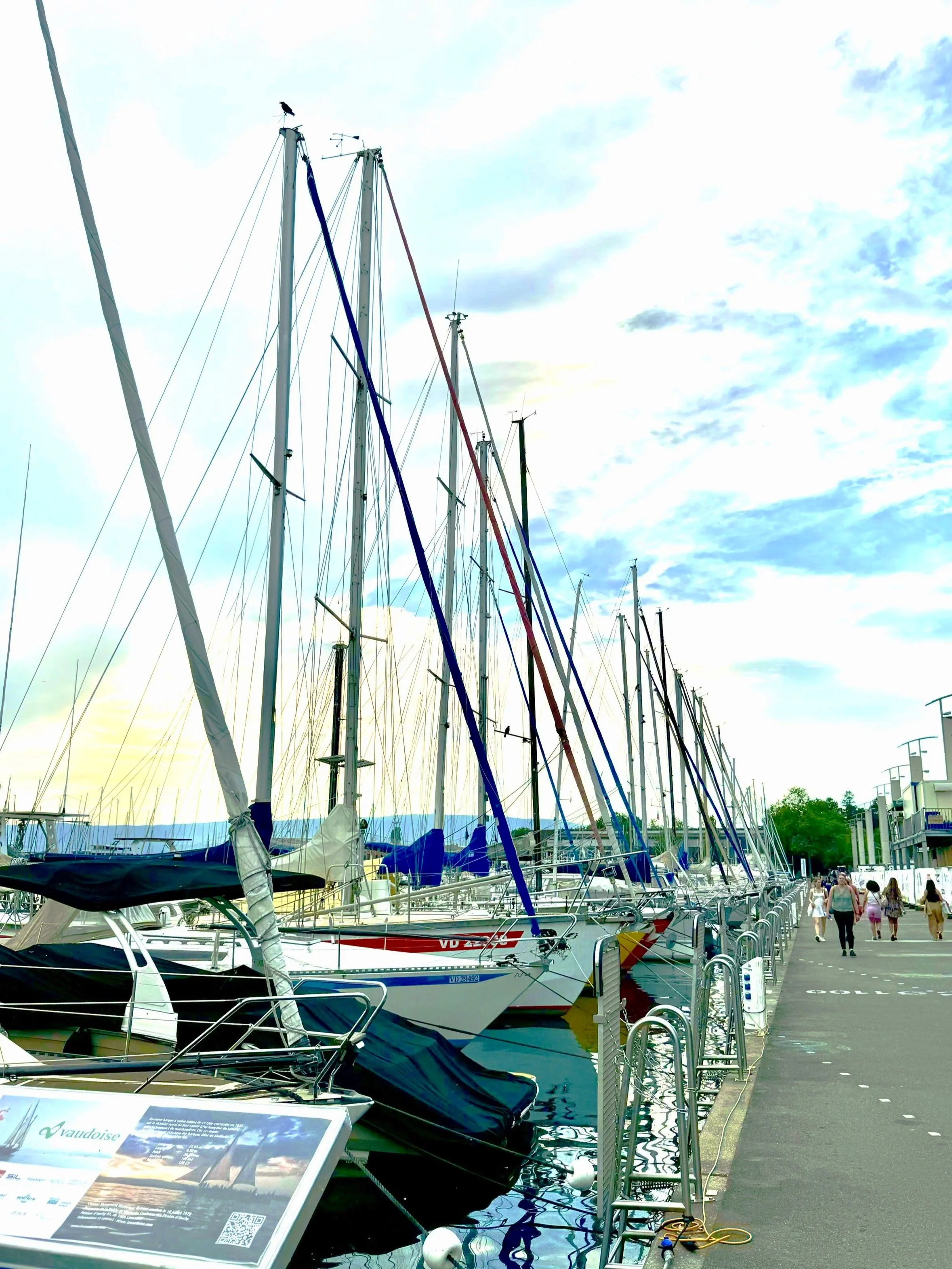
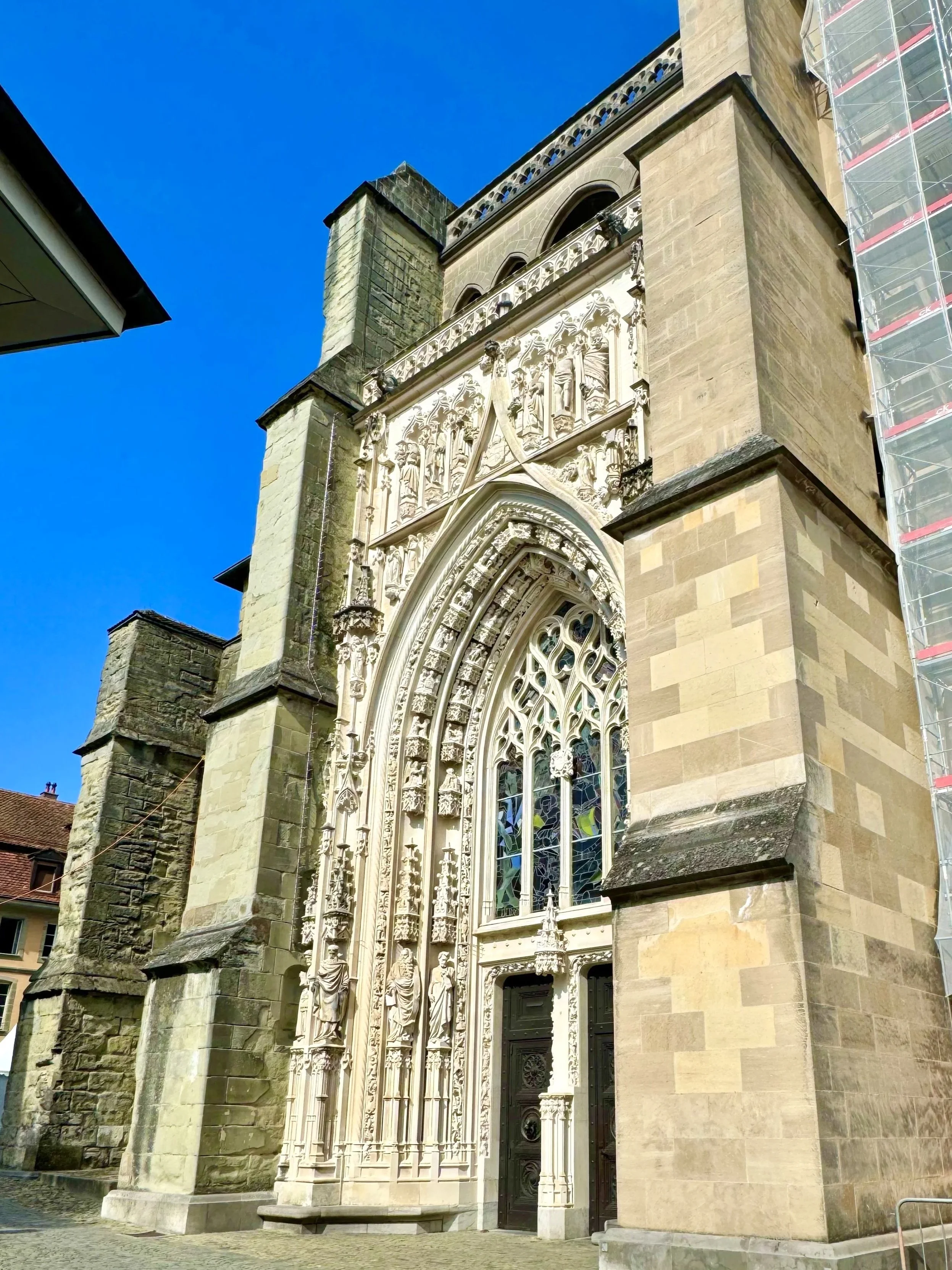
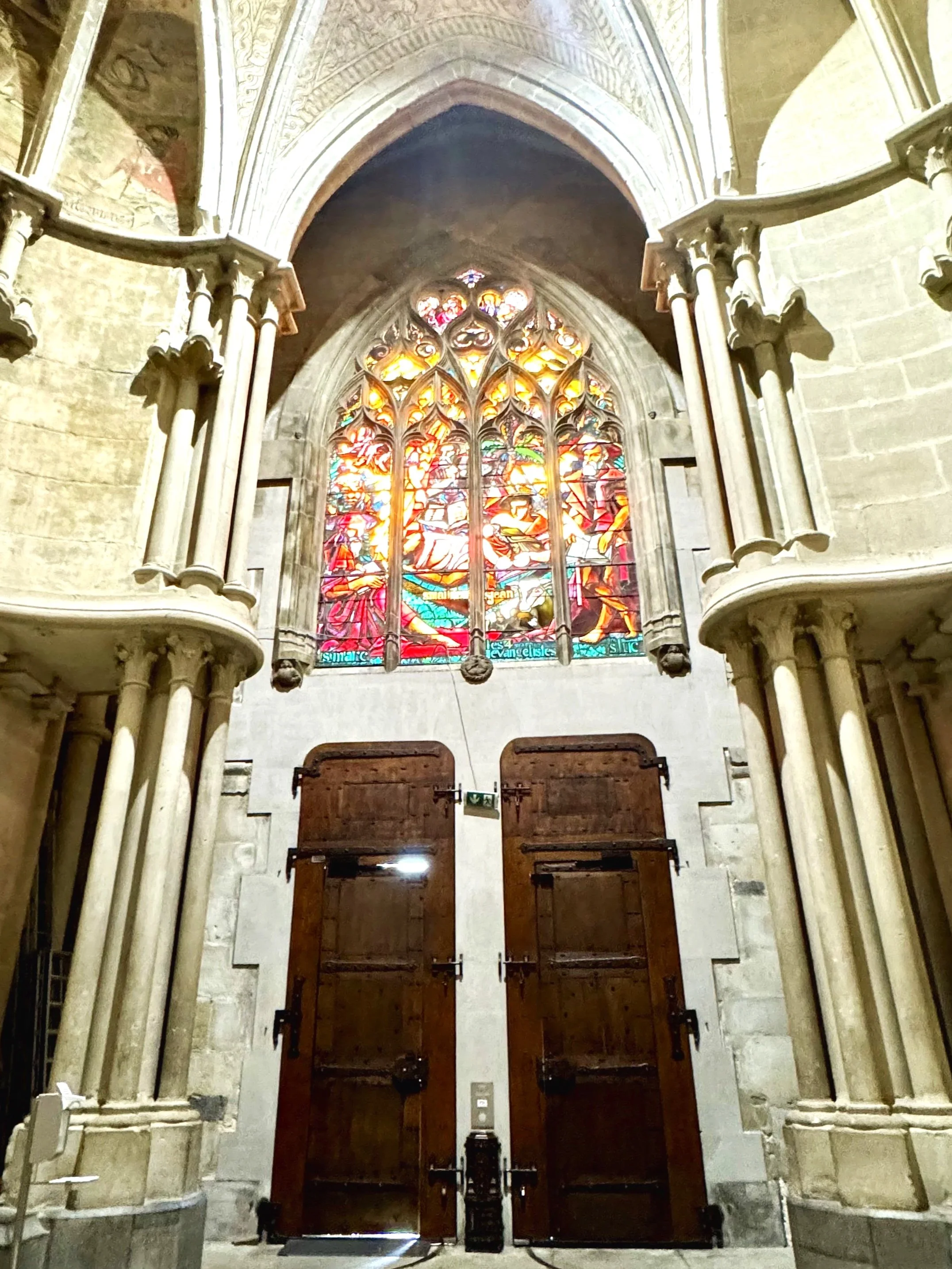
By late afternoon, we reached Lausanne, a city along Lake Geneva that feels like Montreux’s slightly more urban cousin. We spent time in Ouchy Harbor, where the promenade is calmer and more local, before heading uphill to the Lausanne Cathedral, one of Switzerland’s most impressive Gothic landmarks. The interior is striking, but the real payoff is outside, where the city drops toward the lake in layered rooftops and open views.
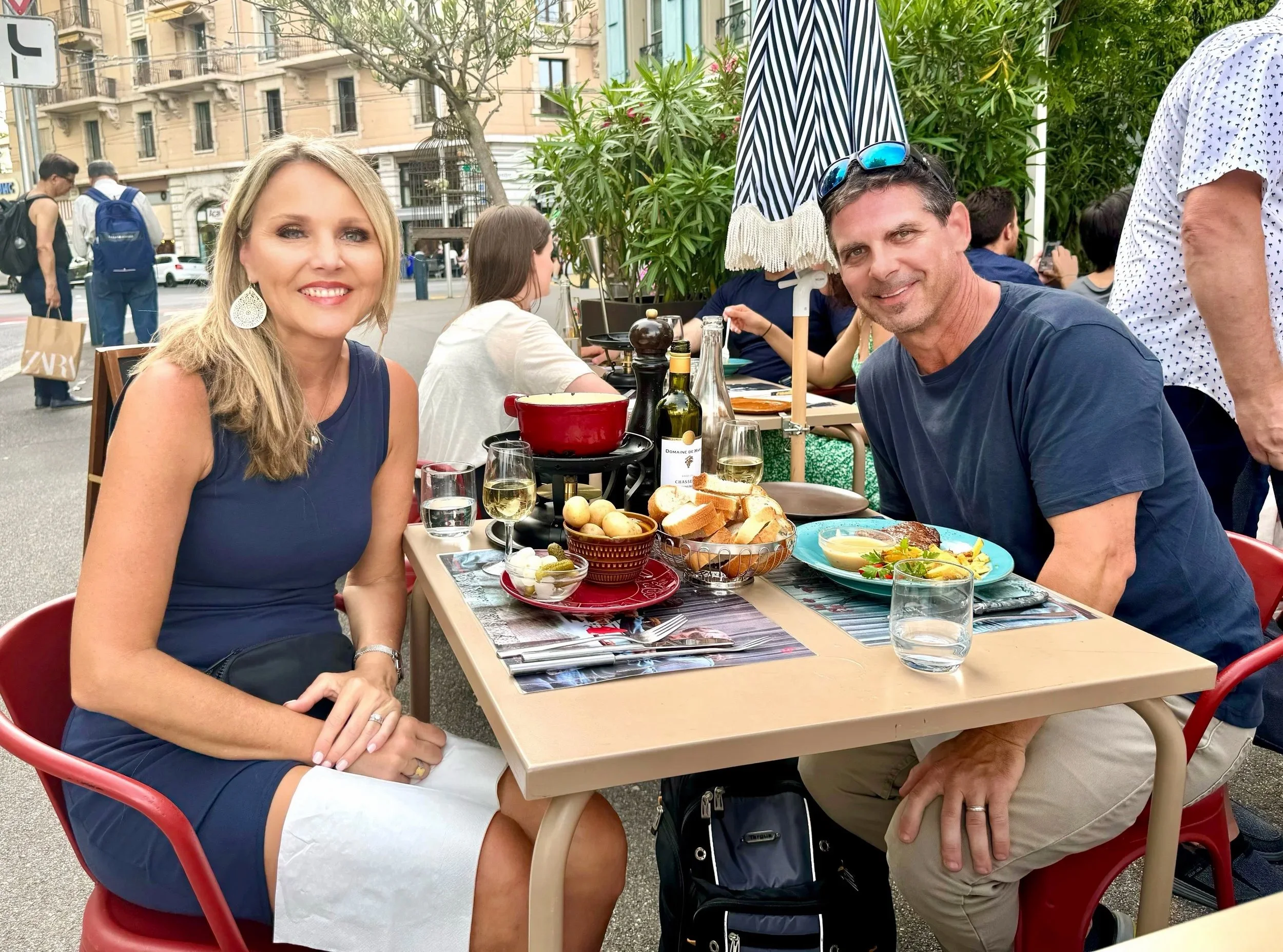
After a full day of castles, cheese, chocolate, and more walking than we intended to admit, we ended at an outdoor table at Le Vieil Ouchy for traditional Swiss fondue—melted Gruyère and Vacherin, white wine, garlic, and kirsch, served with bread and potatoes and absolutely no apologies for how quickly it disappears.
We took the train back to Montreux (about 1 hour 15 minutes), full in every sense of the word, replaying a day that somehow fit a medieval village, working cheese factory, chocolate tasting room, lakeside city, Gothic cathedral, and fondue dinner into a single itinerary.
Switzerland has a way of making days feel slightly overpacked in the best possible way.
Pro Tip: Gruyères and Broc pair perfectly in one day - just pace yourself at the cheese factory… because the chocolate tasting room does not believe in moderation.
Food & Dining Highlights
Breakfast & Coffee in Montreux
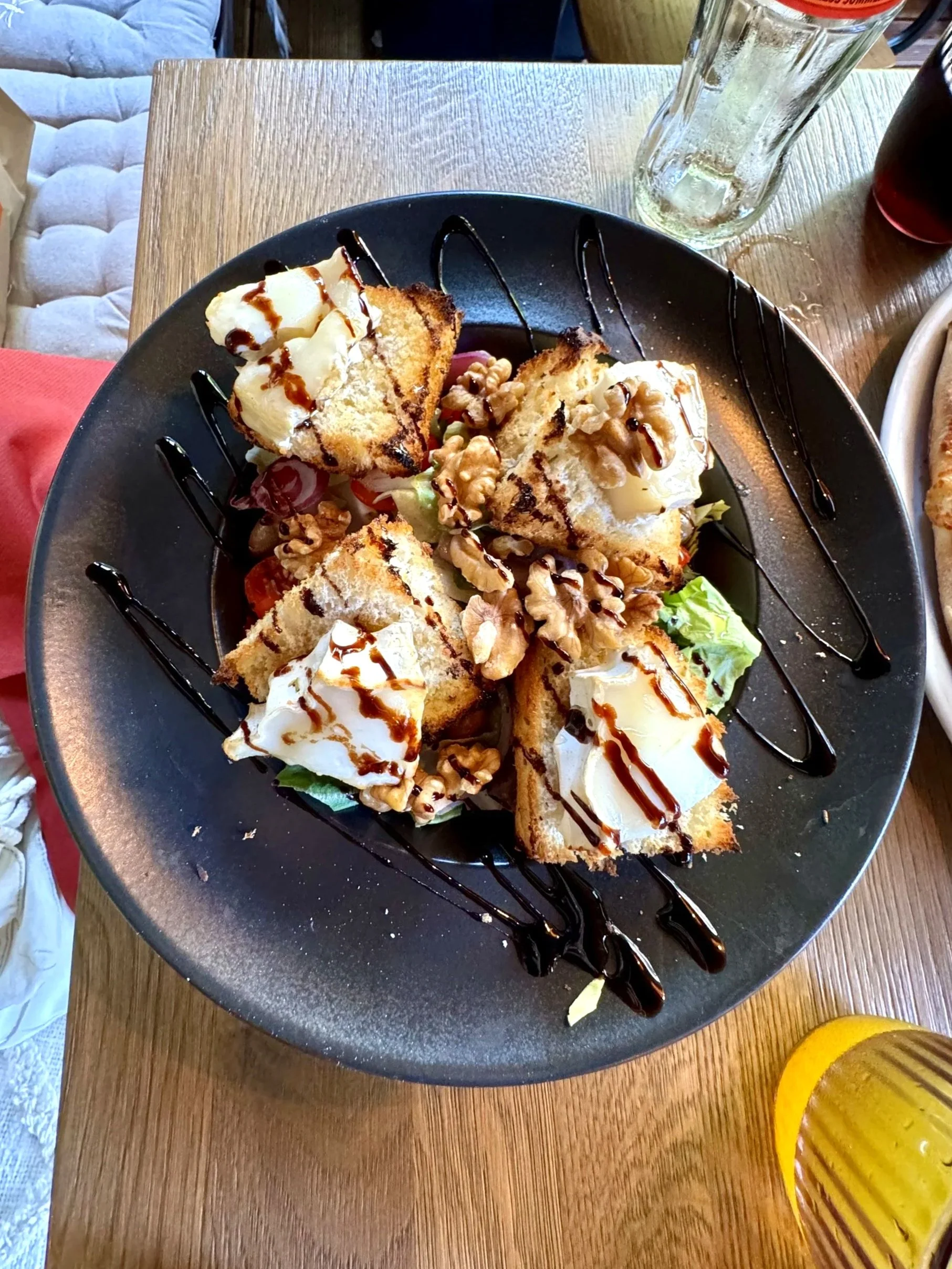
Café de la Terrasse (Montreux Promenade) – A relaxed lakeside café perfect for a morning coffee with uninterrupted views of Lake Geneva. The kind of spot where you plan to “just stop quickly” and end up staying for the scenery.
Scenic Lunch Stop
Gruyères Village Café (Gruyères Old Town) – A small, rustic café in the heart of the medieval village serving simple Swiss fare with castle and countryside views that compete with whatever’s on your plate.
Sweet Stop
Cailler Chocolate Factory Café (Broc) – An interactive chocolate experience that doubles as a tasting marathon. Between the exhibits and the unlimited samples, restraint is optional.
Memorable Dinners
45 Grill & Health – Grand Hotel Suisse Majestic (Montreux) – Terrace dining overlooking Lake Geneva with modern Swiss-inspired dishes. The food is excellent, but the view is doing most of the talking.
Le Vieil Ouchy (Lausanne) – Traditional Swiss fondue served the classic way: melted Gruyère and Vacherin with white wine, garlic, kirsch, bread, and potatoes. Simple, rich, and very different from American fondue chains where dessert is still part of the strategy.
Tips for Other Travelers
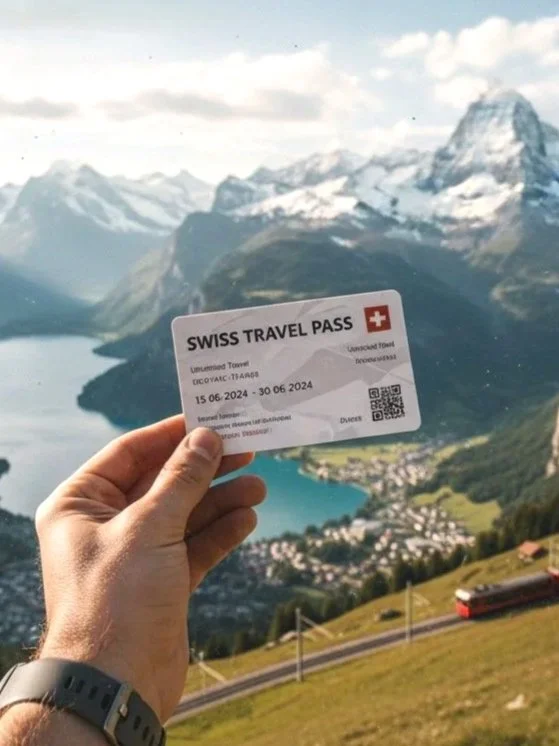
Don’t skip the Swiss Travel Pass – We used it for our entire 14-day trip and never once regretted it. It covered trains, buses, boats, and even included museum entries and discounts on major attractions, making travel effortless and far more flexible.
Stay in Montreux at least two nights – One night would feel rushed. Two gives you time for the promenade, Chillon Castle, and at least one proper day trip without constantly watching the clock.
Walk the promenade early or late – Midday gets busier, but mornings and evenings feel completely different: calmer, quieter, and far more photogenic.
Book fondue dinner in Lausanne ahead of time – Especially at lakeside spots like Ouchy, where outdoor seating disappears quickly when the weather is good.
Don’t over-plan Montreux itself – The magic is in the in-between moments: wandering the waterfront, lingering at cafés, and letting Lake Geneva casually distract you from your schedule.
Final Thoughts
Montreux is where Switzerland trades drama for ease—without giving up the views. After days in the high Alps, it felt almost surreal to be strolling palm-lined promenades along Lake Geneva, hopping between medieval castles, chocolate tastings, cheese villages, and waterfront cafés in what can only be described as Switzerland’s most effortless change of scenery.
In just two days, we experienced a full slice of the region: wandering Montreux’s lakeside promenade, exploring Chillon Castle, stepping back in time in Gruyères, sampling Swiss cheese at its source, overdoing it at a chocolate factory in Broc, and ending with fondue as the sun dropped over Lake Geneva. It’s a combination that somehow shouldn’t work this well—but absolutely does.
We really enjoyed our time here—it’s elegant, scenic, and incredibly easy to explore. But if you’re working with limited time in Switzerland, here’s the honest take: we would prioritize the Jungfrau Region over Montreux.
The Alps are simply on another level. Between the dramatic peaks, mountain villages, waterfalls, and hiking trails that feel engineered for maximum awe, the Jungfrau Region is the kind of experience you don’t replicate anywhere else. Montreux is beautiful, but the Bernese Oberland is the Switzerland that stays with you long after you’ve left.
That said, Montreux earns its place for travelers who have the time. It adds contrast, relaxation, and a completely different rhythm to a Switzerland itinerary—less “stand there speechless at a mountain” and more “wander slowly and decide if you need another glass of wine by the lake.”
If Jungfrau is the headline act, Montreux is the elegant encore. And depending on your schedule, either one is worth the trip—you just may not need both.
Next up: Zermatt—a car-free mountain village tucked beneath Switzerland’s most famous peak, the Matterhorn.
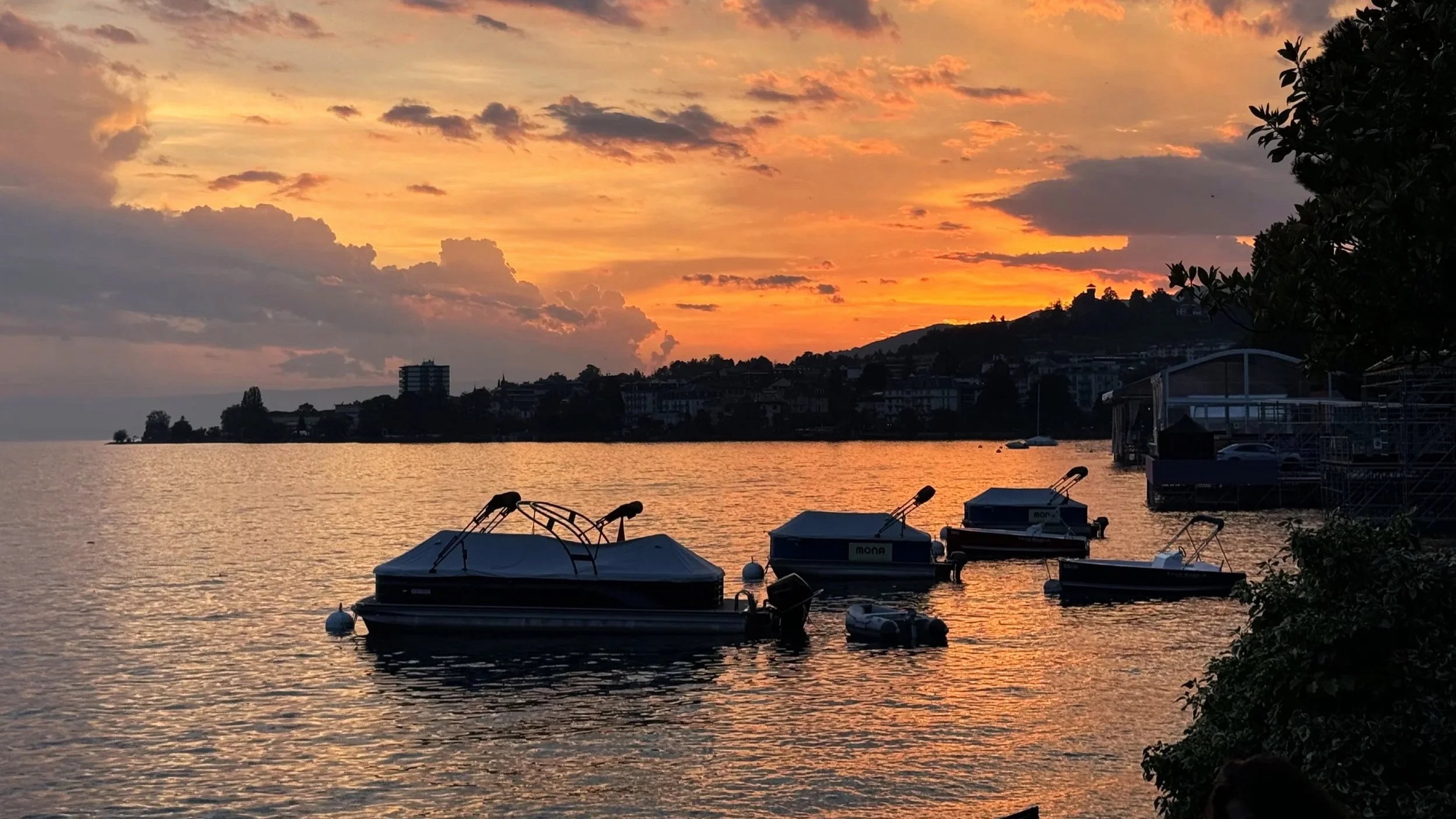
Montreux at sunset.
