How to Choose a Cruise When the Destination Matters as Much as the Ship
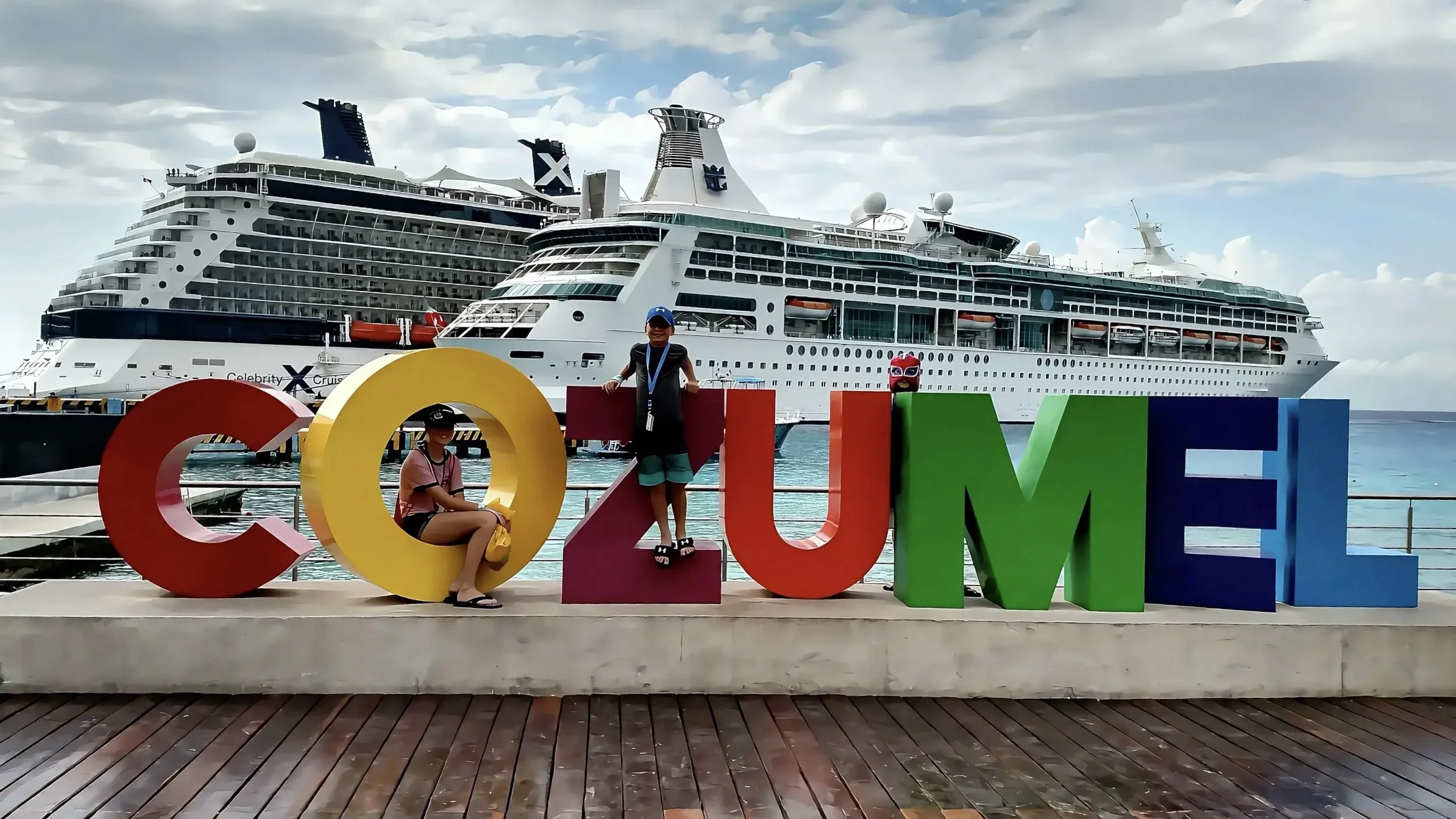
Because the best cruise isn’t necessarily on the biggest ship. It’s the one that takes you where you actually want to go.
The first time we booked a cruise, I knew approximately nothing about cruising.
We were traveling with friends who cruised regularly, so we did what any sensible first-timers would do: we followed them.
In March 2018, our family of five, my mom and another family—complete with their own set of grandparents—boarded Royal Caribbean’s Rhapsody of the Seas for a seven-night Caribbean cruise. We were headed to Key West, Cozumel, Costa Maya and Belize.
I didn’t research ship classes. I didn’t compare restaurant counts or study deck plans. I’m not sure I even knew those were things people researched.
It turned out Rhapsody was an older, smaller ship. Our experienced-cruiser friends noticed. They were accustomed to bigger ships with more restaurants, entertainment, and activities.
We noticed something else. We could find our kids. At 13, 11, and 8, they were old enough to have some independence but still young enough that we wanted to know where they were. A smaller ship was easy to navigate. We learned our way around quickly, rarely got lost and didn’t spend half the vacation trying to figure out where everyone had disappeared. And because we had nothing to compare it to, we didn’t feel like we were missing anything.
Eight years later, after another cruise—this time through Alaska—I understand a lot more about choosing one. And the biggest lesson has very little to do with the ship. Because when I think back to that first cruise, I don’t remember how many restaurants Rhapsody had.
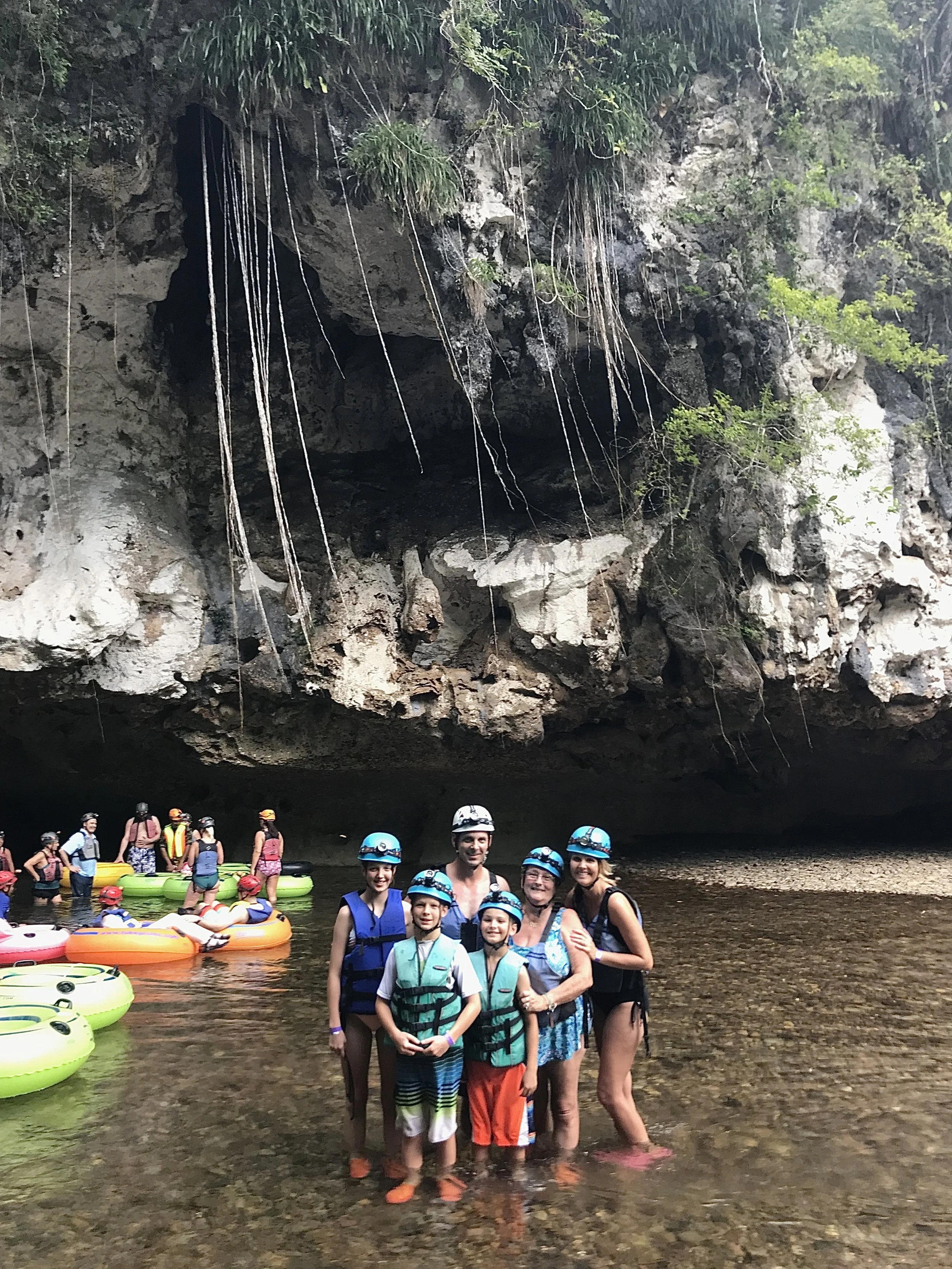
I remember floating through dark caves in Belize with our headlamps on. I remember zip-lining through the jungle. I remember seeing the Sleeping Giant in the foothills of the Maya Mountains from the road. I remember snorkeling in Cozumel, tasting chocolate and tequila, and watching the kids’ faces when they swam with dolphins in Costa Maya.
There may actually be some psychology behind that. Research on experiential spending suggests that experiences tend to bring more lasting satisfaction than material purchases and become more closely connected to our identities and memories.¹
Which raises an interesting question when you’re shopping for a cruise:
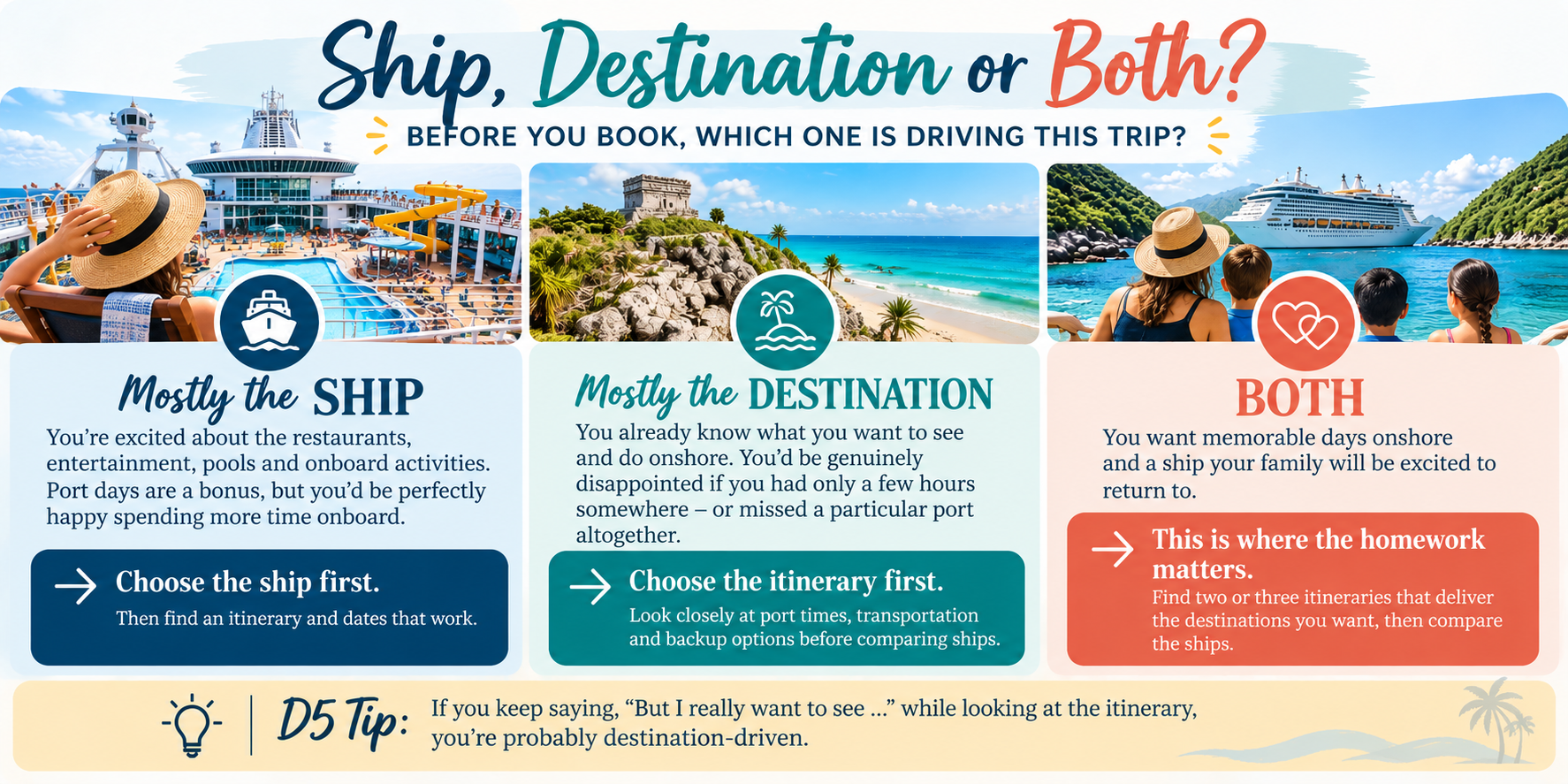
Are you choosing the ship you want—or the vacation you want?
Ideally, you get both.
1. Start With the Destination
Cruise websites make it very easy to fall in love with a ship. There are waterslides, surf simulators, Broadway-style shows, rooftop gardens, infinity pools, dozens of restaurants and ships that increasingly look like floating cities.
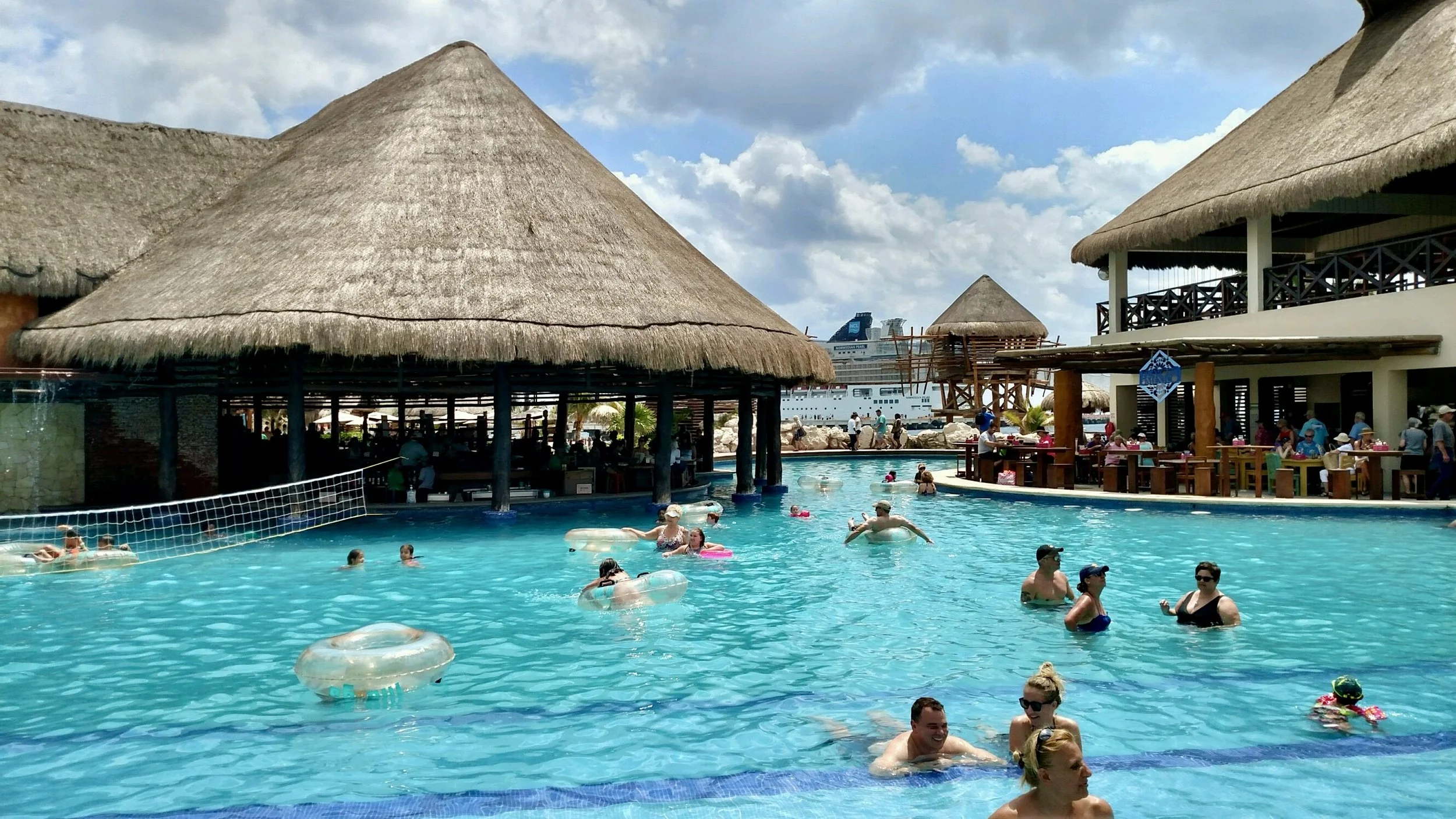
Featured photo: A port day in Costa Maya—proof that sometimes the destination can feel a little like an extension of the ship.
But before you start comparing all of the amenities, pull up the itinerary.
Would you still be excited about this trip if the ship weren’t part of the equation? Which ports make you want to start Googling things to do? Is there somewhere you’ve always wanted to go?
The Caribbean remains the world’s most popular cruise destination by a huge margin. More than 16 million people cruised there in 2025, accounting for 44% of cruise passengers worldwide. Alaska, by comparison, welcomed just over 1.7 million.²
But “Caribbean cruise” can mean wildly different vacations. On ours, we had four very different port days.
In Cozumel, we hired a private driver who showed us around the island, took us to chocolate and tequila tastings and eventually dropped us at Buccanos Beach Club, where we spent the afternoon at the beach and snorkeling. He returned later to take us back to the ship.
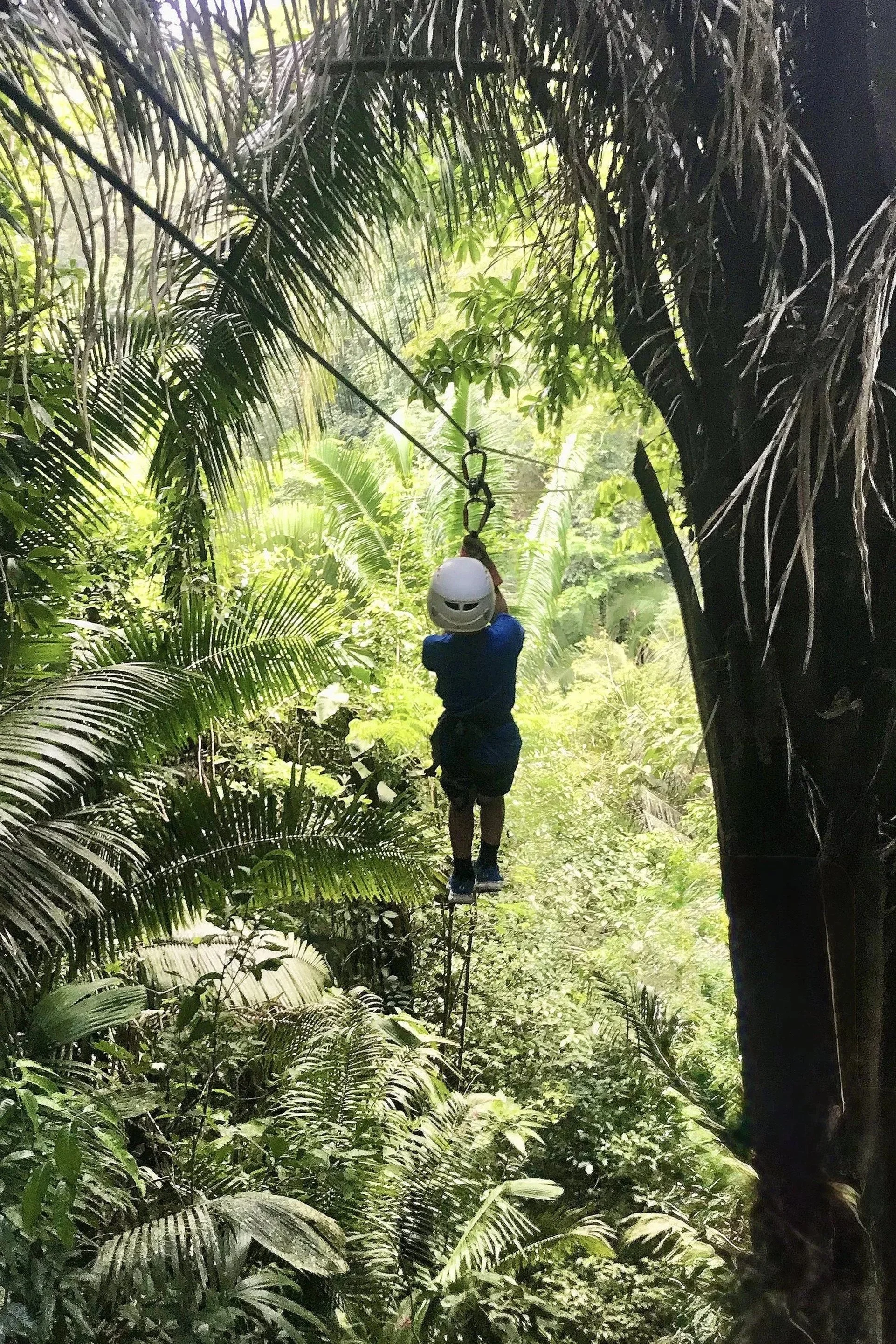
Belize was an adventure day. We drove inland toward the jungle, spotted the Sleeping Giant along the way, then zip-lined and floated through dark caves on inner tubes. The cave tubing was a huge hit with the kids.
Costa Maya required almost no transportation at all. We stayed around the port area, with its enormous pool, restaurants, shops and entertainment, and the kids swam with dolphins—one of the highlights of the trip.
Key West? That one didn’t quite land with the kids. It was brutally hot, we took a sightseeing train around town, ate ice cream while trying not to melt, and by the time the tour ended, the kids were more than ready to get back on the ship.
Same cruise. Four completely different days. Where the ship stops matters. What you can actually do there matters more.

2. Look Beyond the Port List
This is something I didn’t fully appreciate until our Alaska cruise. Seeing Juneau printed on an itinerary is not the same thing as having a full day in Juneau.
Featured photo: Belize’s Sleeping Giant, still keeping watch over the road inland.
Your ship might be in port for eight hours, but transportation, excursions, and getting back onboard can eat up that time quickly. Before booking, look beyond the port names and check:
What time does the ship arrive?
When does it leave?
How do passengers get ashore?
And how far is the thing I actually want to do?
That last question is especially important. In Belize, our drive into the jungle took time—but we enjoyed it. We saw a part of the country we wouldn’t have seen from the port, and the journey felt like part of the experience.
In Alaska, those same time constraints felt different. There were places where I wanted more time and excursions that didn’t go as planned because of weather. I wanted the freedom to say, We’ll do it tomorrow. But there was no tomorrow. The ship was leaving.
That doesn’t make cruising a bad way to see a destination. It simply means the time you have in port matters as much as the destination itself. Don’t just ask where the ship goes. Ask how much of that place you’ll actually get.
3. Give Each Port One Job
Without realizing it, we did something smart on that first Caribbean cruise.
We planned one anchor experience for each port.
Key West had the sightseeing tour. Cozumel had our private driver. Belize had zip-lining and cave tubing. Costa Maya had swimming with dolphins. Anything else was a bonus.
There is a temptation when you have only one day somewhere to squeeze every possible experience into it. I understand that temptation because I am very capable of turning a vacation into an endurance event.
But every port day doesn’t need to be an endurance event. Sometimes it’s adventure. Sometimes it’s culture or food you can’t get at home. And sometimes it’s sitting beside a giant pool in Costa Maya while somebody else entertains your children.
Featured photo: Max zip-lining through the Belizean jungle.
Psychologist Tom Gilovich has explored how memorable moments shape our recollections of experiences. We don’t necessarily remember a trip based on how long each activity lasted. Certain moments simply stick with us.
Instead of asking, “How much can we fit into eight hours?”
Ask: “What’s the one experience we really want to have here?”
Then give yourself enough breathing room to actually enjoy it.
4. Choose the Right Ship for Your Family
This is where I’m going to defend our little old Rhapsody. Not because it had the most to offer. It didn’t.
Our friends, who cruised at least once a year, noticed the difference. They missed the wider range of restaurants, entertainment and activities they’d experienced on larger ships.
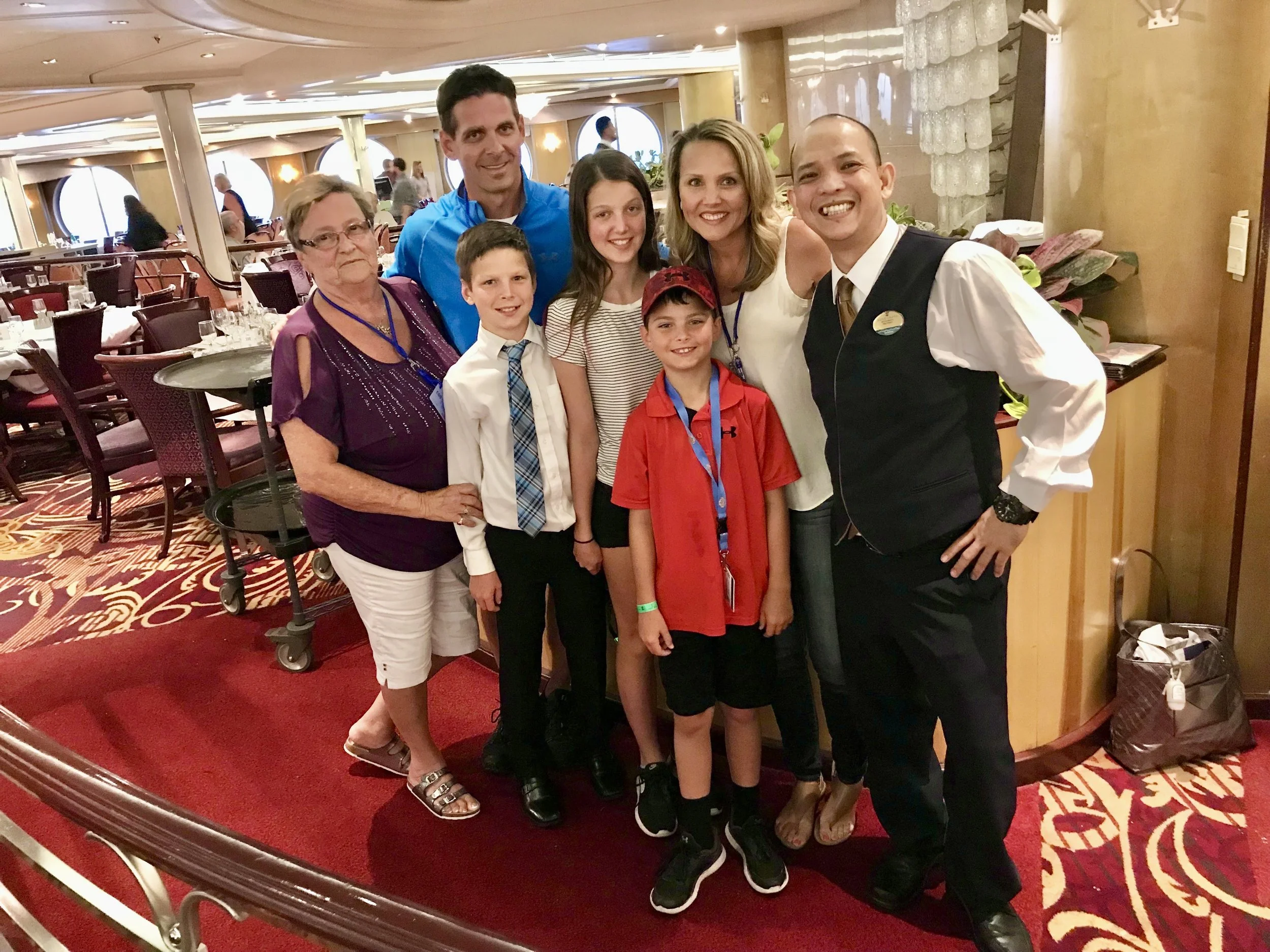
Featured photo: Our first cruise aboard Rhapsody of the Seas (2018).
But it was our first cruise. We had younger kids. We were traveling with grandparents. And there was something reassuring about being able to learn the ship quickly and find one another without launching a search party.
We didn’t know what we were missing, so we didn’t miss it. That’s something worth remembering when you’re comparing ships. More restaurants are great if your family loves trying different restaurants. A massive teen area matters if you’re traveling with teenagers. Water parks matter if your kids will actually use them. But features you won’t use aren’t benefits simply because they’re on the ship.
By the time we cruised Alaska, our kids were older. They loved being able to explore the ship, meet friends, spend time in the teen club and entertain themselves. Our needs had changed.
The best ship for your family may change too.
Don’t automatically choose the biggest, newest ship you can afford. Choose the ship whose amenities match the people you’re bringing with you.
5. Is Cruising the Best Way to See This Destination?
This is the question I wish I’d asked before Alaska.
Not: Do we want to take a cruise?
But: Do we want to experience this destination by cruise?
Those are two very different questions.
Cruising gives you something land travel can’t easily replicate. You unpack once, someone else handles the transportation, and you wake up somewhere new. Meals and entertainment are waiting when you return. Kids can have independence. Grandparents can take a break. Nobody has to agree on a restaurant every night.
The appeal is obvious. Global cruise passenger volume reached a record 37.2 million in 2025, and nearly 90% of cruisers surveyed said they intended to cruise again.²
But that convenience comes with a trade-off: control. You can’t stay an extra night because you love a place or rearrange your plans when the weather doesn’t cooperate. When the ships leaves, you leave.
For our Caribbean cruise, that trade-off worked. We wanted a taste of several destinations. The kids were younger, we were traveling with friends and grandparents, and we had memorable experiences in every port. Then we returned to the same room each night.
Alaska was different. We didn’t just want a taste of Alaska. We wanted more of it.
That doesn’t mean we chose the wrong cruise. It means I learned something important about how I want to experience certain destinations.
The Psychology of What We Bring Home
Here’s the part I keep coming back to. It’s been more than eight years since that first cruise. I couldn’t tell you what we ate for dinner on night three. I don’t remember the shows. I couldn’t draw you a deck plan of Rhapsody of the Seas if my life depended on it.
But I can still picture my kids floating through those caves in Belize.
Featured photo: Cave-tubing in Belize
Research on experiential spending suggests there’s a reason experiences stick with us. Experiences can become part of our personal stories, and even talking about them can actually bring some of that enjoyment back.¹
Of course the ship matters. You’re going to sleep there, eat there and spend a significant part of your vacation there. But years later, the question may not be whether your ship had 12 restaurants or 18.
You’ll remember what you did together—and the stories you’re still telling.
The D5 Takeaway
If the destination matters as much to you as the ship, don’t start by looking for the “best” cruise ship. Start with the vacation you want.
Consider where you want to go, how much time you’ll actually have in each port and what your family wants to experience. Then find a ship that fits.
Sometimes that means a smaller ship. Sometimes it’s a floating city. And sometimes, after looking closely at the itinerary, you realize you’d rather rent a car and stay awhile.
The best cruise isn’t necessarily the one with the biggest ship or the longest list of things to do.
It’s the one where you don’t have to choose between enjoying the ship and experiencing the places it takes you.
References
Lowery, G. (2010, March 31). Glee from buying objects wanes, while joy of buying experiences keeps growing. Cornell Chronicle.
Cruise Lines International Association. (2026). CLIS 2025 global report.
