The D5 Five: 5 Travel Mistakes I Learned the Hard Way

I’ve been traveling for years—first as a couple, then with three kids in tow, and now with those kids becoming my adult travel companions. You might think all that experience means I’ve figured out how to travel without making mistakes.
It does not.
Some lessons have cost us money. Some have caused a lot of unnecessary stress. One nearly derailed a much-anticipated international trip before it even started. And a few needed to happen more than once before I got the message.
The good news? You don’t have to learn all of them the hard way.

1. I Tried to Do Too Much
I love planning a trip. And when we’re traveling somewhere new, I want to see it. If there are ten great things to do, why wouldn’t we try to do all ten?
Because eventually, a vacation starts to feel like a checklist.
I learned that lesson on some of our earlier trips, when too many early mornings, timed reservations, tours and activities left us exhausted. Even things we were excited to do stopped being quite so enjoyable when everyone was tired and already thinking about where we had to be next.
There’s a little psychology behind this, too. Even good experiences can become mentally exhausting when there’s no downtime between them. Sometimes our brains—and our families—just need a chance to reset.
I still plan. A lot. But now I prioritize the things we really don’t want to miss and deliberately leave some breathing room. Sometimes that means lingering over lunch, wandering without a destination or going back to a place we loved. Sometimes it means doing absolutely nothing for a couple of hours.
And I’ve learned that doing less can actually make a trip feel like more.

2. I Booked Through a Third Party—Twice
You’d think once would have been enough.
Years ago, I booked a hotel through Priceline. Then COVID happened and our travel plans fell apart.
Getting our money back wasn’t nearly as simple as I’d hoped. Instead of a refund, we received a credit that had to be used within a limited period. I think we eventually used at least part of it, but the whole experience was frustrating.
Lesson learned. Except apparently not.
Before a trip to Germany, I booked what I thought was a room directly through the hotel. The reservation page looked enough like part of the hotel’s booking process that I didn’t realize I was actually booking through a third-party site.
Later, our plans changed and I decided to share a room with a family member. That’s when I discovered I couldn’t simply cancel the reservation.
Even better? My niece had done the same thing. So instead of sharing a room and splitting the cost, we each ended up paying for our own.
I’m not saying third-party booking sites are always a bad choice. They can offer good prices, rewards and convenient comparison shopping. But after my experiences, I generally prefer to book directly with the hotel or travel provider whenever possible. If plans change, I’d rather deal directly with the company providing the service.
And before I enter my credit card information, I now make sure I know exactly who is taking my money.
3. I Thought a Valid Passport Was Enough
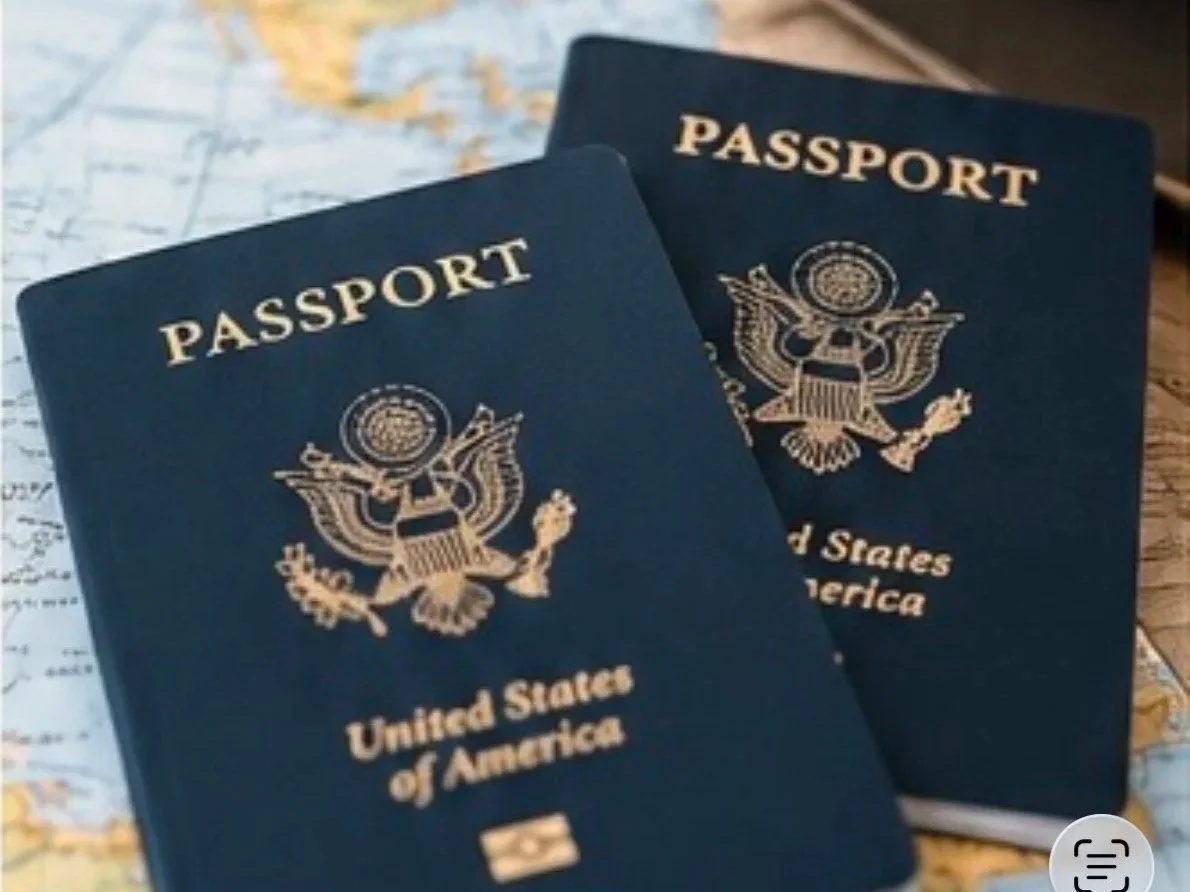
This may be the most important lesson on the list because it could have stopped an entire trip before it started.
When Callan and I traveled to London, we needed something we’d never needed on previous trips to the UK: an Electronic Travel Authorisation, or ETA.
The application process was straightforward, and we received approval within a few business days. U.S. travelers currently need an ETA for UK visits unless an exemption applies, and each traveler needs one. (GOV.UK)
That should have reinforced something I already knew: entry requirements change.
But the lesson really hit home while planning our upcoming trip to Thailand. Jake’s passport was valid. It would still be valid when we traveled to Thailand and when we returned home. So we were good, right? Nope.
Fortunately, I happened to read an article explaining that Thailand requires U.S. passports to be valid for at least six months beyond the date of arrival. (U.S. State Department) Jake’s passport was due to expire in early spring, which meant it wouldn’t meet the requirement for our November trip.
Our travel agent hadn’t asked when our passports expired, either. Had I not stumbled across that information, we could have discovered the problem much closer to departure—or at the airport.
Needless to say, Jake made a trip to the passport office, applied for an expedited renewal and received a new passport.
Crisis averted.
Now, as soon as we start planning an international trip, I check the destination’s official entry requirements myself: passport validity, visas or electronic authorizations, and anything else required for entry. Then I check again before we leave.
Because “not expired” and “valid for travel” are not always the same thing.

4. I Didn’t Check My Flight Before Going to the Airport
This lesson cost considerably more than a passport renewal.
We had spent two weeks in Hawaii—one week on Oahu and another on the Big Island.
On our final day, we headed to the airport to catch our inter-island flight back to Honolulu, where we would connect to our evening flight home to the mainland. We walked up to the check-in counter. Our flight had been canceled.
“Didn’t you get the text?” No. No, I most certainly did not.
Panic set in quickly. If we couldn’t get to Honolulu that afternoon, we were going to miss our flight home.
I sent Bryan and the kids to a bench while I tried to figure out how to get five people to Honolulu that afternoon. The agent suggested checking with the other airline at the airport. They had a flight.
The good news: there were five seats available.
The bad news: I now needed to buy five same-day plane tickets.
I even stood at the counter and enrolled all five of us in the airline’s mileage program because it gave me a slight discount on what had become an astronomical last-minute expense.
We got on the plane. We made it to Honolulu. And we caught our flight home.
These days, I make sure the airline has my correct cell number and email address, download the airline app and turn on notifications. But I don’t rely solely on alerts, either. I check the flight myself the night before and again before heading to the airport.
Five same-day tickets have a way of making a lesson stick.

5. I Assumed “Youth” Meant Under 18
For two weeks in Italy, we traveled almost exclusively by train. It was remarkably easy. I bought tickets through the Omio app or from kiosks at the train stations, and for most of the trip, we paid the same fare for all five of us.
Then came the very last train ride of our vacation.
We needed to get from Roma Termini to the airport on the Leonardo Express. I went to the kiosk to buy our tickets and saw a youth fare option. We had three kids. All three were under 18. Youth tickets it was.
We settled into our seats, the train pulled away and eventually the conductor came through checking tickets, just as conductors had on plenty of our other train rides. I proudly presented ours.
She was not impressed.
Our children were too old to qualify for the fare I had purchased. And I didn’t simply have to pay the difference. We were issued three citations, which I had to pay on the spot with a credit card.
As if that weren’t deflating enough, the train was packed.
Were all the people sitting around us actually paying attention? Probably not. But in my mind, every one of them was looking at the American family wondering whether we had just tried to scam the Italian railway system out of three train fares.
We hadn’t. I just thought “youth” meant, well…youth. It was an embarrassing—and expensive—final train ride after an otherwise wonderful two weeks in Italy.
Now, when I see a discounted child, youth, student or senior fare while traveling, I check the actual age requirements before clicking the button.
Thirty seconds of fine print would have saved me money and a very uncomfortable train ride.
Final Thoughts: The Best Travel Lessons Usually Cost Something
I wish I could say I learned all of these lessons through careful research and impeccable planning.
I didn’t.
Some cost money. Some cost time. Most involved at least a few minutes of panic.
But that’s also part of becoming a better traveler. You learn what deserves a second look, what needs to be checked twice and what really isn’t worth stressing about.
I still plan trips. I still make reservations. I still want to see and do a lot when we travel. I’m just better at knowing where the potential landmines are—and leaving a little more room for the unexpected.
Because even after all these years and all these trips, I’m sure I haven’t made my last travel mistake.
Hopefully, though, I’ve already made one that will save you from making the same one.
