5 Trips to Take With Your Kids Before They Leave Home
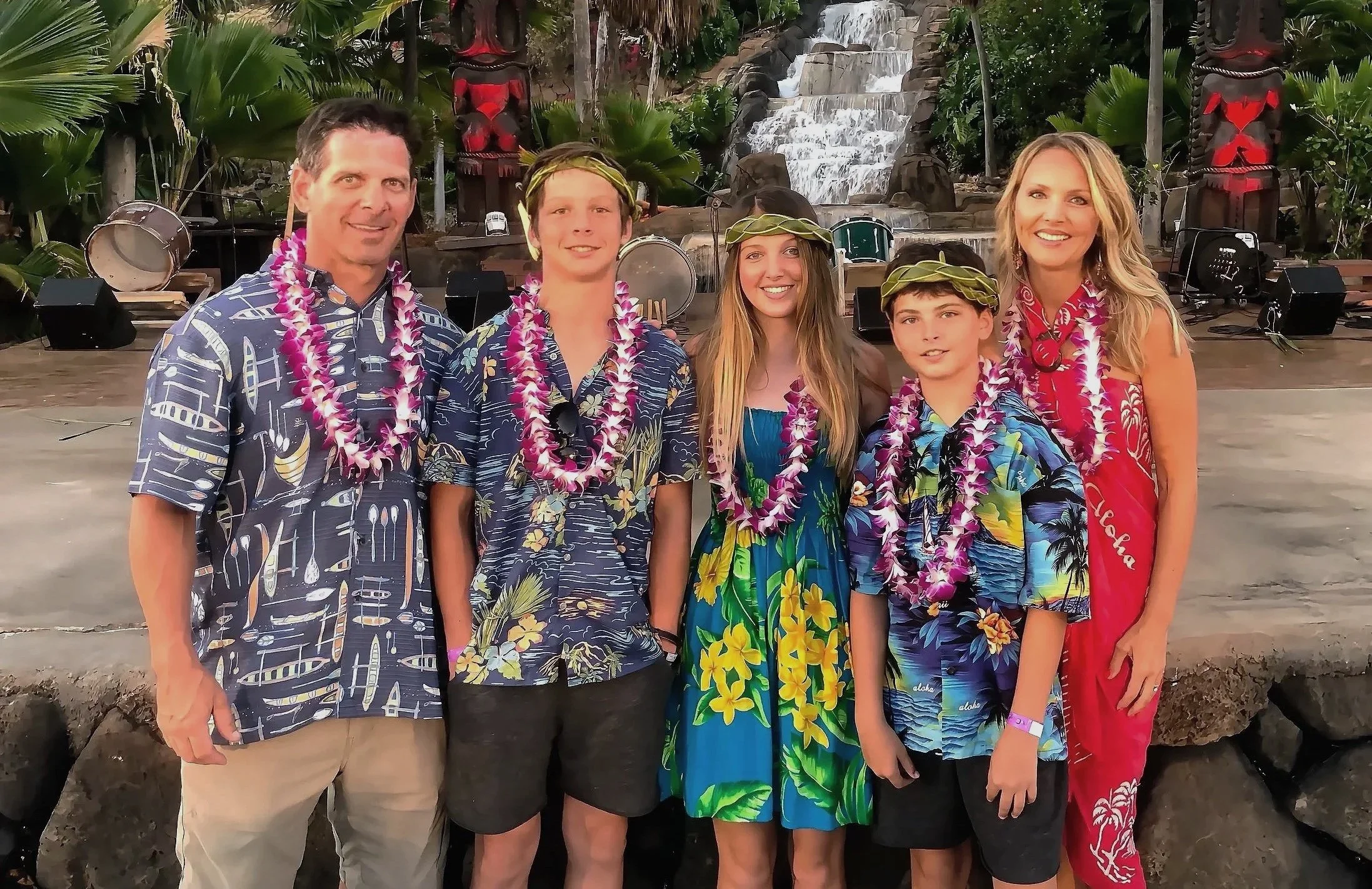
Nobody tells you that family vacations have an expiration date.
Not the trips themselves, of course. But the years when you can pick a week, book five plane tickets, and reasonably expect all five members of your family to show up.
Now my daughter is in medical school, my oldest son is in college, and my youngest is a senior in high school with a schedule that requires the logistical skills of an air traffic controller. Getting all five of us in the same place at the same time has become considerably harder than getting all five of us through airport security.
These days, I look back at the trips we took when they were younger with a new appreciation. At the time, they were vacations. Now they feel like little markers of our family history.
That's the funny thing about family travel. You think you're planning a vacation. You're actually collecting stories—the ones that years later still begin with, “Remember when we...?”
So when I started thinking about The D5 Five, I wasn't trying to name the five “best” family destinations in the world. These are simply five places we experienced with our kids that gave us something different—and that I'm incredibly grateful we experienced while we could still get everyone on the same plane.
Your five may look completely different. But if you're still in the stage when family vacations can actually make it onto everyone's calendar, take the trip. Here are five I'm awfully glad we did.
1. Hawaii: Twice as Nice
For our 10th anniversary, Bryan and I planned a romantic two-week trip to Hawaii. Then we invited our 1-, 4-, and 5-year-olds.
Romance, but with snacks and nap schedules.
Neither of us wanted to leave three very small children for two weeks, so our anniversary getaway became a family vacation. And it worked beautifully.
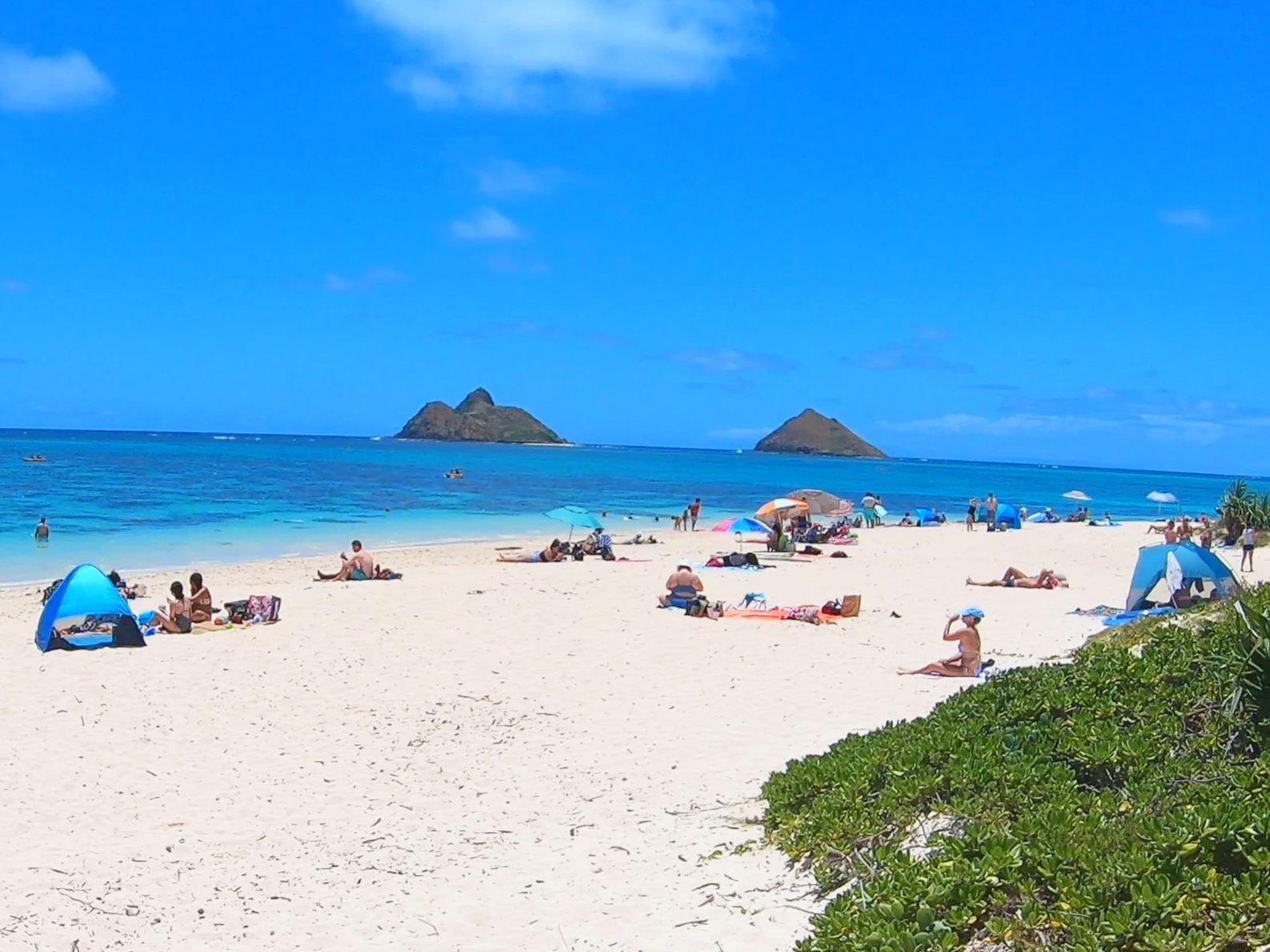
We spent two weeks on Oahu and quickly found our rhythm: explore in the morning, resort in the afternoon. We built sandcastles on Waikiki Beach, watched fireworks at night, visited Pearl Harbor and Waimea Falls, went to a luau and the Polynesian Cultural Center, and took the older two snorkeling at Hanauma Bay.
We even hit the swap meet at Aloha Stadium, where we bought fresh Hawaiian bread, candy leis, outfits for our luau, and a tiny coconut purse for Callan. When you’re five, a coconut purse is basically haute couture.
It worked so well that 11 years later, we went back.
Same kids. Very different vacation.
This time they were teenagers, and we split two weeks between Oahu and the Big Island. The naps were gone. The adventures got bigger.
We kayaked from Lanikai Beach toward the Mokulua Islands, hiked Kīlauea Iki, explored black- and green-sand beaches, snorkeled at Two Step, and visited Puʻuhonua o Hōnaunau.
And then we swam with manta rays.
At night.
Watching those enormous manta rays glide and turn beneath us in the dark Pacific was absolutely magical—and easily one of the highlights of the trip.
We stayed at Hilton Waikoloa Village, where the pools and saltwater lagoon made the resort an adventure of its own. We’d also discovered one of the great luxuries of traveling with teenagers: Bryan and I could go for a walk or grab a cocktail while the kids happily stayed in the room.
Older kids have their perks.
Looking back, I love that we never waited for the “perfect age” to take our kids to Hawaii. At 1, 4, and 5, there were sandcastles, swimming, adventures, and naps. At 12, 15, and 16, there were volcanoes, kayaking, manta rays—and the occasional cocktail without arranging childcare.
Same family. Same destination. Two completely different versions of paradise.
2. Italy: Give Them a Say
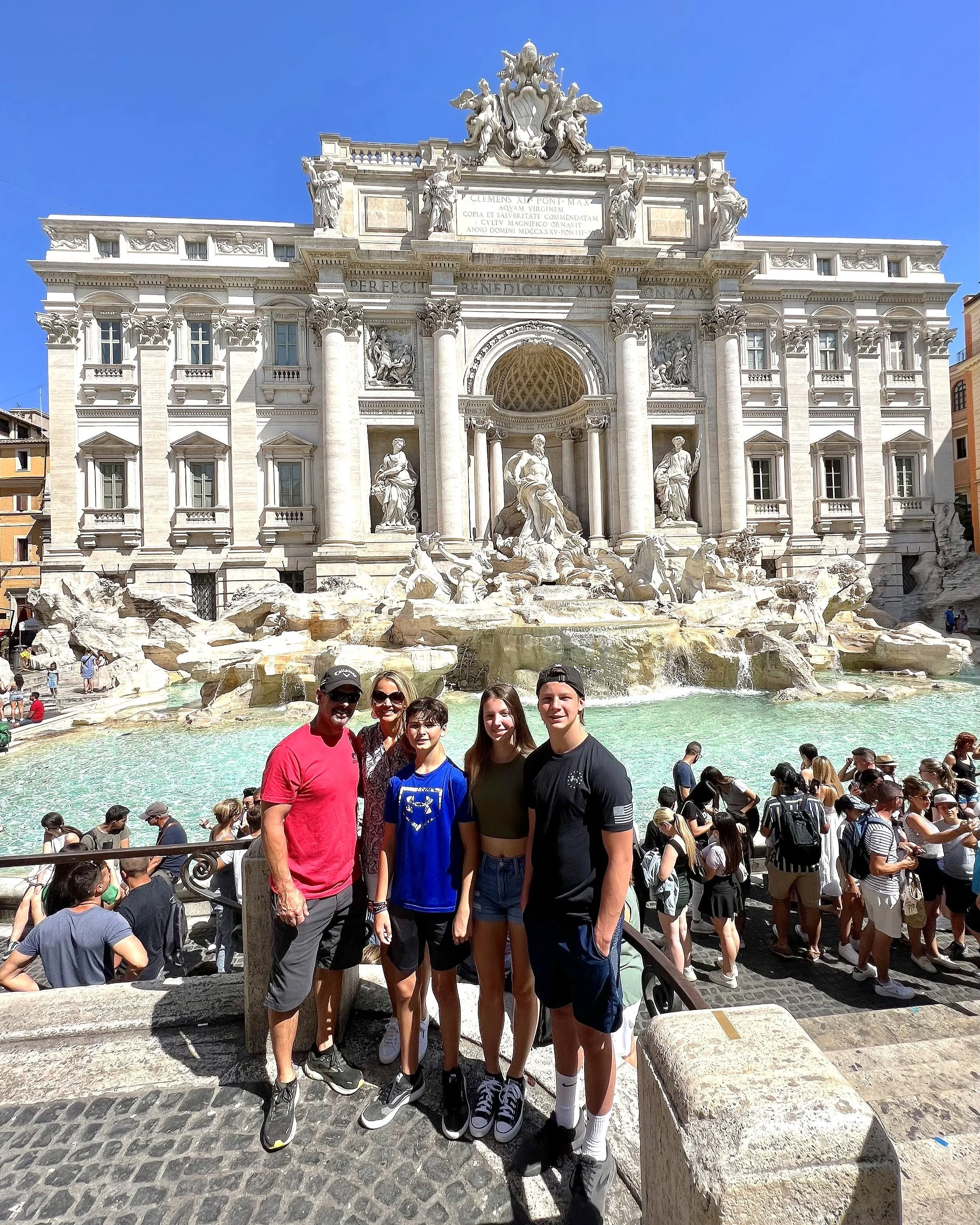
Three teenagers visit Italy. One asks for Botticelli, one asks for gladiators, and the third asks for a boat. Their mother asks for gelato and calls the itinerary complete.
Before we left, Bryan and I gave each of the kids one assignment: choose an experience you really wanted to have. Their choices couldn’t have been more different.
Callan chose Florence’s Uffizi Gallery. She had studied many of its masterpieces in AP Art History and wanted to see the real things—the paintings she’d previously known only from textbooks and classroom slides.
Jake chose the Colosseum. He wanted to learn about the gladiators, see where they fought, and discover how the Romans manipulated the arena floor and scenery to create dramatic spectacles. Ancient Rome knew how to put on a show.
And Max? Max wanted a boat day. Fair enough. There is only so much Renaissance art one teenager should reasonably be expected to absorb before someone puts him on the Mediterranean. So when we reached Sorrento, that’s exactly what we did.
Giving each of them a piece of the itinerary changed the dynamic. They weren’t simply following Bryan and me through Italy; each had something they had chosen and genuinely looked forward to.
Some of our favorite experiences, though, were the ones none of us had chosen.
We were all excited to see Venice—because a city seemingly floating on water is a pretty easy sell—but Tuscany was the surprise favorite. On a day trip from Florence, we wandered the medieval streets of Siena and San Gimignano, had lunch at a beautiful Tuscan winery, stopped in Pisa, and wondered why Tuscany hadn’t been higher on our list in the first place.
Before the trip, the kids had also practiced a few Italian essentials: per favore (please), grazie (thank you), prego (you’re welcome), bagno (bathroom), and acqua (water). We weren’t aiming for fluency. We were aiming for polite, hydrated, and able to locate a restroom.
At first, they were hesitant to use what they knew. But little by little, they became more comfortable stumbling through a few words of Italian. They learned that you don’t have to speak perfectly to make an effort. You try, probably mispronounce something, smile, and figure it out.
And as for my contribution to the itinerary? We ate gelato most days. I take my responsibilities seriously.
Looking back, that’s what I loved most about Italy. As our kids got older, family travel became less about taking them places and more about letting them shape the experience. They chose. They communicated. They tried unfamiliar things.
And they developed their own ideas about what made a trip worth taking.
Sometimes that was Botticelli. Sometimes it was gladiators. And sometimes, you just needed to put the kid on a boat.
3. Alaska: Grateful for Plan B
We arrived in Alaska with an itinerary. Alaska made a few edits.
We experienced Alaska on a seven-day cruise, and one of the excursions we were most excited about was a helicopter flight to a glacier.
Then the weather rolled in.
Tour canceled.
When you’re in port for one day, “We’ll do it tomorrow” isn’t much of a backup plan. The ship will, rather inconveniently, leave without you. So we started asking questions.
That’s when we learned that different helicopter companies flew to different parts of the glacier, where weather conditions could vary. Our company wasn’t flying—but another one was.
Success!
They had three seats. We had five people. Alaska wasn’t finished editing.
So we split up. Callan, Jake, and I grabbed the three available seats for a helicopter flight to Mendenhall Glacier, followed by a thrilling glacier airboat ride that brought us incredibly close to the ice. Bryan and Max took off in a floatplane for lunch at Taku Glacier Lodge.
Several hours later, five very happy Donovans met back at the port with two completely different adventures to compare. Not the family day we’d planned. Still a pretty spectacular day.
Then Alaska made another edit.
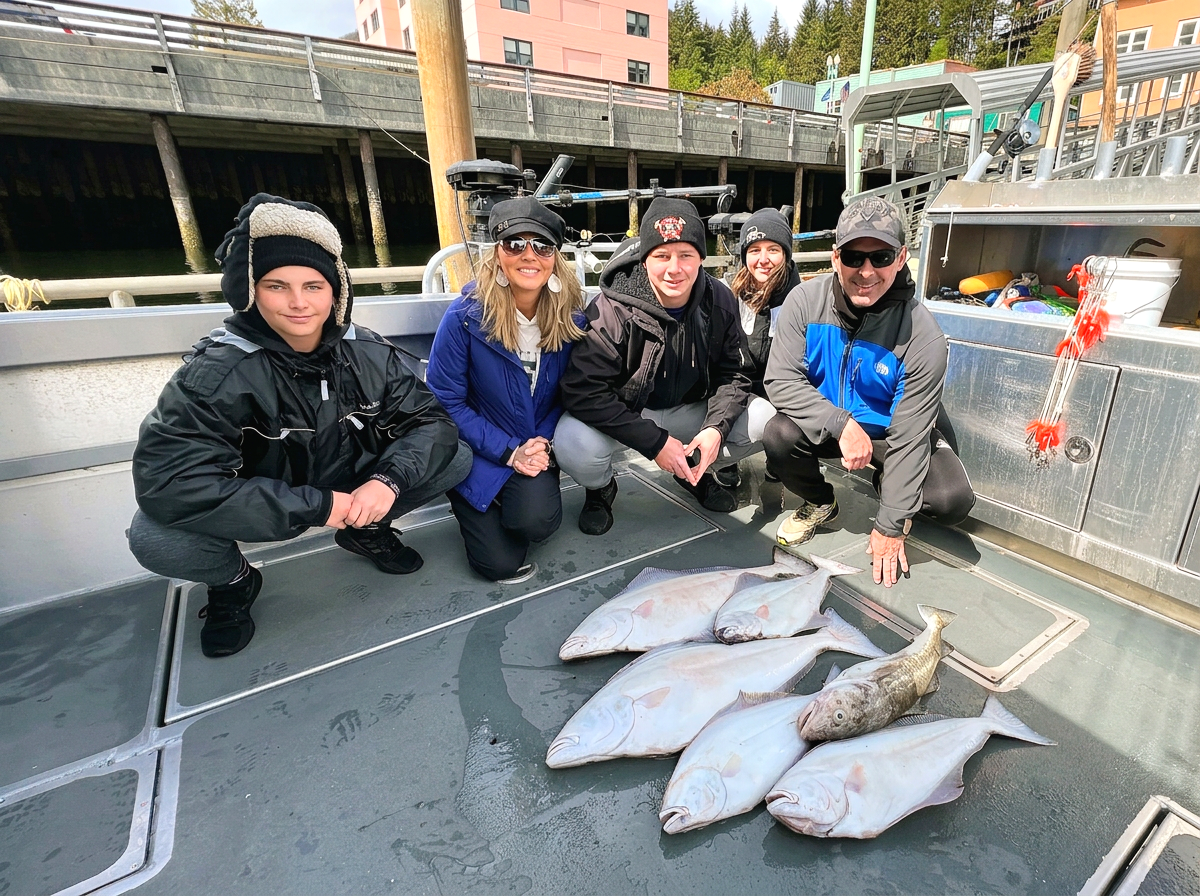
We’d hoped to go salmon fishing in Juneau, only to discover that it wasn’t salmon season. The salmon had neglected to consult our itinerary. So we chartered a boat and went deep-sea fishing for halibut instead. We caught our own fish, had it cleaned and shipped home on dry ice, and shortly after we returned from Alaska, dinner arrived at our doorstep.
It was delicious.
And years later, that unexpected halibut trip is still one of the experiences we remember most.
Of course, Alaska gave us plenty of what we’d gone there hoping to find: enormous glaciers, spectacular scenery, wildlife—including some very impressive black bears—and opportunities to learn about Alaska Native cultures and the Russian influence still visible in some communities.
But perhaps the best thing Alaska gave us was practice with Plan B.
Weather happens. Tours get canceled. Sometimes your family of five becomes a party of three and a party of two standing on a dock trying to figure out what to do next. You can spend the day mourning Plan A. Or you can find out what else is flying.
Sometimes Plan B turns out to be the story you’re still telling years later.
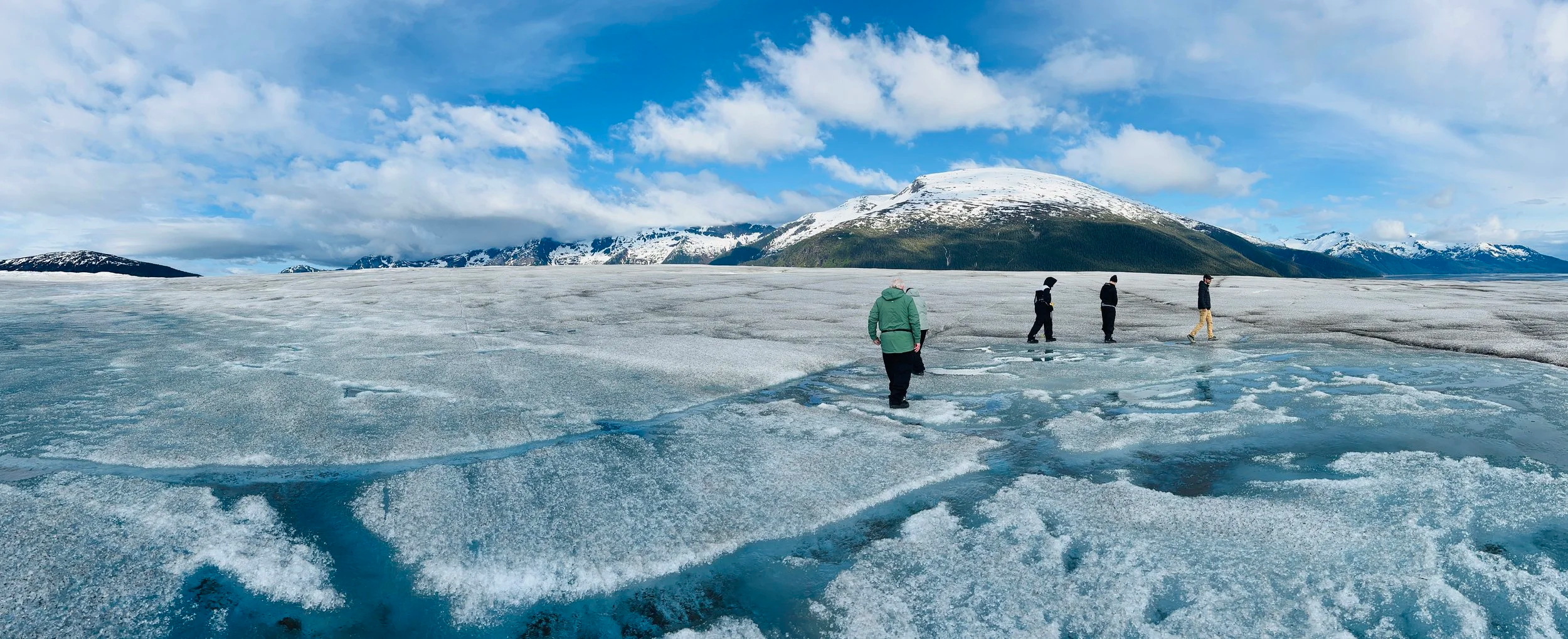
FUN FACT: Alaska is home to about 100,000 glaciers—but only around 600 have names. The rest prefer to stay anonymous.
4. Southern Germany: Leave Room for the Cows
I took my kids to Southern Germany for castles, Alpine adventures, and snow in the middle of summer. Their favorite attraction? The cows.
With German roots and family in the Eifel region, I had visited Germany many times, but mostly to spend time with relatives. I’d always wanted to explore Bavaria and the Alps, so taking the kids gave me the perfect excuse.
And I had plans. Very good plans, if I do say so myself.
We explored Munich by bike, watched river surfers ride the Eisbach wave, toured Neuschwanstein Castle, raced down an Alpine coaster in Oberammergau, and took day trips to Salzburg and Innsbruck.
We also spent several hours at Dachau Concentration Camp Memorial Site. Because of the kids’ ages, Bryan and I were selective about which exhibits they saw and how much detail they were exposed to. It was sobering, but it led to meaningful conversations afterward as they tried to process what had happened there. Not every important travel experience needs to be fun. Sometimes standing in the place where history happened teaches children something a textbook simply can’t.
And then there were the cows.
One morning, we were driving to the Zugspitze, Germany’s highest mountain. I couldn’t wait for three Florida kids to ride into the Alps, see a glacier, and play in snow in the middle of summer. This was going to be memorable. Then we passed a pasture.
“STOP!”
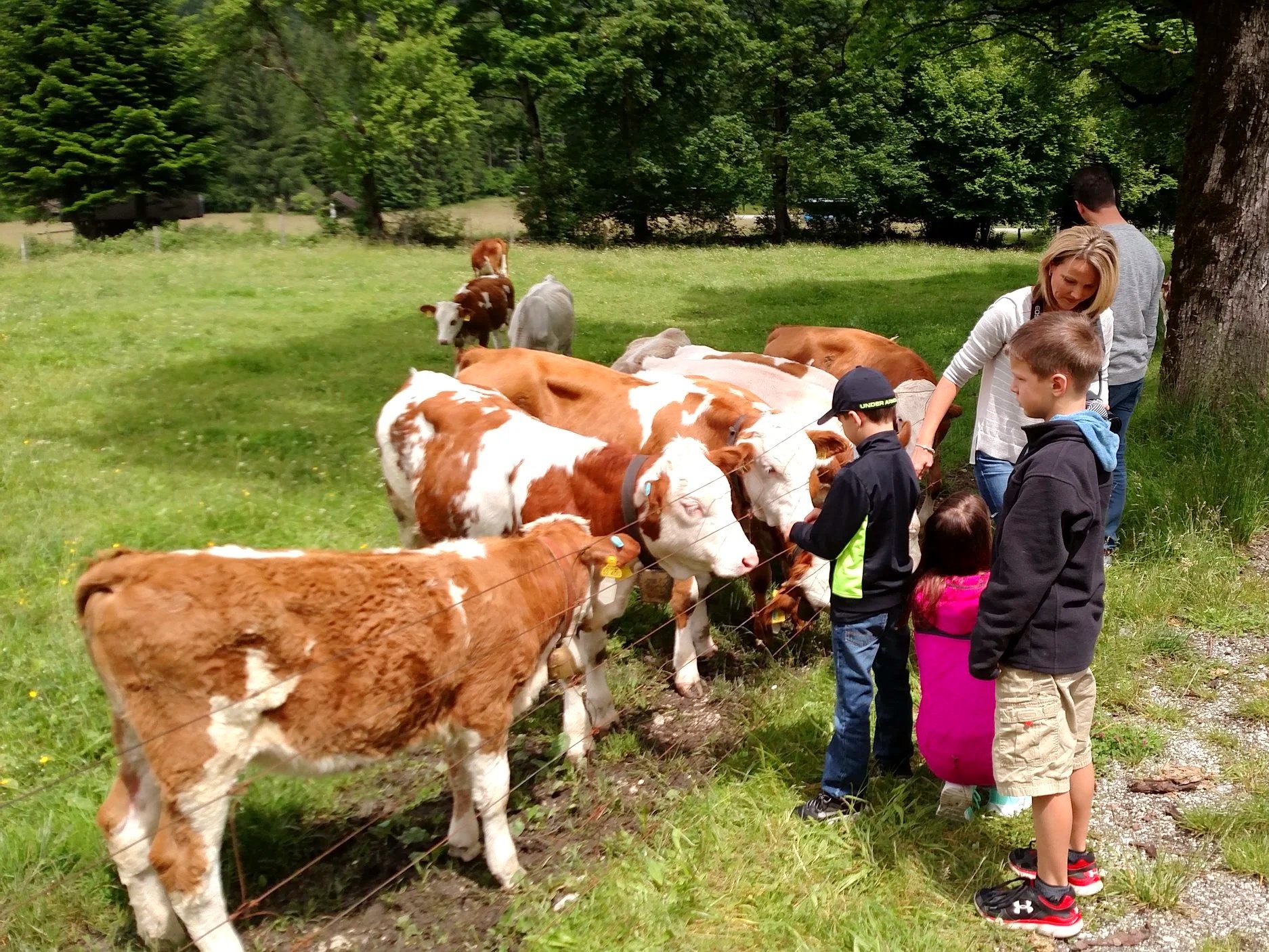
There, in a ridiculously picturesque Alpine meadow, were cows wearing bells around their necks. Germany’s highest mountain would have to wait.
We pulled over, and the cows wandered up to the fence. The kids pulled long pieces of grass to feed them while cowbells tinkled across the meadow. They were completely enchanted.
We practically had to drag them back to the car. Negotiations ensued. We finally secured their cooperation by promising we’d stop and visit the cows again on the way down. Only then were we permitted to continue to the spectacular Alpine adventure their mother had so thoughtfully planned.
To be fair, the Zugspitze put up a respectable fight. At the top, the kids played in the snow, built a snowman, and went tobogganing—in the middle of summer. For Florida kids, that was sufficiently exotic to compete with livestock.
But a promise is a promise. On the way back, we stopped at the pasture so they could visit their new cow friends one more time.
I had taken my children to Germany to show them castles, mountains, history, and a piece of their heritage. They reminded me that kids don’t necessarily care what’s supposed to be the highlight.
We can plan the big adventures. We just can’t predict which moments will become the moments.
So plan the castles. Ride the Alpine coaster. Go to the top of the mountain. Just leave a little room for the cows.
5. London: Ready to Launch
I took my 20-year-old daughter to London for a week so she could get comfortable being on her own in another country. Turns out, I was the one who needed the practice.
Callan had been accepted into a six-week research-abroad program at Newcastle University, so we flew over a week early to explore London together before her move-in date.
And explore we did.
On our first day, we logged more than 27,000 steps. Most days after that hovered around 20,000. We took “seeing London” rather literally.
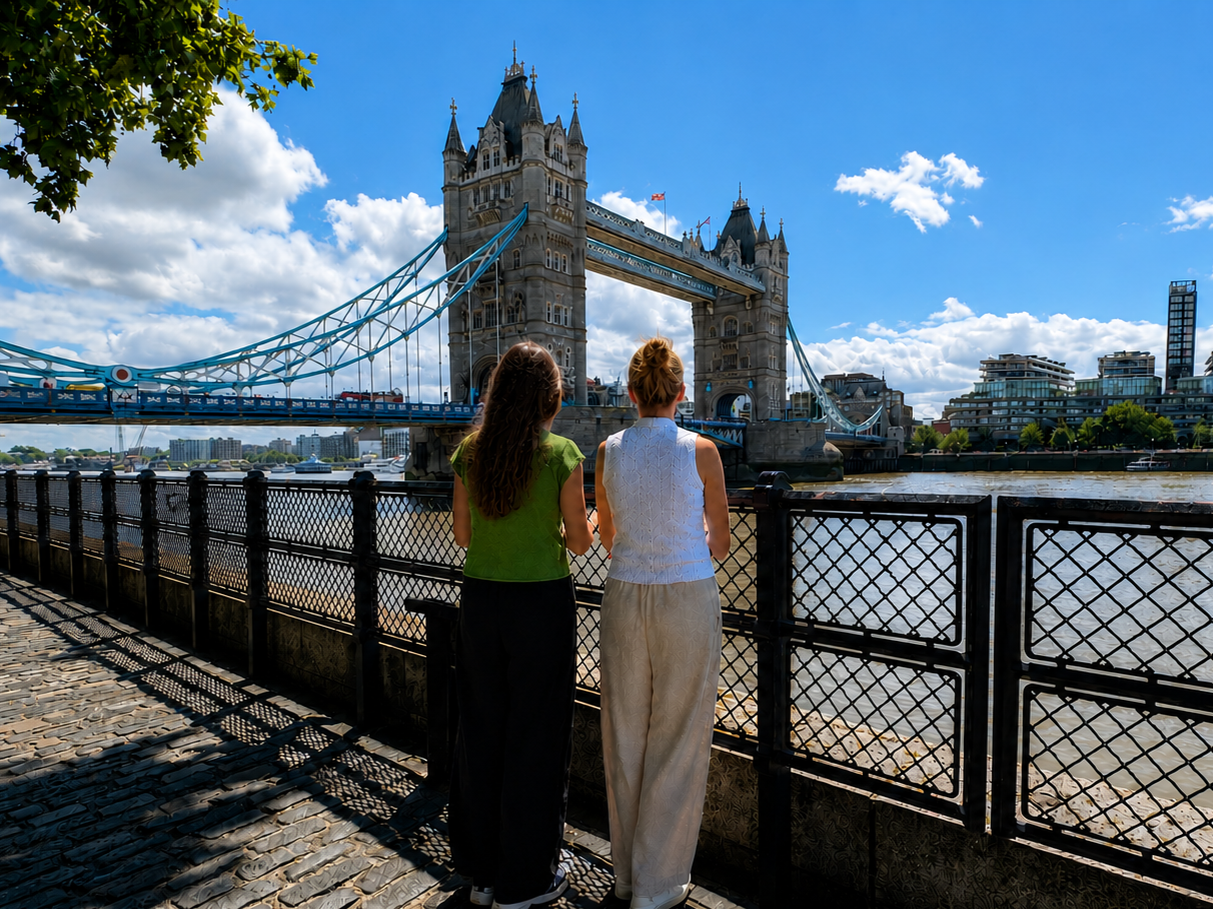
We bought London Passes and treated them less like sightseeing passes and more like a personal challenge. Westminster Abbey, the Tower of London, Tower Bridge, St. Paul’s Cathedral, Shakespeare’s Globe, museums, galleries, neighborhoods, and parks. We saw two West End shows, did an escape room and the Frameless immersive art experience, and squeezed in a day trip to Windsor Castle, Bath, and Stonehenge.
We also made time for the important cultural experiences: fish and chips, Sunday roast, Yorkshire pudding, and afternoon tea.
We were thorough.
But somewhere between all those miles, Callan became increasingly comfortable taking the lead. She grouped our activities by location so we weren’t crisscrossing London all day. She kept an eye on expenses and found ways to have the experiences we wanted without automatically choosing the most expensive version.
And then she conquered the Tube.
Before long, I had stopped navigating altogether. I simply followed her into the station, got on whichever train she told me to, and trusted that I would eventually resurface somewhere in the general vicinity of our next destination.
Wasn’t I supposed to be helping her acclimate? That had been the plan.
Instead, I spent the week watching my daughter navigate an unfamiliar city with an ease I hadn’t expected. She didn’t need nearly as much acclimating as her mother had imagined. And somewhere between all that walking, we talked. A lot.
Walking between attractions. Waiting for trains. Sitting down after another 20,000-step day. We talked about her research program, her plans, her future, and all the things that surface when you have a week alone with your adult daughter.
For years, family travel had meant Bryan and me showing our kids the world.
In London, I got to watch one of them navigate it.
On our final day, I went with Callan to King’s Cross Station and put her on a train to Newcastle. I was sad to see her go.
But I wasn’t worried.
The week I’d planned to help her feel comfortable being on her own in another country had done something entirely different. It had made me comfortable leaving her there.
Funny how parenting works. You spend years teaching your children how to navigate the world without you. Then one day, you’re standing in a train station watching them do exactly that.
She was going to be just fine. And now I knew it, too.
The Destination Matters. But Going Matters More.
There’s no definitive list of five trips every family should take. These just happen to be ours.
The point isn’t collecting passport stamps or checking expensive destinations off a list. Some of the best family memories happen in the spaces between the plans—and sometimes the carefully planned attraction loses to a field full of cows.
Getting away from everyday routines gives families room to connect differently. Kids get to try new things, make choices, adapt when plans change, and discover they’re more capable than they realized.
Along the way, you collect the mishaps, inside jokes, unexpected favorites, and “remember when” stories that become part of your family history.
So go somewhere new. Let the kids help plan. Embrace Plan B. And leave a little room for the unexpected.
You may forget half the itinerary. But you’ll remember the cows.
Final Thoughts: Take the Trip
If there’s a trip you’ve been talking about taking with your kids, take it.
Don’t wait for the perfect age, the perfect itinerary, or the perfect time. Chances are, something won’t go according to plan anyway.
Years from now, the best souvenir probably won’t be anything you brought home in your suitcase.
It’ll be the story that starts with: “Remember when we...?”
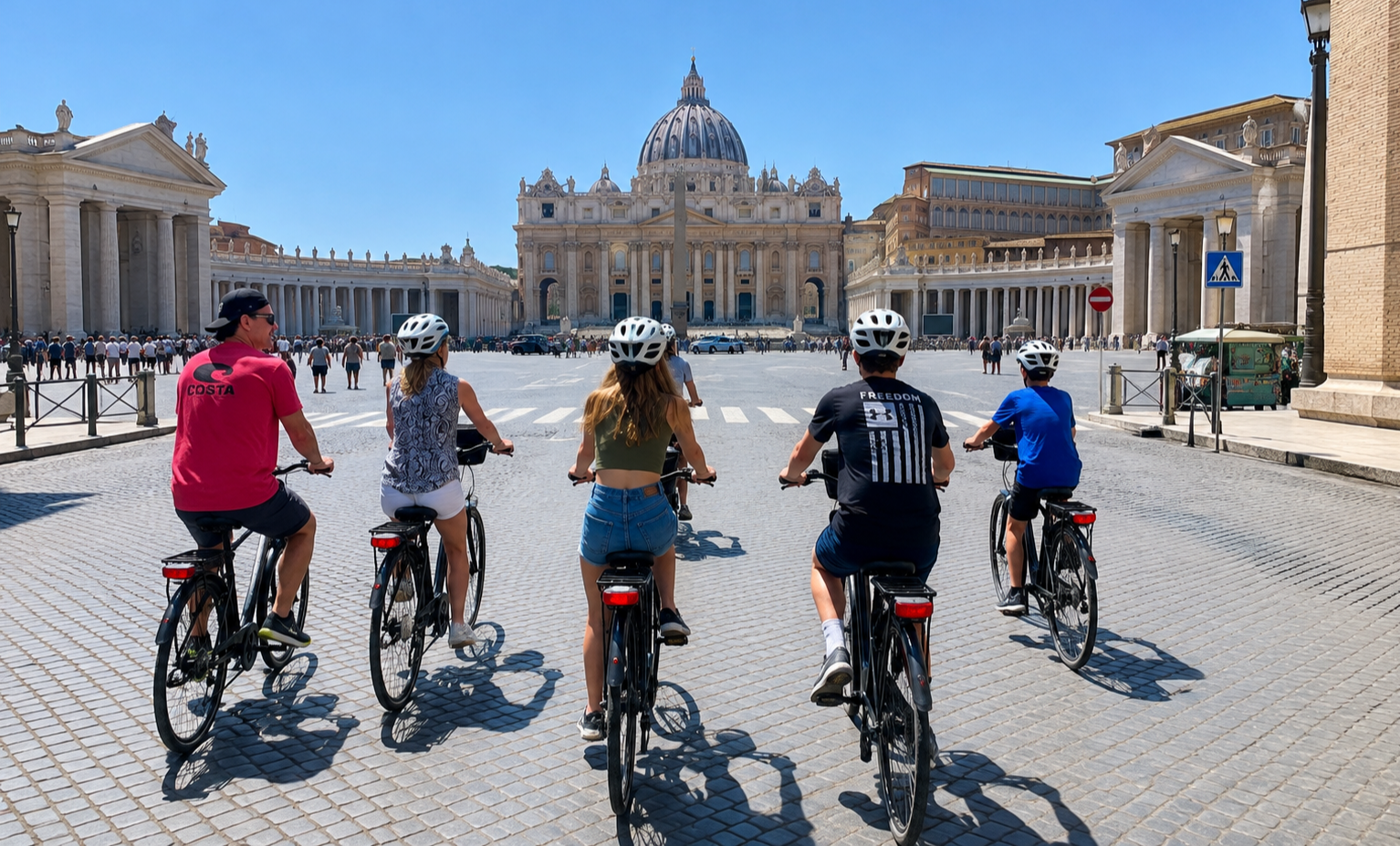
Our bike tour in Rome included a stop in Vatican City.
